


Brass Inlaid Grandfather Clock
A brass inlaid grandfather clock brings precise mechanical timekeeping and rich cabinetwork together, offering a commanding presence in a room.
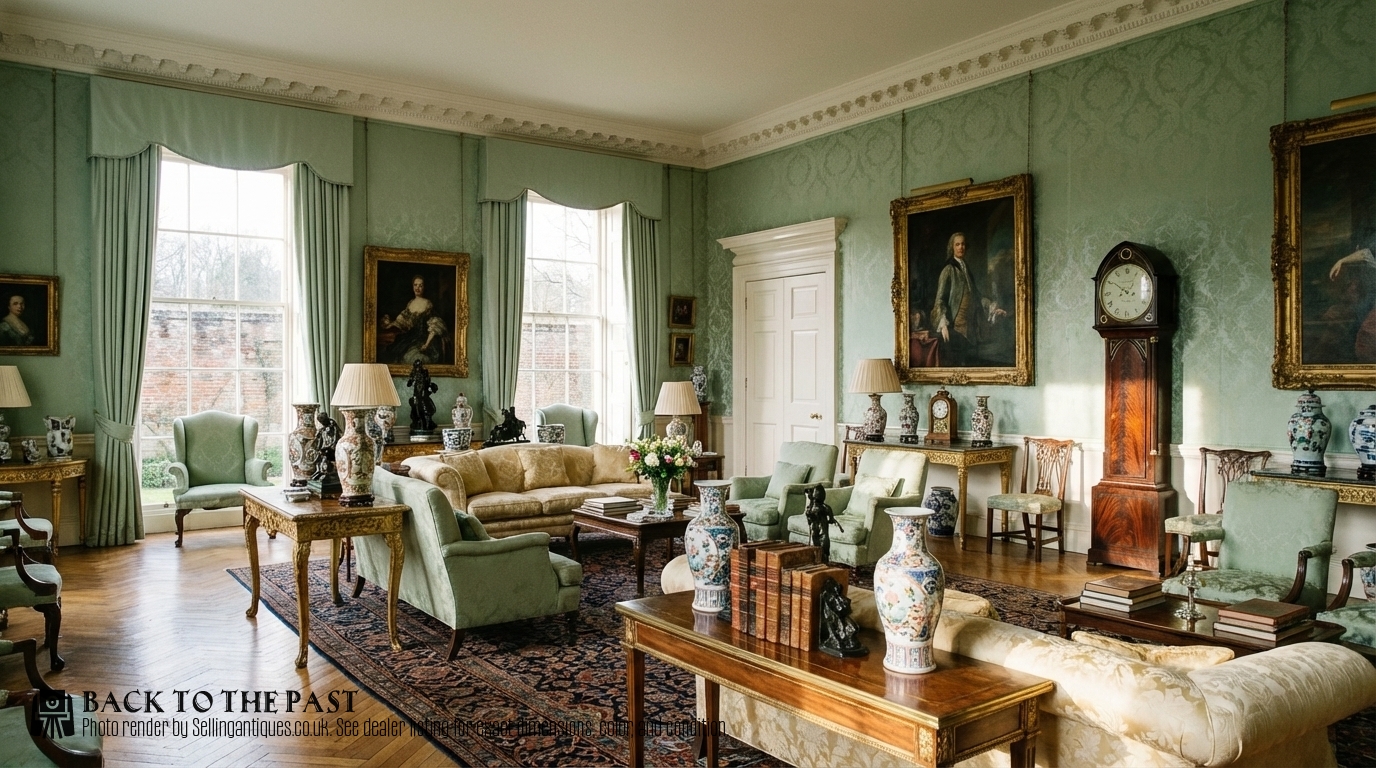
Brass Inlaid Grandfather Clock
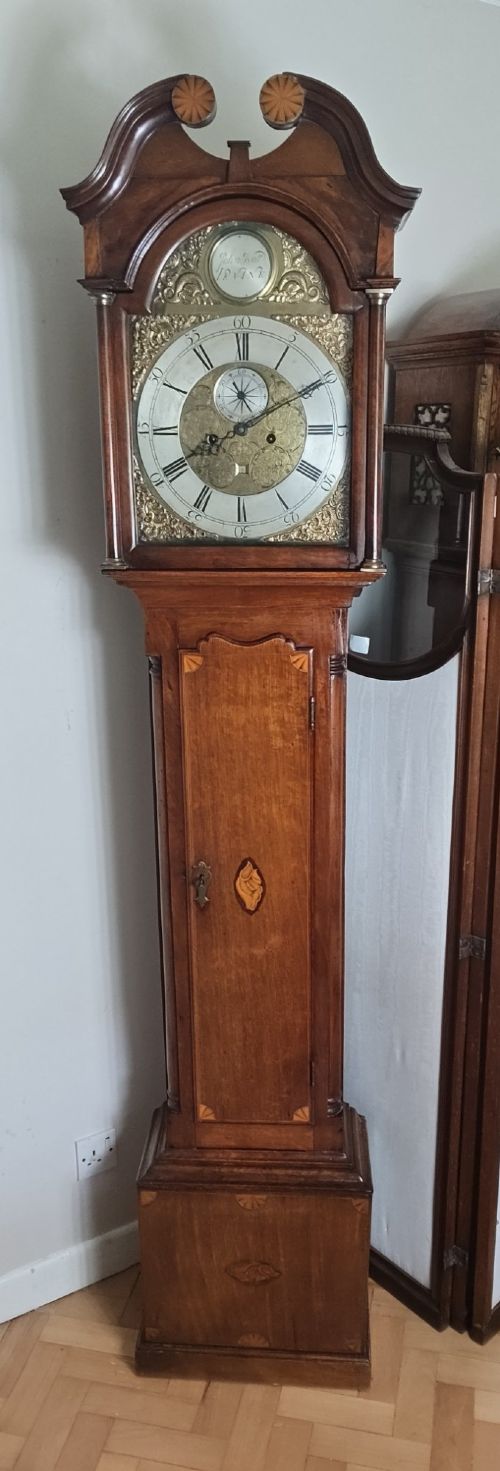
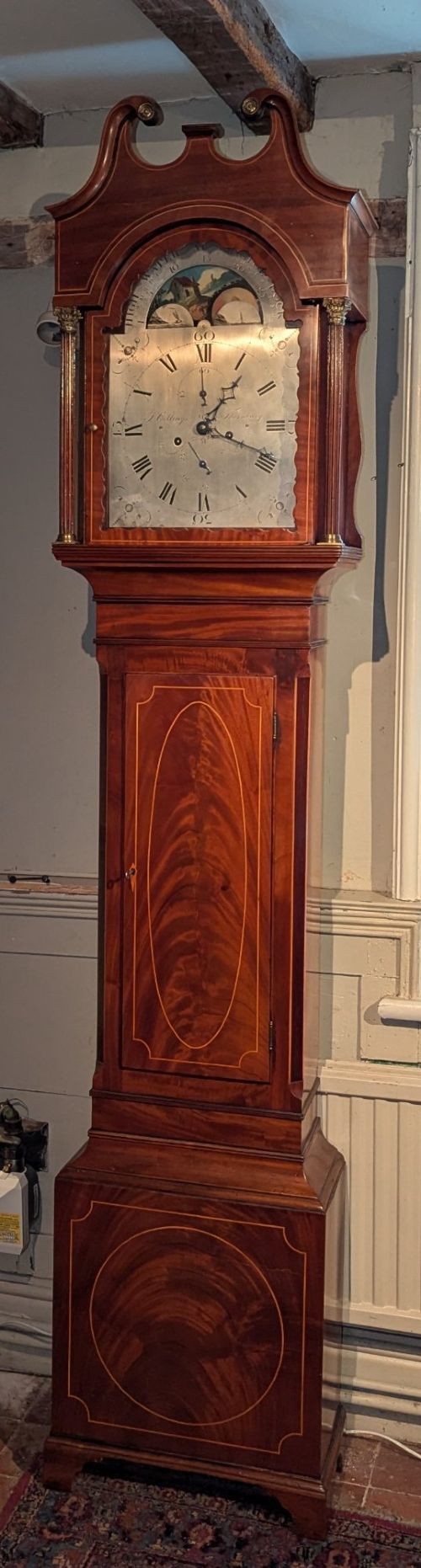
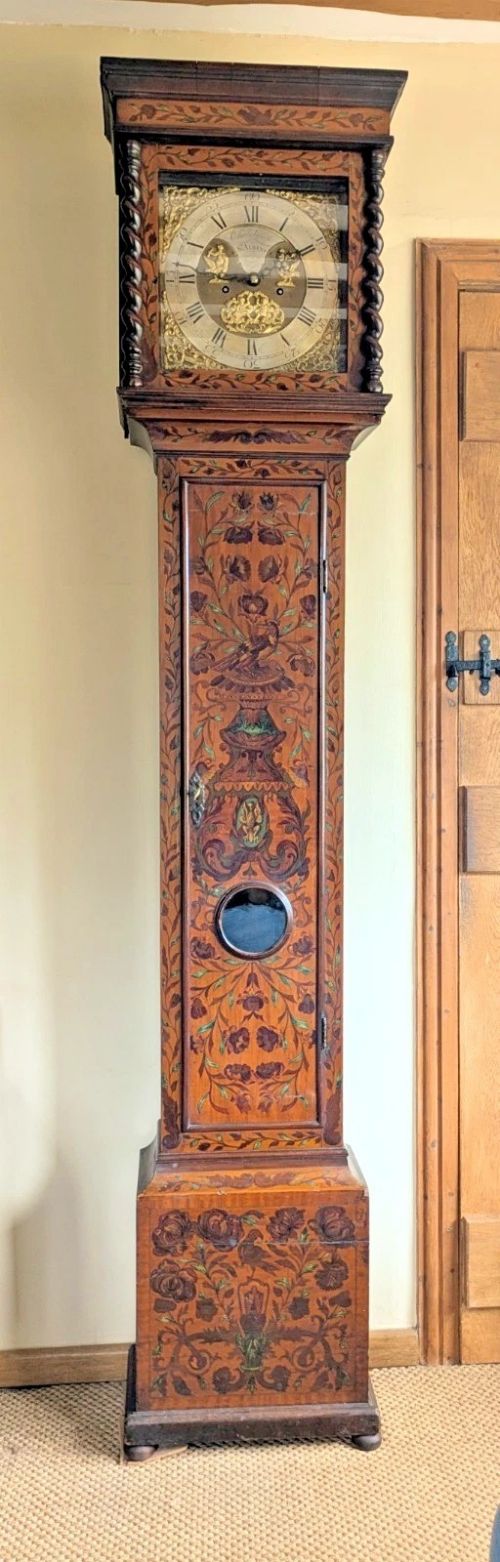
A brass inlaid grandfather clock is a tall, floor-standing timekeeper that relies on a weighted pendulum and dialwork housed within a timber case. When searching for a brass inlaid grandfather clock, buyers encounter pieces spanning from the seventeenth century through the Edwardian era, with eighteenth-century and nineteenth-century examples forming the majority of the selection.
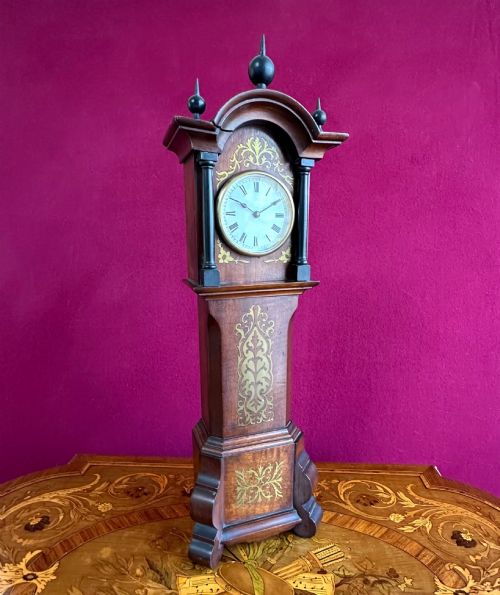
Cases appear in mahogany, walnut, and oak, frequently decorated with marquetry or satinwood inlay alongside brass dial components, glass hood panels, and steel movements. Forms range from full-sized longcase clocks to smaller proportions, including grandmother clocks and miniature timepieces.
Materials and construction
Cabinetmakers constructed the tall housing from timbers such as mahogany, walnut, and oak, often shaping veneers to form intricate marquetry patterns or incorporating satinwood inlay and paterae. Glass fitted into the hood door protected the brass dial and steel hands.
Movements required precision metalworking, combining brass for plates, wheels, and dial faces with steel for springs, arbours, and escapements. Dial faces frequently incorporated applied brass spandrels, engraved chapter rings, and subsidiary calendar or moon phase displays.
Listings feature cases constructed from mahogany, walnut, and oak, spanning periods from the late seventeenth century through the Edwardian era and the 1920s.
Distinctions in quality
Quality rests in the harmony between the cabinetwork and the mechanical movement inside. Finer examples display crisp inlay work, well-figured timber grain, and robust dial engraving signed by established makers.
The sophistication of the movement dictates the tier of the piece, moving from simple time-only or eight-day trains to complex quarter-striking, musical, or tidal dial mechanisms.
Charles Louch St. Albans·William Moon London·Nathaniel Pyne·David Morice of Auchtermuchty·Edward Stanton·Peter Wise London·Henry Massy of London·Richard Baker London·Joseph Lum·G Brown Edinburgh·Sam Robson·Iames Richards Liverpool·John Douglas of Galston
The Brass Inlaid Grandfather Clock Glossary
- Longcase clock
- An alternative term for a grandfather clock, describing a tall floor-standing timekeeper enclosed in a wooden case. This term appears frequently in historical and trade records.
- Marquetry inlay
- Decorative woodwork created by fitting small pieces of veneer into a prepared ground to form floral or geometric patterns. It adds visual depth to the timber case.
- Spandrel
- The ornamental corner piece mounted on a clock dial outside the central chapter ring. These elements are typically cast in brass and chased or engraved.
- Paterae
- Small, round decorative motifs carved or inlaid into furniture surfaces, resembling a classical saucer or medallion. They punctuate friezes and panels on eighteenth-century cases.
Brass Inlaid Grandfather Clock: Frequently Asked Questions
What is a grandfather clock?
A grandfather clock is a tall, weight-driven pendulum timekeeper enclosed in a protective wooden case that rests directly on the floor. These instruments measure time through descending weights hung on cords or chains.
They combine cabinetmaking with mechanical gear trains, utilising a tall waist to house the long pendulum and an upper hood to display the dial.
How do you wind a grandfather clock?
Winding involves using a small crank key inserted into winding holes on the dial face to draw the suspended weights back up toward the top of the case. Care must be taken not to overwind the mechanism.
Most eight-day movements require winding once a week, while thirty-hour versions need daily attention depending on the train configuration.
What is a moon phase dial?
A moon phase dial is an auxiliary display on the clock face that tracks the twenty-nine-and-a-half-day lunar cycle. It utilises a rotating disc decorated with painted moons behind a curved aperture.
This complication allowed historical households to track tides and moonlit nights for travel, adding visual complexity to the upper dial arch.
How do I distinguish eighteenth-century cases?
Eighteenth-century cases tend to display rich mahogany or walnut timber with restrained proportions and high-quality brass dial work by named regional or London makers. Construction techniques rely on period joinery methods.
Later nineteenth-century and Edwardian revivals often incorporate heavier carving, musical movements, or differing veneer thicknesses that signal their later production date.