


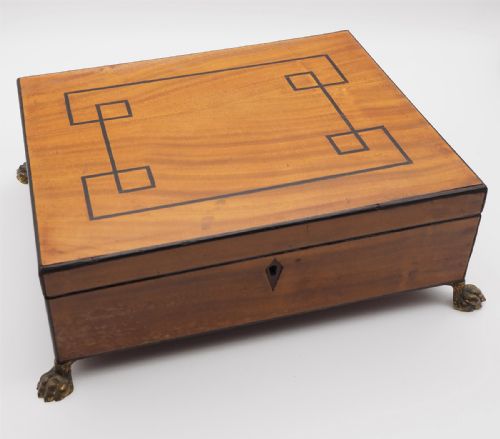

Brass Inlaid Dressing Box
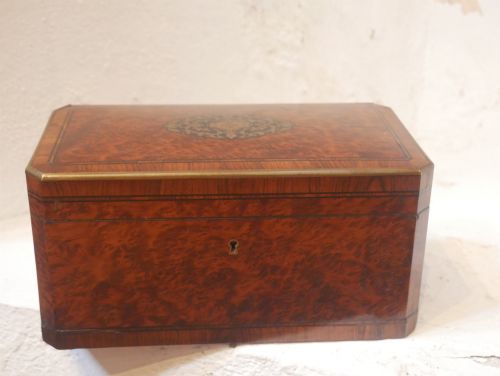
A brass inlaid dressing box organises the gentleman or lady's daily routine while displaying the finest cabinet timber.
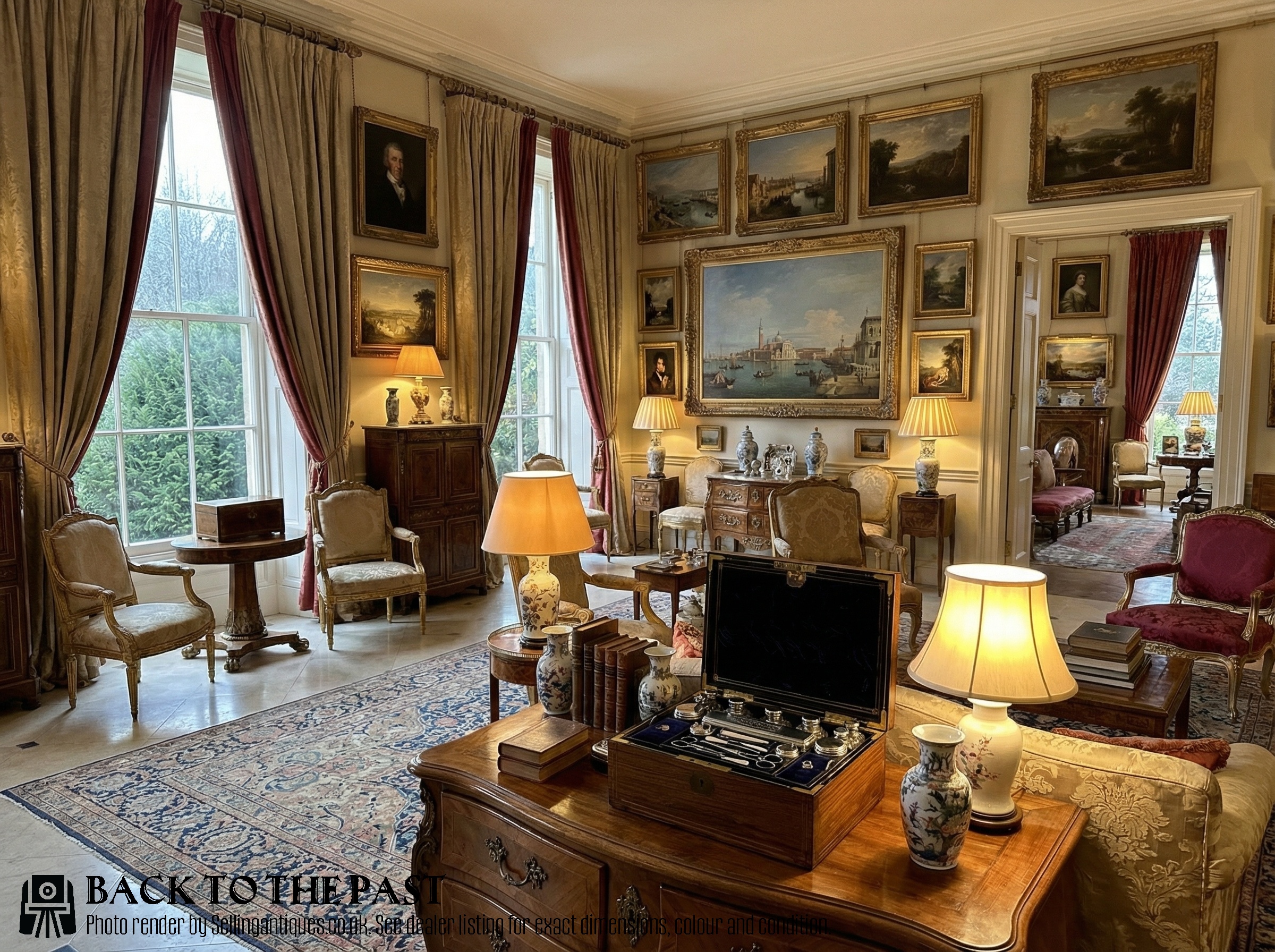
Brass Inlaid Dressing Box
A brass inlaid dressing box provides a secure receptacle for personal trinkets, jewellery, and grooming equipment, doubling as a handsome desktop or table accessory. These pieces span the Georgian, Regency, and Victorian periods, capturing an era when personal grooming required specialised travelling and stationary containers.
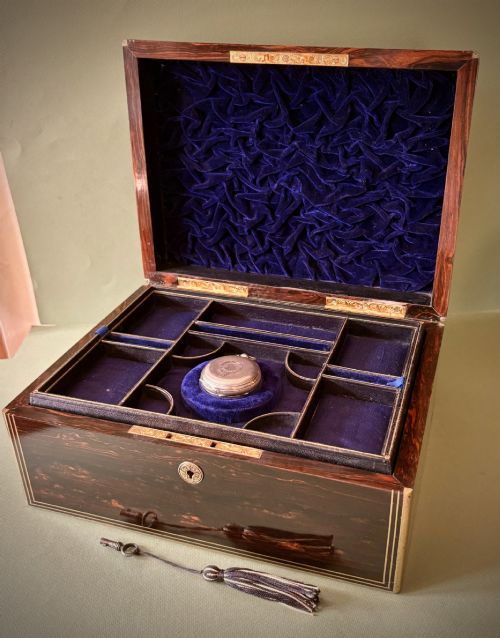
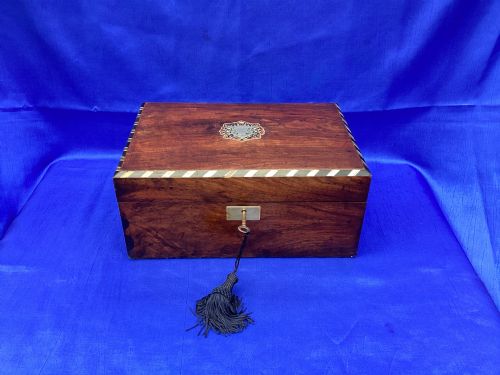
The version most commonly met on this page is the Victorian rosewood or coromandel dressing box, frequently dated between 1850 and 1880. Such examples often include fitted interiors with trays, compartments, and occasionally glass perfume bottles.
Beyond the standard Victorian forms, the evidence reveals earlier Regency models featuring cut brass inlay alongside later French and Art Deco variations. Each style reflects the prevailing taste of its decade, from linear brass banding to elaborate boullework.
How they were made
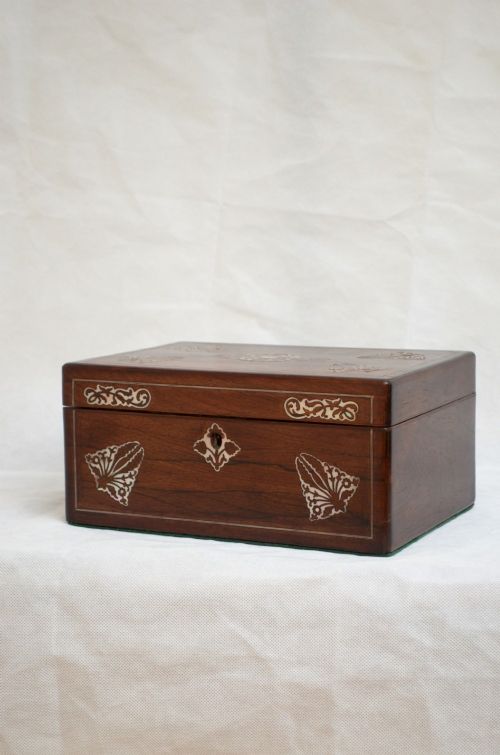
Cabinetmakers constructed the carcass from dense tropical and domestic hardwoods including rosewood, coromandel, mahogany, satinwood, and walnut, often applying burr or amboyna veneers. They channelled the timber surfaces to receive precise cut brass inlays, brass banding, and mother-of-pearl accents.
Internal spaces received fitted trays, dividers, and luxurious linings of velvet. Many examples integrated functional elements such as working locks, secret drawers, and glass perfume scent bottles.
Periods represented include Georgian, Regency, Victorian, and the Art Deco era.
What varies in quality
The distinction between ordinary and superior boxes lies in the choice of exotic timber and the precision of the brass inlay work. Finely executed brass banding and flush joints demonstrate the cabinetmaker's mastery.
Complexity of the internal fittings also dictates standing, with fully intact trays, secret compartments, and silver hallmarked components elevating the piece. The preservation of original velvet linings and working keys contributes to the overall integrity.
Tahan Paris·H Mitchell·Lund Of Cornhill·JH Browne
The Brass Inlaid Dressing Box Glossary
- Coromandel
- A dense, heavily figured Southeast Asian timber prized for its rich dark brown colour and striking black grain. Cabinetmakers utilised it extensively for high-end Victorian dressing boxes.
- Boulle
- An elaborate form of marquetry employing brass and tortoiseshell inlaid into wood, named after the French cabinetmaker André-Charles Boulle. Pieces utilising this technique often originate from nineteenth century French workshops.
- Fitted interior
- An internal arrangement of removable trays, velvet-lined compartments, and dedicated slots for accessories. These layouts kept grooming tools orderly during travel.
Brass Inlaid Dressing Box: Frequently Asked Questions
What is inside a dressing box?
A dressing box typically contains a fitted interior with velvet linings, removable trays, and compartments designed to hold jewellery, trinkets, and grooming accessories.
Many examples also house glass perfume bottles with matching stoppers, creating an all-in-one vanity station for domestic or travelling use.
How do I identify a Victorian box?
Victorian boxes often feature substantial rosewood or coromandel carcasses decorated with brass banding or mother-of-pearl inlay. They frequently date from the mid to late nineteenth century.
Examining the interior construction, wood choice, and style of brasswork helps distinguish these pieces from earlier Regency or later Art Deco examples.
Were these boxes used for travel?
Many dressing cases were engineered as travelling companions for wealthy owners, incorporating robust locks and secure internal compartments to protect valuables on the move.
Others served primarily as stationary table top cabinets for ladies' jewellery and trinkets kept permanently in the bedroom or boudoir.
What woods are most common?
Rosewood and coromandel dominate the selection, offering dark, richly figured surfaces that contrast sharply with bright brass inlay and banding.
Mahogany, satinwood, walnut, and exotic amboyna also appear across various periods, each bringing distinct grain patterns and colour variations to the box exterior.