



Brass Bound Jewellery Chest
A brass bound jewellery chest is a timber box strengthened for travel, offering secure storage for valuables with enduring utility.
Brass Bound Jewellery Chest
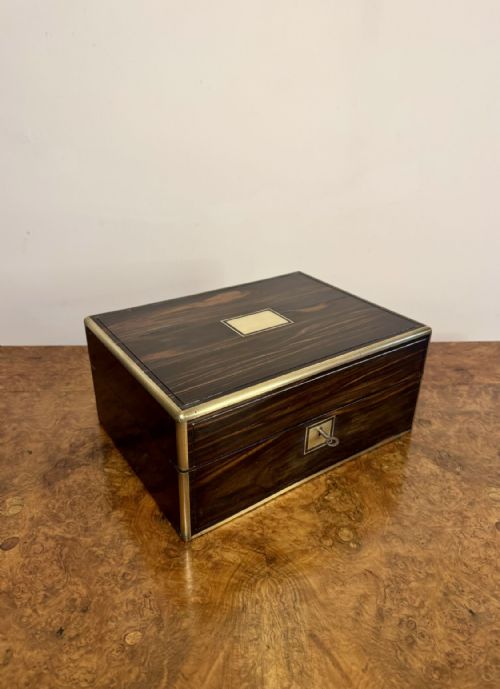
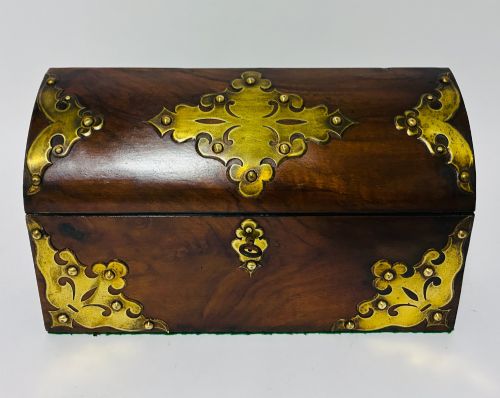
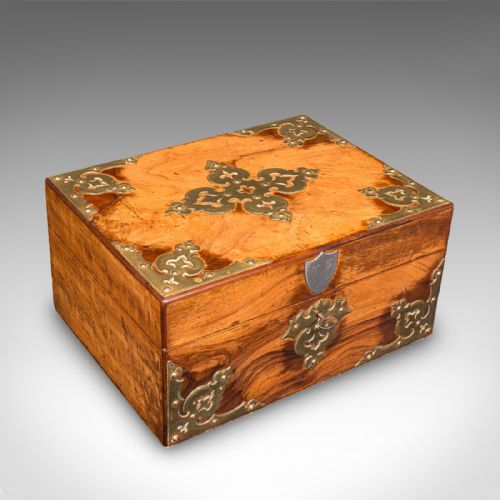
A brass bound jewellery chest represents a sturdy container designed to safeguard precious items during transit or domestic use. These pieces emerge in various forms, including jewellery boxes, campaign boxes, and small travel trunks.
The pieces on this page span several distinct periods, including Georgian, Victorian, and the seventeenth century, showing how cabinetmakers adapted timber and metal for personal storage. Forms range from compact rosewood caskets to larger teak travel chests and miniature campaign trunks.
Makers drew on diverse regional styles such as Anglo-Indian, Gothic Revival, Regency, and Traditional Chinese to adorn these chests. Buyers encounter portable vanity cases alongside fitted workboxes and display chests.
How they were made
Cabinetmakers constructed these chests using dense timbers such as rosewood, teak, walnut, and coromandel to withstand regular handling. Wood was selected for both durability and rich grain pattern.
Brass formed the structural and decorative reinforcement, appearing as corner straps, bindings, and mounts to protect vulnerable edges during journeys. Leather also served as an exterior covering on specific campaign and travel pieces.
Brass Bound Jewellery Chest Retail Price Guide 2026
Typical asking prices for brass bound jewellery chest among the pieces listed under this phrase on Sellingantiques today, from the lower quarter to the upper quarter. They describe what is for sale here now, not the wider market.
Several Victorian boxes include secret compartments hidden behind false panels for confidential letters.
What varies in quality
The refinement of the timber and the precision of the brass work distinguish standard utility items from finer personal chests. Superior examples display seamless mitre joints and heavy gauge brass bindings fitted flush to the wood.
Interior fitments, including secret compartments, mirror mountings, and dedicated tray tiers, elevate the sophistication of a piece. The complexity of the internal arrangement directly reflects the original purpose and investment in the chest.
The Brass Bound Jewellery Chest Glossary
- Campaign box
- A portable chest built with recessed brass handles and reinforced corners for military or travel use. These items were designed to endure rough journeys.
- Coromandel
- A dense, heavily figured exotic hardwood prized for dark brown coloration and dramatic grain. It frequently appears on luxury nineteenth-century dressing cases.
- Rosewood
- A heavy, durable timber featuring deep red and brown tones with dark streaks. It is a favoured material for high-status Victorian and Georgian boxes.
- Workbox
- A specialised container fitted with compartments for sewing implements, threads, and small accessories. Many incorporate textiles and delicate wood veneers.
- Zanzibar chest
- A heavy wooden storage trunk characterised by brass studwork and strapwork hinges. These items reflect East Asian and Middle Eastern trade routes.
Brass Bound Jewellery Chest: Frequently Asked Questions
What is a brass bound jewellery chest?
A brass bound jewellery chest is a portable wooden box strengthened with metal corners and straps to protect personal valuables during travel. These pieces utilise dense timbers and secure locks for safe storage.
They appear across multiple centuries and regional styles, functioning as compact vanity cases, fitted workboxes, or miniature travel trunks.
How do I date a campaign box?
Dating relies on timber selection, brass hardware style, and construction methods used by the cabinetmaker. Georgian and Regency pieces often feature simple mahogany or rosewood with minimal flush handles.
Victorian examples frequently introduce denser exotic woods like coromandel alongside more elaborate brass corner strapping and fitted internal compartments.
How should I clean coromandel wood?
Maintenance requires gentle dusting with a soft, dry cloth to prevent abrasion of the delicate polished surface. Moisture and direct sunlight should be avoided to preserve the natural grain.
Applying appropriate wax polish occasionally helps nourish the dense timber without building up heavy residue on the brass mounts.