
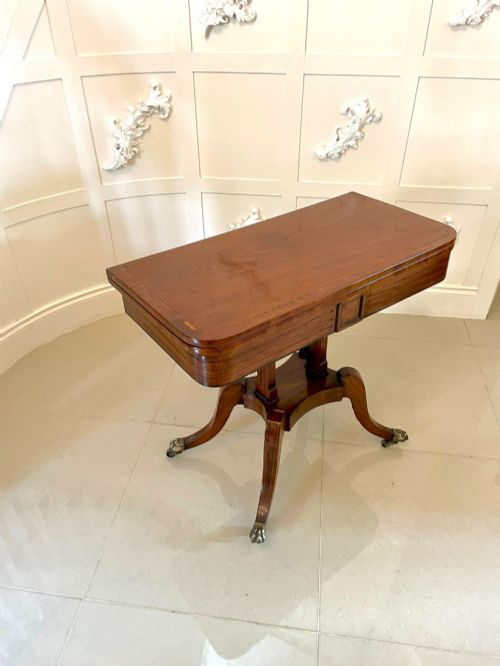

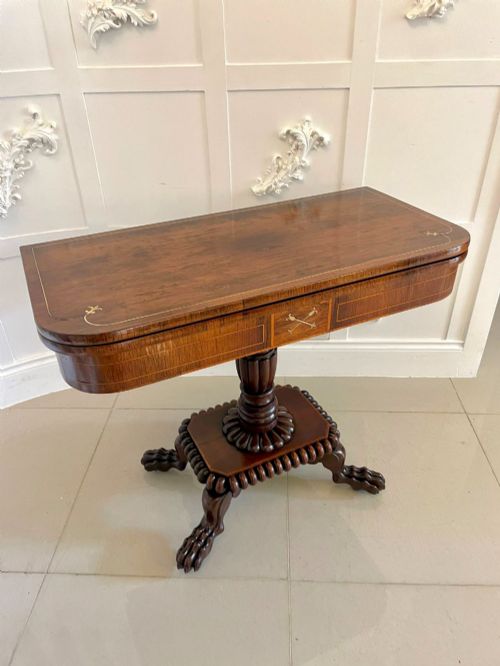
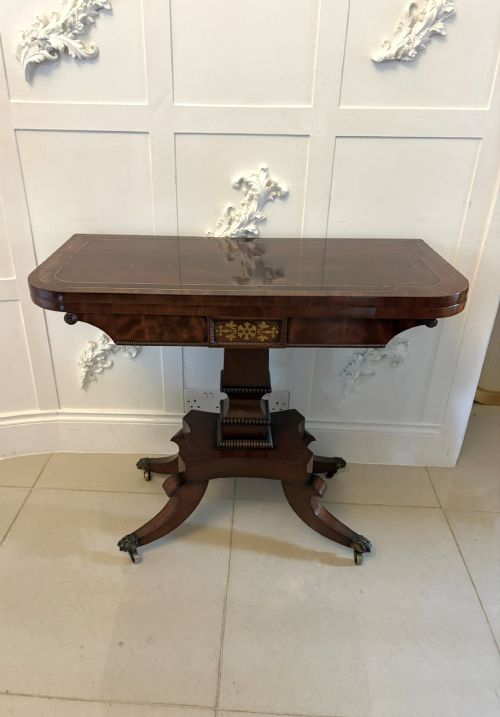
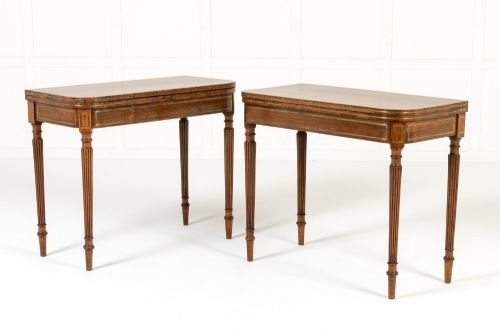
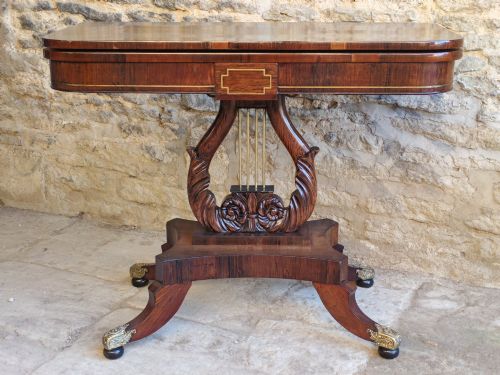
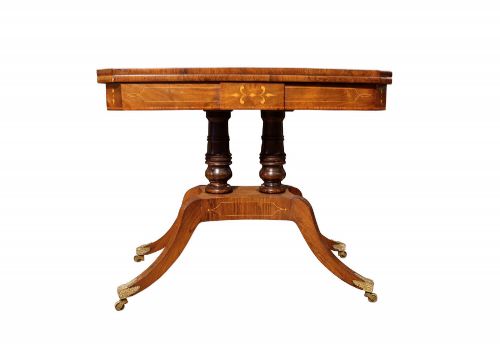
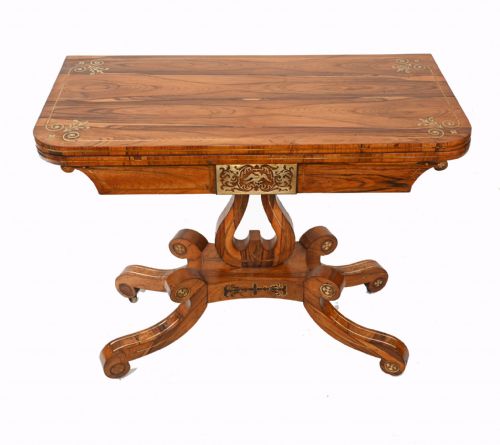
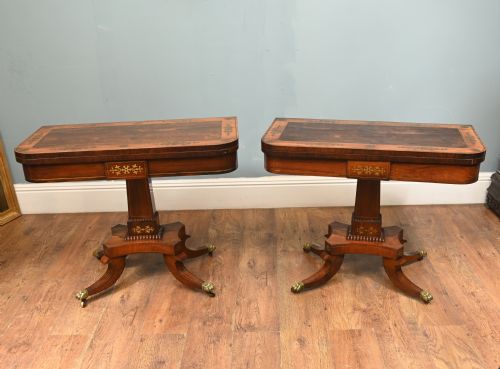


Brass Inlaid Card Table
A brass inlaid card table brings polished timber and bright metalwork together for a striking fold-over surface.
What a brass inlaid card table is
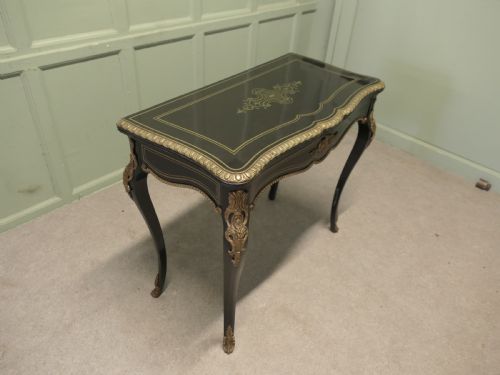
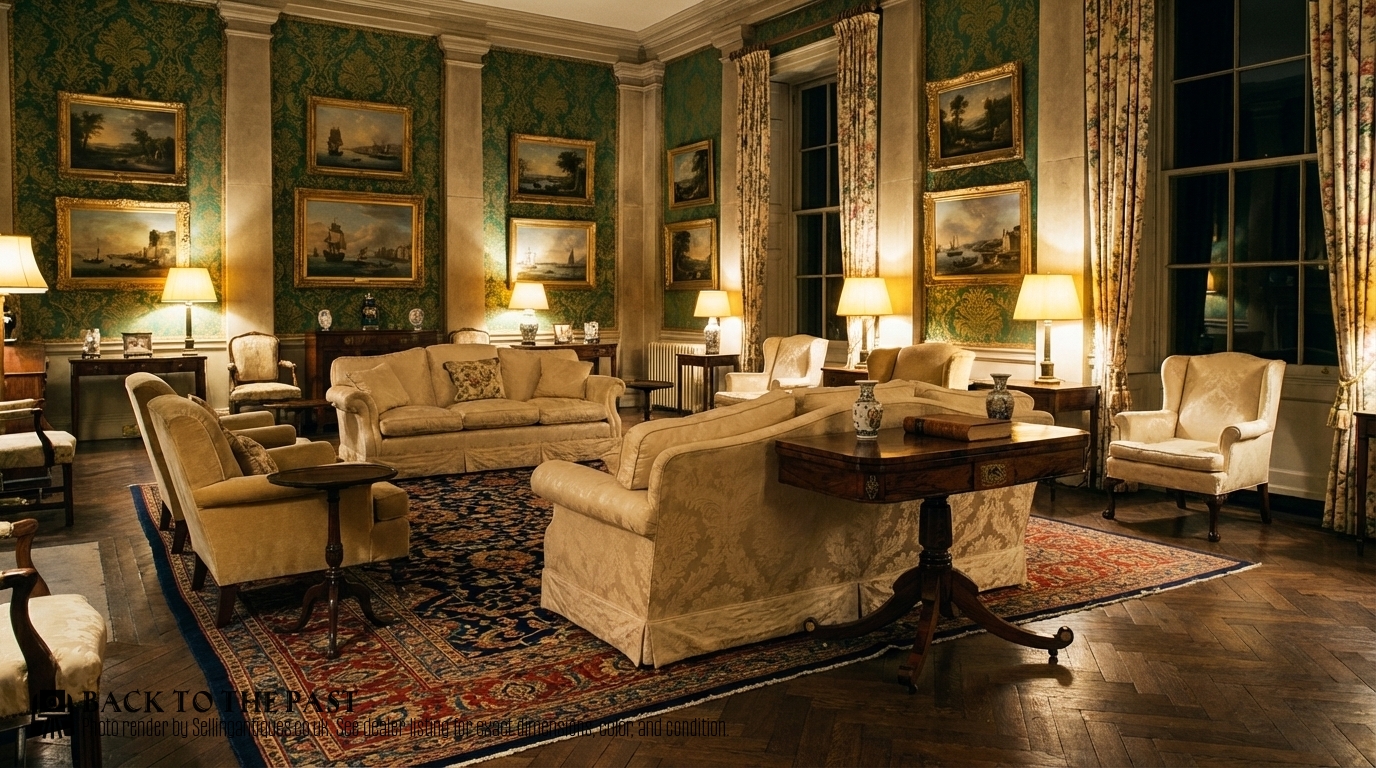
A brass inlaid card table is primarily a Regency creation, though later Napoleon III examples also appear with ebonised finishes and mother-of-pearl detail. The form is designed for multi-use living, operating as a console or side table when closed and opening up for games or tea.
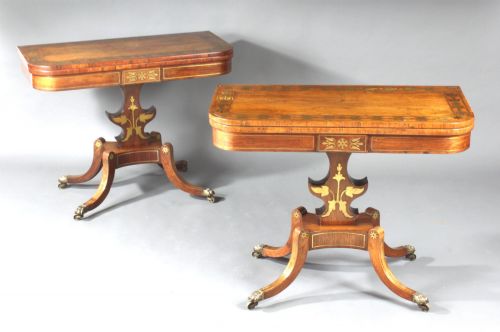
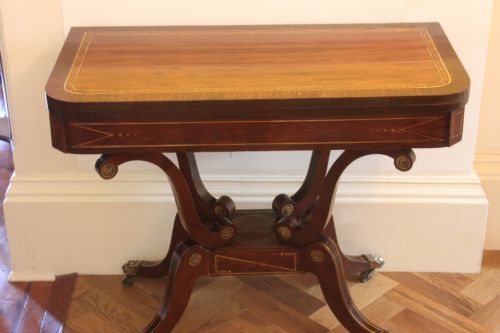
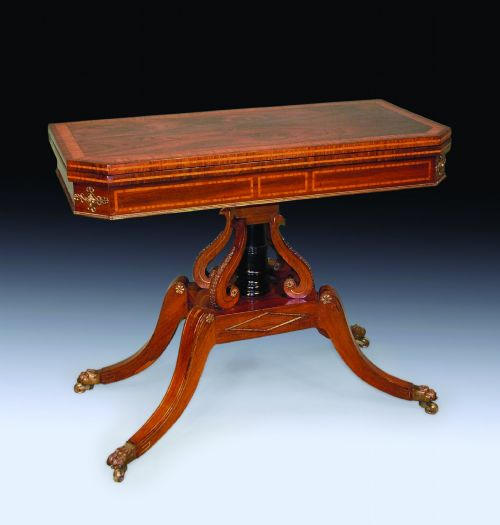
Rosewood and mahogany dominate the timber choices, frequently paired with intricate brass stringing and ornamental inlay across the fold-over top. Buyers looking at this page will encounter mostly Regency period examples alongside occasional 1870 French pieces.
How they were made
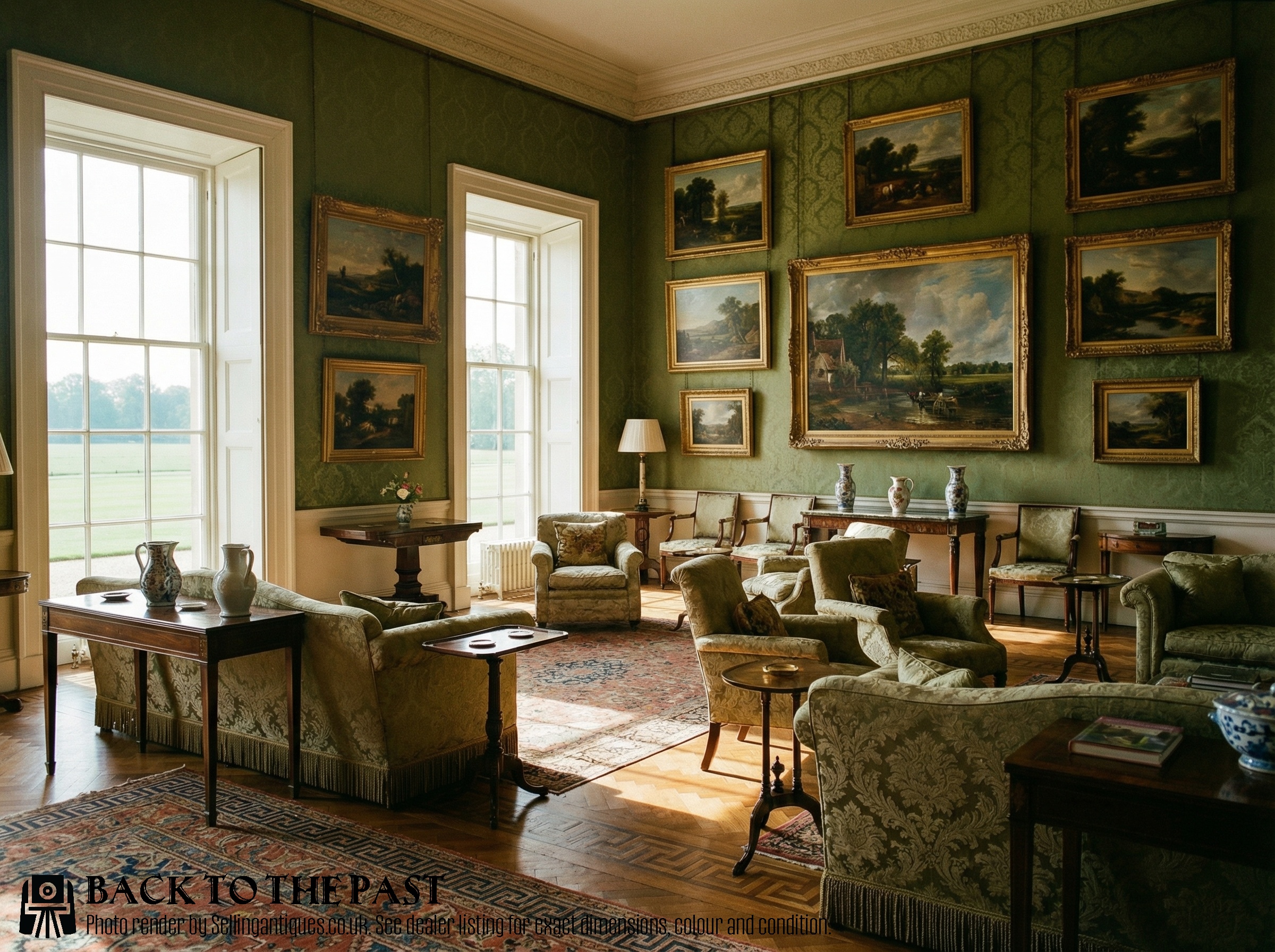
Cabinet makers constructed these tables using solid and veneered timbers such as rosewood, mahogany, satinwood, and burr walnut over supportive carcases. They channelled the wood surfaces by hand to recess delicate brass wire and brass motifs into the grain.
Many examples incorporate secondary materials like mother-of-pearl, ebony, and gilt-brass mounts to accent the central brass inlay. Folding mechanisms rely on pivoting or hinged leaves supported by swivel tops or concertina actions.
Retail Price Guide 2026
Typical UK retail prices for brass inlaid card table, calculated from the Sellingantiques database of over a million retail prices indexed since 2003. This retail price guide relies exclusively on Sellingantiques data; no external sources or auction records are used, so the figures do not describe the wider market.
Listings feature Regency and Napoleon III periods, utilising rosewood, mahogany, ebonised wood, burr walnut, and mother-of-pearl.
What varies in quality
Quality rests in the precision of the brass inlay work and the choice of figured timber veneers. Finer pieces demonstrate tight alignment where the brass meets the surrounding wood, alongside deeply figured rosewood or plum pudding mahogany.
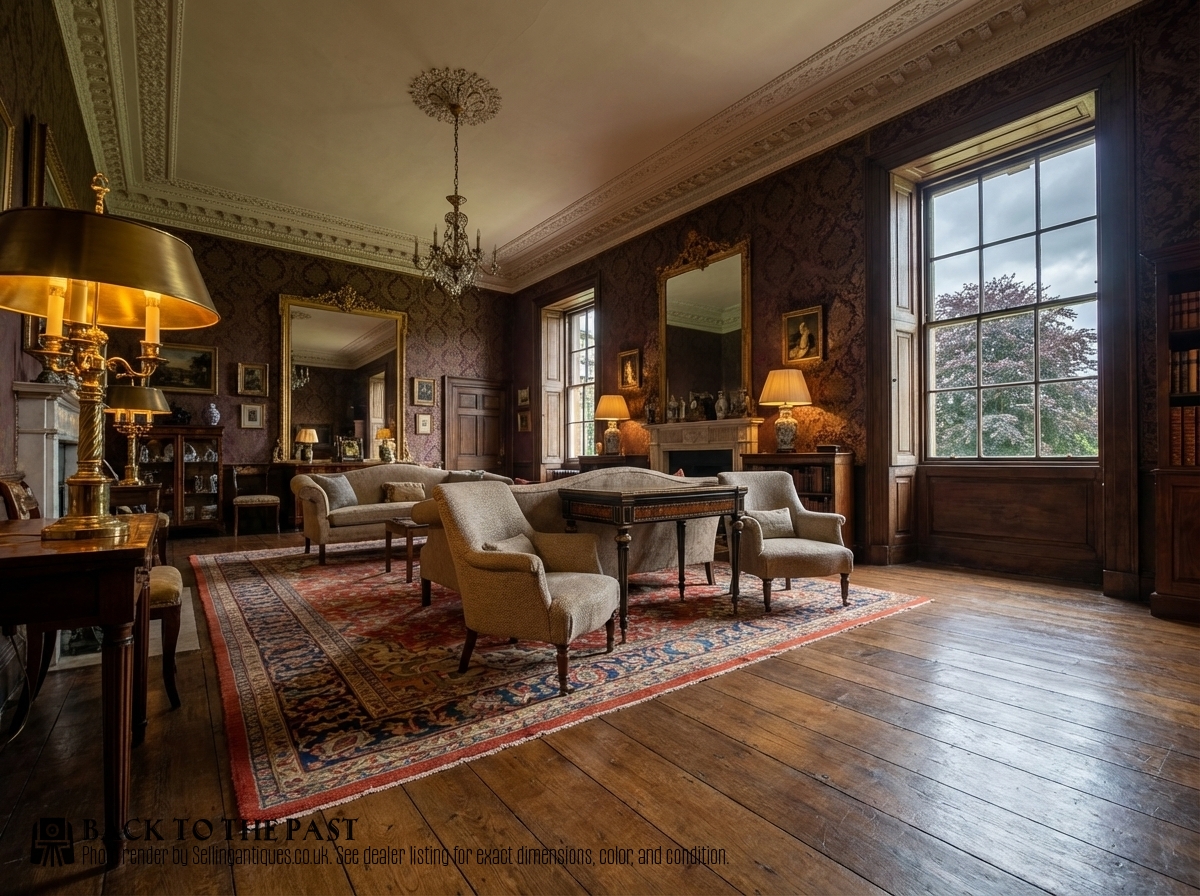
The sophistication of the carved supports and the presence of makers such as George Bullock or Gillows elevate certain examples above standard workshop production.
George Bullock·Gillows
The Brass Inlaid Card Table Glossary
- Fold-over
- A table top hinged to double in surface area when opened. This design allows the piece to function as a compact console against a wall.
- Stringing
- Thin inlay of contrasting material fitted into channels in the wood. It creates geometric borders and outlines panels on the table top.
- Ebonised
- Timber treated to imitate ebony. This dark finish provides high contrast for brass and mother-of-pearl inlay.
- Ormolu
- Gilt-bronze mounts applied to furniture edges and legs. It adds sculptural metallic detail to the wooden structure.
Frequently Asked Questions
How do I date a brass inlaid card table?
Dating relies on stylistic markers and timber choices. Most examples date from the Regency period, showing classical lines and rosewood veneers.
Later 19th-century French pieces often incorporate ebonised wood and mother-of-pearl alongside brass. Construction methods and secondary woods also help confirm the period.
Where should I place it?
These tables suit hallways, living rooms, and drawing rooms as accent furniture. Placed flat against a wall, they occupy minimal floor space while displaying the inlaid top.
Opening the table requires clearance around it, making it ideal for occasional use when entertaining guests.
How do I care for the wood and brass?
Regular dusting with a soft, dry cloth protects the polished timber and metal inlay. Avoid harsh cleaning products that can loosen delicate brass wire.
Keeping the table away from direct sunlight and extreme temperature changes prevents the veneer and inlay from shifting.