




Brass Indoor Plant Holder
A brass indoor plant holder brings greenery into a room with warmth, offering a durable vessel for your ferns and flowers.
Brass Indoor Plant Holder
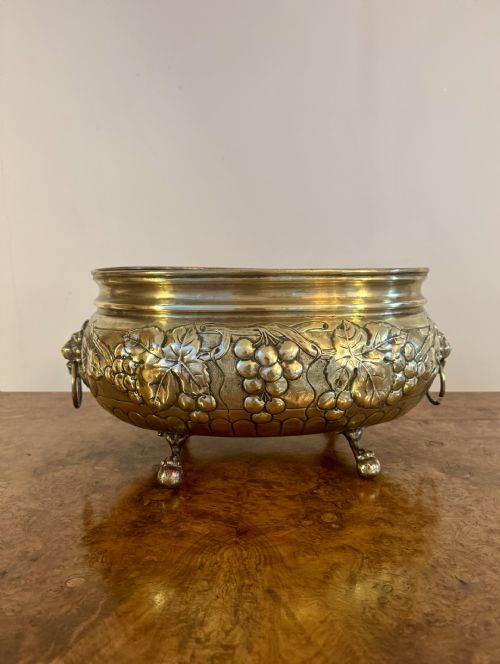
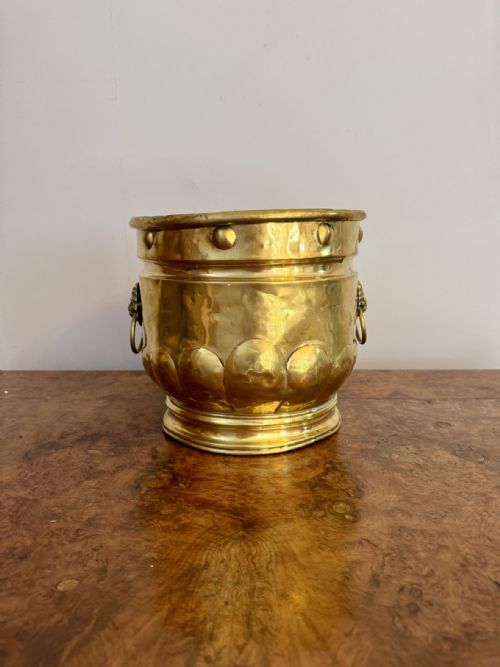
A brass indoor plant holder serves as a decorative vessel designed to display foliage within domestic rooms, appearing in forms such as jardinieres, cachepots, planter stands, and waste bins. Buyers browsing this selection encounter vessels spanning from the Georgian period through the Victorian and Edwardian eras up to the early twentieth century. These objects function primarily to conceal utilitarian flowerpots while protecting interior surfaces from water and soil.
The assortment on this page includes cylindrical planters, square forms, and footed vessels, alongside taller jardiniere stands. Materials extend beyond pure brass to incorporate copper, cast iron, oak, mahogany, and tin, reflecting diverse manufacturing origins from English workshops to continental Europe and India. Styles range from simple utilitarian designs to ornate Gothic Revival, Art Nouveau, and Aesthetic Movement expressions.
How they were made
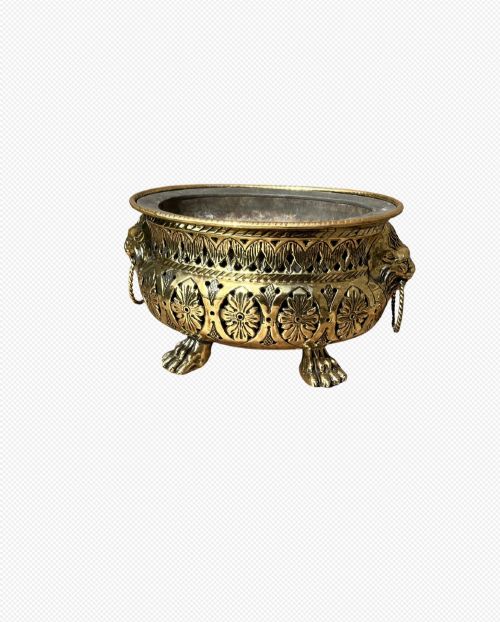
Makers utilised sheet brass and copper, frequently shaping the metal through hammering, spinning, or piercing techniques to create intricate patterns across the body. Many vessels incorporate applied decorative elements such as lion mask handles or cast iron framework, joining different metals within a single piece. Woodwork also plays a structural role in coopered barrel stands and plant stands utilising oak, mahogany, and box tree.
Construction methods vary between hand-beaten metalwork and mechanically produced cylindrical bodies with soldered seams. Pierced designs required careful hand-sawing or punching through the brass plate to form delicate fretwork galleries around the rim or base. Interior liners of tin or mixed metal were often fitted to contain moisture and protect the outer structure from dampness.
Brass Indoor Plant Holder Retail Price Guide 2026
Typical asking prices for brass indoor plant holder among the pieces listed under this phrase on Sellingantiques today, from the lower quarter to the upper quarter. They describe what is for sale here now, not the wider market.
The available selection includes forms designated as jardinieres, cachepots, and plant stands, spanning the nineteenth and early twentieth centuries.
What varies in quality
The weight of the metal and the thickness of the brass sheet dictate the structural integrity and longevity of each vessel. Thicker gauge brass resists denting and supports heavy earth and plants without buckling under pressure, whereas lighter vessels feel flimsy to the touch. The calibre of hand-finishing, visible in the crispness of hammered textures and the precision of pierced fretwork, separates standard items from exceptional examples.
Integrity of construction across mixed materials, such as tight coopered staves in wooden barrel stands or secure riveting on metal handles, indicates superior craftsmanship. The sophistication of stylistic details, including distinct Art Nouveau contours or finely cast lion mask handles, contributes to the overall presence of the piece. Preservation of original surface patination without aggressive cleaning further distinguishes better-kept specimens.
The Brass Indoor Plant Holder Glossary
- Jardiniere
- A large ornamental pot or stand for holding flowers or plants, typically manufactured from ceramic or metal. These vessels sit on tables or floor stands.
- Cachepot
- An ornamental flowerpot cover designed to conceal a plain inner plant pot, lacking drainage holes in the base. The term translates from French as hiding pot.
- Aesthetic Movement
- A late nineteenth-century design style that emphasised visual beauty over narrative or moral content in the decorative arts. Objects from this movement often display refined simplicity or Japanese-inspired motifs.
- Coopered
- Built from wooden staves joined edge to edge and bound with metal hoops, much like a barrel. This technique appears in Edwardian and Georgian plant stands.
- Pierced brass
- Sheet metal decorated with patterns created by cutting or punching openings through the material. This technique allows light to pass through the decorative frieze of a planter.
Brass Indoor Plant Holder: Frequently Asked Questions
What is a brass indoor plant holder?
A brass indoor plant holder is a decorative container designed to house potted plants inside a home. These vessels hide standard clay pots and protect furniture from water.
They appear in various styles from the Victorian and Edwardian periods, functioning as table centrepieces or floor-standing jardiniere stands.
How do I protect the inside of a brass planter?
Many antique brass planters feature removable metal liners, such as tin or copper inserts, designed to hold moisture. Placing a plastic saucer inside the vessel prevents water from sitting directly against the antique brass.
Lining the bottom with gravel also aids drainage and keeps plant roots clear of standing water.
How do I date a brass plant stand?
Dating a brass plant stand involves examining its manufacturing techniques, materials, and stylistic details. Pieces from the Georgian era often utilise turned hardwoods like oak or mahogany alongside simple metal bands.
Victorian and Edwardian examples frequently display specific stylistic markers like Gothic Revival motifs, Aesthetic Movement lines, or Art Nouveau whiplash curves.
Can I plant directly into an antique jardiniere?
Planting directly into an antique metal jardiniere is generally discouraged because moisture and soil acidity can corrode the brass or copper over time. Using an inner pot ensures the metal container remains dry and preserves its structural integrity.
If the piece lacks a liner, a waterproof saucer placed inside offers similar protection.
What styles of brass plant holders exist?
Brass plant holders span several distinct decorative styles produced during the nineteenth and early twentieth centuries. Victorian and Edwardian examples range from plain cylindrical vessels to ornate pieces featuring pierced patterns and lion mask handles.
Other notable designs include Art Nouveau pieces with flowing organic forms, Aesthetic Movement vessels, and Anglo-Indian cachepots.