
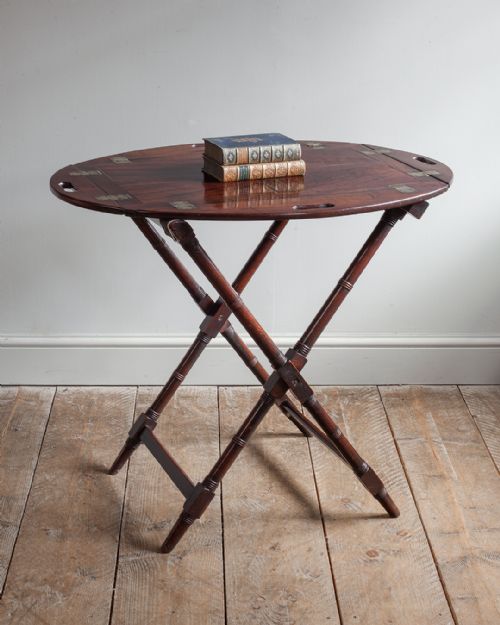


Brass Hinged Table
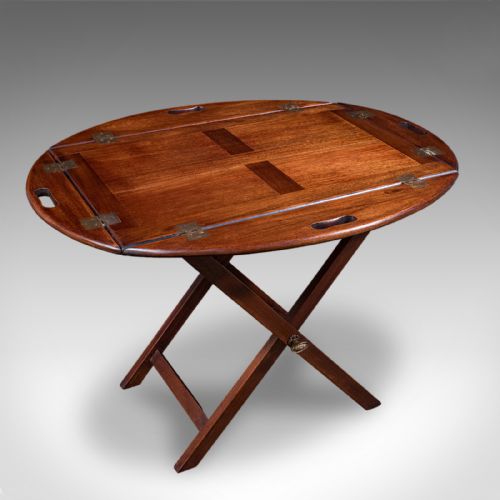
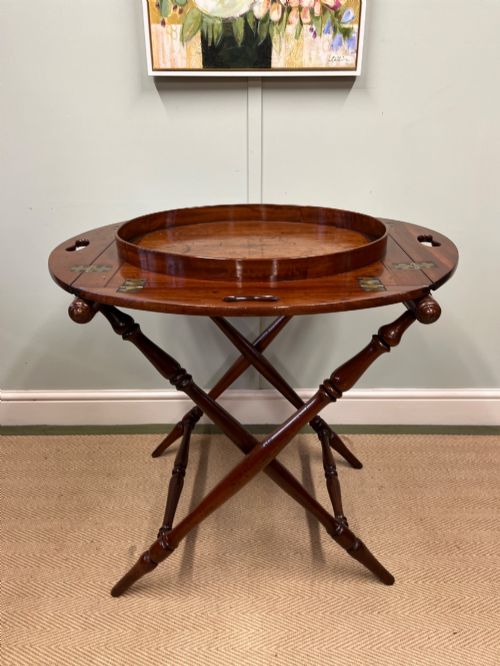
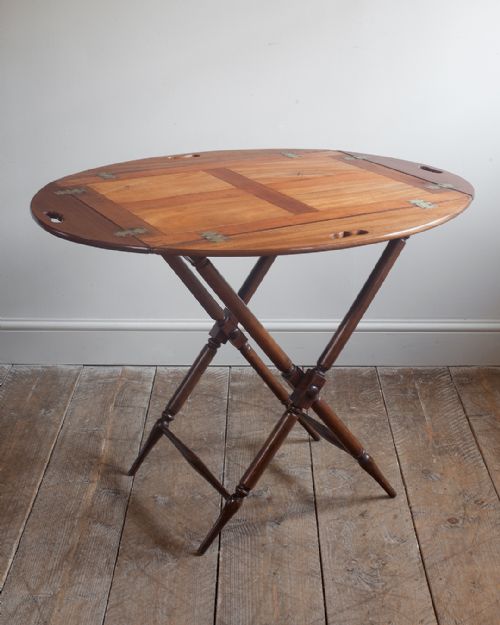
These brass hinged table pieces offer portable utility and traditional surface space, combining timber trays with folding stands.
Brass Hinged Table
A brass hinged table serves as a versatile piece of furniture designed for flexible placement in domestic spaces.
Buyers seeking a brass hinged table most frequently encounter butler's tray tables and serving stands originating from the eighteenth, nineteenth, and early twentieth centuries.
These examples span periods from the Georgian era through the Victorian period, Edwardian times, and into the 1930s, utilising forms such as oval trays on stands, coffee tables, and occasional tables.
How they were made
Cabinet makers constructed the primary surfaces using mahogany, oak, and Cuban mahogany, often incorporating brass hinges and fixtures to allow the tray sides to drop or fold.
Stands were fashioned as folding or fixed supports, sometimes utilising canvas webbing alongside timber to support the removable tray tops securely.
Listings feature items spanning the 18th century, Georgian era, 19th century, Regency period, Victorian era, Edwardian period, and 1930.
What varies in quality
Quality differences stem from the selection of timber, such as figured Cuban mahogany versus standard mahogany, and the precision with which brass hinges are integrated into the tray joints.
The sophistication of the stand construction, whether a simple folding frame or a refined George III base, marks the distinction between utilitarian items and finer pieces.
The Brass Hinged Table Glossary
- Butler's tray
- A removable wooden tray with hinged sides, originally designed for carrying silver and glassware.
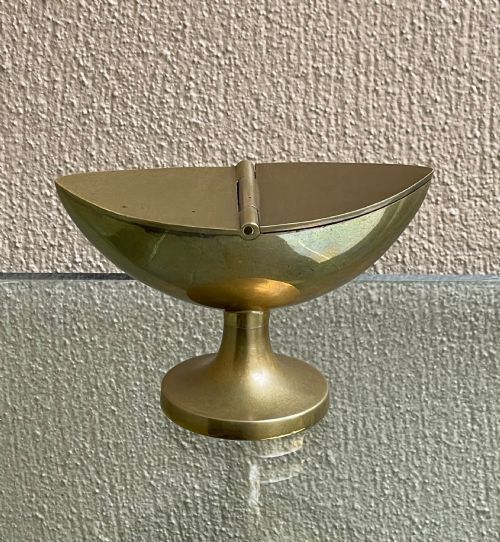
- Navette
- A boat-shaped decorative form seen in certain Georgian boxes and small items.
- Cuban mahogany
- A dense, richly grained hardwood utilised in high-status furniture during the eighteenth and nineteenth centuries.
- Drop-flap
- A hinged section of a tabletop or tray that folds downwards to save space or alter the surface shape.
Brass Hinged Table: Frequently Asked Questions
How do I date a mahogany tray?
Dating involves examining the timber grain, construction methods, and the style of the brass hardware. Georgian examples often feature lighter mahogany and hand-cut dovetails.
Later pieces from the Victorian and Edwardian periods display different joinery techniques and heavier proportions compared to eighteenth-century work.
Are the trays removable?
Trays on these tables are designed to lift off their folding or rigid stands completely. This allowed servants to carry the tray independently of its base.
When placed back on the stand, the weight of the tray and any contents keep it stable during use.
What woods were used?
Mahogany is the predominant timber found in these listings, including specific varieties such as Cuban mahogany. Oak also appears in certain pieces.
Secondary materials include brass for hinges and canvas webbing for support within the stands.