



Brass Hexagonal Light
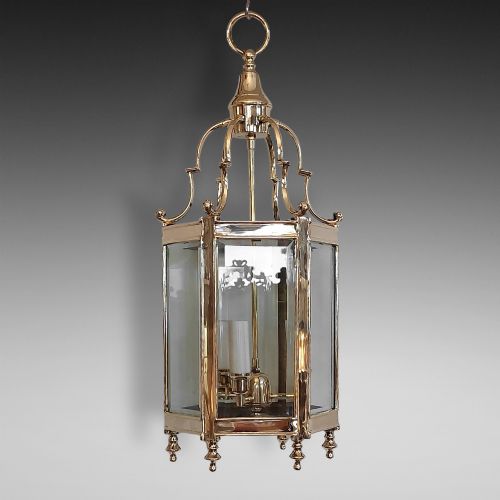
A brass hexagonal light brings architectural geometry and warm metalwork to an entrance hall, drawing the eye upwards with its six-sided form.
Brass Hexagonal Light
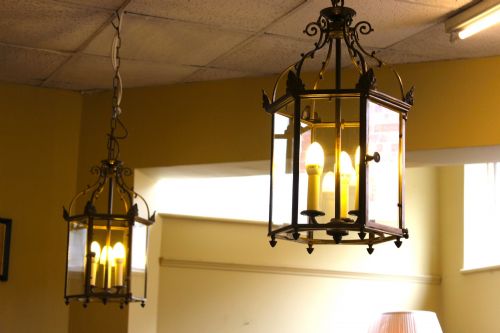
When you search for a brass hexagonal light, you find pieces designed primarily as ceiling pendants, hall lanterns, and wall sconces spanning the Victorian, Edwardian, and early twentieth-century periods. These six-sided fixtures hang in hallways, porches, and reception rooms to cast directional or ambient illumination through their metallic frames.
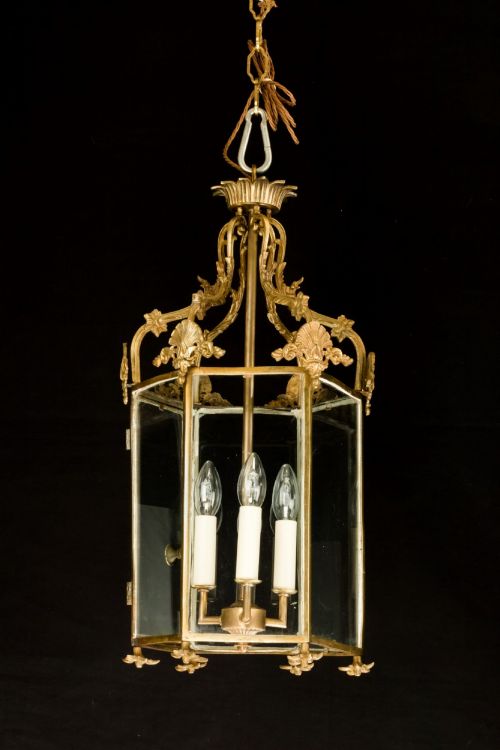
The version you are most likely to meet on this page is the hanging hall lantern, often constructed with panels of glass held within a brass armature. These fixtures range from simple nineteenth-century utilitarian designs to elaborate French styles referencing eighteenth-century design traditions.
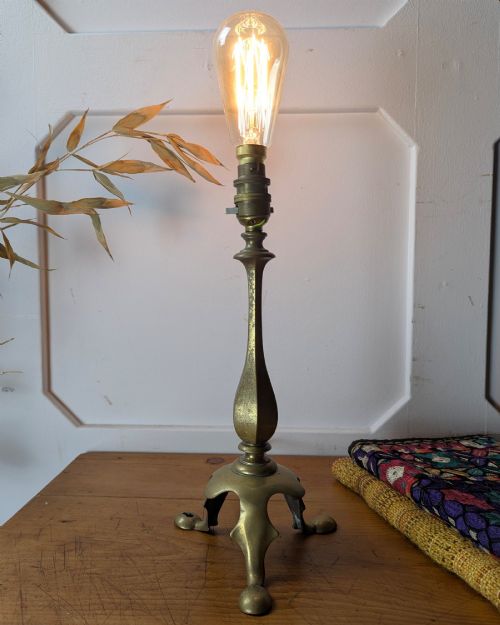
Beyond hanging lights, the selection includes related domestic items sharing the same geometric form, such as baluster table lamps and heavy candlesticks. Each piece demonstrates how metalworkers utilised the six-sided shape to create depth and structure in interior illumination.
Materials and construction methods
The primary material underpinning these lights is brass, frequently worked alongside copper, steel, and gilded bronze to achieve varied surface textures and tones. Metal sheets and cast components form the rigid skeleton, shaped into six distinct panels that lock together to carry the weight of the fixture.
Glass panels insert directly into the metal frames, utilising bevelled, stained, or opaque panes to diffuse the light from internal bulbs or candles. Many examples incorporate soldered joints, decorative casting, and patinated finishes that reveal the hand of the maker in the final assembly.
The listings span Victorian, Edwardian, and 1920s periods, incorporating brass, copper, steel, and gilded bronze.
Distinguishing quality across the range
Quality in these lanterns rests upon the weight of the metal casting and the precision of the joinery where the six sides meet. Superior examples feature heavier gauge brass, crisp decorative detailing, and substantial cast mounts rather than thin pressed metal.
The integration of glass also separates standard pieces from finer ones, with bevelled panes, stained glass inserts, or hand-formed leaded sections indicating higher workshop standards. Original surface patination and intact structural hardware further elevate the standing of a piece.
The Brass Hexagonal Light Glossary
- Baluster
- A moulded shaft or pillar with a swelling base, often seen in the stems of table lamps and candlesticks.
- Bevelled glass
- Glass panes with cut and polished edges that refract light at sharp angles, adding visual depth to lantern panels.
- Ormolu
- Gilded bronze or brass applied to decorative mounts and decorative fittings, popular in French neoclassical designs.
- Rococo
- An ornate artistic style characterised by asymmetric scrolls, curved lines, and naturalistic plant motifs seen in nineteenth-century French lanterns.
- Gilded bronze
- Bronze metal coated with a thin layer of gold leaf or applied gold wash, offering a rich, enduring metallic sheen.
Brass Hexagonal Light: Frequently Asked Questions
Where should I hang a hall lantern?
A brass hexagonal light suits entrance halls, vestibules, and stairwells where its geometric shape can be viewed from multiple angles. Hanging the fixture centrally allows the glass panels to cast patterned shadows across surrounding walls.
Ensure adequate clearance beneath the lantern for foot traffic, particularly in smaller hallways or narrow corridor spaces.
How do I date an antique lantern?
Dating relies on examining the assembly methods, screw threads, and wiring channels integrated into the brass frame. Victorian and Edwardian examples often feature heavier castings and distinct hand-finished components compared to later production.
Stylistic cues, such as neoclassical motifs or Regence revival details, also help anchor the piece within a specific nineteenth or early twentieth-century period.
Can these lights be rewired for modern homes?
Most antique hanging lanterns accommodate modern electrical components and can be adapted by a qualified electrician to meet current safety standards. Rewiring preserves the historic exterior while ensuring the internal lamp holders function reliably.
Discuss wiring options with your electrician to maintain the original height adjustments and ceiling rose fixings where possible.
What is the difference between brass and ormolu?
Brass is an alloy of copper and zinc with a natural golden hue that develops a darker patina over time. Ormolu specifically refers to gilded metal mounts, where a layer of gold is applied to a bronze or brass base to create a bright, non-tarnishing finish.
Pieces described as ormolu typically exhibit a more refined, golden surface reflectance than standard polished brass.