


Brass Helmet Coal Bucket
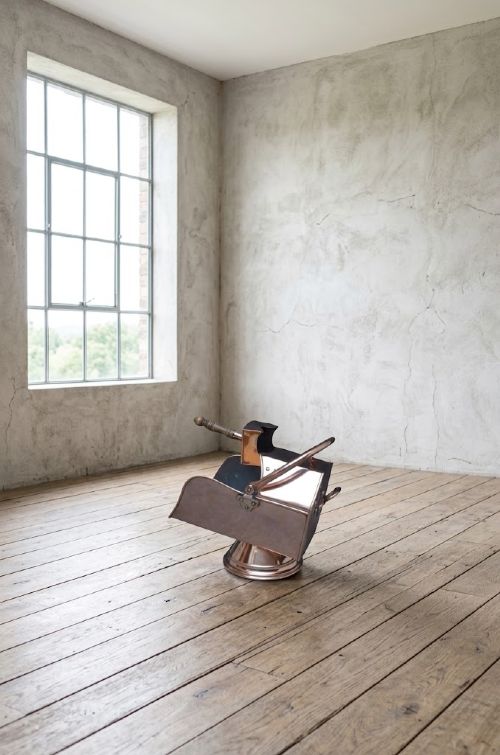
A brass helmet coal bucket brings a gleaming, flared silhouette to the fireside, designed to hold and pour fuel with practical grace.
Brass Helmet Coal Bucket
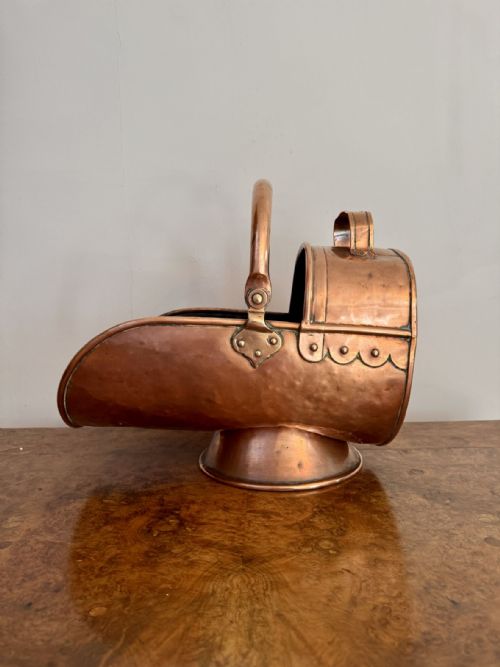
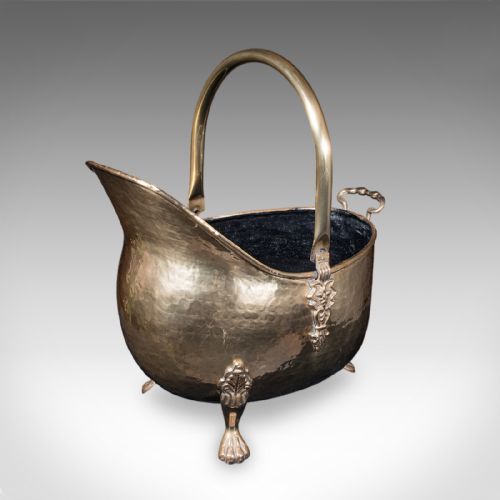
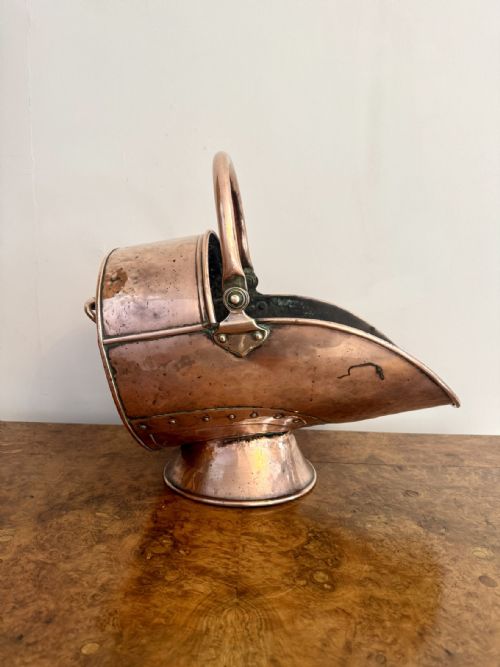
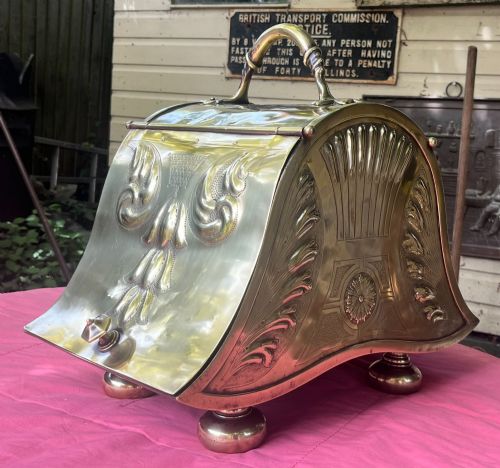
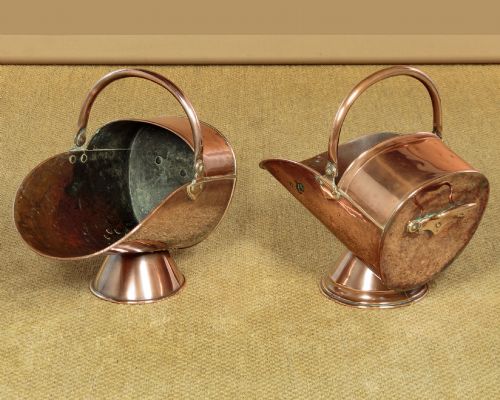
A brass helmet coal bucket is a utilitarian fireside vessel shaped with a high, sloping back and a flared mouth, designed for carrying and tipping coal onto a domestic fire. These containers appear most frequently in Victorian and Edwardian iterations alongside earlier George III and Regency examples.
The form relies on a sturdy swing handle above a stable base, often resting on small feet or a stepped plinth. While primarily constructed from polished brass, many pieces combine copper bodies with brass mounts, handles, and shovels.
How They Were Made
Metalworkers formed these vessels using sheet brass and copper, joining the seams with dovetailing, brazing, or heavy rivets to withstand the weight of heavy fuel. Handles and feet were cast separately in brass and attached securely to the main body.
Makers often applied surface decoration through hand embossing, planishing, or polishing to achieve a bright, reflective finish on the metal.
What Varies in Quality
The quality of a brass helmet coal bucket rests on the weight of the metal gauge and the integrity of its construction, distinguishing solid, heavy pieces from lighter, flimsy alternatives. Thicker sheet brass and robustly cast handles endure regular handling and lifting without warping.
Refinement in the detailing of the hand-embossed motifs, the crispness of the casting on the feet, and the survival of the original matching shovel mark the difference between standard production and superior workshop output.
Benham And Froud·Henry Loveridge
The Brass Helmet Coal Bucket Glossary
- Helmet
- A vessel shape featuring a high back and a sloping, flared front lip reminiscent of historic headwear. This design directed the flow of coal smoothly into the hearth.
- Planishing
- A metalworking technique involving light hammering with a flat-faced tool to smooth the surface and harden the metal. It leaves a subtle, attractive texture across the copper or brass body.
- Brazing
- A method of joining metals by melting a filler metal into the joint at high heat. This creates a strong, permanent bond along the seams of the bucket.
- Embossing
- The process of raising a design in relief from the surface of the sheet metal using punches from the reverse side. This added decorative patterns of foliage or fluting to the coal scuttle.
Brass Helmet Coal Bucket: Frequently Asked Questions
How were these buckets used?
These vessels stood beside the fireplace to store and transport coal from the cellar to the hearth.
The flared helmet shape and attached handle allowed the user to tip fuel directly onto the fire with control.
What periods do these pieces date from?
The available pieces span the George III, Regency, Victorian, and Edwardian eras.
Most surviving examples date from the nineteenth century, particularly the decades around eighteen-eighty.
How do I clean polished brass?
Polished brass requires a gentle cloth and a mild metal cleaner suitable for historic items.
Avoid harsh abrasives that can wear away the original surface texture and finish.
Are original shovels common?
Some buckets survive with their matching brass shovels tucked into a side bracket.
Finding a complete set adds significantly to the character of the fireside accessory.