

Brass Hearth Dogs
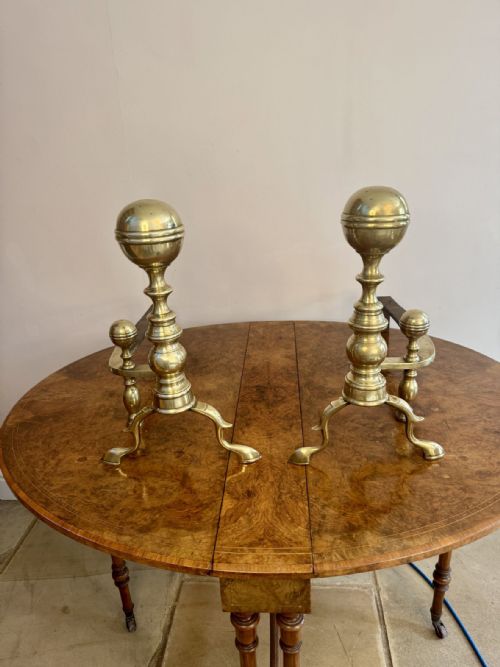
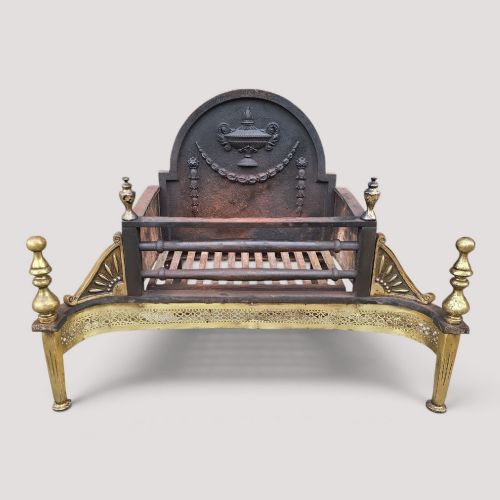
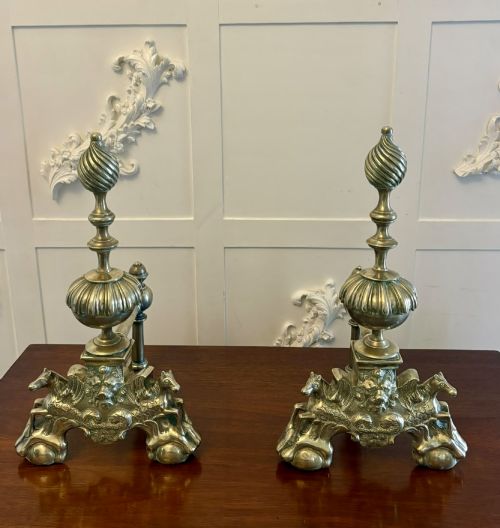
Brass hearth dogs anchor an open fire with sturdy metalwork and polished metal fronts, holding logs safely in the grate.
Brass Hearth Dogs
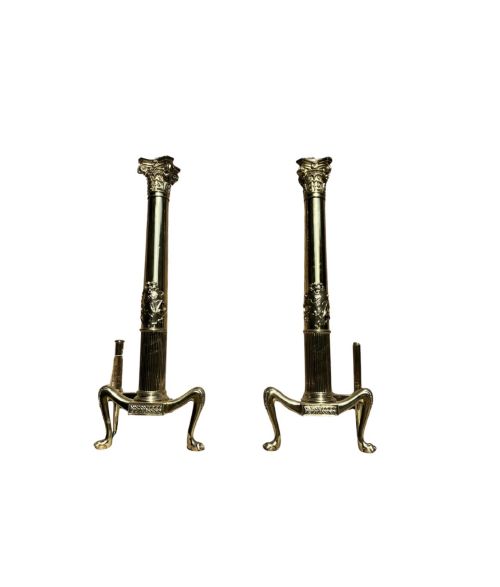
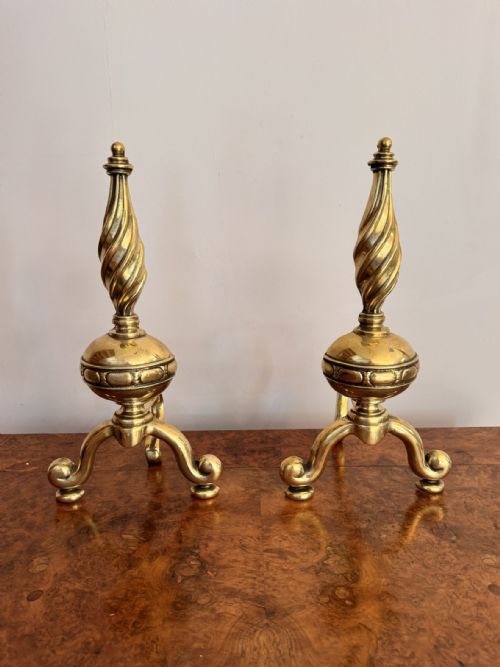
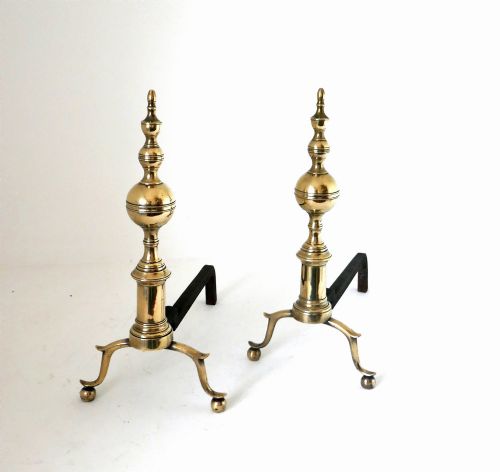
Brass hearth dogs serve as decorative and functional supports placed inside an open fireplace to hold logs above the hearth floor. When you search for brass hearth dogs, you encounter pairs of upright metal supports designed to manage wood fires while adding a gleam to the chimney breast. The selections span the nineteenth century through the early twentieth century, showing diverse influences from Georgian restraint to Victorian exuberance.
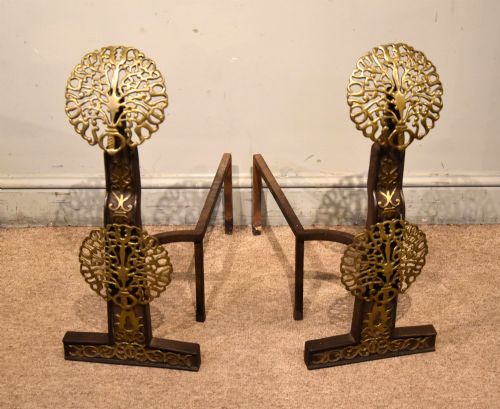
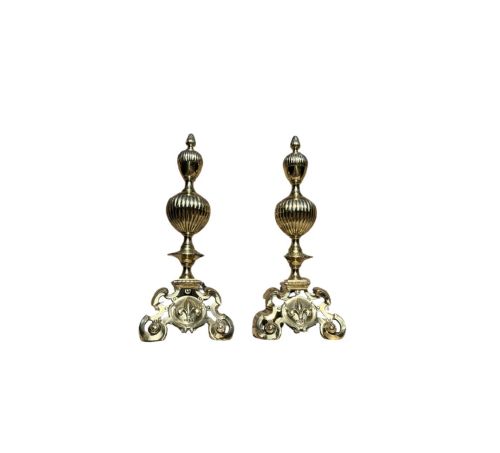
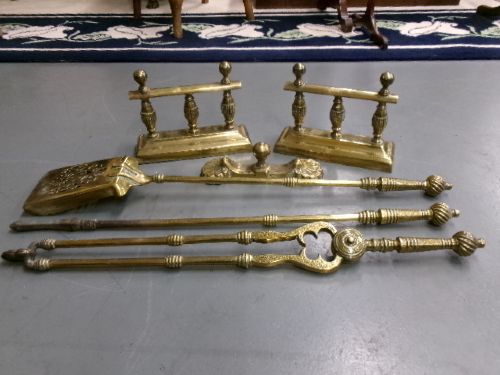
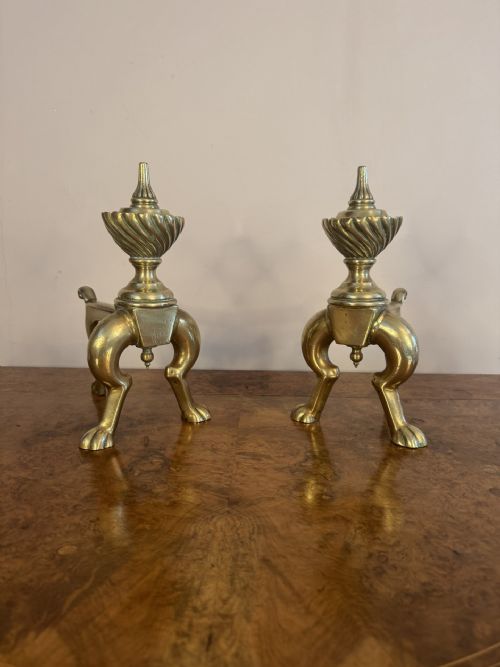
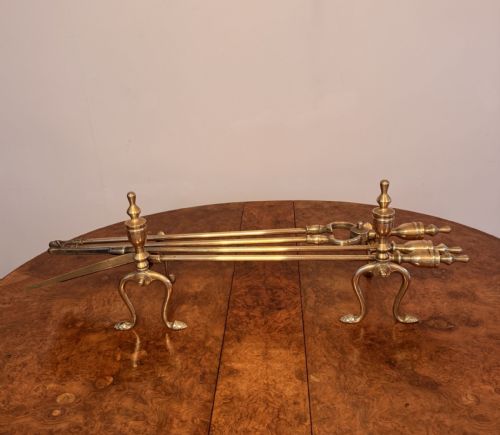
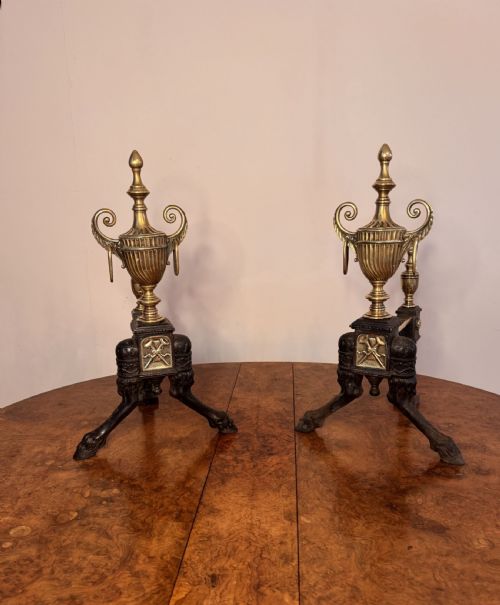
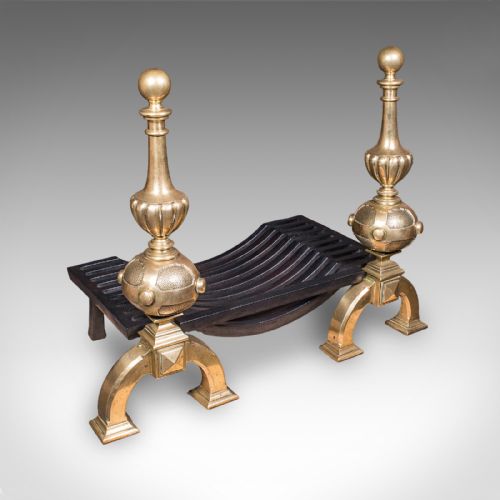
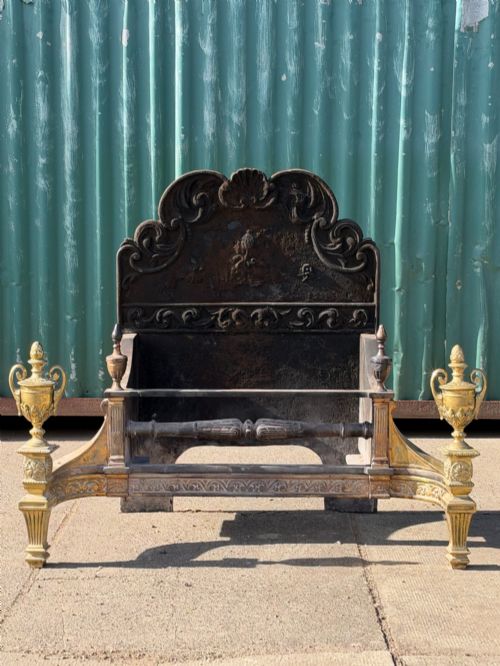
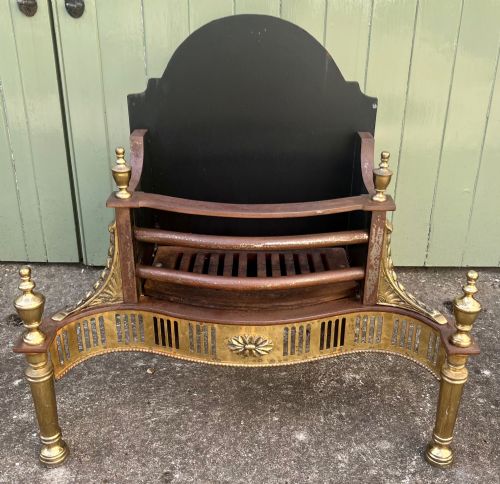
Most examples you meet on this page date from the Victorian era and the late nineteenth century, often cast in solid brass or combined with iron. Pairs frequently appear alongside matching fire irons, fenders, or grates to complete a fireplace arrangement. Styles range from simple turned shafts to ornate French Rococo designs, Aesthetic Movement sunflower motifs, and Gothic revivals.
Materials and Construction
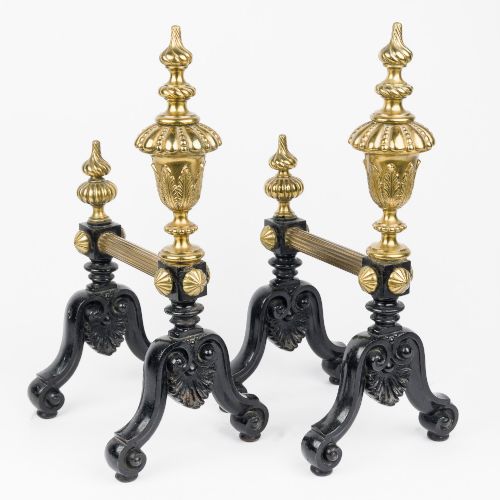
Foundries manufactured these pieces using durable combinations of brass, cast iron, and wrought iron, pairing decorative front standards with heavy iron billet bars that endured intense heat. Artisans utilised sand casting techniques to shape intricate details, producing solid brass or cast bronze components that could be polished to a bright finish or parcel-gilt.
Makers integrated ormolu mounts, steel accents, and bronze elements on finer French and English examples to introduce varied textures and contrasting tones. The heavy iron portions provided structural strength for supporting fuel, while the brass and ormolu sections delivered the polished visual presence expected in a principal reception room.
Brass Hearth Dogs Retail Price Guide 2026
Typical asking prices for brass hearth dogs among the pieces listed under this phrase on Sellingantiques today, from the lower quarter to the upper quarter. They describe what is for sale here now, not the wider market.
Listings feature brass, cast iron, and bronze materials spanning the Georgian, Victorian, and Edwardian periods.
Evaluating Quality and Detail
Quality rests in the crispness of the casting and the weight of the metal, where finer pairs exhibit sharply defined ornamentation rather than softened or blurred edges. Substantial metal thickness distinguishes superior pieces, ensuring the upright standards and billet bars withstand daily use without bending or cracking under heat.
Design sophistication further separates standard production from exceptional work, particularly when makers incorporate named artistic styles like the Aesthetic Movement or deploy skilled chasing and gilding on bronze and ormolu mounts. The presence of makers' marks or identifiable workshop patterns adds historical weight to the physical construction.
Thomas Jeckyll·William Tonks·James Cartland and Sons·Christopher Dresser
The Brass Hearth Dogs Glossary
- Andiron
- A horizontal iron bar supported by an upright decorative standard, used in pairs to hold logs in an open fireplace. They are also known historically as fire dogs or firedogs.
- Chenet
- The French term for an andiron, frequently denoting ornate decorative metalwork in brass, bronze, or ormolu dating from the eighteenth and nineteenth centuries.
- Ormolu
- Gilded bronze, where finely ground gold is applied to a bronze base using mercury, creating a bright golden surface often seen on French hearth accessories.
- Fender
- A low metal guard placed on the hearth in front of the fire to contain rolling embers and sparks, frequently matched stylistically with a pair of hearth dogs.
Brass Hearth Dogs: Frequently Asked Questions
What are brass hearth dogs used for?
These pieces support logs inside an open fireplace, elevating the wood to allow air circulation beneath the fire for better combustion.
They also protect the back and sides of the hearth while providing a decorative focal point in the room.
How do I clean brass hearth dogs?
Wipe the metal surfaces gently with a soft cloth to remove dust and soot accumulation gathered from regular fires.
Avoid harsh chemical abrasives that strip historical patination, using mild soapy water or specialised brass polish only where appropriate.
Can I use antique fire dogs with a modern fire?
Many pairs remain structurally sound for burning wood if the iron billet bars are thick and free from deep corrosion.
Check the weight and stability of the iron supports before loading fuel onto them in an active hearth.
How do I date a pair of fire dogs?
Examine the casting quality, fastening screws, and stylistic clues such as Victorian Gothic motifs or Aesthetic Movement plant forms.
Compare the metal composition and manufacturing marks against known period production standards to narrow down the decade.