
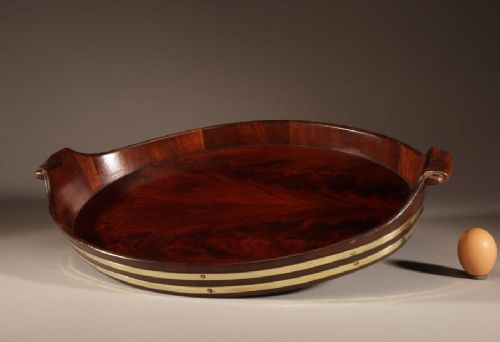
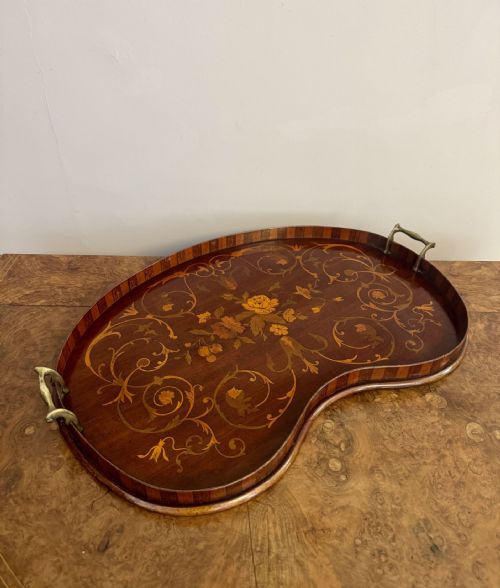

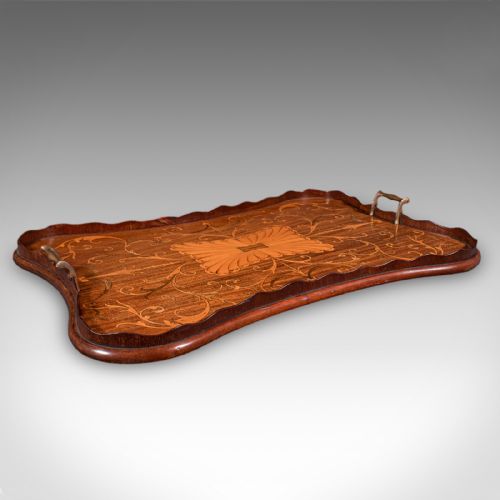
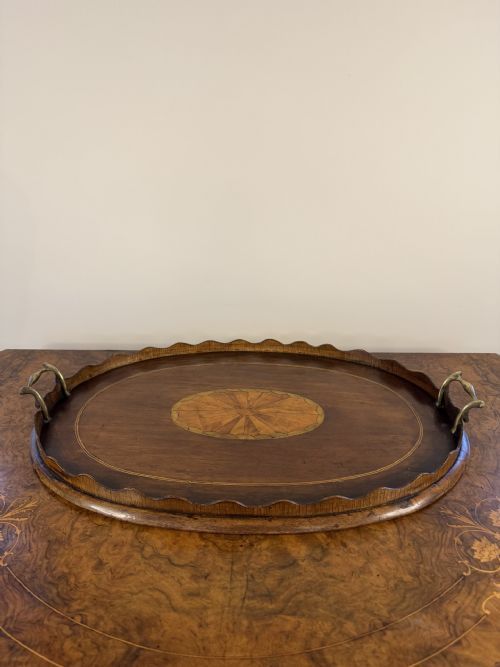
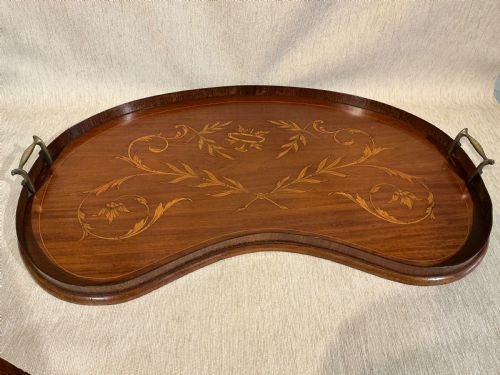


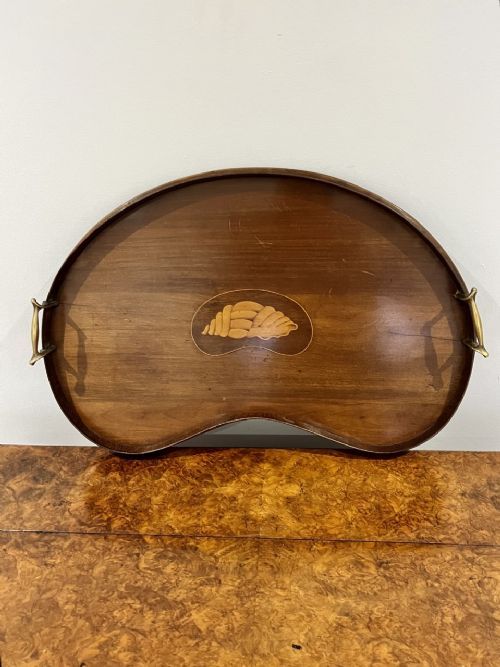


Brass Handle Mahogany Tray
A brass handle mahogany tray combines rich timber with functional metalwork, serving as both a practical hosting piece and a distinguished tabletop.
Brass Handle Mahogany Tray
A brass handle mahogany tray represents a fusion of fine cabinet-making and utilitarian design, originating across periods from the Georgian era through to the Edwardian period. When you search for a brass handle mahogany tray, you encounter serving trays, butler's trays, and occasional tables that incorporate these specific materials.
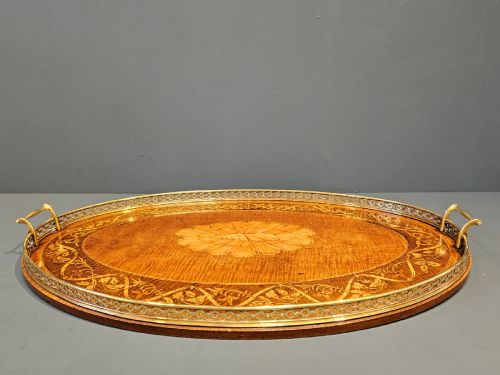
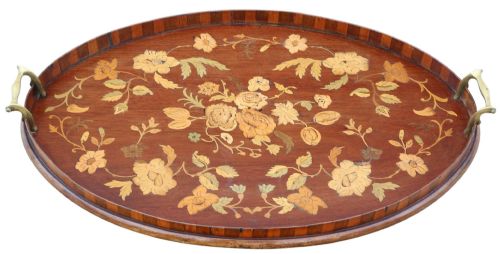
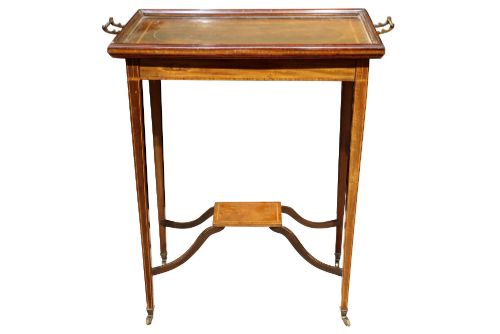
The versions most commonly met on this page date from the Victorian and Edwardian eras, alongside George III and later Georgian revivals. Forms range from simple oval and kidney-shaped serving platters to coopered designs and etagere tray tables.
Originating primarily from English workshops, these pieces often utilise rich hardwoods complemented by contrasting stringing and satinwood inlay. Collectors value them for their dual capacity as decorative items and functional servingware.
Quality and Craftsmanship
The distinction between standard examples and the finest pieces lies in the crispness of the inlay and the weight of the brass hardware. Superior items display tightly fitted marquetry with minimal filler, whereas lesser pieces show simple painted lines or rough veneer joins.
The choice of timber grain significantly impacts visual appeal, with master makers selecting figured mahogany and matching symmetrical veneers across the surface. Substantial, cast brass handles securely integrated into the structure indicate higher workshop standards than thin, stamped metal replacements.
Proportion and finishing define the upper tier of these items, where edges remain smooth and the underside receives the same polishing attention as the display surface. Structural integrity in the gallery edges and handle attachments separates daily utility items from masterwork presentation pieces.
Listings feature pieces spanning from the 18th Century through the Georgian, Victorian, and Edwardian periods, showcasing mahogany, brass, satinwood, and boxwood.
The Brass Handle Mahogany Tray Glossary
- Marquetry inlay
- Decorative woodwork where pieces of contrasting veneer are assembled to form pictorial or geometric patterns. This technique requires meticulous hand-cutting by skilled artisans.
- Kidney-shaped
- A curved, asymmetrical furniture or tray outline resembling a kidney bean. This form gained popularity during the Edwardian period for tea and serving trays.
- Coopered
- Construction method utilising vertical wooden staves bound together, similar to barrel-making. It appears in specialised serving trays and wine carriers.
- Butler's tray
- A portable serving tray featuring hinged or fixed sides, often designed to sit on a folding X-frame stand. They were essential for serving refreshments in large 18th and 19th-century households.
- Etagere
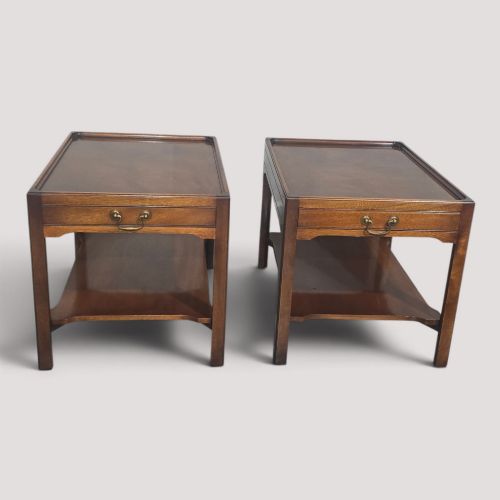
- A piece of furniture consisting of a set of open shelves for displaying small objects. In the context of tray tables, the top surface is frequently removable as a functional tray.
Brass Handle Mahogany Tray: Frequently Asked Questions
How do I clean a mahogany tray?
Maintain the finish by dusting with a dry, soft cloth and occasionally applying a traditional beeswax to nourish the timber. Avoid using harsh chemical cleaners or excess water, which can damage the french polish and loosen veneer.
Keep the brass handles bright by wiping them gently with a dry microfiber cloth. Prevent tarnish buildup without letting abrasive polishes touch the surrounding mahogany.
Can I use these trays for serving?
Many of these pieces were built for afternoon tea and hospitality, making them sturdy enough for careful modern use. Protect the antique polish by using coasters and avoiding hot dishes directly on the wood.
Heavier items and wine carriers function well for display or gentle bedside service. Assess the handle attachment and base stability before carrying liquids across rooms.
How do I date an Edwardian tray?
Edwardian pieces often feature lighter satinwood inlay, kidney shapes, and Sheraton Revival styling typical of the early 1900s. The timber grain tends to be brighter, and the construction methods reflect mass-production techniques beginning to merge with hand-crafting.
Compare the brass hardware style to known period examples. Drawer linings and secondary woods underneath also offer clues to the exact manufacturing decade.
What is a butler's tray?
A butler's tray consists of a large wooden tray with raised sides, originally used by staff to transport food and drink from the kitchens. The sides often featured cut-out handles or hinged flaps that could fold flat.
These pieces sat atop folding wooden stands when in use. Today, they function as versatile coffee tables or occasional stands in domestic settings.