
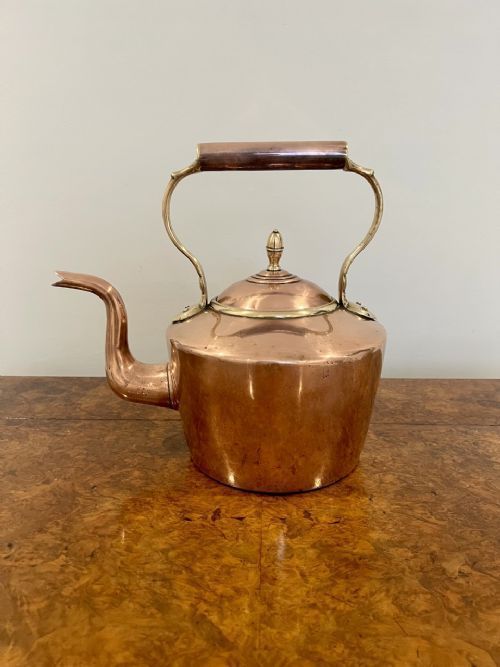
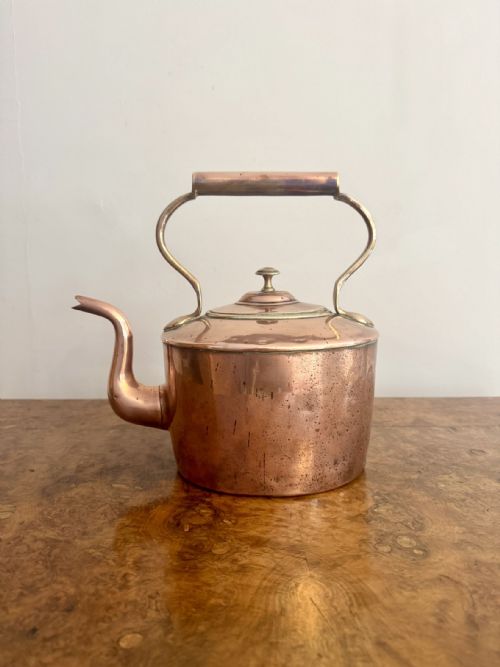
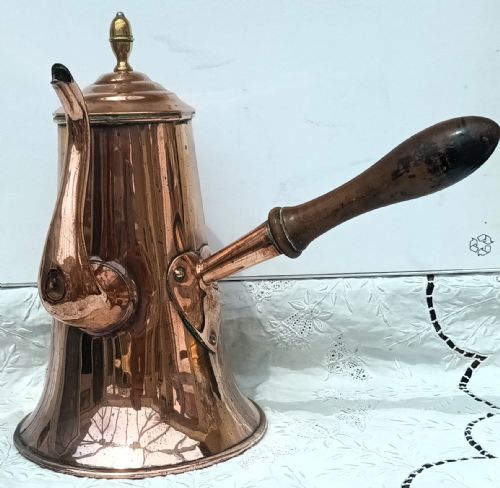
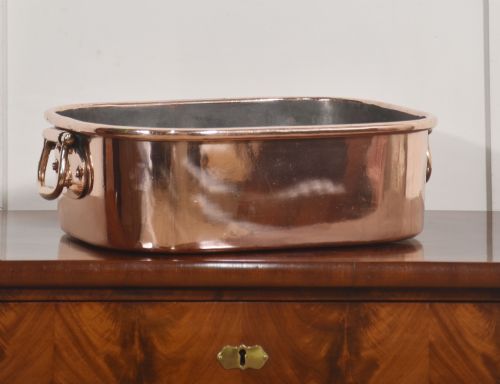
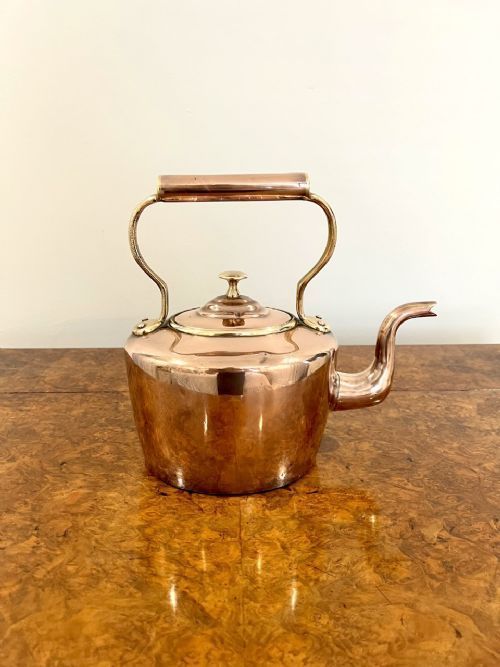


Brass Handle Kettle
These brass handle kettle examples combine useful metalware with period charm, offering a practical centrepiece for any traditional hearth or dresser.
Brass Handle Kettle
A brass handle kettle is a domestic vessel designed for heating water, most frequently encountered in George III, Georgian, and Victorian forms made from copper and brass.
The selection here encompasses standard tea kettles, spirit kettles complete with stands, larger water urns, and fish kettles dating from the eighteenth century through to the early twentieth century.
Buyers will find that standard hearth kettles predominate, alongside specialised items like samovars and preserve warmers associated with fireside interest.
Materials and construction
These pieces primarily utilise copper bodies joined with brass handles, sometimes incorporating iron, tin linings, bronze, or wooden components such as ebonised wood and cane.
Construction techniques involve seaming and shaping metal plates, pairing durable copper bodies with sturdy brass handles and occasionally decorative elements like acorn finials.
Brass Handle Kettle Retail Price Guide 2026
Typical asking prices for brass handle kettle among the pieces listed under this phrase on Sellingantiques today, from the lower quarter to the upper quarter. They describe what is for sale here now, not the wider market.
Object forms span standard tea kettles, spirit kettles with stands, coffee pots, samovars, and fish kettles.
Factors that define quality
Quality rests on the crispness of form and proportion, distinguishing straightforward utility items from exceptional oval or round vessels with well-balanced brass stands.
The integration of materials also dictates standard, with finer examples showing careful attention to handles, finials, and surface polishing across George III and Victorian periods.
William Soutter And Sons
The Brass Handle Kettle Glossary
- Spirit kettle
- A water vessel mounted on a metal stand with an integrated spirit burner underneath for keeping water hot at the table.
- Samovar
- A heated metal container traditionally used to boil and heat water for tea, appearing in large Victorian formats.
- Fish kettle
- An elongated metal pan equipped with a lid and handles, designed specifically for poaching whole fish.
- Preserve warmer
- A wide open vessel, such as a bronze jam pan, utilised over a fireside for boiling fruit and sugar.
- Finial
- A decorative knob or ornament attached to the lid of a kettle or urn.
Brass Handle Kettle: Frequently Asked Questions
How do I date a brass handle kettle?
Dating relies on observing the form, construction methods, and prevailing styles associated with specific periods like George III or Victorian. Georgian pieces often display different handle attachments and body shapes compared to later nineteenth-century examples.
Examining materials like copper, brass, and internal tinning also provides clues to age, alongside any documented maker marks or related archival pieces.
Can I use an antique kettle on a modern stove?
Most antique kettles are constructed from copper with tin linings and are intended primarily for display or decorative fireside interest rather than daily modern culinary use.
Using them on modern hobs can damage the historical metalwork and compromise any internal linings or seams.
What is the difference between a tea kettle and a spirit kettle?
A standard tea kettle is designed to sit directly upon a hearth fire or stove hob to heat water for domestic tasks.
A spirit kettle is elevated in a metal stand above a small burner, allowing it to maintain water temperature during tea service.
How should I clean a copper kettle?
Maintenance typically involves gentle dusting or light cleaning to preserve the natural patina developed over centuries of existence.
Avoid harsh modern abrasive compounds that strip away the authentic surface character and historical wear.