

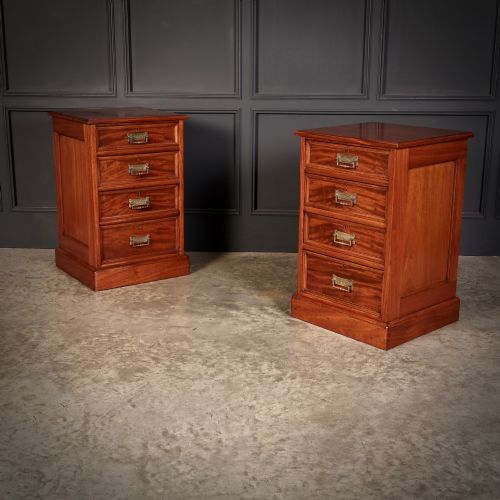
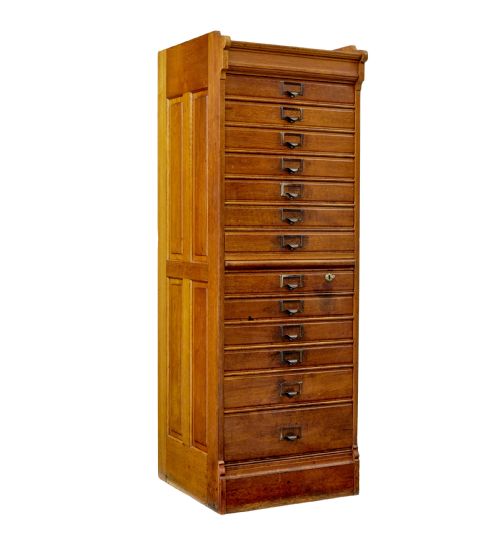
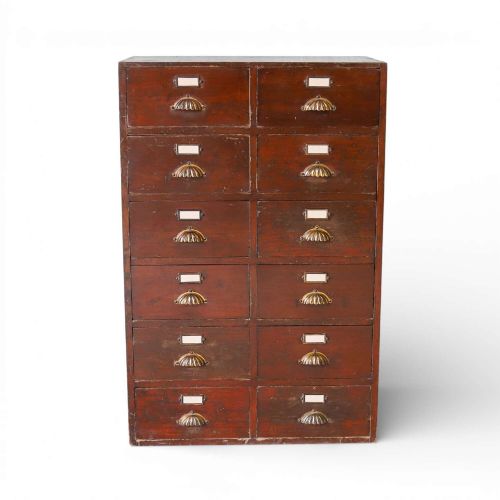
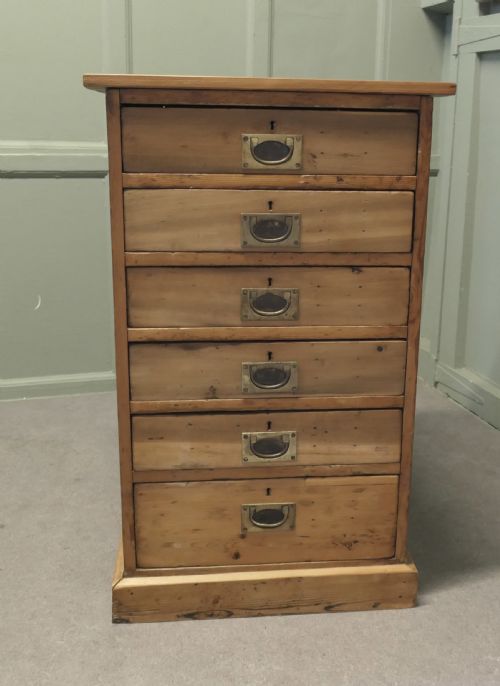
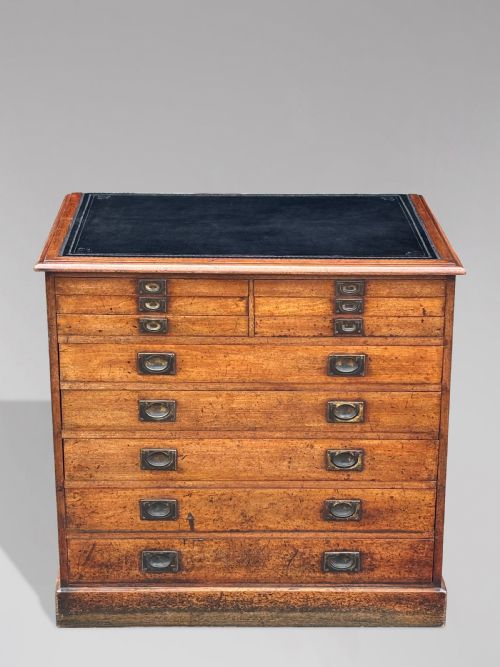
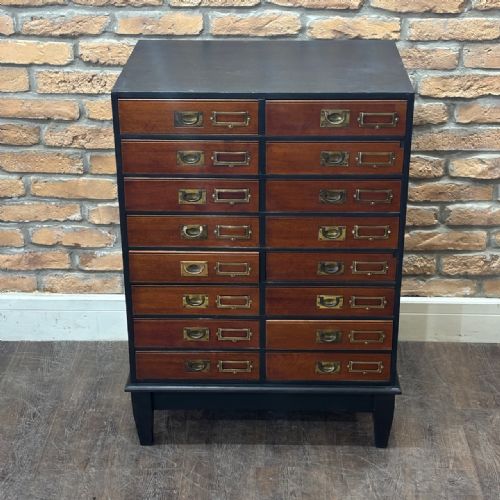
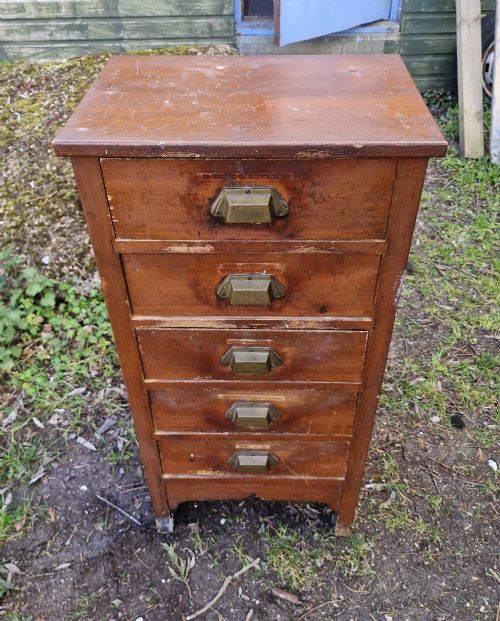
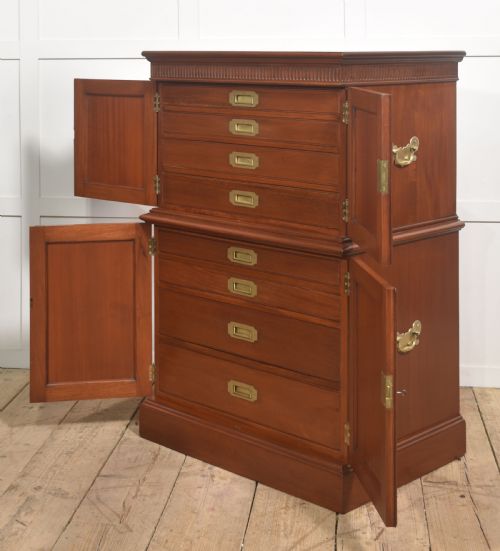


Brass Handle Collector Cabinet
A brass handle collector cabinet organises small treasures or paperwork behind multiple fitted drawers and brass pulls.
Brass Handle Collector Cabinet
A brass handle collector cabinet brings together multi-drawer storage and fitted specimen space from periods ranging from the eighteenth century through to the mid twentieth century. Buyers seeking this phrase encounter formats such as shallow pine filing drawers, mahogany banks of drawers, walnut specimen chests, and haberdashery units.
The objects span Victorian, Edwardian, Georgian, and industrial utility styles, often featuring drop handles, shell pulls, or label holders on the drawer fronts. Many examples serve specialised roles like microscope slide storage, cigar humidors, or jewellers storage.
Originating predominantly in British workshops, these pieces utilise dense timbers like mahogany, walnut, and oak alongside painted pine and satin walnut. The form prioritises function and compartmentalisation, whether constructed for a gentleman's library, a draper shop, or an office workspace.
How they were made
Cabinet makers constructed these pieces using solid timbers such as mahogany, walnut, oak, and pine, frequently applying flame mahogany veneers to primary display surfaces. Dovetail joints secured the drawer constructions, while internal framing provided rigid support for numerous shallow compartments.
Fitted hardware relied heavily on cast brass, taking the form of drop handles, shell pulls, and integrated label holders. Secondary treatments included dark polishing, black and gold painted finishes, and inlaid stringing on Georgian and Victorian bodies.
Brass Handle Collector Cabinet Retail Price Guide 2026
Typical asking prices for brass handle collector cabinet among the pieces listed under this phrase on Sellingantiques today, from the lower quarter to the upper quarter. They describe what is for sale here now, not the wider market.
Listings feature brass, mahogany, walnut, oak, pine, and glass across Victorian, Edwardian, and Georgian periods.
What varies in quality
The distinction between standard utility storage and fine specimen furniture lies in the selection of timbers and the precision of the joinery. Dense woods like burr walnut, flame mahogany, and red walnut elevate the visual depth of a piece.
Hardware execution also defines the tier of craftsmanship, with cast brass shell pulls and matching label holders demonstrating superior workshops compared to basic iron or plain timber alternatives. The integration of locks, secondary internal dividers, and proportional proportions mark out the finest examples.
The Brass Handle Collector Cabinet Glossary
- Shell pull
- A pressed or cast brass handle shaped like a scallop shell, commonly found on nineteenth-century filing drawers and cabinet fronts.
- Wellington chest
- A tall, narrow chest of drawers secured by a locking hinged side stile that fastens over the drawer edges.
- Humidor
- A specialised cabinet or box designed to store cigars at a controlled humidity, often lined with aromatic timbers.
- Haberdashery cabinet
- A multi-drawer display unit originally utilised in draper shops to sort small textiles, ribbons, and sewing notions.
- Specimen case
- A shallow-drawered cabinet built to house natural history collections, geological samples, or microscope slides.
Brass Handle Collector Cabinet: Frequently Asked Questions
What is a collector cabinet used for?
These cabinets house small objects, natural history specimens, documents, or specialised collections within shallow, compartmentalised drawers.
They provide structured organisation while displaying the fine grain of timbers like mahogany and walnut.
How do I date a walnut cabinet?
Dating relies on examining construction methods, timber choice, and hardware styles across Victorian, Edwardian, and Georgian eras.
Hand-cut dovetails, original brass drop handles, and secondary wood choices help anchor the piece to a specific century.
Are these cabinets suitable for modern offices?
Many multi-drawer formats function effectively for filing paperwork, storing stationery, or organising small accessories today.
Their compact footprints and compartmentalised layouts offer practical desktop or floor storage with period character.
What woods were used in these cabinets?
Common timbers include mahogany, walnut, oak, satin walnut, and pine, often finished with brass pulls.
Some examples feature burr walnut or flame mahogany veneers on the primary drawer fronts for enhanced visual texture.