
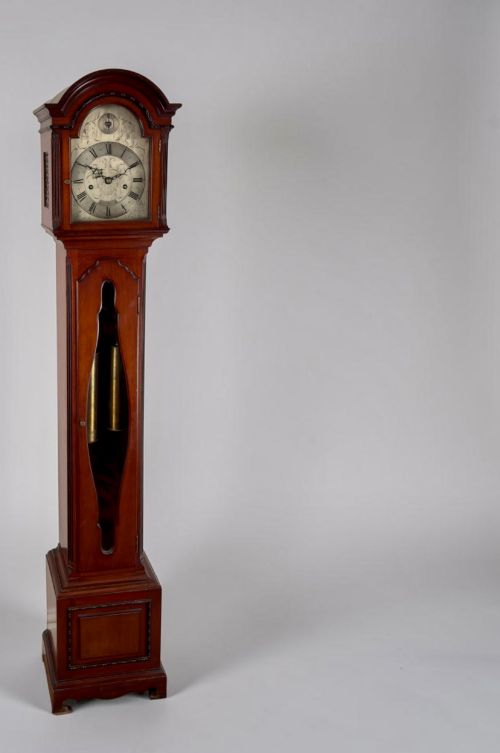
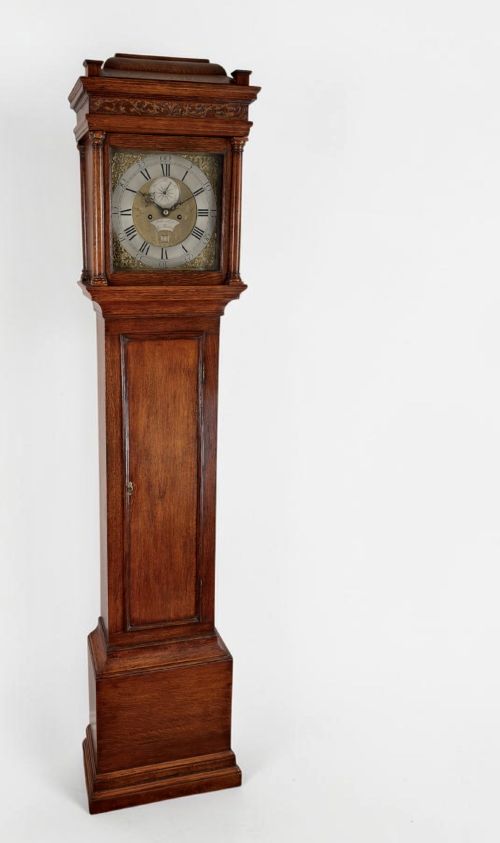
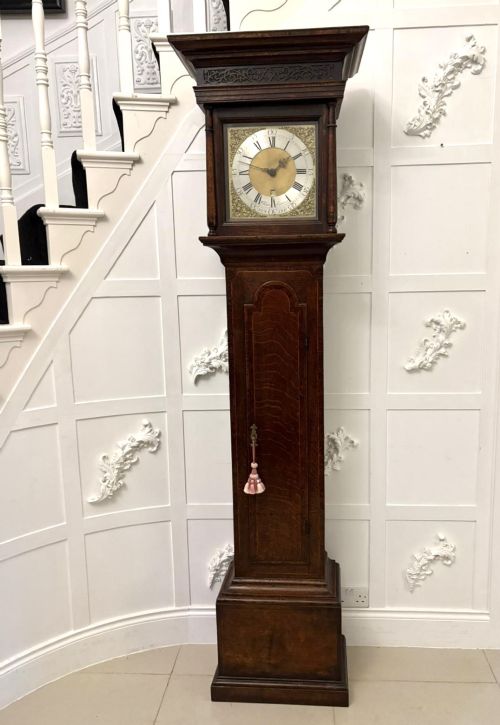
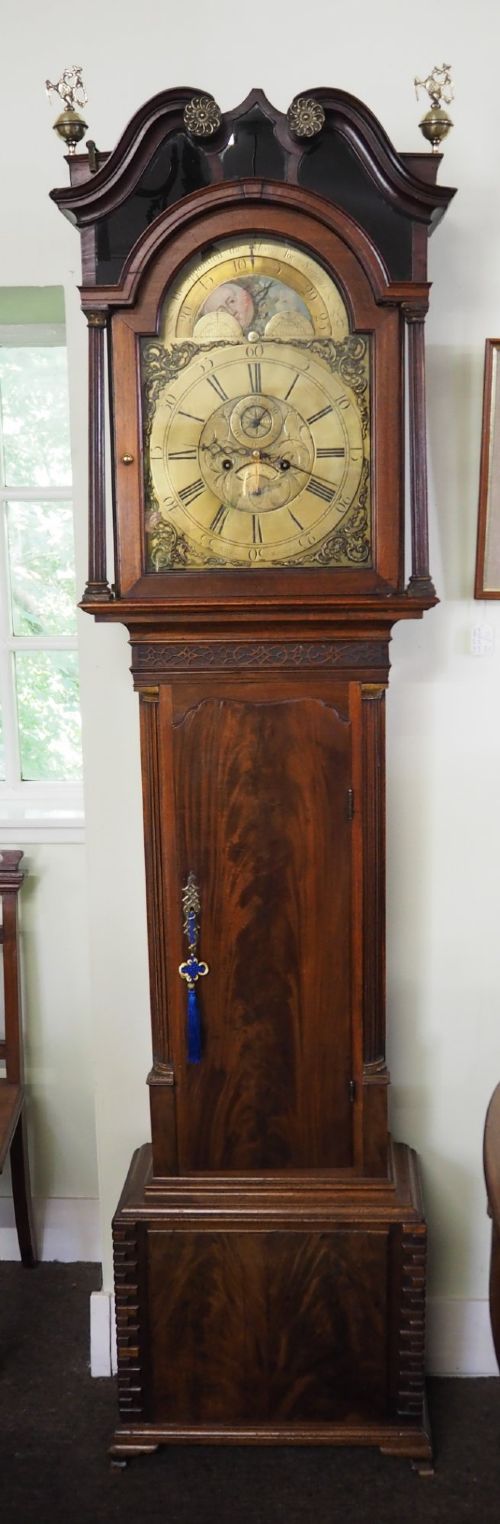
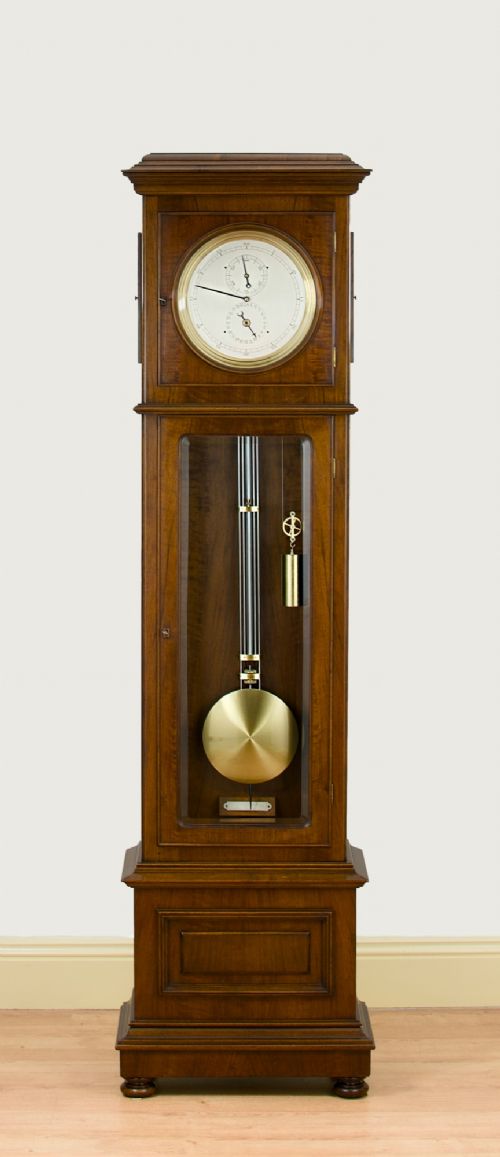
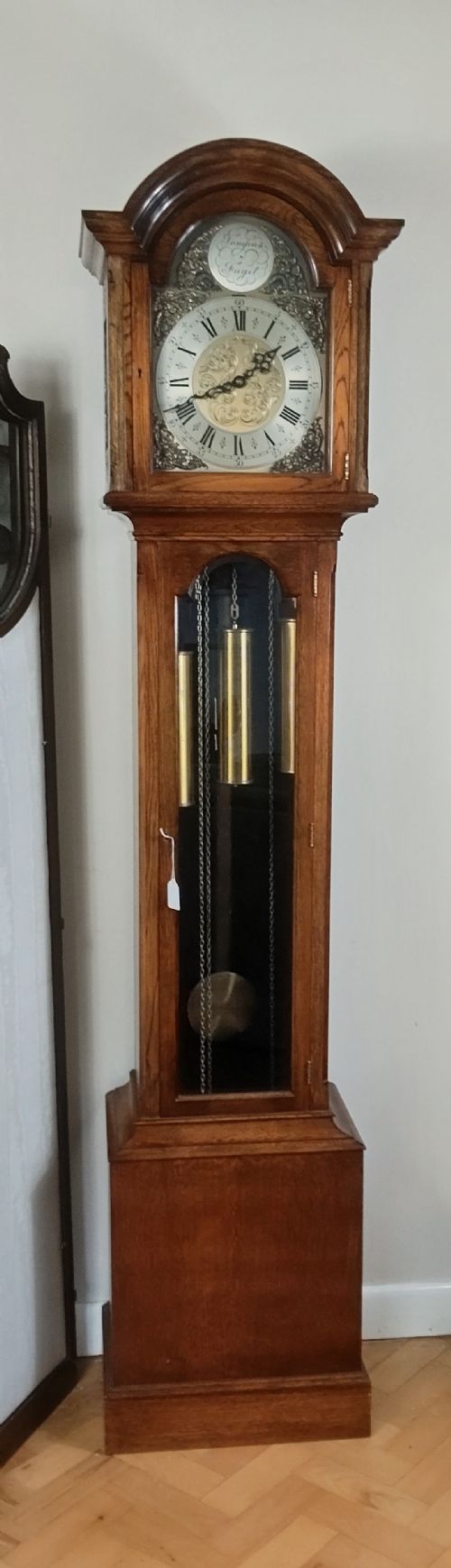


Brass Grandfather Clock Weights
Brass grandfather clock weights keep time moving, turning historical longcase and grandmother clocks into working pieces of domestic machinery.
Brass Grandfather Clock Weights
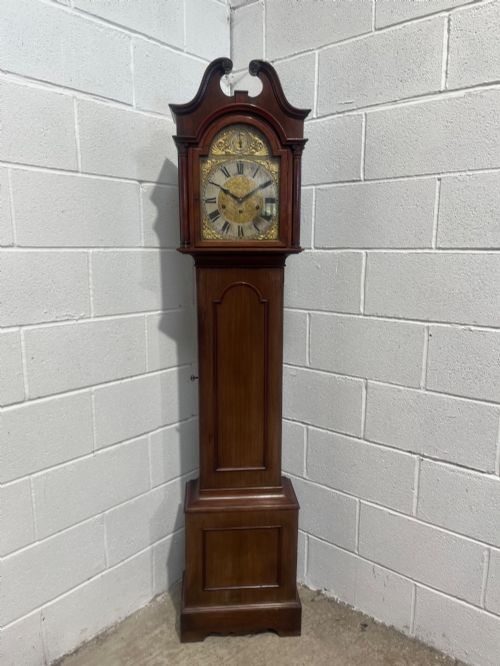
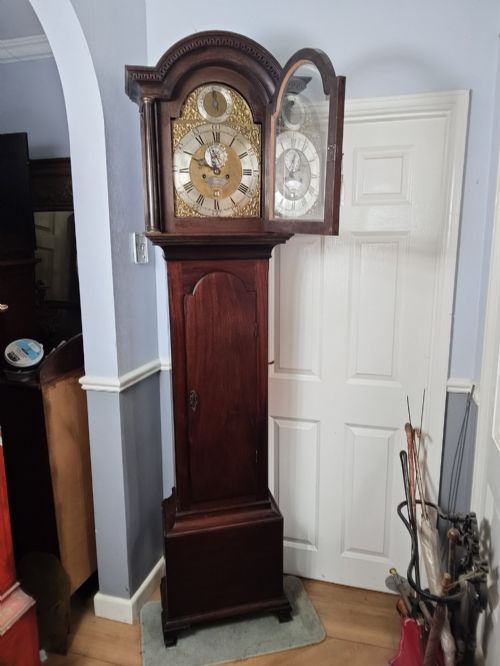
Brass grandfather clock weights supply the driving force for longcase, grandmother and wall clocks dating from the eighteenth century through the Edwardian period and the early twentieth century. Buyers search for these components to complete movements housed in oak, mahogany, walnut, burr oak and lacquered wooden cases.
The selections span periods including the Georgian era, the nineteenth century and the 1920s, reflecting the enduring mechanics of weight-driven timepieces. These items connect directly to clock parts and movements originating from English, Scottish and continental makers.
The physical objects range from single replacements to matched pairs, designed to hang within tall wooden cases and drive time, strike or chime trains. They serve both functional restoration and decorative authenticity for period clock owners.
Materials and construction
Construction relies on cast or spun brass casings, often filled with denser materials such as lead or iron to achieve the precise mass required for an eight-day or thirty-hour movement. The metal surfaces display the natural working marks of the foundry, from turned lathe lines to polished finishes.
Associated components incorporate durable timber cases in oak, mahogany and walnut, paired with glass dial covers and steel internal workings. These traditional materials work together to house and suspend the heavy metal cylinders safely inside the clock trunk.
One listed clock required a limited edition run of a thousand pieces to contain its complex mechanical personality.
Assessing quality and authenticity
Quality rests on the integrity of the metal casing and whether the weight retains its original filling and suspension loop. Castings with crisp shaping and appropriate heft for the specific movement command greater attention than poorly matched replacements.
The distinction between superior examples and lesser ones depends upon period harmony, where the brass colour, age patination and physical proportions match the era of the longcase clock housing.
Gillett & Johnston of Croydon·Lee of Great Marlow·Elliott·Lenzkirch·Enfield·Francis Perigal of Bond Street·William Wady of Twickenham·Lister & Sons·Benjamin Rogers·Anthony Marsh·Aitchison of Glasgow·Frederick Rowe of Great Marlow
The Brass Grandfather Clock Weights Glossary
- Longcase clock
- A tall pendulum clock enclosed in a wooden case, commonly known as a grandfather clock. These floor-standing timepieces rely on suspended weights for their power.
- Grandmother clock
- A smaller version of the longcase clock, typically produced during the Edwardian period and later. They share the same weight-driven mechanics in a reduced scale.
- Regulator
- A precision timekeeping clock designed for high accuracy, often featuring a deadbeat escapement and heavy brass weights. They were used in observatories and railway stations.
- Movement
- The internal mechanism of a clock, comprising the gears, escapement and dial. Weight-driven movements utilise falling brass cylinders to power the gear train.
- Chime train
- The secondary gear train in a clock that drives the musical or quarter-hour chimes, requiring an additional weight alongside the time and strike trains.
Brass Grandfather Clock Weights: Frequently Asked Questions
How do I choose the correct weight?
Match the weight's mass and style to the specific requirements of the clock movement, ensuring the pendulum and escapement operate without stalling.
Consider whether the clock requires single, double or triple weights for time, strike and chime functions.
Are eighteenth-century weights different from Edwardian ones?
Eighteenth-century examples often display hand-cast brass construction with distinct surface textures from early foundry work, while later Edwardian versions can feature more uniform machine turning.
Both types serve the same mechanical purpose of driving longcase movements, though their visual characteristics match their respective periods.
Can I use these with grandmother clocks?
Grandmother clocks require appropriately scaled weights that fit within their narrower and shorter wooden cases compared to full-sized grandfather clocks.
Check the internal clearance of the trunk before selecting replacement brass cylinders.
What is a triple weight clock?
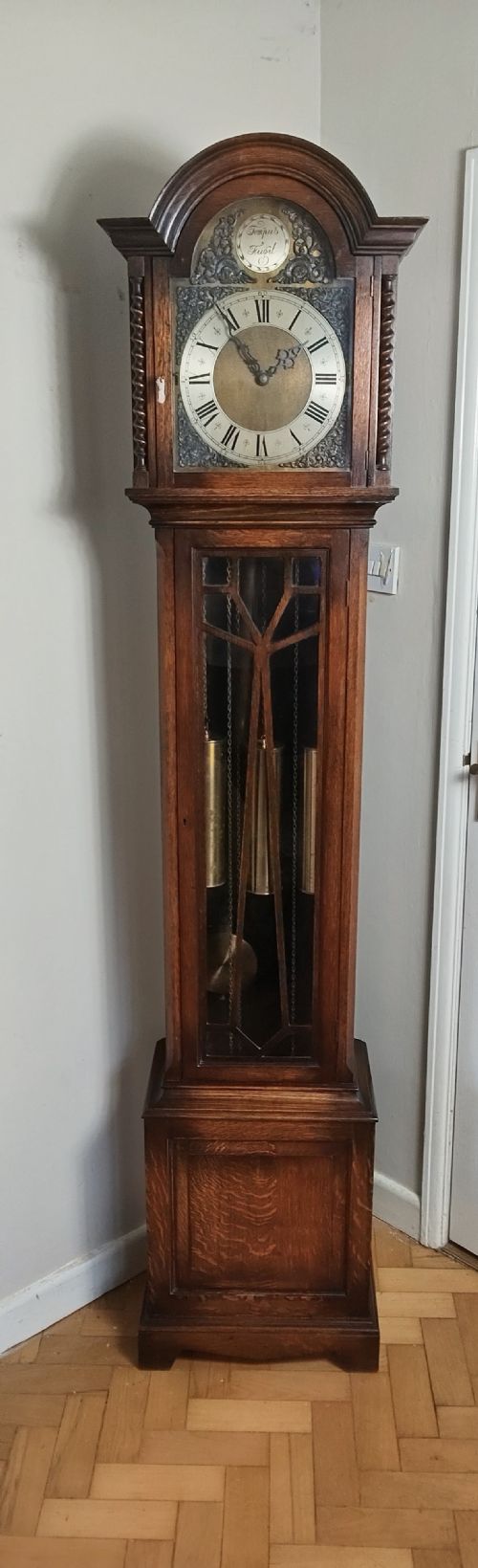
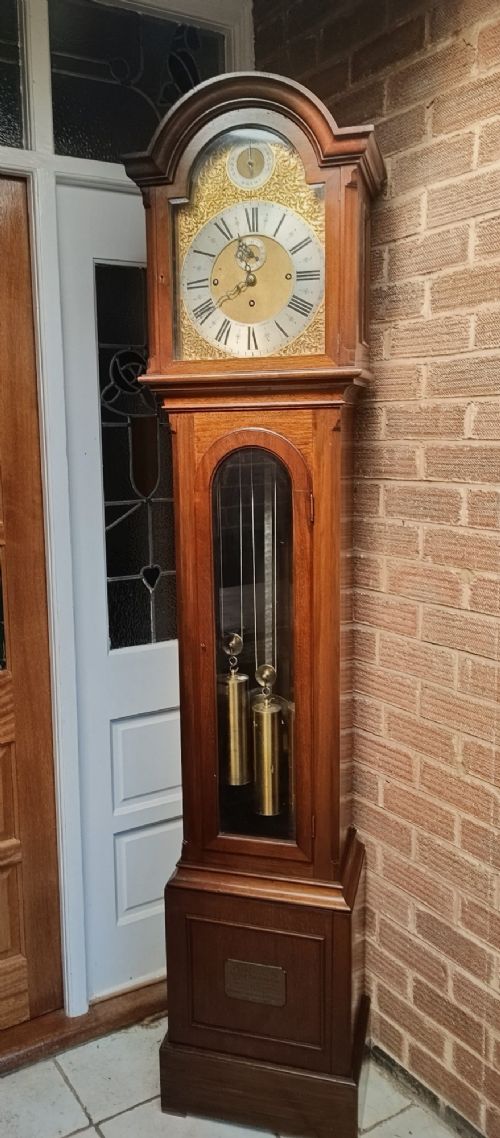
A triple weight clock drives three separate trains within the movement: timekeeping, striking the hour, and playing musical chimes or Westminster quarters.
Each train hangs its own brass cylinder inside the mahogany or oak case to maintain continuous operation.