
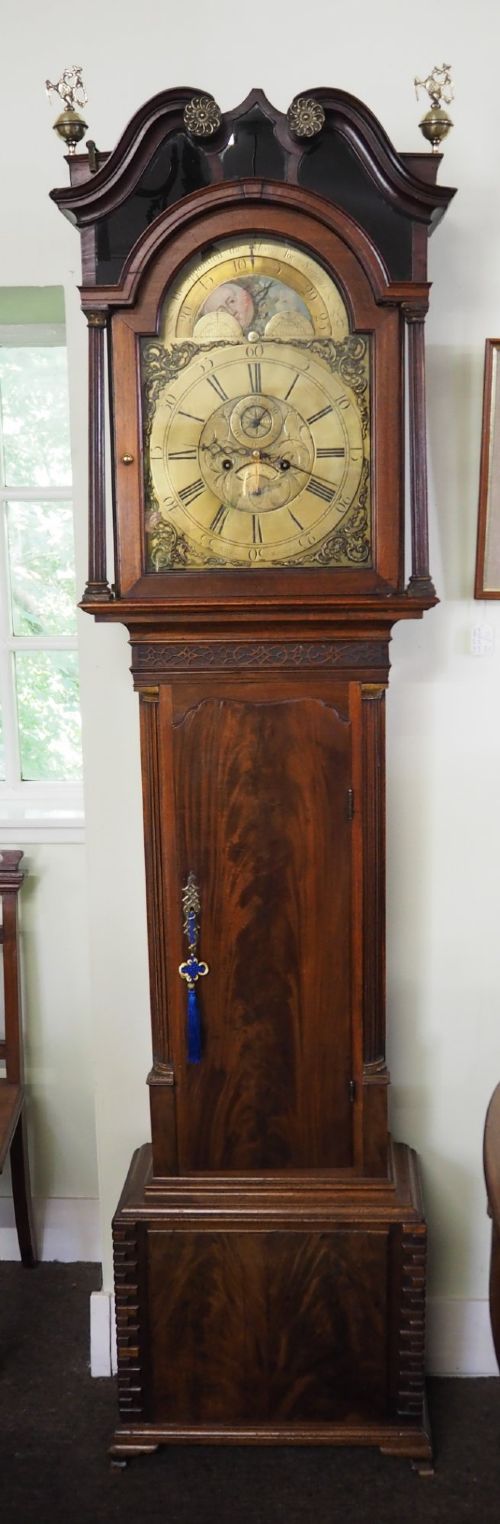
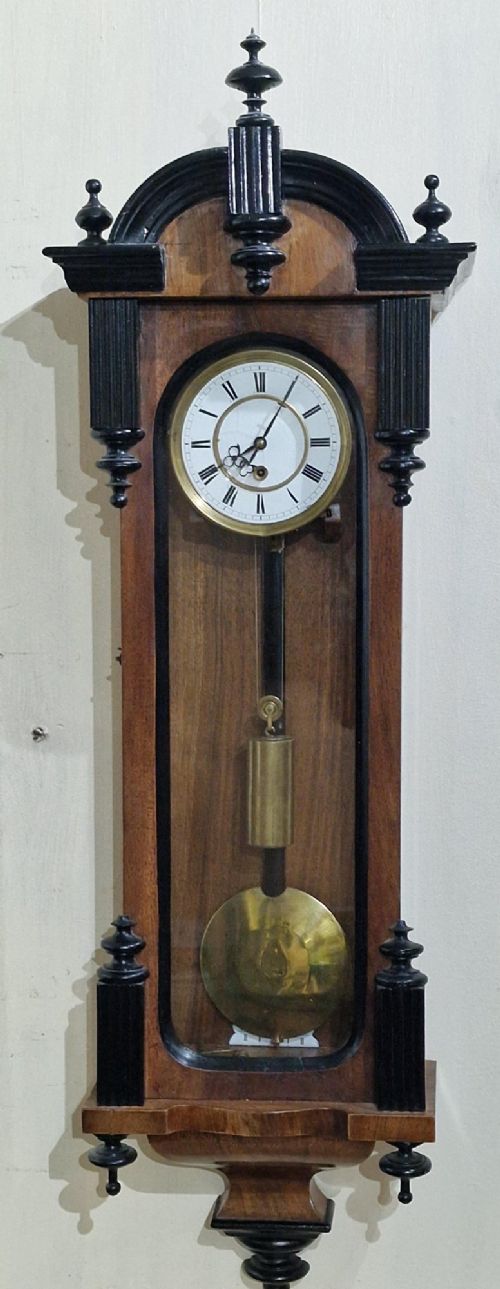
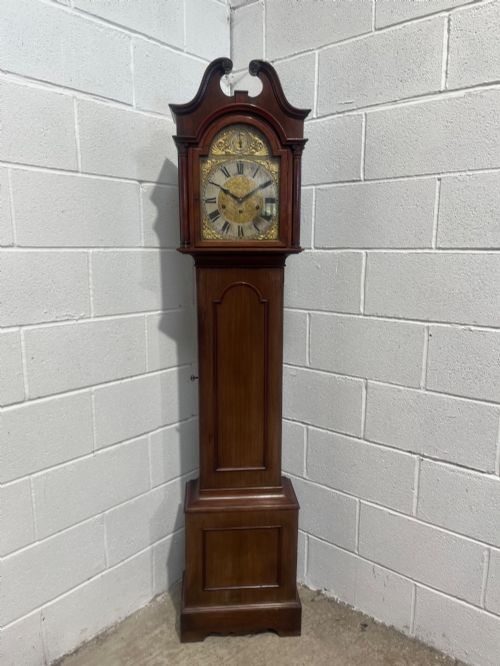
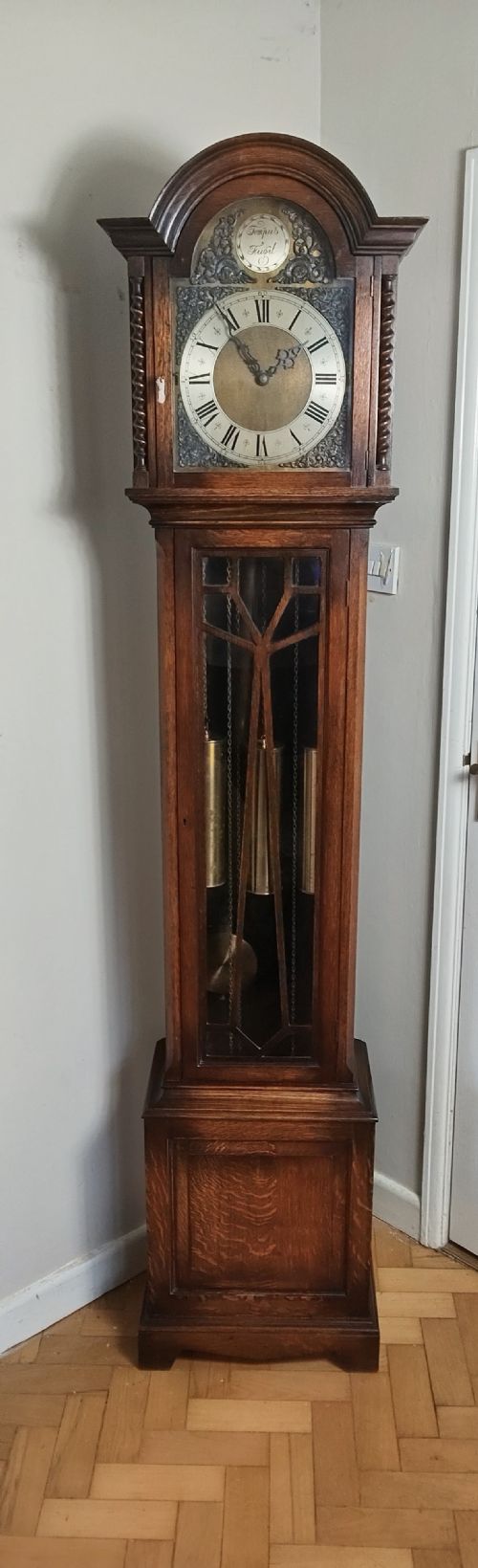
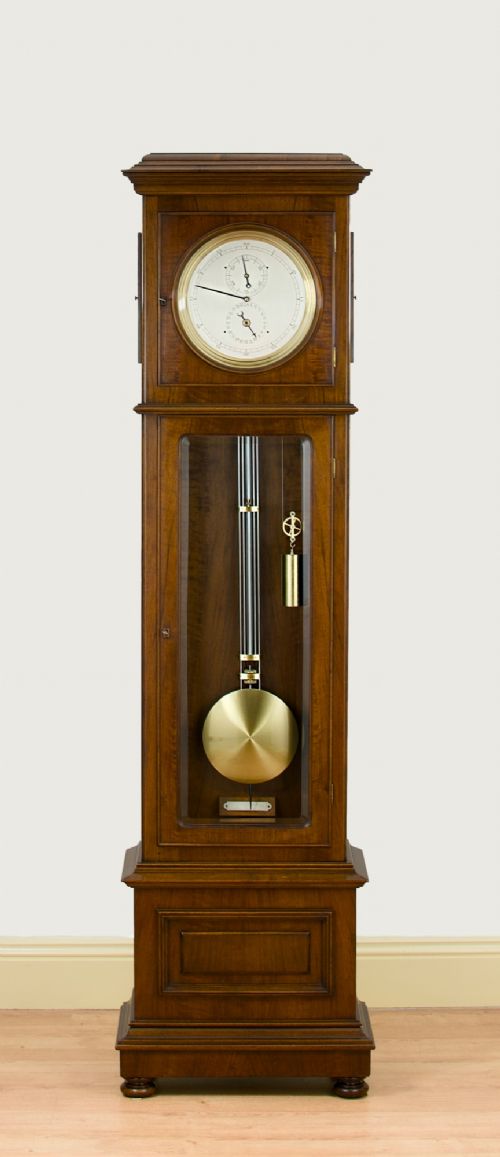


Brass Cased Clock Weights
Brass cased clock weights provide the essential drive for longcase and wall clocks while adding a gleam of polished metal to the movement.
Brass Cased Clock Weights
Brass cased clock weights are metal containers filled with lead or iron, designed to drive the gear trains of longcase, grandfather, and wall clocks. These cylindrical objects hang inside the clock case on cords or chains, descending steadily as the clock runs.
The versions most likely to be met on this page date from the eighteenth century and the Victorian era, matching the longcase and wall clocks of those periods. They appear either singly for timepiece movements, in pairs for striking clocks, or in sets of three for chiming regulators.
Originating alongside tall case and regulator timepieces, these weights formed a functional part of domestic timekeeping in Georgian and Victorian households. Their outer shells combine utility with the warm sheen characteristic of period brasswork.
Materials and construction
The construction relies on a sheet brass outer casing formed around a heavier interior core of lead or iron to achieve the precise mass required for the movement. This technique protects the softer inner material while presenting a bright metal exterior.
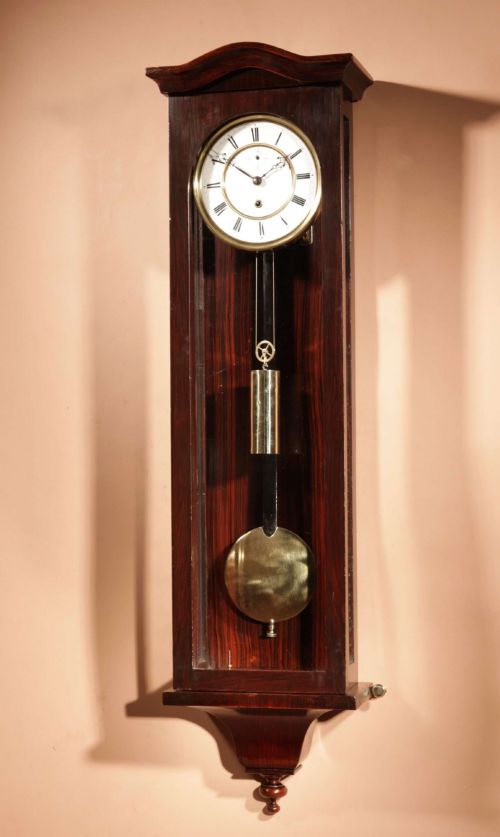
Period examples utilise sheet brass joined along a seam, often finished with looped iron suspension rings soldered or pinned into the top cap. The metal acquires a natural patina over centuries of handling and exposure to air inside glazed wall cases or timber trunk doors.
Some nineteenth-century Vienna regulators required weights so heavy they practically needed a gym membership just to wind them up on a Sunday morning.
Factors of distinction
Quality in these items rests on the integrity of the brass casing, the crispness of any edge seams, and the retention of an honest, undisturbed age patina. Superior examples maintain their original filling and suspension loops without modern replacements or heavy denting.
The finest specimens display the heavier gauge metal and careful soldering typical of eighteenth-century and precision regulator workshops. Lesser items often show careless repairs, modern replacement caps, or excessive surface pitting that detracts from their historic character.
Gillett and Johnston·Francis Perigal·Gustav Becker·Lenzkirch·Lister and Sons
The Brass Cased Clock Weights Glossary
- Longcase clock
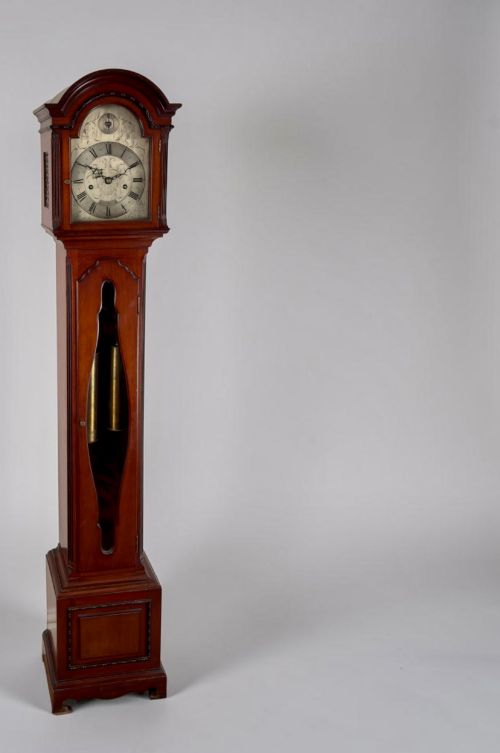
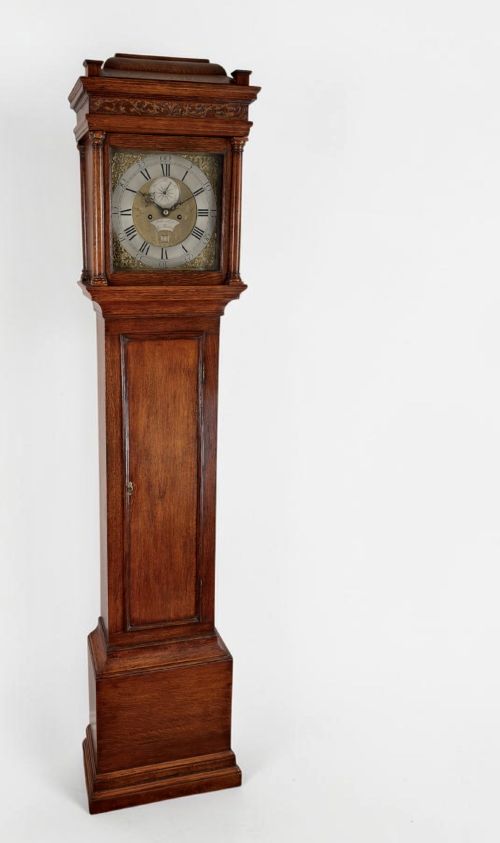
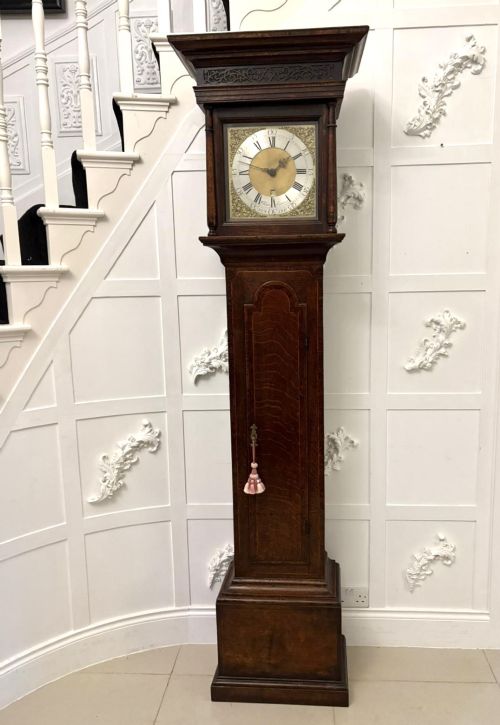
- A tall pendulum clock enclosed in a wooden case, commonly referred to as a grandfather or grandmother clock. These tall floor-standing timepieces rely on suspended weights hanging within the trunk.
- Vienna Regulator
- A precision wall clock developed in Austria during the nineteenth century. These movements often employ double or triple brass weights to drive time, strike, and chime trains.
- Regulator
- A high-precision clock designed for accuracy, frequently utilising heavy brass cased weights and a deadbeat escapement. They serve as reference timekeepers in workshops and fine homes.
- Patina
- The surface sheen and oxidation developed on metal and wood over many decades of age. On brass, this creates a muted golden tone distinct from modern lacquered finishes.
Brass Cased Clock Weights: Frequently Asked Questions
What do brass cased clock weights do?
These weights provide the downward gravitational force that powers the gear train of a weight-driven clock movement. As they slowly descend down the trunk or wall, they turn the drums that operate the time, strike, or chime functions.
They must match the exact mass required by the specific movement to ensure accurate timekeeping. Too much weight damages the escapement, while too little causes the clock to stop.
How do I know the correct weight for my clock?
The correct weight is determined by the drop distance, the gear ratios, and the pendulum length of the specific movement. Original weights are stamped or balanced specifically for the clock they were paired with during manufacture.
Matching replacement weights requires knowing the exact total mass needed to drive the train without forcing the escapement. Heavier weights are required for multi-train chiming movements compared to simple timepieces.
Are these weights filled with lead?
Yes, the brass shell acts primarily as an outer decorative and protective container for a denser core material. Iron shot or solid lead is poured inside to reach the heavy mass necessary for the clock.
Handling these items requires care due to the heavy internal metal core. The brass casing keeps the toxic lead securely sealed away during everyday use.
How do eighteenth-century weights differ from Victorian ones?
Eighteenth-century brass weights typically feature hand-formed seams and simple iron loop attachments suited to Georgian longcase clocks. They display the slightly uneven surfaces characteristic of early sheet metal working techniques.
Victorian and later regulator weights often exhibit more uniform industrial production methods to supply Vienna regulators and precision wall clocks. Their construction reflects standardised workshop practices of the nineteenth century.