


Tallcase Clock Weights
These tallcase clock weights keep time across longcase, grandfather, and grandmother clocks from the Georgian, Victorian, and Edwardian periods.
Tallcase Clock Weights
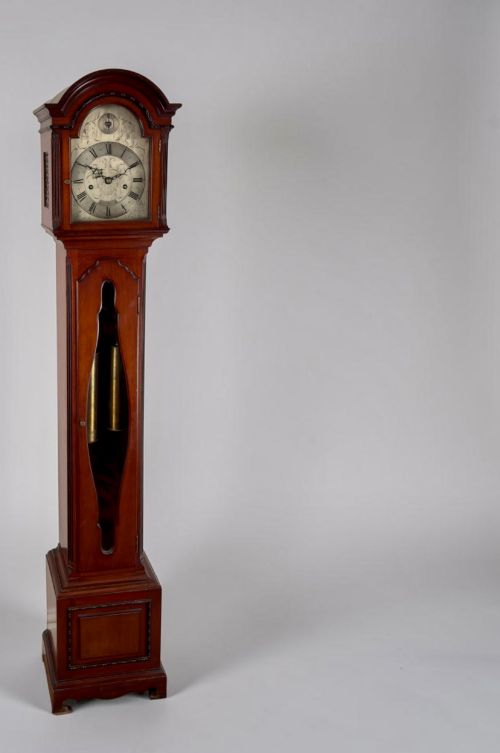
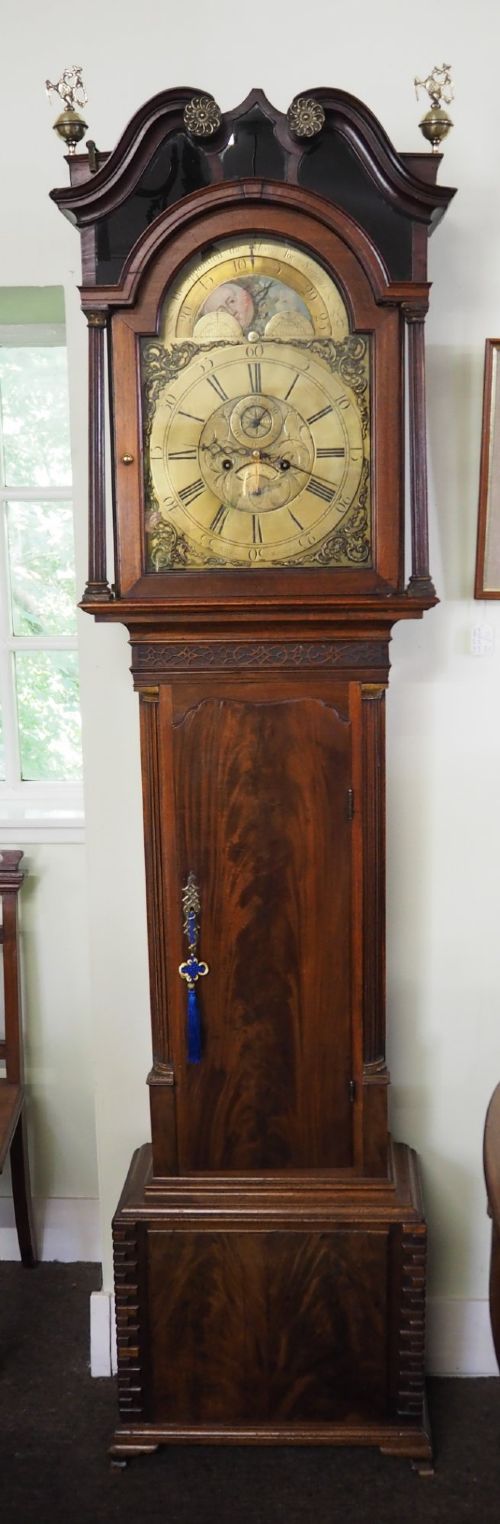
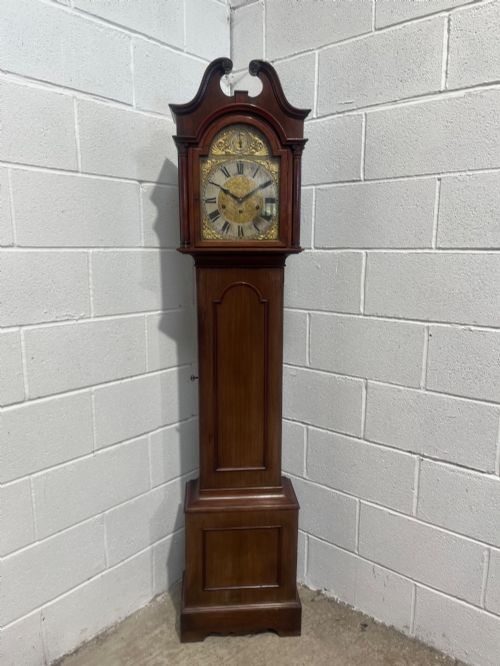
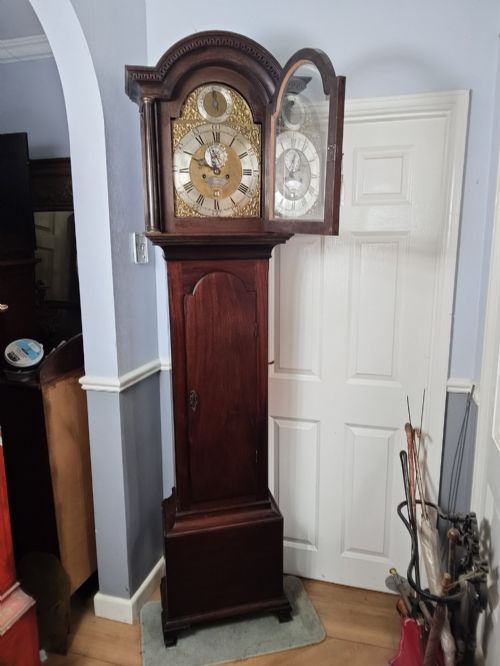
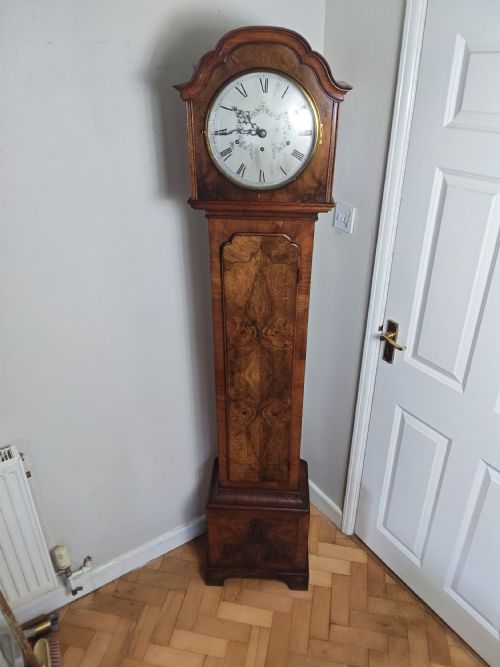
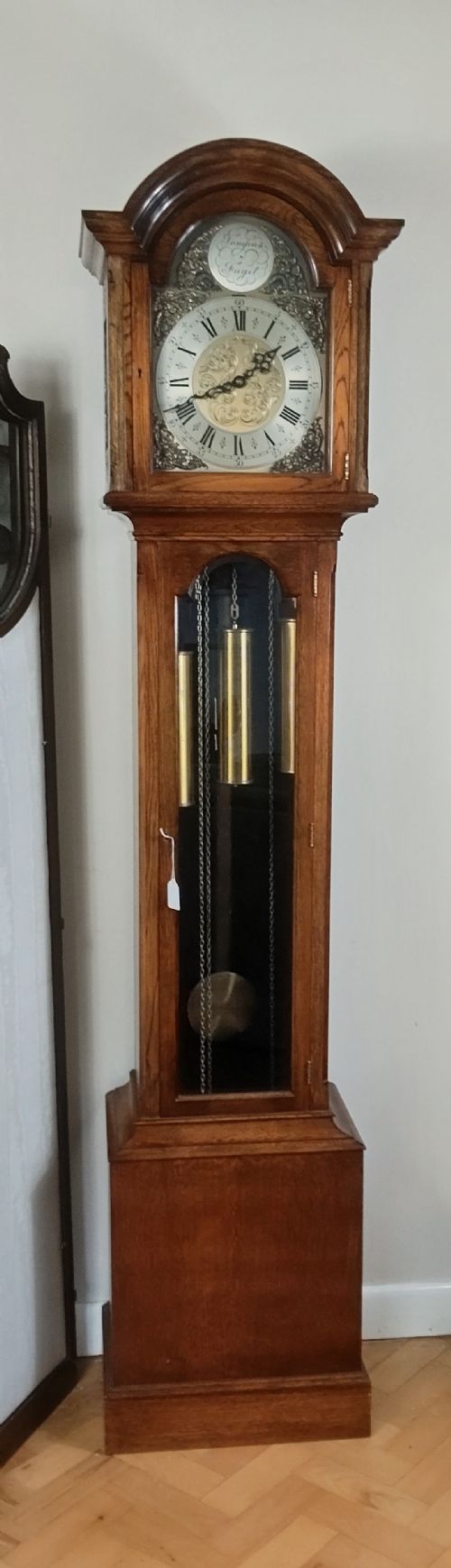
Tallcase clock weights provide the driving force for weight-driven timepieces, hanging inside the trunk to power the movement as they descend. When you search for tallcase clock weights, you encounter both the internal components themselves and the complete clocks they operate.
The selections span centuries of British clockmaking, appearing alongside longcase clocks, grandfather clocks, and smaller grandmother clocks. Materials range from traditional brass and iron to the timber cases enclosing them, such as mahogany, oak, walnut, and glass.
How they were made
Makers cast weights in dense metals like iron and brass to ensure sufficient gravitational pull for the gear trains. Cases utilised native and imported timbers, including mahogany, oak, and walnut, shaped through period woodworking techniques.
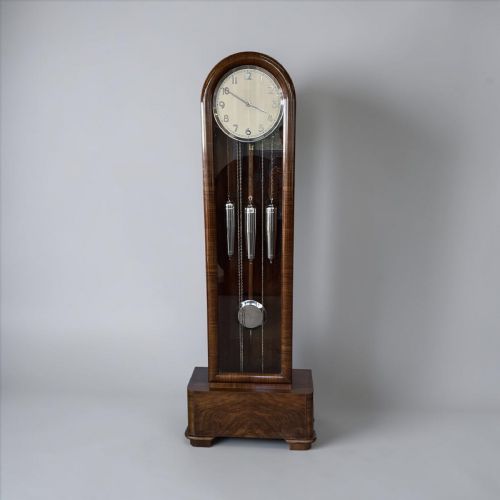
Movements often integrated steel components alongside brass wheels and plates, housed within timber frames and glass-fronted dial doors. Later examples from the Edwardian and Art Deco eras incorporated chrome alongside traditional materials.
Some clocks require three separate weights inside the case just to handle the time, the strike, and the tunes.
What varies in quality
Quality rests in the precision of the metal casting and the craftsmanship of the surrounding timber case. Heavier, well-balanced weights ensure steady descent, while finer clock bodies display detailed inlay, select veneers, and carved architectural elements.
The reputation of the maker also distinguishes examples, as signed movements from recorded workshops demonstrate greater attention to mechanical execution than anonymous production.
Gillett and Johnston of Croydon·William Wady of Twickenham·Thomas De Gruchy Jersey·Wm Stanford Great Yarmouth·Benjamin Rogers·Rob Parry Pwllheli·Anthony Marsh London·Herbert of Haversham·Aitchison of Glasgow·Frederick Rowe of Great Marlow·JJ Elliot
The Tallcase Clock Weights Glossary
- Longcase clock
- A weight-driven pendulum clock enclosed in a tall wooden case, commonly known as a grandfather clock. These tall timepieces require internal weights suspended by cords or chains to operate the movement.
- Grandmother clock
- A smaller version of the traditional longcase clock, popular during the Edwardian period and the early twentieth century. They share the weight-driven mechanism of their larger counterparts.
- Drum head longcase clock
- A style featuring a circular dial housing mounted at the top of the trunk. This distinct silhouette appeared during the Victorian period.
- Regulator longcase clock
- A precision timekeeper designed for high accuracy, often featuring a simplified dial and heavy pendulum. These clocks utilise carefully calibrated weights to maintain consistent force.
- Strike silent
- A mechanism allowing the striking train to be silenced while the clock continues to keep time. This function appears on selected Georgian and later movements.
Tallcase Clock Weights: Frequently Asked Questions
What powers a tallcase clock?
Suspended metal weights provide the driving power for the gear train as gravity pulls them downward inside the trunk.
As the weights slowly descend over days or weeks, the energy turns the wheels and moves the hands.
How do I know my clock date?
Examination of the dial style, case timber, and movement construction helps determine the period of origin.
Maker signatures or engraved names on the brass faceplate also point to specific working eras.
Are grandmother clocks different?
Grandmother clocks feature the same weight-driven mechanics as grandfather clocks but are built to a smaller overall scale.
They emerged predominantly during the twentieth century to fit more compact domestic spaces.
What is a chiming clock?
A chiming clock includes additional gear trains and weights to sound melodies or hour markers at set intervals.
Movements like quarter chiming mechanisms require multiple weights to power the timekeeping, striking, and chiming functions separately.