



18th Century Clock Weights
These 18th century clock weights provide the heavy drive needed to keep historical tallcase and wall timepieces running.
18th Century Clock Weights
When searching for 18th century clock weights, a buyer is looking at the functional lead, iron, and brass-cased driving components that hung inside tallcase clocks, wall clocks, and turret clocks during the Georgian era. These essential items provided the mechanical descent necessary to power movements housed in oak, mahogany, and burr oak clock cases.
The versions most frequently met on this page belong to longcase clocks and wall-hanging timepieces created across provincial and metropolitan English workshops during the 1700s. They include solid metal masses as well as pairs of brass-cased cylinders designed to drop steadily within the trunk of the clock.
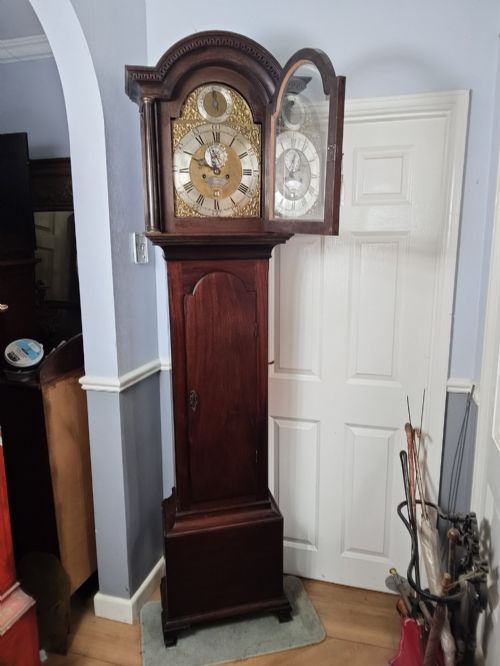
Collectors encounter these utilitarian pieces either as original survivals paired with longcase clocks by makers such as Lee of Great Marlow and Francis Perigal, or as standalone components like granite turret weights. They reflect the straightforward mechanical requirements of eight-day and thirty-hour clockwork from the period.
How they were made
Makers utilised heavy, dense materials such as lead, iron, and granite to achieve the required gravitational pull within a compact vertical space. These materials were cast or shaped to hang cleanly inside narrow wooden longcase trunks without catching on the pendulum or case sides.
Some examples featured protective outer shells of brass, enclosing the heavier filling material to prevent oxidation and to present a polished appearance when the clock door stood open. The method of manufacture prioritised sheer mass and durability over decorative flourish, ensuring decades of reliable descent.
Granite blocks once hoisted in stone towers now rest quietly alongside domestic mahogany clock components.
What varies in quality
The distinction between ordinary utility weights and superior examples lies in the integrity of the original casing and the purity of the metal used in the casting. Solid brass casing or well-finished outer surfaces indicate a higher grade of manufacture intended for luxury longcase clocks by prominent London makers.
Wear patterns also determine the character of each piece, distinguishing weights that have descended smoothly within their original oak or mahogany trunks from those subjected to rough handling or replacement over centuries.
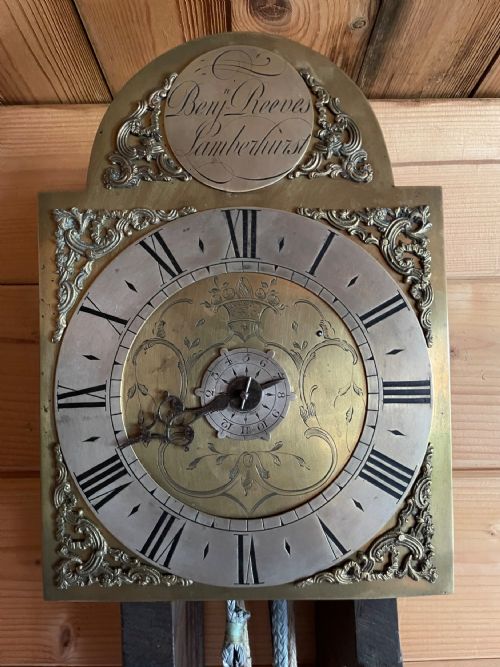
Lee of Great Marlow·Benj Reeves Lamberhurst·Windmills & Bennet London·John Waller Preston Lancashire·William Barrow London·Henry Deykin Worcester·Francis Perigal Bond Street·William Wady Twickenham·George Buckmaster Royston·Benjamin Rogers·Anthony Marsh London
The 18th Century Clock Weights Glossary
- Longcase clock
- A tall, weight-driven pendulum clock enclosed in a wooden case of oak, mahogany, or burr oak. These timepieces rely on suspended weights hanging within the trunk to power the movement.
- Lantern clock
- An early form of brass wall clock, typically driven by weights suspended from cords or chains. They date predominantly to the 17th and 18th centuries.
- Verge escapement
- An early type of clock mechanism that regulates the release of power from the train. It works alongside the pull of the driving weights to maintain steady timekeeping.
- Turret clock
- A large clock designed for a tower or public building, requiring exceptionally heavy weights such as granite masses to drive the external dials and striking trains.
- Georgian
- The stylistic period covering the reigns of the four Georges from 1714 to 1830. Much of the cabinetry and clockwork on this page originates from this expansive era.
18th Century Clock Weights: Frequently Asked Questions
What drove 18th century clocks?
These timepieces were driven by heavy weights suspended on cords or chains inside the case. The gradual descent of these masses provided the constant energy needed to operate the gear train.
Heavier movements, such as those with striking mechanisms or longer durations like eight days, required correspondingly substantial lead or iron weights to function properly.
How do I match weights to a clock?
Matching requires knowing the exact weight tolerances of the specific movement, whether it is an eight-day or thirty-hour system. Using incorrect mass will either cause the clock to run too fast, too slow, or stop entirely.
Examining the materials, such as brass-cased cylinders or plain lead, helps determine the appropriate period and style for specific longcase or wall clock housings.
Where were clock weights placed?
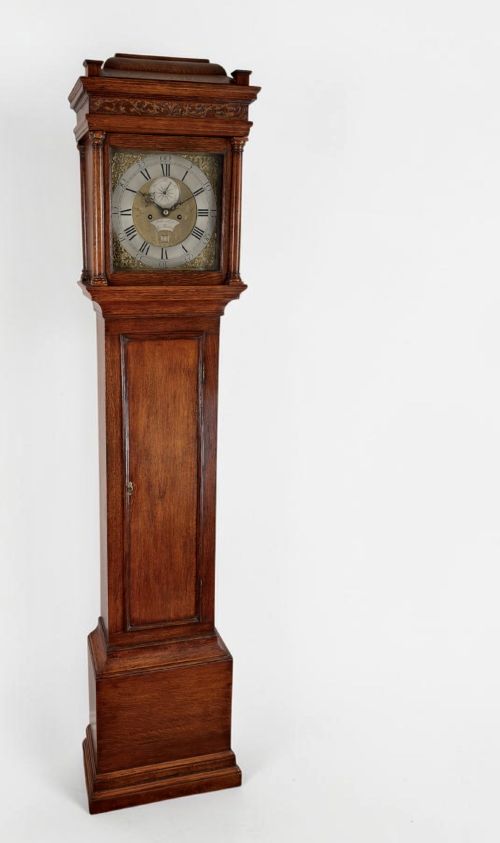
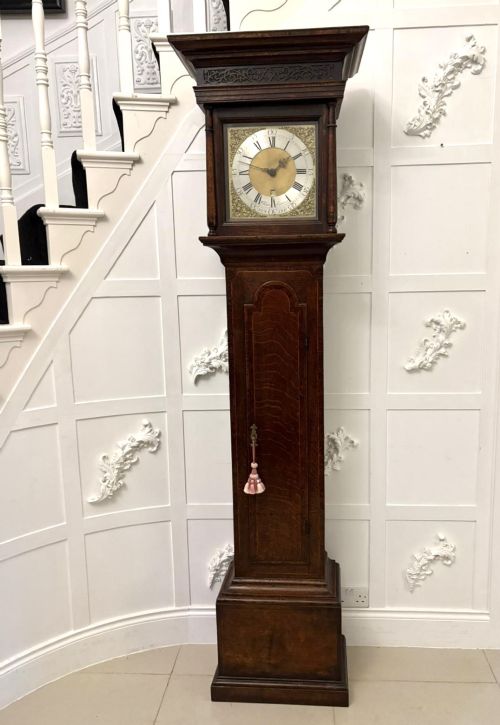
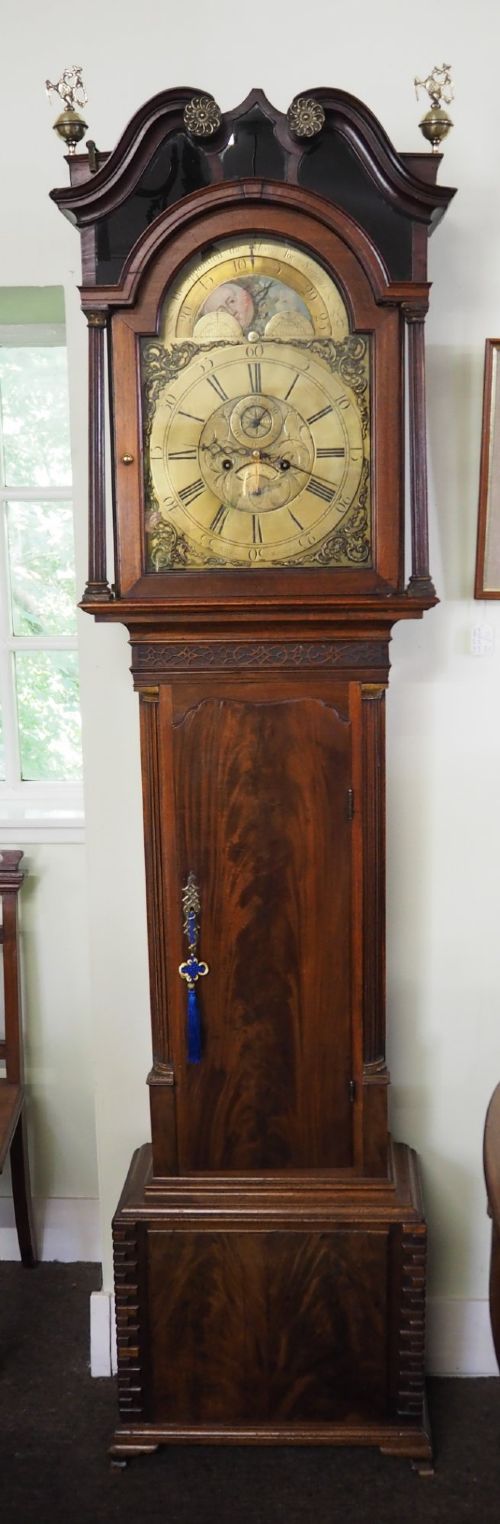
In longcase clocks, the weights hung freely inside the trunk behind the door, dropping slowly alongside the pendulum as the clock ran down. Care was taken to ensure they hung clear of the swinging pendulum rod.
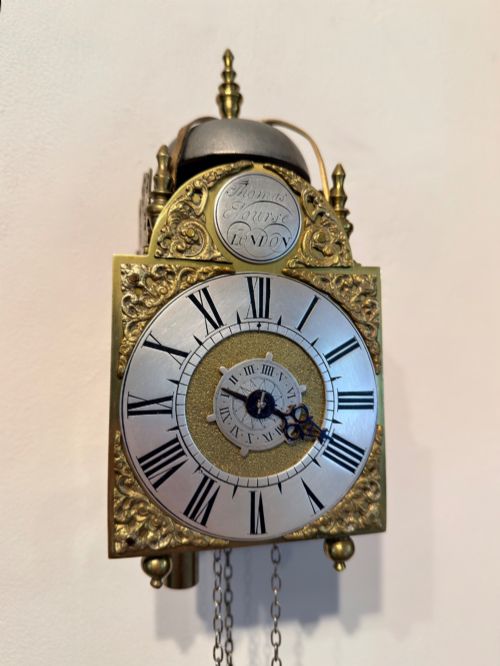
For wall-mounted variants like lantern clocks, the weights were suspended openly beneath the case, dropping toward the floor on cords.
Are these weights period originals?
The listings on this page include components from the 18th century, Georgian era, and around 1800. Many survive alongside their original longcase and wall clock movements.
Materials range from traditional lead and iron to brass-cased cylinders and granite turret components, reflecting the diverse scale of horological engineering in the period.