
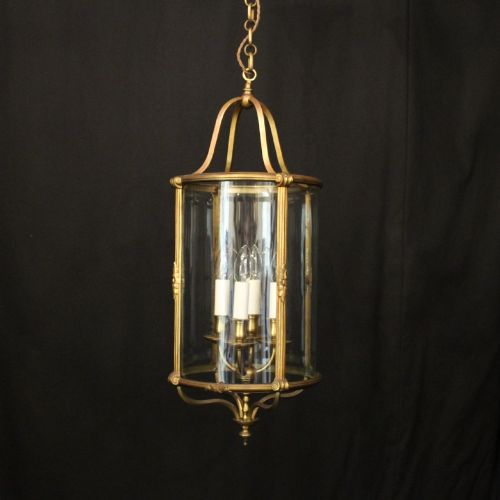
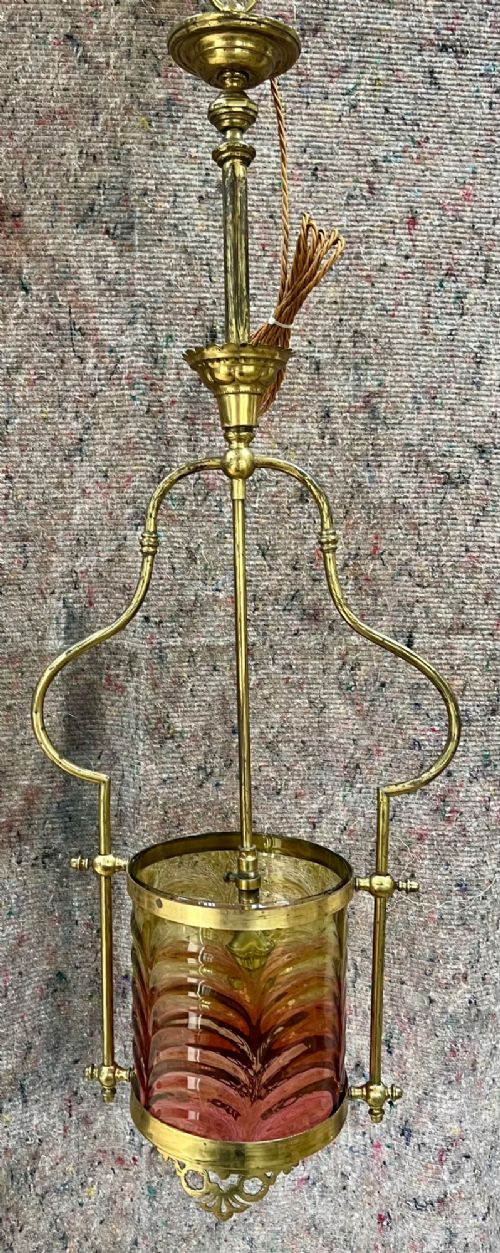
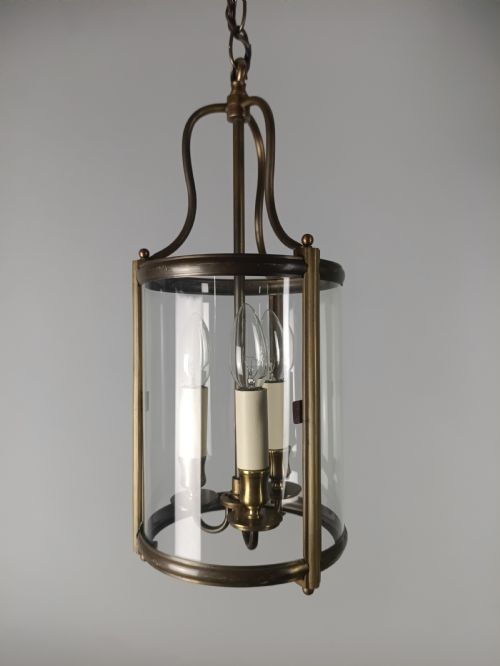
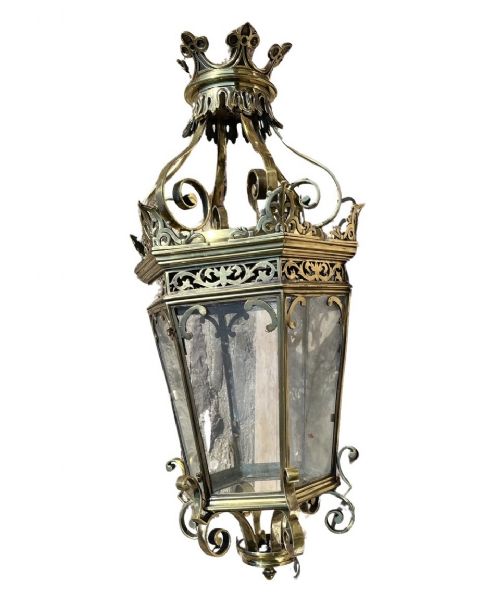
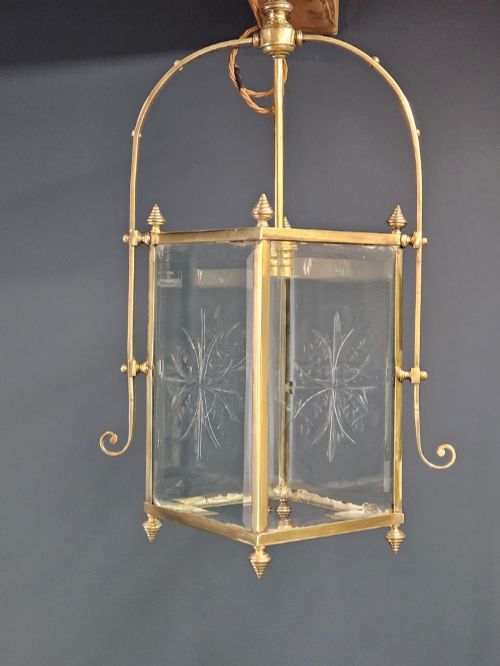
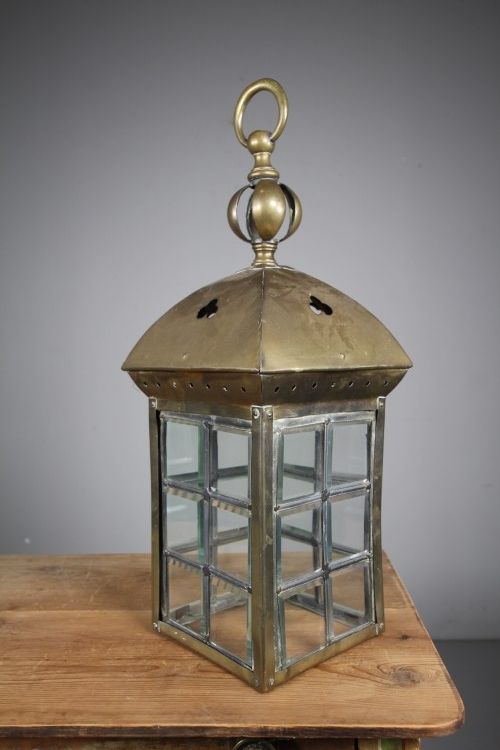


Brass Glass Vestibule Lantern
A brass glass vestibule lantern brings a welcoming glow to an entrance hall, combining metalwork and glass to cast light through a narrow threshold.
Brass Glass Vestibule Lantern
When you search for a brass glass vestibule lantern, you encounter ceiling-hung lighting designed specifically for corridors, stairwells and entrance passages. The selection spans the nineteenth century through to the nineteen-thirties, with notable representation from Edwardian and later periods.
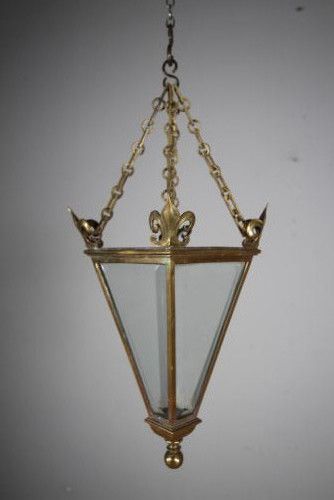
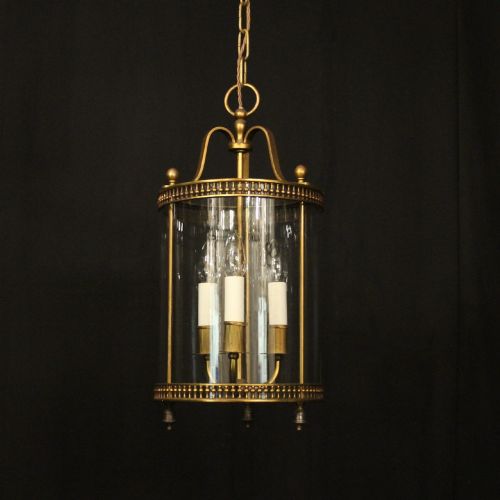
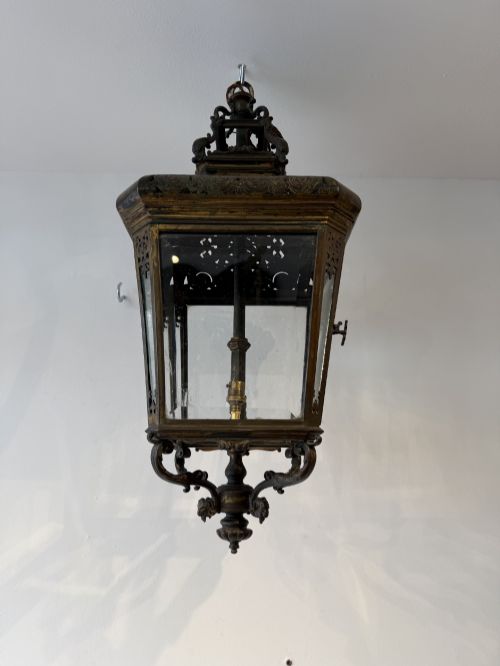
You will find English and French examples, ranging from simple designs with a single bulb or candle point to multi-light fittings. Forms vary from hexagonal frames to large hanging pendants equipped with opening doors and multiple internal light sources.
The style vocabulary is broad, drawing on Victorian, Grand Regency, Louis XVI and French Rococo influences. These pieces served a practical purpose in narrow entryways while establishing a decorative focal point for visitors.
Materials and construction
The primary metal framework relies on brass, gilt brass, bronze and gilded bronze, occasionally paired with steel elements for structural rigidity. Metal components are cast, chased or polished to create solid housings that support the weight of suspended glass.
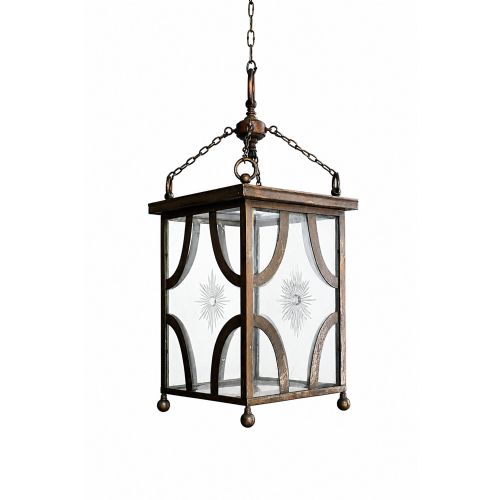
Panels and shades utilise clear glass, frosted glass, etched glass and cut glass to diffuse the internal illumination. Many lanterns feature hinged doors providing access to the interior bulbs or candle holders.
The selection spans from the mid-nineteenth century through the Edwardian era into the nineteen-thirties, using brass, bronze, gilt metal and various decorative glass types.
Distinctions in quality
Quality rests in the weight and thickness of the cast metal frame, alongside the crispness of chased ornamentation on bronze and gilt components. Finer examples display precise joinery in the metalwork and well-fitted glass panels that sit securely within the rebates.
The choice of glass further elevates a piece, particularly where cut, etched or frosted panels are employed rather than plain flat glass. The integration of multiple light clusters and operable doors with secure latches indicates higher manufacturing ambition.
The Brass Glass Vestibule Lantern Glossary
- Vestibule lantern
- A hanging light fixture designed for entrance halls and narrow passages. These pieces hang closely to the ceiling to illuminate thresholds without obstructing movement.
- Gilt bronze
- Bronze that has been coated with a thin layer of gold or gold-coloured alloy. This technique provides a lasting metallic sheen resistant to tarnishing.
- Convex glass
- Glass panels curved outward to diffuse light across a wider angle. This treatment softens the illumination cast by internal bulbs.
- Hexagonal
- A six-sided geometric form frequently used for lantern frames. This shape allows multiple glass panels to distribute light evenly around a hallway.
- Cut glass
- Glass decorated with faceted patterns ground into the surface by wheel cutting. The cuts refract light to create brilliant patterns when illuminated from within.
Brass Glass Vestibule Lantern: Frequently Asked Questions
Where should I hang a vestibule lantern?
These lanterns suit entrance halls, corridors and high-ceilinged landings where hanging space allows adequate clearance below.
Their downward illumination provides practical lighting for thresholds while establishing a strong decorative character upon entering a property.
How do I access the interior bulbs?
Many models incorporate a hinged side door secured by a small latch, allowing easy access for bulb replacement.
Other designs require the removal of securing screws or the lowering of the glass basket assembly from the main frame.
Are these lanterns wired for modern electricity?
Most surviving examples have been adapted for modern electrical supplies, though internal wiring may require updating to meet current safety standards.
An electrician can easily integrate standard lamp holders into the existing metal frames without altering the outer appearance.
How do I distinguish French styles from English ones?
French pieces often display ornate Louis XVI or Rococo ornamentation with heavier gilt bronze casting and elaborate decorative mounts.
English variants tend toward simpler geometric or Edwardian framing, prioritising functional elegance over excessive surface decoration.