


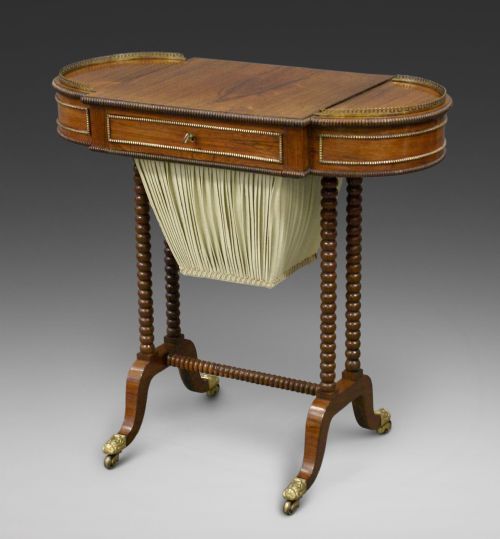

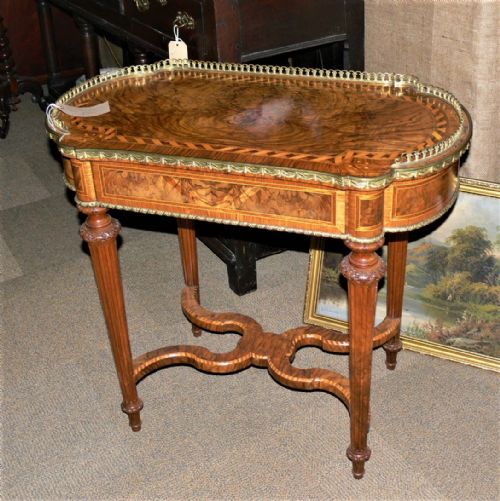


Brass Gallery Work Table
These brass gallery work table examples combine refined timber framing with delicate metal borders, offering both a functional surface and classic decorative presence.
Brass Gallery Work Table
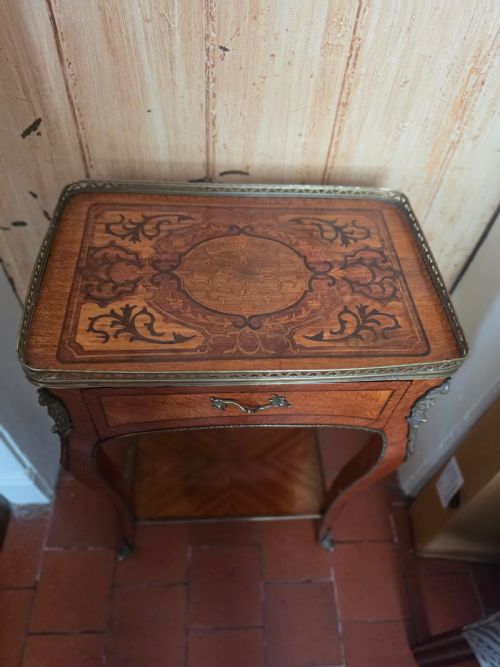
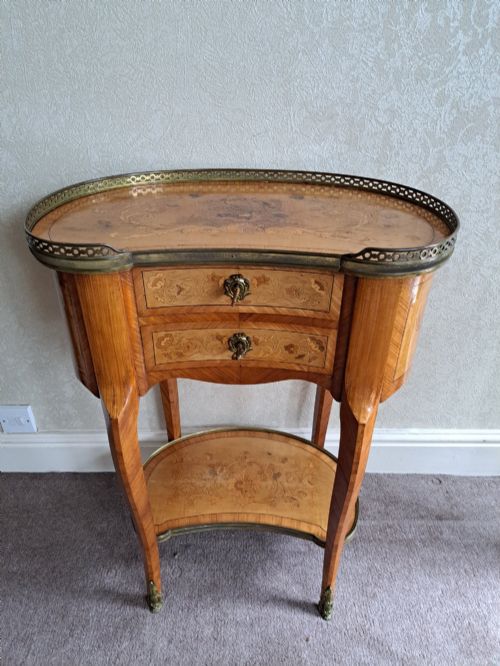
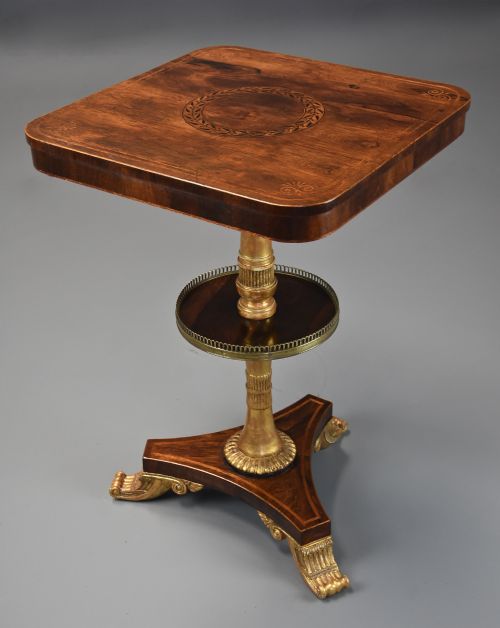
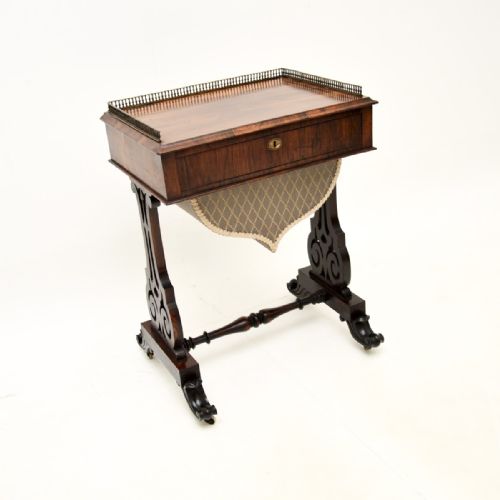
A brass gallery work table represents a refined intersection of utility and display, typically taking the form of a side, occasional, or games table fitted with a raised metal rail around the top. These pieces appear across various periods including the Regency era, Victorian period, and Edwardian times, often drawing on French Louis XV and Louis XVI revival styles.
Makers utilised exotic hardwoods such as rosewood, kingwood, walnut, and mahogany, frequently incorporating intricate marquetry inlay or fabric inserts. The forms range from two-tier occasional stands and combination games tables to dedicated chiffonnières featuring drawers and storage compartments.
Buyers encountering this group will notice a strong leaning towards nineteenth-century craftsmanship, where timber selection and brasswork define the character of each piece. Whether designed for needlework, writing, or general parlour use, these tables remain versatile additions to period and traditional interiors.
Assessing quality
Quality rests in the crispness of the brass gallery work and the fidelity of the timber veneers. Superior examples display tightly fitted metal rails, precise marquetry without gaps, and rich grain patterns in the underlying rosewood or kingwood.
Construction details further separate standard pieces from exceptional ones, particularly the smoothness of drawer operation, the integrity of secondary timbers, and the subtlety of revival styling such as French Louis XVI influences.
Listings feature rosewood, kingwood, mahogany, and walnut, spanning the Regency, Victorian, and Edwardian periods alongside French revival styles.
George Bullock·Charles Topino
The Brass Gallery Work Table Glossary
- Brass gallery
- A low raised railing of pierced or solid brass fitted to the edge of a table top to prevent items from sliding off.
- Marquetry
- Decorative patterns formed by fitting contrasting pieces of veneer into a wooden background, frequently seen in floral or geometric motifs.
- Chiffonière
- A small tall chest of drawers or a multi-tiered occasional table designed for sewing or miscellaneous use.
- Regency
- An English design period spanning the early nineteenth century, characterised by classical restraint and rich cabinet woods.
- Revival style
- Nineteenth-century designs that consciously imitate earlier historical aesthetics, such as French Louis XV and Louis XVI forms.
Brass Gallery Work Table: Frequently Asked Questions
What is a brass gallery work table used for?
These tables originally served specialised domestic purposes such as needlework, writing, or casual gaming in the parlour. The raised brass rim kept sewing implements, cards, or writing materials secure on the surface.
Today, they function well as decorative side pieces, lamp stands, or bedside tables in traditional interiors.
How do I date a brass gallery work table?
Dating relies on examining the timber species, construction techniques, and stylistic revival influences present in the piece. Regency examples often feature clean lines and rosewood, while late nineteenth-century French revival pieces frequently employ kingwood and intricate marquetry.
The specific style of the brass gallery and the secondary woods used inside drawers provide further chronological clues.
Are these tables sturdy enough for daily use?
Most pieces are built from solid hardwoods and stable veneers, making them suitable for normal everyday placement. However, their delicate legs and decorative inlay require careful handling rather than heavy loading.
Placing them away from direct heat sources and strong sunlight preserves both the timber and the polished brasswork.
What is the difference between a work table and a side table?
A work table typically includes internal compartments, drawers, or fabric bags originally intended for sewing and crafting materials. A side table or occasional table focuses purely on surface area for display or holding objects.
Many pieces blur these distinctions through multi-tiered designs or convertible game tops.