

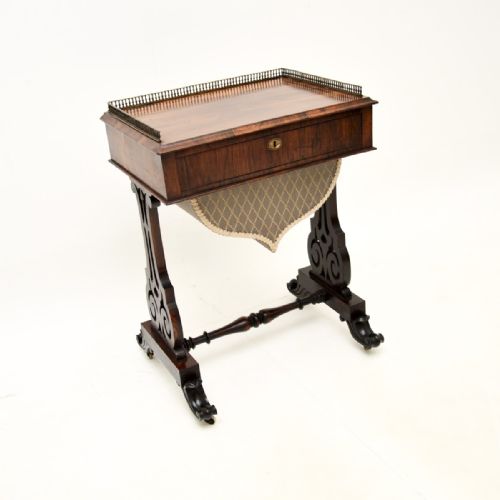


Brass Gallery Tray
A brass gallery tray brings together polished metal and fine timber to create a practical serving piece that doubles as a display surface.
Brass Gallery Tray
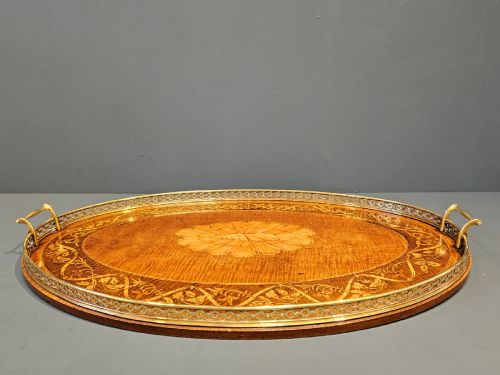
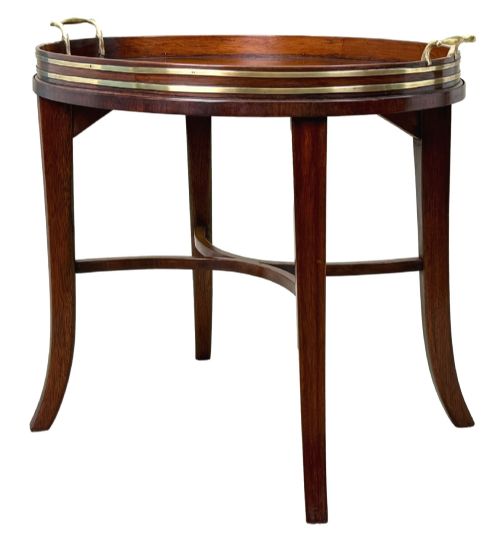
A brass gallery tray combines a wooden base with a raised metal railing around the edge, designed to keep items secure during transport. The pieces found here span from the Georgian and Victorian eras through to the Edwardian period, encompassing serving trays, occasional tables, and side tables.
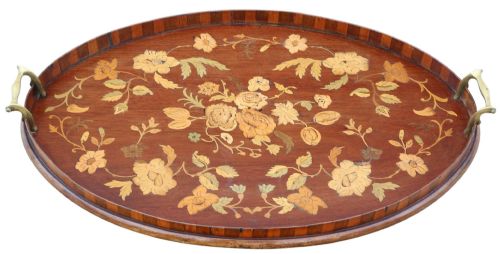
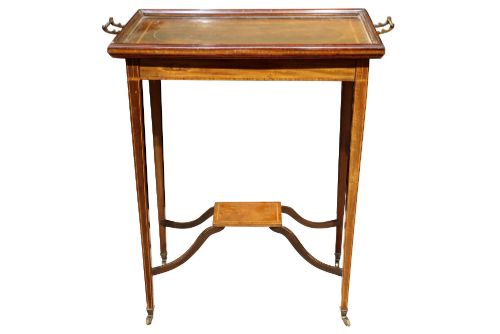
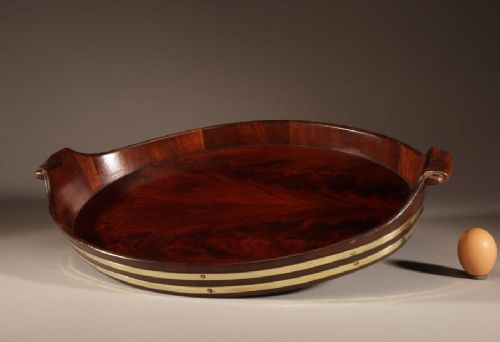
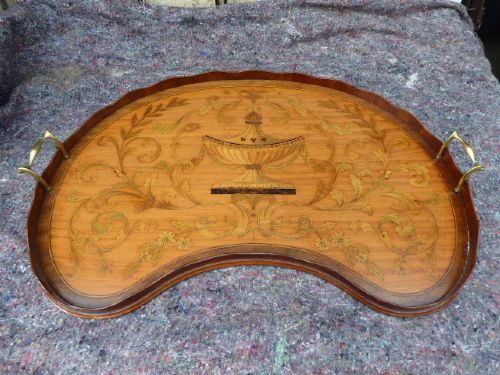
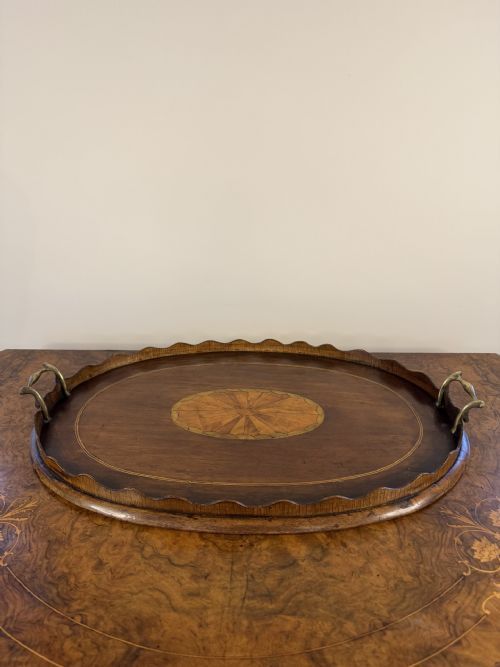
The form typically takes an oval shape, constructed from mahogany, satinwood, or rosewood, often featuring inlaid wood or marquetry decoration. Many examples sit upon stands to function as occasional or drinks tables, while others remain portable serving pieces.
Makers such as Edwards and Roberts produced high-end specimens, whilst patent designs like those by Halls introduced specialised utility to the form. Buyers encounter both standalone trays and table conversions that adapt the traditional serving surface into fixed furniture.
Materials and Construction
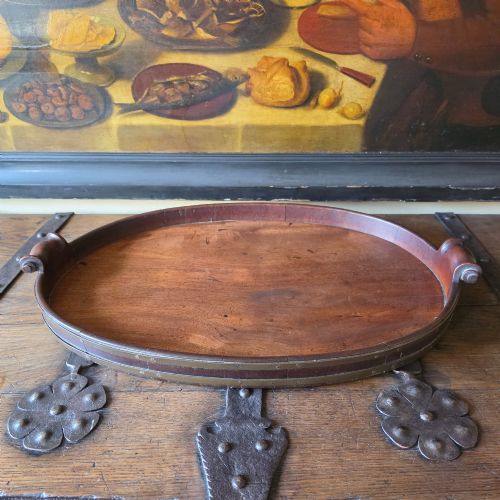
Makers constructed the bases of these trays using dense timbers like mahogany and rosewood, frequently incorporating satinwood for contrast and inlay. The timber panels were often coopered or reinforced to provide a stable foundation for the raised edges.
The defining feature is the brass gallery, a pierced or spindle railing secured around the perimeter of the tray. Ormolu mounts and handles were integrated to add decorative detail alongside structural support.
Brass Gallery Tray Retail Price Guide 2026
Typical asking prices for brass gallery tray among the pieces listed under this phrase on Sellingantiques today, from the lower quarter to the upper quarter. They describe what is for sale here now, not the wider market.
The listings feature mahogany and satinwood across Victorian, Georgian, and Edwardian periods.
Evaluating Quality and Craftsmanship
The refinement of the marquetry and satinwood inlay separates standard production from exceptional work. Crispness in the pierced brass gallery and the weight of the metal fittings indicate the standard of original manufacture.
Integration between the tray and its stand dictates the success of conversion pieces. The depth of the timber grain and the integrity of the joinery determine the lasting durability of each piece.
Edwards and Roberts·Halls
The Brass Gallery Tray Glossary
- Brass gallery
- A raised metal railing fitted around the perimeter of a tray to prevent items from sliding off. It is often pierced or cast in openwork patterns.
- Marquetry
- The art of applying decorative pieces of veneer to a structure to form intricate patterns and pictures. It frequently utilises contrasting timbers like satinwood and mahogany.
- Ormolu
- Gilded bronze used for decorative mounts and handles on furniture and accessories. It provides a bright, golden finish that complements polished wood.
- Coopered
- Constructed from staves of wood joined edge to edge, a technique more commonly associated with barrels but utilised for certain circular and oval trays.
- Satinwood
- A durable, lustrous timber with a natural golden sheen. It serves as a primary wood or a contrasting veneer for inlay work.
Brass Gallery Tray: Frequently Asked Questions
How do I clean a brass gallery tray?
Use a soft cloth to remove dust from the timber and metal surfaces, avoiding harsh chemical polishes that can damage antique finishes.
Apply a gentle beeswax to nourish the wood while taking care not to let polish accumulate against the brass gallery.
Were these trays originally used for serving drinks?
Many examples served as tea trays or portable surfaces for decanters and glassware within formal reception rooms.
Some designs incorporated stands from the outset or were later adapted to function as permanent drinks and side tables.
How can I date a mahogany and brass tray?
Examine the timber species, inlay style, and construction methods, comparing them against known Georgian, Victorian, and Edwardian design characteristics.
Maker marks, patent stamps, and the specific casting technique of the brass gallery provide further chronological indicators.
Can I use an antique tray on a table?
Standalone trays work well as decorative centerpieces on coffee tables or sideboards to group smaller objects together.
Ensure the underside is protected with discreet felt pads if placing the tray on polished wooden furniture.