

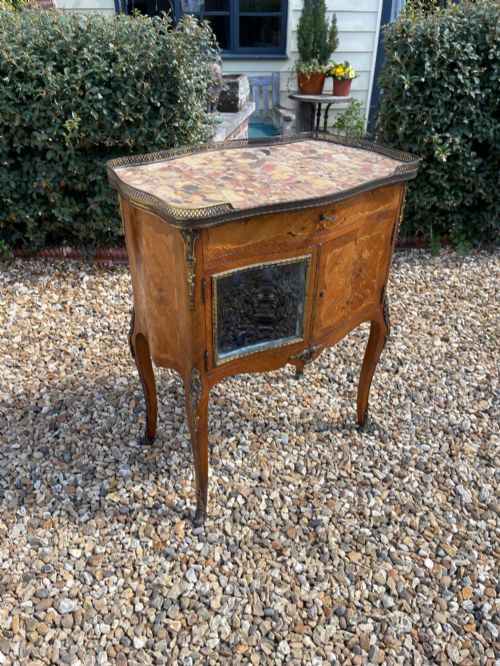


Brass Gallery Nightstand
A brass gallery nightstand brings useful surface space and decorative metalwork to the bedside.
Brass Gallery Nightstand
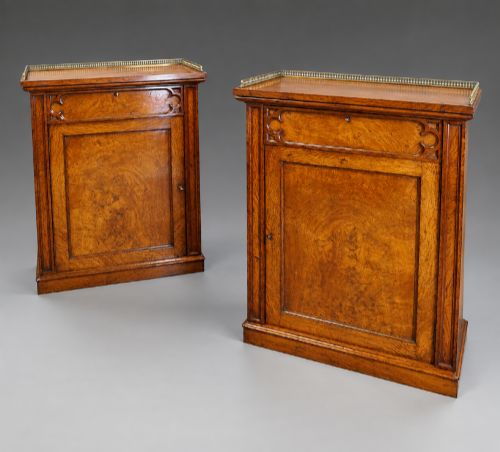
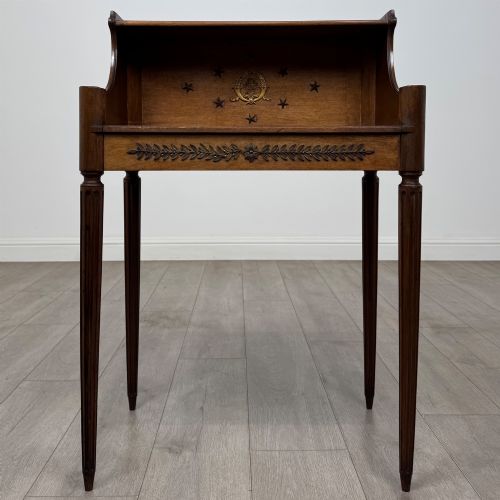
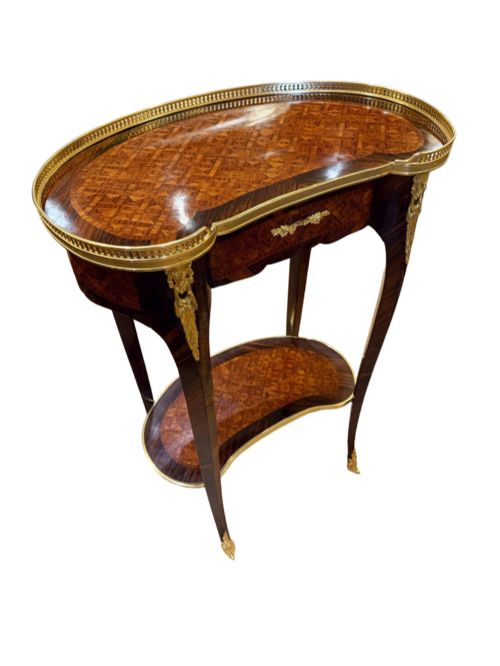
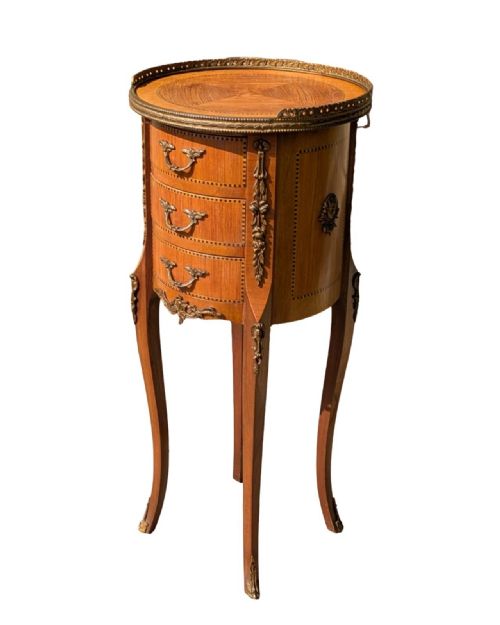
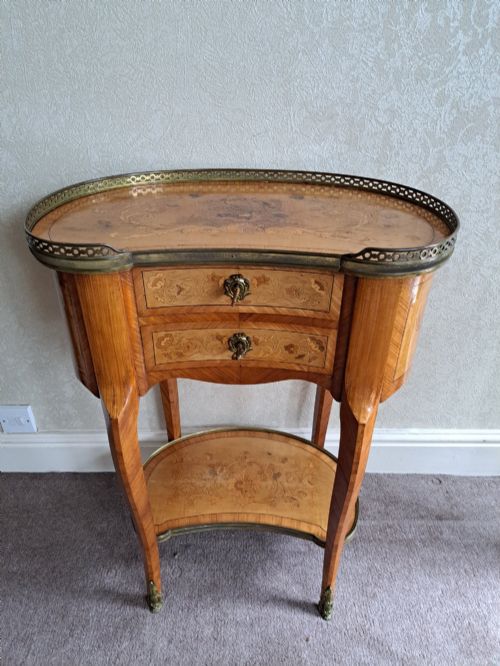
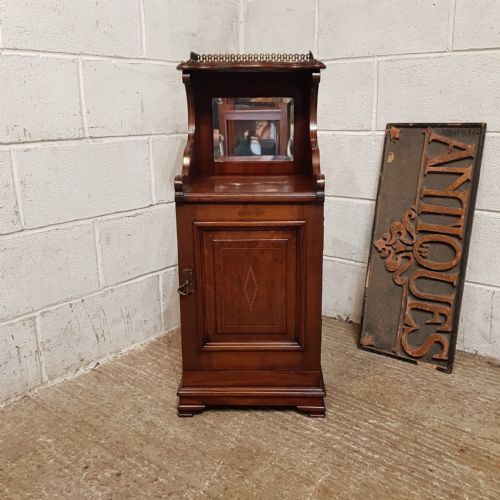
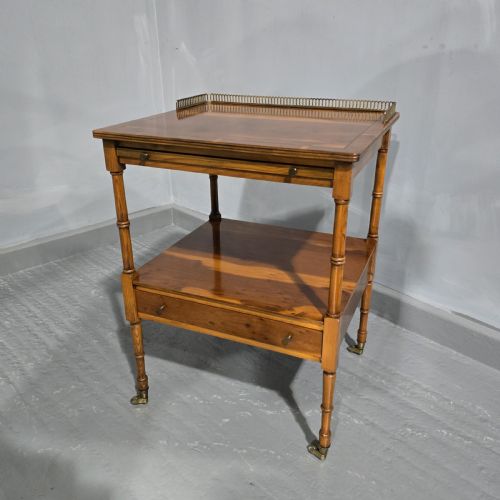
When you search for a brass gallery nightstand, you find compact bedside tables, cabinets and commodes defined by their raised metal railing. These pieces take various forms, from kidney-shaped lamp tables to marble-topped cupboards.
The pieces appearing on this page stem largely from the Victorian and Edwardian eras, alongside pieces dated to the 1920s and 1930s. French revivals of the Louis periods dominate the selection, bringing Continental forms into British bedrooms.
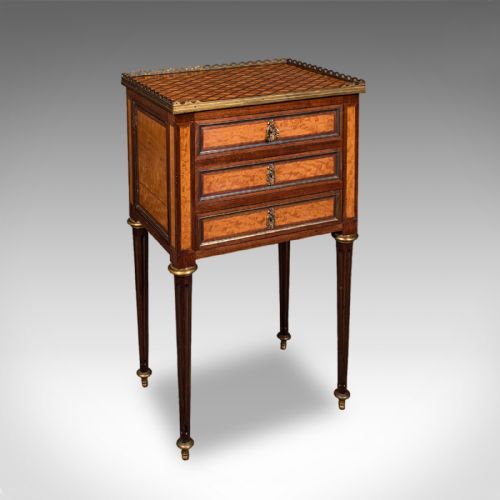
Cabinets often feature enclosed storage with doors or drawers, while lighter tables offer open tiers or parquet surfaces. Each piece serves the practical function of holding nighttime essentials while adding historical character to a room.
How they were made
Cabinetmakers used dense timbers such as mahogany, walnut and oak as the foundational structure for these bedside pieces. Finer examples applied kingwood, tulipwood and marquetry veneers to create decorative patterns across the surfaces.
Brass formed the signature gallery rails that encircled the tabletops, sometimes accompanied by ormolu mounts and gilt metal accents. Marble tops, including breche d'alep, provided durable and cool surfaces for daily use.
Brass Gallery Nightstand Retail Price Guide 2026
Typical asking prices for brass gallery nightstand among the pieces listed under this phrase on Sellingantiques today, from the lower quarter to the upper quarter. They describe what is for sale here now, not the wider market.
Charles Topino inspired late nineteenth-century French cabinetmakers to cover small tables in intricate marquetry.
What varies in quality
The standard of timber selection and marquetry inlay sets the baseline for quality among these bedside items. Finely cut veneers and precise parquetry patterns require skilled handwork that distinguishes superior pieces.
The weight, casting quality and attachment of the brass gallery rail indicate the overall craftsmanship of the piece. Solid construction in the drawers and door frames ensures the furniture withstands daily bedside use over generations.
The Brass Gallery Nightstand Glossary
- Gallery
- A raised railing of brass or wood running around the edge of a tabletop to prevent items from sliding off. This metal fringe defines the appearance of the bedside table.
- Marquetry
- Decorative patterns formed by fitting together small pieces of veneered wood of different colours and grains. Artisans used this technique to ornament cabinet doors and tabletops.
- Parquetry
- Geometric wood inlay forming repetitive patterns such as cubes or chequers across a surface. It provides a structured contrast to curved furniture forms.
- Ormolu
- Gilded bronze mounts applied to furniture for decorative effect, common on French revival pieces. The metalwork highlights the corners and legs of cabinets.
- Etagere
- A small open shelving unit or side table with multiple tiers for display. These pieces offer lighter alternatives to enclosed bedside cabinets.
Brass Gallery Nightstand: Frequently Asked Questions
What is a brass gallery?
A brass gallery is the small decorative railing that runs around the perimeter of the tabletop. It stops items from rolling off the surface.
Cabinetmakers integrated these railings into bedside tables and commodes during the nineteenth and early twentieth centuries.
How do I use a nightstand with a marble top?
Marble-topped nightstands provide a cool, water-resistant surface that handles bedside water jugs and glasses safely. They require minimal upkeep beyond regular dusting.
Avoid placing acidic liquids directly on the stone to protect the polish over time.
Are these tables French or English?
The selection includes both British pieces in mahogany and oak, and French continental items featuring kingwood and marquetry. French revival styles strongly influence the design of many tables.
Details like ormolu mounts and kidney shapes point toward French workshop traditions.
How do I date a bedside cabinet?
Dating relies on timber choices, construction methods, and stylistic revivals recorded in the piece. Victorian and Edwardian examples show distinct handling of veneers and hardware.
Comparing the joinery inside the drawers helps confirm the period of manufacture.