
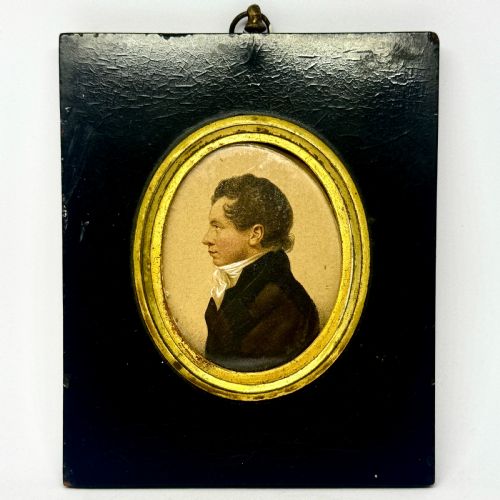
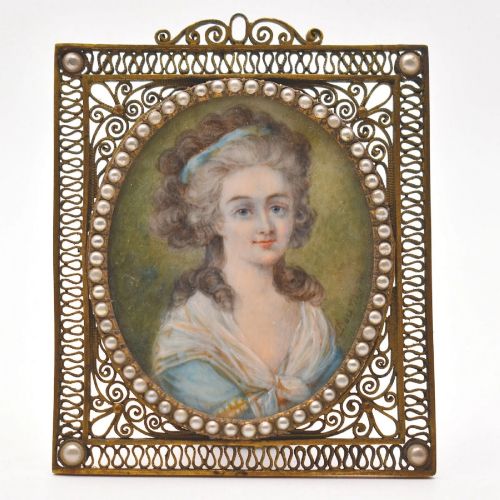


Brass Framed Miniature Painting
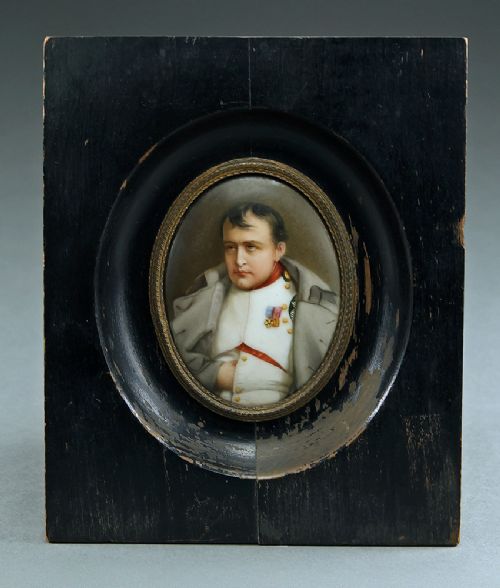
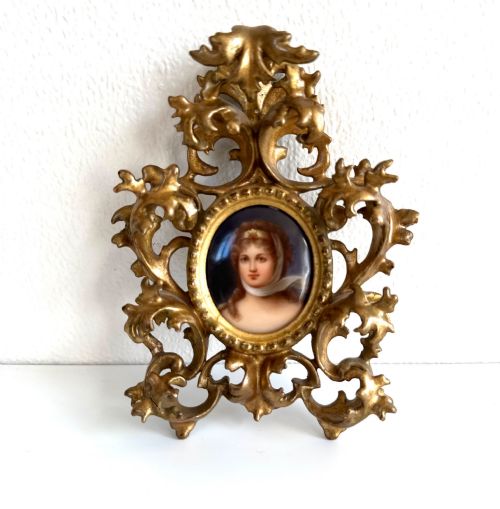
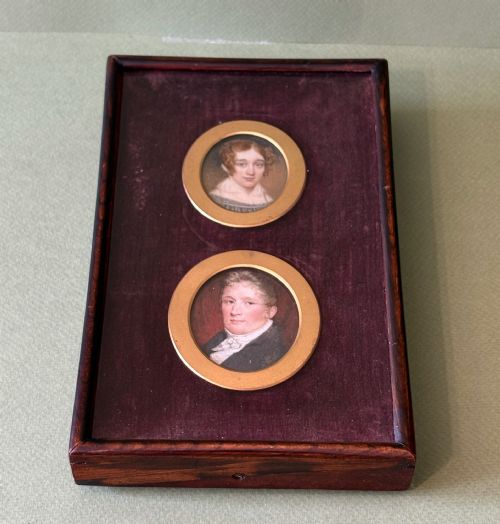
These pieces of brass framed miniature painting deliver intimate likenesses in miniature, treasured for their delicate portraiture and historic metal enclosures.
Brass Framed Miniature Painting
A brass framed miniature painting comprises small-scale works depicting individual likenesses, ranging from early Georgian profiles to detailed Victorian studies. Buyers look for these portraits to bring personal, historic character into domestic spaces.
The versions most commonly met on this page include watercolour and gouache portraits set inside polished brass or gilt metal surrounds, often dated across the 18th and 19th centuries.
Works appear in various formats, encompassing oval wall plaques, framed portrait miniatures, and snuff box lids, reflecting the diverse domestic uses of miniature art across Regency and Victorian periods.
How these works were constructed
Makers applied watercolour, gouache, or oil onto surfaces such as paper, card, plaster, or ivory, capturing fine facial details with tiny brushes.
Enclosures combined brass, gilt metal, or ormolu mounts fitted with protective glass, sometimes incorporating ebonised wood or papier-mache structures.
Portraits often integrated specialised elements like seed pearls or hand-painted highlights, secured within cast and polished metal frames.
Listings feature works spanning the 18th century, Regency, and Victorian eras, utilising watercolour, enamel, and glass.
What distinguishes the quality
The skill of the brushwork dictates the standing of a piece, separating hasty student work from precise portraiture executed by accomplished artists.
The execution and preservation of the housing matter deeply, as crisp casting in the brass or gilt metal frame and clean, stable glass elevate the overall object.
Strong provenance and legible signatures by recorded artists anchor the historical merit of a miniature above unsigned or anonymous examples.
James Gillespie·John Miers·J Deacon·Susie Lassam·George Atkinson·Archibald Skirving·Emma Kendrick·Jeremiah Steele
The Brass Framed Miniature Painting Glossary
- Miniature portrait
- A small-scale painting, typically a likeness of a person executed with fine detail. These works were designed to be portable or displayed in compact domestic spaces.
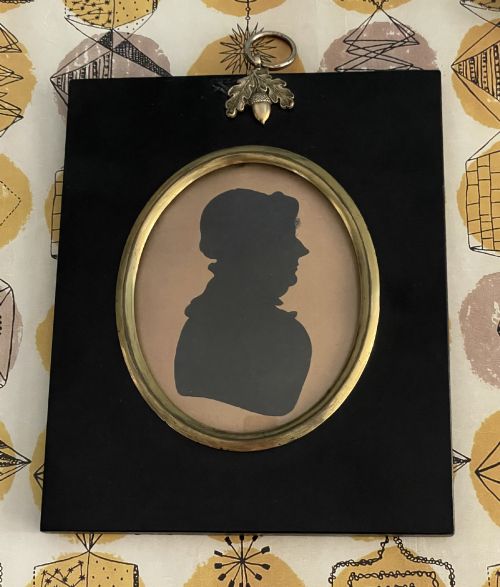
- Silhouette
- A portrait represented as a solid shape of a single colour, usually black, showing the profile in contrast. Artists often painted these on card, plaster, or glass.
- Gilt metal
- A metal base treated with a gold-coloured finish or plating to resemble solid gold. It provides a decorative and protective boundary for small paintings.
- Ormolu
- Finely chased and gilt bronze used for decorative mounts and frames. This technique imparts a rich, golden sheen to the exterior housing of plaques and portraits.
- Plaster
- A solid composition material used as a flat ground for painted profiles. It offers a smooth surface that holds fine silhouette work securely.
Brass Framed Miniature Painting: Frequently Asked Questions
How were miniature portraits displayed originally?
Owners hung small framed portraits in intimate rooms like boudoirs or placed them on desks and tables using attached metal stands.
Some pieces also functioned as portable tokens or adorned personal items such as snuff boxes.
How do I date a brass framed portrait?
Clothing styles, hairstyles, and framing techniques offer clear clues to the period of origin.
Georgian and Regency works often feature high-waisted dresses or distinct profile silhouettes, whereas Victorian examples display different mounting styles.
Are these works signed by artists?
Certain pieces bear signatures or attribution to known miniaturists and silhouette artists working in the eighteenth and nineteenth centuries.
Many surviving examples remain unsigned, reflecting the commercial output of period portrait studios.