
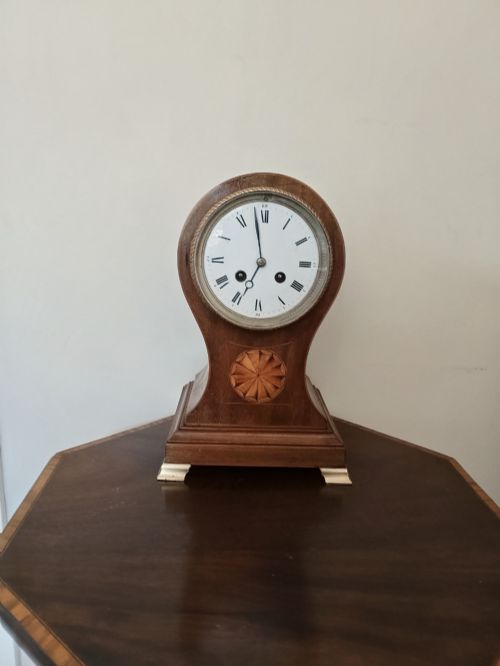



Brass Footed Mantel Clock
A brass footed mantel clock brings mechanical precision and fine timber cases into the room, offering a focal point that anchors a study or living space.
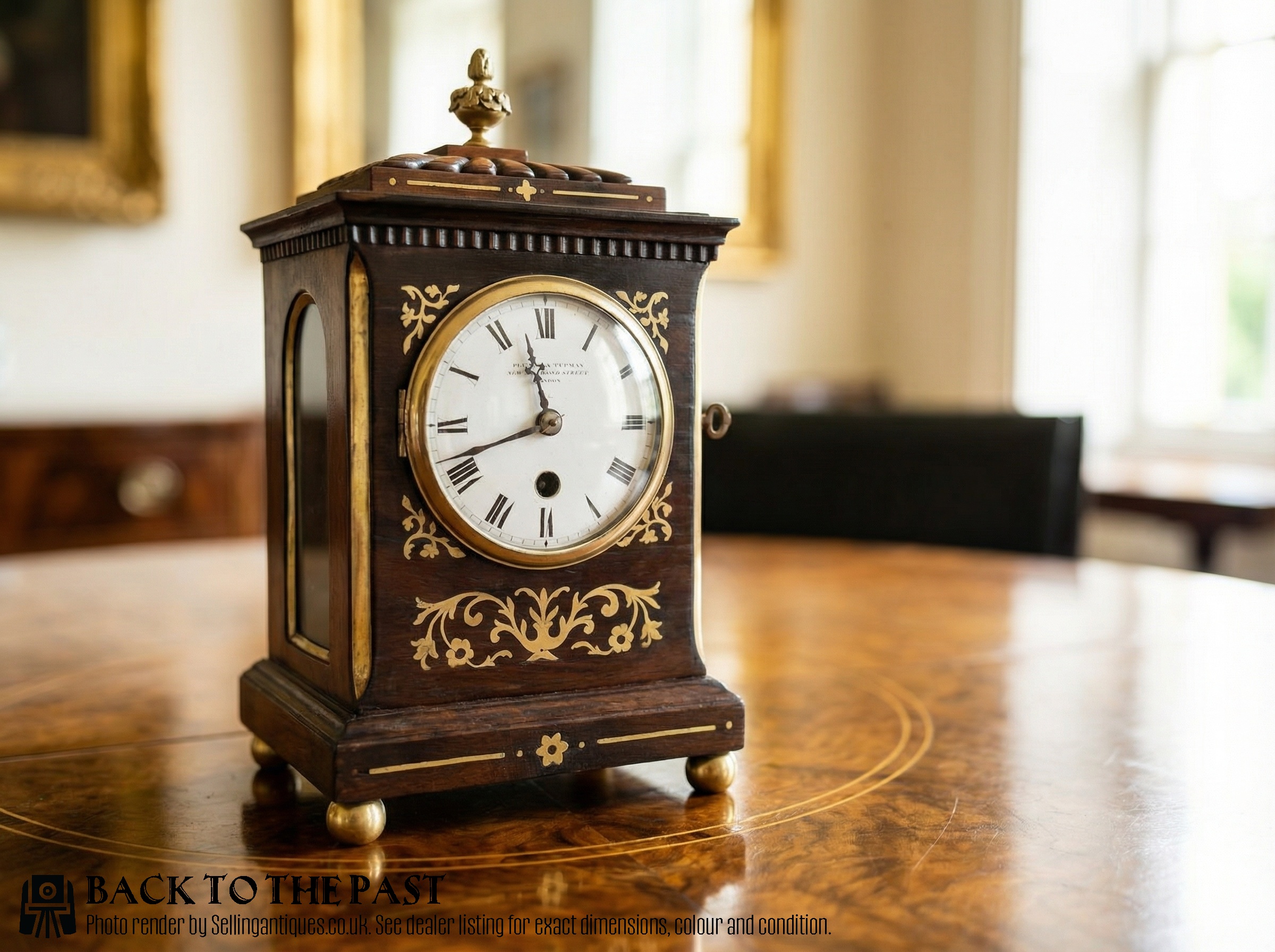
Brass Footed Mantel Clock
A brass footed mantel clock is typically housed in a timber case and raised on small brass feet, combining timekeeping utility with furniture-grade cabinet work. These clocks appear across the Georgian, Regency, Victorian, and Edwardian periods, manifesting in bracket, library, and balloon styles.
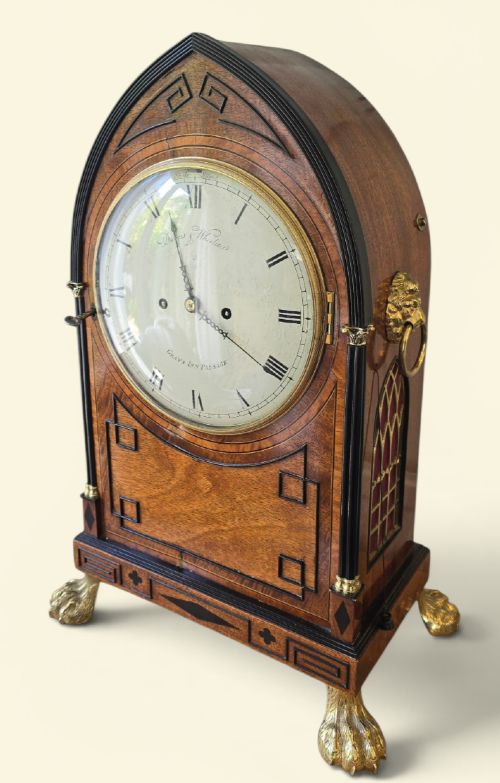
The most common examples on this page are mahogany bracket clocks dating from the nineteenth century, often featuring fusee movements and inlaid details in satinwood or ebony. Makers ranged from provincial West Country horologists to prominent London firms operating from Gray's Inn Passage or the City.
Cases follow architectural and decorative shifts, moving from the sharp lancet arches of the early nineteenth century to the softer balloon curves and break-arch profiles of later decades. Enamel dials and protective glass bezels complete the standard format, which sits easily upon a mantelpiece or library shelf.
Judging quality and execution
Quality rests upon the crispness of the timber case, the precision of the inlay work, and the reputation of the horologist whose signature appears on the dial. A higher grade of clock displays finely pierced brass frets, clean carving, and balanced proportions that reflect the aesthetic standards of its period.
Internal movement finishing marks the division between standard production and superior craftsmanship, visible in the hand-engraving on backplates and the robustness of the gear train. The integration of the brass feet and mountings with the wooden base also indicates the level of care invested in the original commission.
Several clocks carry the names of West Country makers alongside London masters, proving good time was kept far beyond the capital.
Bush of London·Desbois & Wheeler·L. Vick of Stroud·Hyde of Salisbury·Louis Recordon·Joseph Jump·Leplastrier of London·Plumbly & Tupman
The Brass Footed Mantel Clock Glossary
- Fusee
- A conical pulley used in mechanical clocks to maintain an even pull on the movement as the mainspring unwinds. This mechanism ensures more accurate timekeeping throughout the running period.
- Bracket clock
- A portable spring-driven clock originally designed to sit on a wall bracket or a table. Despite the name, many examples function entirely as mantel or shelf clocks.
- Lancet clock
- A clock featuring a pointed, arched top resembling a Gothic church window. This architectural silhouette gained popularity during the Regency and early Victorian eras.
- Balloon clock
- A table or mantel clock housed in a case whose curved silhouette resembles the profile of a hot air balloon. These forms emerged strongly in the later nineteenth century.
- Enamel dial
- A clock face made by fusing powdered glass onto a copper or brass base at high temperatures. The resulting smooth surface resists tarnishing and provides high contrast for painted numerals.
Brass Footed Mantel Clock: Frequently Asked Questions
What is a fusee movement?
A fusee movement uses a conical pulley and cord to equalise the power delivered by the mainspring as it unwinds. This clever device ensures consistent force reaches the escapement from the beginning to the end of the winding cycle.
Clocks equipped with fusee movements generally demonstrate higher standards of mechanical execution and were built for more exacting timekeeping.
Where should I place a mantel clock?
These clocks belong on stable, level surfaces such as mantelpieces, chests of drawers, or library shelves where vibrations remain minimal. Keeping the clock away from damp walls and direct sunlight protects both the timber veneer and the delicate internal brasswork.
Ensure the surface allows the clock to stand plumb so the pendulum or balance wheel beats evenly.
How can I tell the period of a clock case?
Case timber, architectural proportions, and decorative details provide the clearest clues to age. Georgian and Regency pieces favour rich mahogany with clean stringing and architectural brackets, whereas Edwardian examples often revisit earlier Sheraton revival forms with lighter inlay.
Dial signatures and the presence of makers' names engraved on the backplate also help anchor the piece within a specific decade.