



Brass Fireplace Supports
Brass fireplace supports are sturdy hearth furniture designed to hold logs aloft for better airflow, bringing warmth and metallic gleam to an open fire.
Brass Fireplace Supports
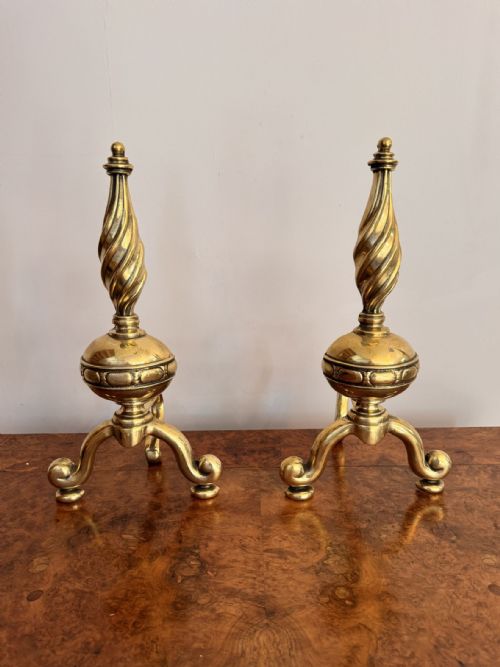
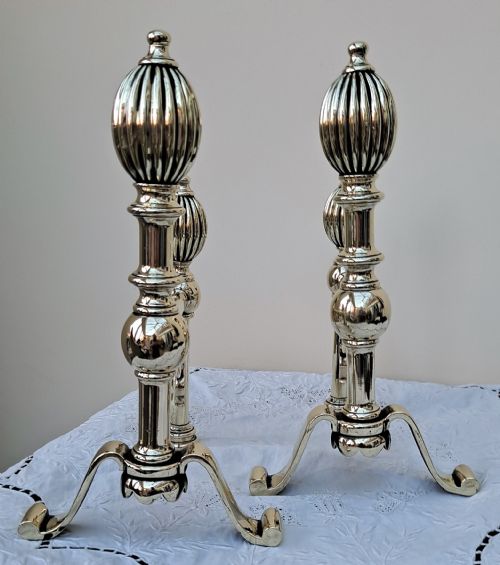
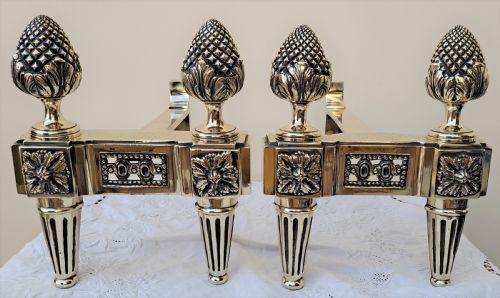
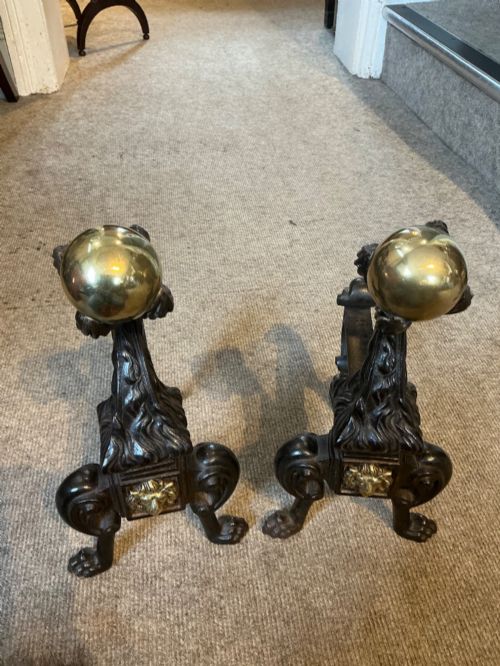
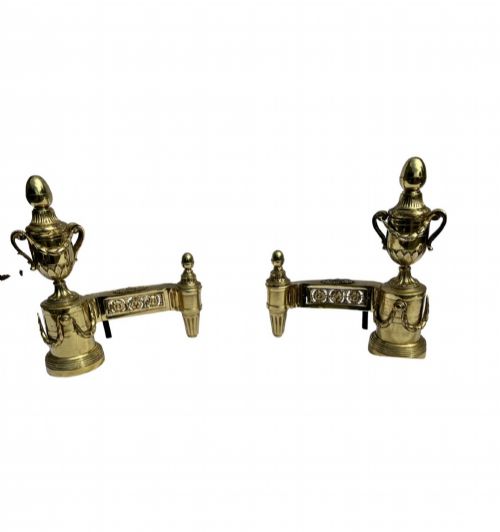
Brass fireplace supports appear on this page as pairs of functional hearth accessories, spanning forms like fire dogs, andirons, and chenets. These heavy metal supports date primarily from the nineteenth century, encompassing Victorian and Regency periods alongside earlier Georgian examples.
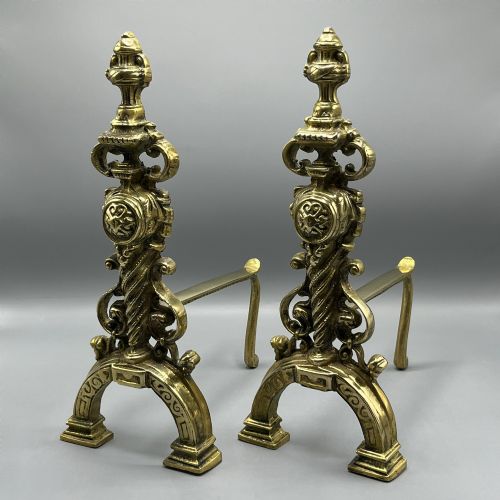
Most items you will meet on this page are matched pairs designed to sit either side of the hearth. They range from simple functional standards to large, ornate decorative pieces shaped in French Provincial, Neoclassical, and Gothic Revival styles.
Materials and construction
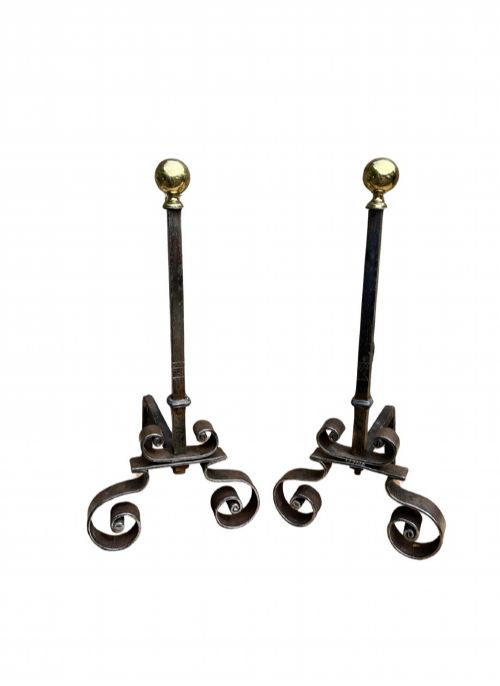
These hearth pieces utilise solid brass, cast iron, and wrought iron in varying combinations to achieve both weight and decorative surface appeal. Founders cast the main bodies in moulds before finishing the brass surfaces by hand.
Finer examples incorporate bronze, copper, and ormolu mounts to add contrasting metallic tones and intricate decorative detail to the primary brass structure.
Listings feature brass fireplace supports spanning the Georgian, Regency, and Victorian eras, alongside later revival styles up to the nineteen-twenties.
Judging quality in hearth supports
The distinction between standard utility items and superior examples lies in the crispness of the casting and the depth of the hand-finishing. Better pieces display sharp architectural moulding, clean chasing on the brass, and substantial weight in the iron bars.
Proportion and decorative restraint often separate mass-produced later items from master-patterned nineteenth-century works. Superior pairs balance decorative ornamentation with robust structural ironwork built to withstand intense hearth heat.
The Brass Fireplace Supports Glossary
- Andirons
- Horizontal bars supported by vertical pillars, placed in a hearth to raise logs for better combustion. They form the primary category of fireplace supports.
- Chenets
- French term for firedogs or andirons, often highly decorative and associated with continental styles. They frequently feature ormolu or bronze mounts.
- Firedogs
- Alternative name for andirons, consisting of a vertical front standard and a horizontal rear billet bar. They protect the hearth back and support the fuel.
- Ormolu
- Finely ground high-carat gold-mercury amalgam applied to a bronze base metal. This technique creates a rich, enduring golden surface on decorative mounts.
- Wrought iron
- Tough, malleable iron beaten into shape by a blacksmith, commonly used for the functional billets and bars attached to decorative brass fronts.
Brass Fireplace Supports: Frequently Asked Questions
What is the difference between andirons and fire dogs?
Andirons and fire dogs are simply different names for the exact same hearth furniture. Both terms describe a pair of metal supports used to hold logs above the hearth floor.
Historically, regional preferences determined which term makers used, but structurally they serve identical functions in managing an open wood fire.
Can I actually use antique andirons in a working fireplace?
Most antique brass and iron supports are robust enough for occasional or regular use in an open hearth. The heavy cast iron and solid brass components withstand high temperatures effectively.
Buyers should inspect the iron billets at the rear to ensure they remain strong and free from deep corrosion before burning logs.
How do I identify Victorian brass supports?
Victorian pieces frequently display heavier casting, ornate detailing, and historical revival motifs such as Gothic or Baroque flourishes. Makers during this era embraced complex decorative patterns and often combined brass fronts with sturdy wrought iron.
Examining the casting seams and the style of the feet helps distinguish these mid-to-late nineteenth-century examples from earlier Regency or Georgian work.
Why do some andirons include iron parts alongside brass?
Makers combined brass with iron because each metal served a distinct purpose in the hearth. Brass provided a bright, decorative frontage that reflected firelight into the room.
Iron supplied the necessary strength and heat resistance for the horizontal bars that directly supported burning logs.