


English Brass Firedogs
English brass firedogs anchor the hearth with bright metal and robust form, offering both practical fuel support and period character to a room.
English Brass Firedogs
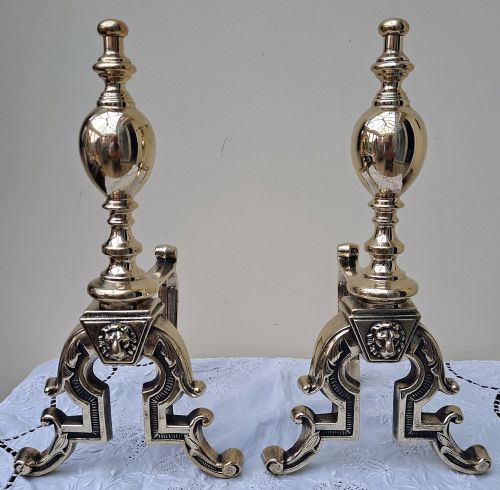
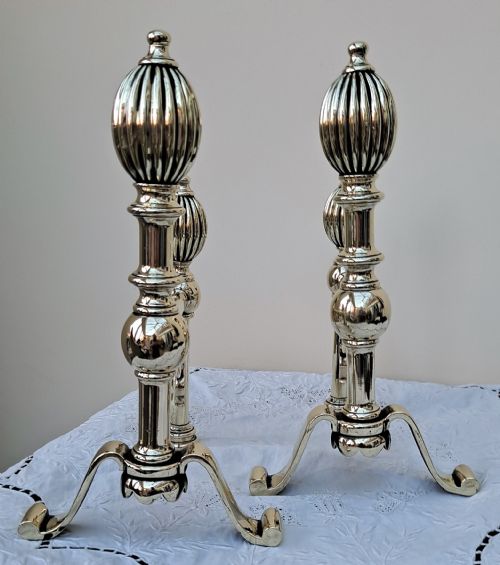
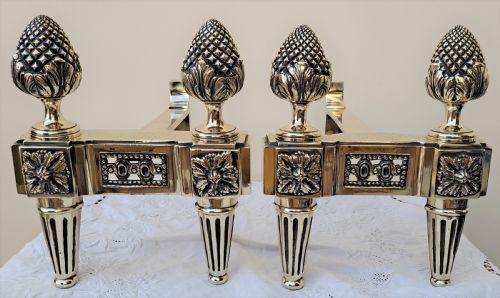
English brass firedogs, also known as andirons or fire dogs, support logs within an open fireplace while presenting a decorative front to the room. The selection here brings together pieces primarily from the nineteenth century and the Victorian era.
Buyers encounter pairs designed for hearth use, including styles that draw on earlier Georgian and seventeenth-century revivals, alongside pieces featuring Aesthetic Movement and Victorian Neoclassical details. Associated hearth furniture such as fire tool rests and companion tool suites also appear within this group.
Most examples combine a brass facade with structural iron, steel, or wrought iron components to handle the weight of fuel and the heat of the fire. The forms vary from traditional columnar and urn-topped designs to more ornate period interpretations.
How they were made
The construction of these pieces relies on a combination of cast or spun brass for the visible fronts and durable iron or steel for the horizontal billets that bear the weight of the logs. Wrought iron and copper elements appear in specific components, providing structural strength or contrasting tonal detail.
Maker techniques involve metal casting for decorative finials and feet, joined securely to robust iron bars designed to withstand high hearth temperatures over generations of use.
Some pairs include dedicated tool rests, proving that nineteenth-century sweeps and homeowners appreciated an orderly shovel and poker.
What varies in quality
Quality across these pieces rests on the crispness of the brass casting and the substantial weight of the underlying iron and steel framework. Finer examples display deeper relief in decorative elements, cleaner joints, and heavier gauge metals that indicate careful period workmanship rather than lighter commercial production.
The English Brass Firedogs Glossary
- Andiron
- A metal support used in pairs to hold logs in an open fireplace. They elevate the wood to improve air circulation.
- Billet
- The horizontal iron bar extending backward from the firedog to support the burning logs. It bears the primary weight and heat.
- Aesthetic Movement
- A late nineteenth-century design style emphasising visual beauty over narrative content. Pieces from this movement often feature distinct linear motifs.
- Neoclassical
- A style drawing inspiration from classical antiquity, often incorporating balanced symmetry, urns, and architectural columns. It appears frequently in Victorian hearth furniture.
English Brass Firedogs: Frequently Asked Questions
What is the difference between firedogs and andirons?
The terms are used interchangeably to describe the same hearth accessories. Both refer to the metal supports placed on either side of the fireplace.
Historically and practically, they serve to keep logs elevated for better burning and draw the eye as a decorative focal point.
How were english brass firedogs used?
They sat within the fireplace hearth to hold logs off the floor, allowing oxygen to circulate underneath the fire for a cleaner burn.
The decorative brass fronts remained visible in the room even when the fireplace was not in active use.
How do I date a Victorian brass firedog?
Dating relies on stylistic clues such as Aesthetic Movement linear details or Neoclassical motifs combined with nineteenth-century manufacturing methods.
Examining the weight, construction joints, and metal combinations helps distinguish a Victorian piece from a later reproduction or an earlier Georgian original.
Can these firedogs be used in a working fireplace?
Most pieces combine a brass front with a sturdy iron or steel billet designed to handle wood fires.
Buyers should inspect the structural iron components to ensure they remain solid and capable of bearing log weight before lighting a fire.