

Brass Fireplace Spark Screen
A brass fireplace spark screen protects a room from stray embers while adding a decorative metallic focal point to the hearth.
Brass Fireplace Spark Screen
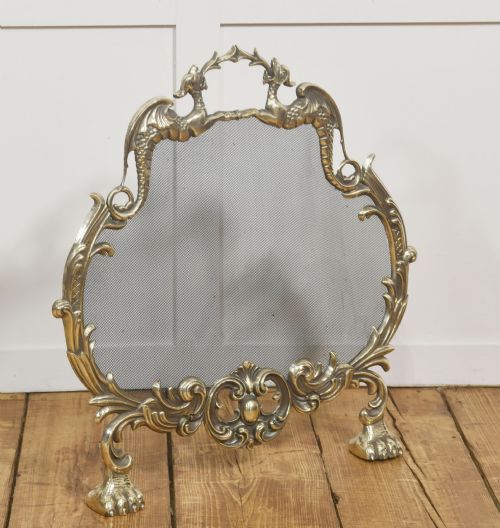
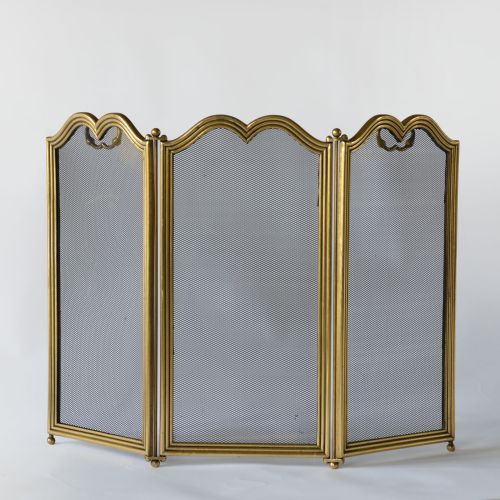
A brass fireplace spark screen serves a dual purpose by containing flying sparks and dressing an inactive hearth during warmer months. Buyers hunting for a brass fireplace spark screen encounter various configurations, from folding fan designs to rigid mesh panels.
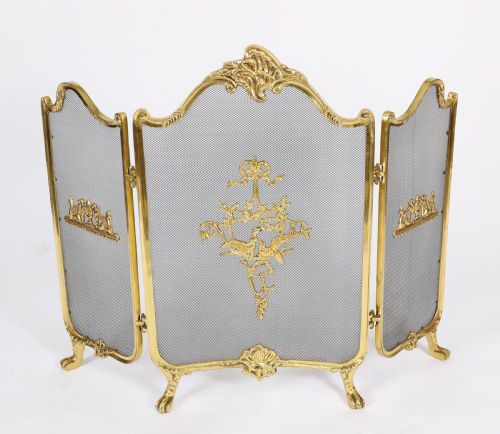
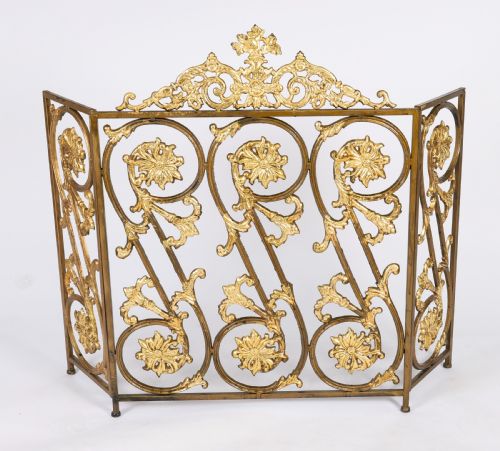
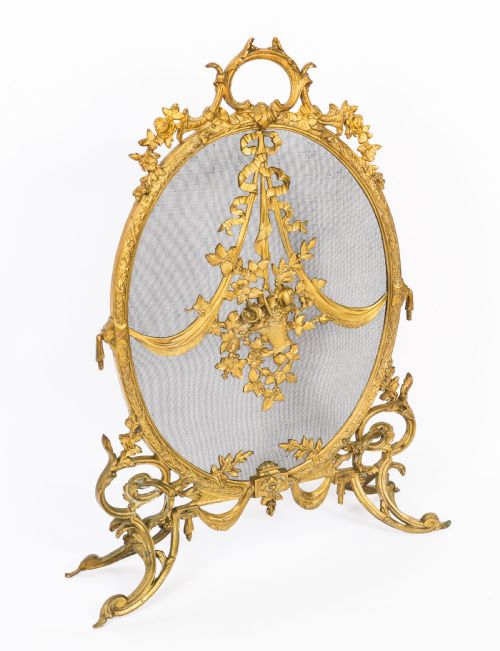
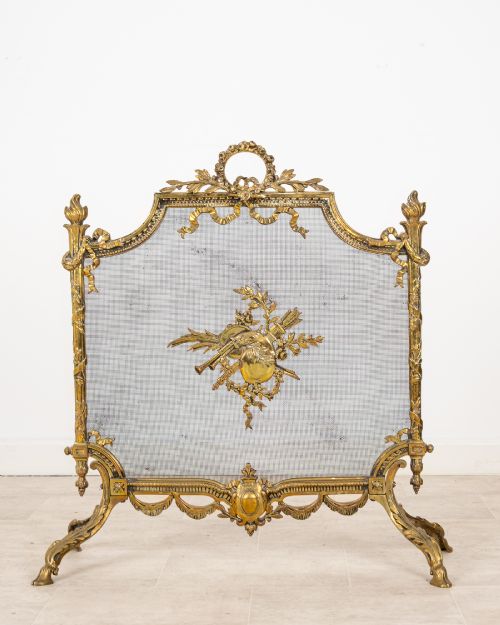
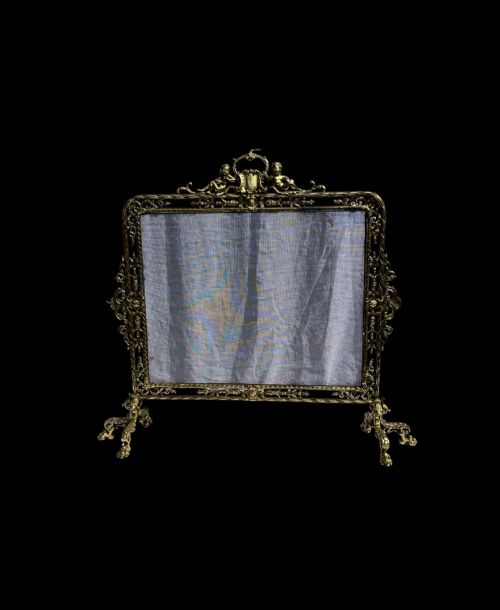
The selection spans multiple periods, featuring Victorian and Edwardian examples alongside French Rococo and Empire revival pieces. Many items utilise simple wire mesh frames, while others incorporate elaborate cast brass frames with decorative handles and feet.
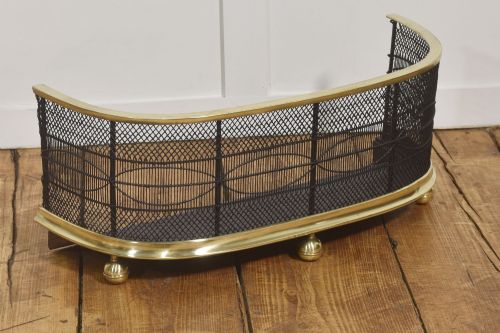
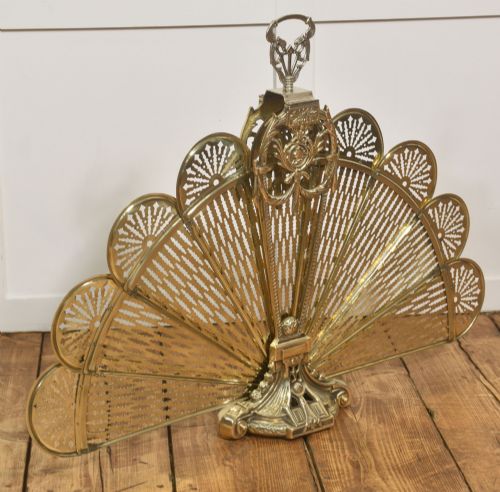
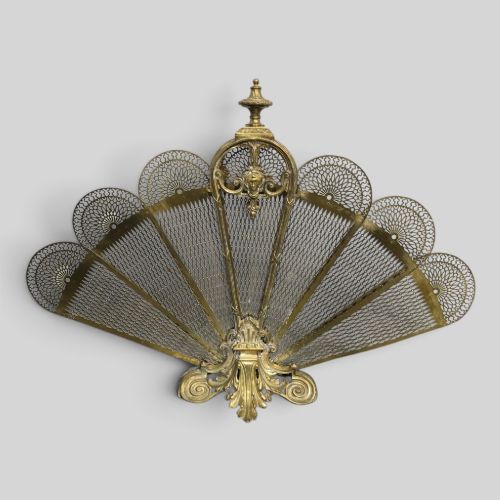
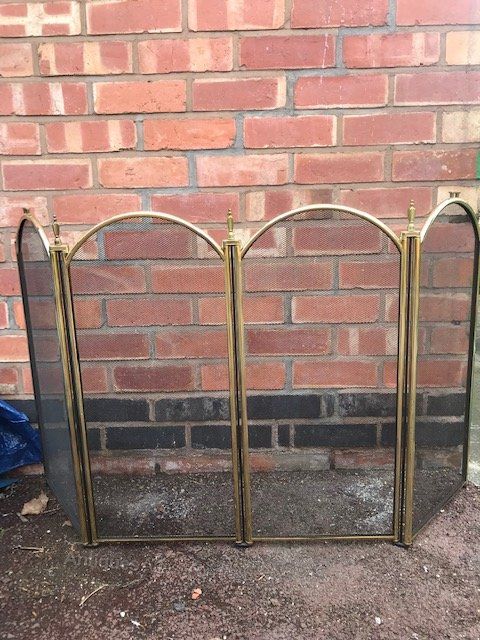
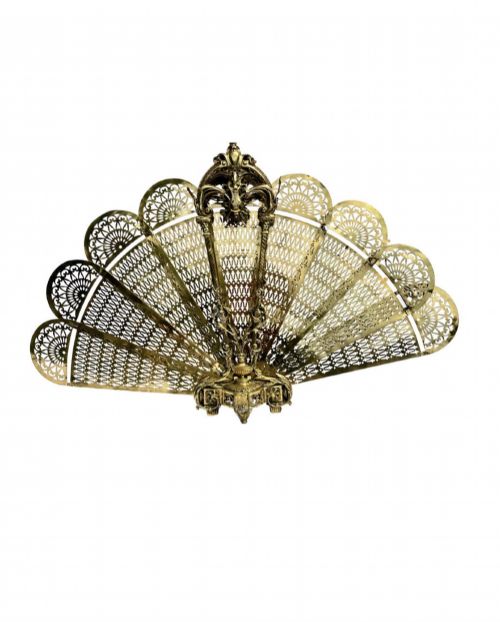
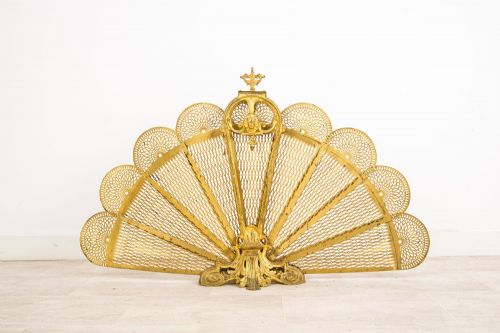
Common forms include tripartite folding guards, nursery fenders, and peacock fan screens that expand outwards. These objects originate from British, French, and Dutch workshops, showing varying degrees of ornamentation from plain brass to chased gilt bronze.
Materials and construction
Makers constructed these fire guards primarily from brass sheets, wire mesh, and iron frames, frequently employing gilt bronze for high-end French revival pieces. Workshops utilised casting, piercing, and embossing techniques to pattern the metalwork.
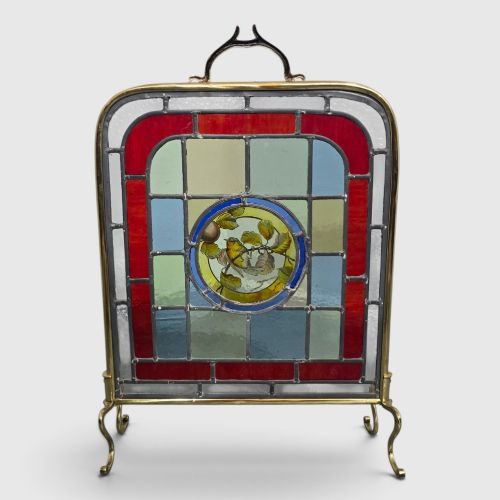
Folding screens rely on hinged sections of brass mesh or articulated plates, whereas peacock fan screens employ sliding blades that pivot from a central base. Artisans sometimes combined brass with oak frames, cut glass panels, or applied cast trophies and coats of arms.
Several Victorian nursery fenders included built-in clothes rails so families could dry damp garments safely by the hearth.
Assessing quality
Quality reveals itself in the weight of the metal and the crispness of chased or pierced details on the frame. Superior examples demonstrate robust hinges that hold folding sections firmly without sagging.
French gilt bronze and ormolu pieces typically display finer hand-chiselling on classical trophies and floral motifs compared to mass-produced stamped brass guards. The integrity of the wire mesh and the stability of the supporting feet dictate the durability of each piece.
The Brass Fireplace Spark Screen Glossary
- Spark guard
- A protective barrier placed before an open fire to catch flying embers and ash. These screens use fine wire mesh to maintain visibility of the flames.
- Peacock fan screen
- A folding hearth guard with radiating metal blades that expand into a semicircle resembling a peacock tail. They fold compactly when the fireplace is in use.
- Nursery fender
- A low, protective metal enclosure designed to keep children and pets at a safe distance from the hearth. They often feature an integrated mesh spark guard.
- Ormolu
- Finely chased and gilt bronze mounts applied to decorative objects and fire screens. The technique involves fusing a gold-mercury amalgam onto a bronze base.
- Repoussé
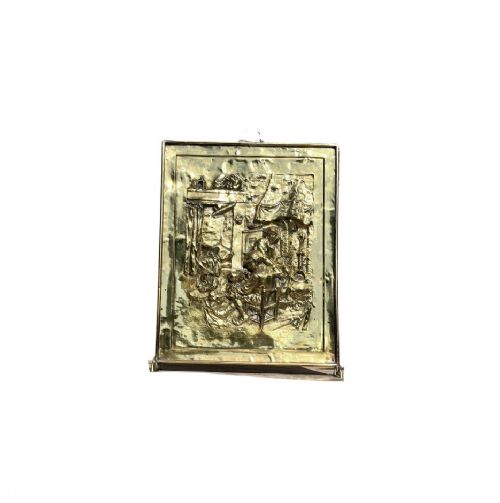
- Metalworking technique where the artisan hammers the design from the reverse side to create a raised relief pattern. Embossed brass panels on fire screens frequently utilise this method.
Brass Fireplace Spark Screen: Frequently Asked Questions
How do I clean a brass fire screen?
Dust the wire mesh and frame regularly with a dry cloth to prevent soot accumulation. Avoid harsh chemical polishes that strip historic patination from the brass.
For stubborn grime, use mild soapy water on a soft brush, ensuring the metal dries completely afterwards. Take care not to damage delicate hinges or pierced fretwork during cleaning.
Are these screens safe for open fires?
Most antique brass and wire mesh screens function well for containing standard hearth sparks. However, verify that the mesh remains intact without holes or loose joints before use.
Larger nursery fenders and heavy tripartite guards provide substantial barriers against rolling logs. Lighter decorative fan screens suit decorative hearths better than roaring fires.
How do I date a brass fire screen?
Examine the style indicators, such as Victorian aesthetic movement lines or French Rococo revival casting patterns. Construction methods, including hand-cut screws versus machine-made fasteners, also offer chronological clues.
Makers frequently incorporated period motifs like Empire classical trophies or Art Nouveau organic curves into the brass frame design.
What is the difference between a fender and a screen?
A fender sits directly on the hearth floor as a low perimeter barrier around the fireplace opening. Many Victorian examples combine a fender base with an integrated wire mesh spark guard.
A screen stands upright independently in front of the fireplace opening. Screens often feature folding panels or fan mechanisms rather than a fixed floor surround.