



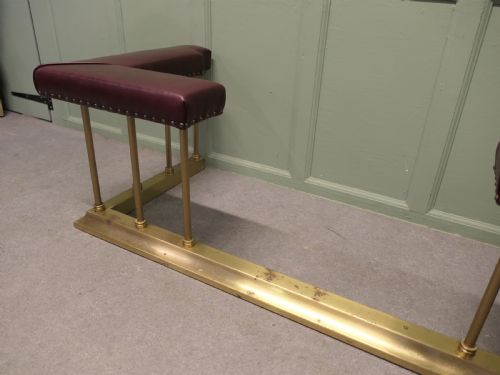


Brass Fireplace Bench
A brass fireplace bench offers low-slung fireside seating, bringing polished metal and leather into the hearth room.
Brass Fireplace Bench
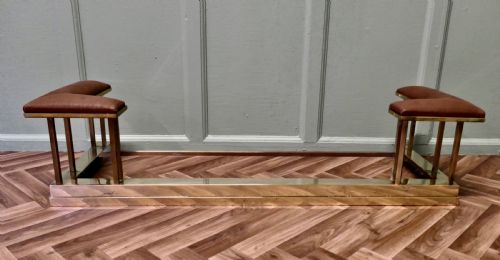
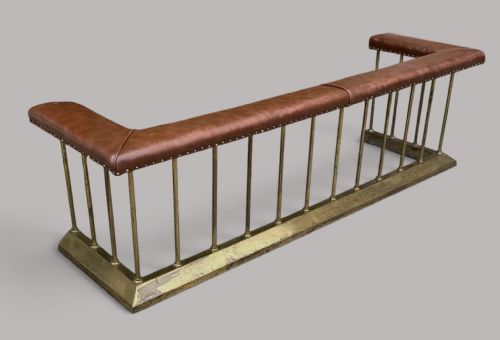
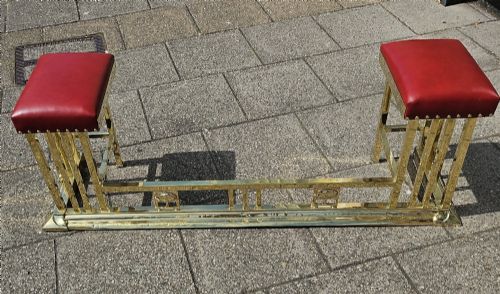
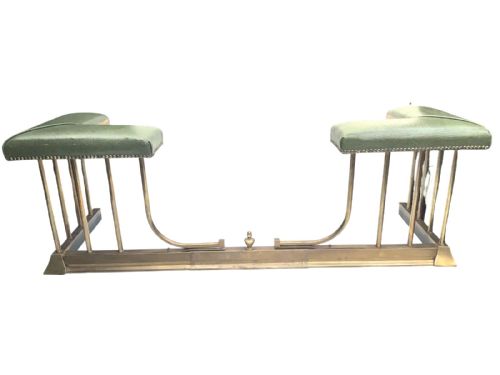
A brass fireplace bench, commonly known as a club fender, provides practical seating around the hearth while keeping the fire contained. These pieces span the nineteenth century through the Edwardian era and into the Art Deco period.
Originating in traditional English country houses, these furnishings adapt easily to both period rooms and modern interiors. The combination of functional ironmongery and domestic comfort defines the category.
How They Were Made
Makers constructed the primary frames using solid brass tubing, cast steel, and copper components joined securely for heavy daily use. Metal surfaces received either a high polish or developed a mature patina over decades of service.
Seats utilise traditional upholstery techniques, securing horsehair or padding beneath durable coverings of tan leather, green leather, or plush velvet. Studded detailing often secures the hide directly to the wooden or metal internal foundation.
One robust steel survivor carries the distinguished provenance of The In & Out Club.
What Varies in Quality
Substantial weight and gauge of the metal framework distinguish superior examples from lighter alternatives. Heavier brass castings and robust steel internal structures ensure the bench remains rigid under frequent sitting.
The choice and condition of the upholstery surface significantly impact the overall character. High-grade leather with mature patination sits at the upper end of the scale, whereas replaced fabric or perished padding alters the integrity.
The Brass Fireplace Bench Glossary
- Club fender
- A low fireside seat built around an open hearth, featuring cushioned tops and a metal frame. This form allowed gentlemen to sit close to the fire in comfort.
- Cast steel
- An alloy melted in crucibles to achieve greater uniformity and strength than basic iron. It forms the durable internal structure of heavier nineteenth-century examples.
- Chesterfield seat
- A heavily buttoned or padded leather surface providing deep comfort. It is frequently found on Edwardian and Victorian hearth seating.
- Patina
- The surface sheen and colour acquired by metal and leather through age and handling. Mature tan leather showcases this quality distinctly.
- Upholstery
- The padded and covered components secured to the frame. In these pieces, it transforms hard metal fire guards into welcoming seats.
Brass Fireplace Bench: Frequently Asked Questions
How do I use a brass fireplace bench?
These pieces sit directly on the floor around an open hearth to provide low guest seating close to the warmth.
They also act as a physical barrier that keeps stray embers safely contained within the fireplace opening.
How do I clean polished brass?
Dust the metal framework regularly with a soft dry cloth to prevent the accumulation of soot and grime.
Avoid harsh chemical abrasives that strip away the historic surface character and original polish.
How do I care for leather seats?
Apply a specialised leather conditioner periodically to keep the hide supple and prevent cracking.
Keep the bench positioned at a safe distance from direct excessive heat to protect the natural material.
How do I date a club fender?
Examine the construction methods, such as the thickness of the brass tubing and the style of the metal castings.
Design details like Art Deco geometry or Victorian proportions point directly to the era of manufacture.