
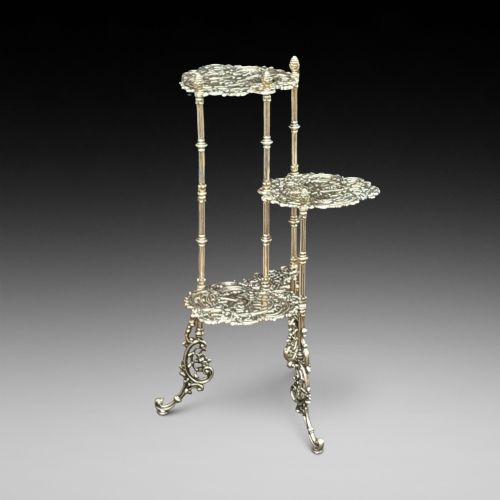
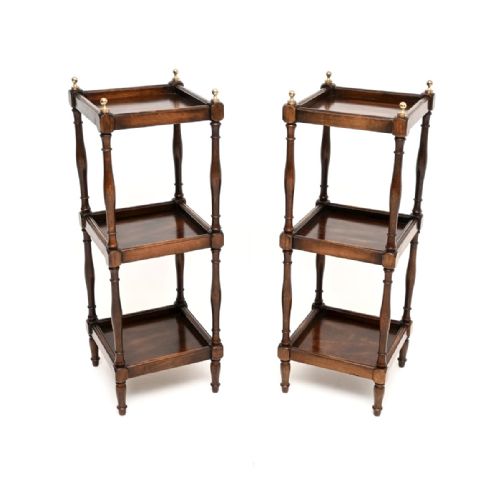
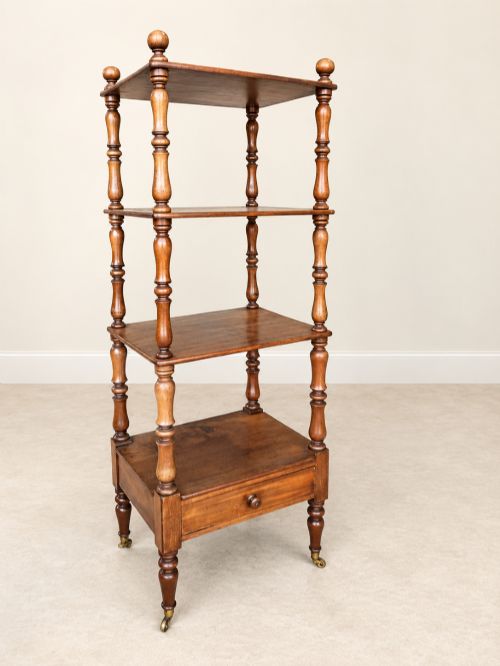
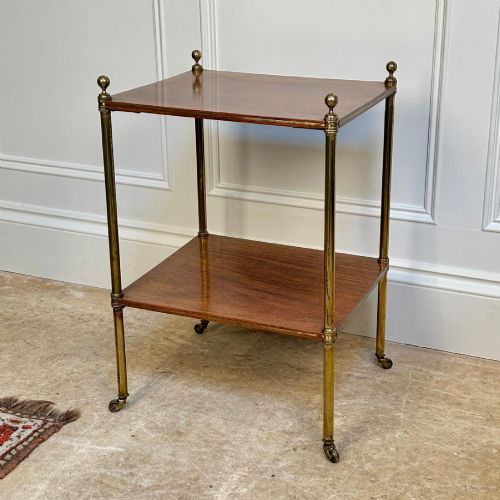

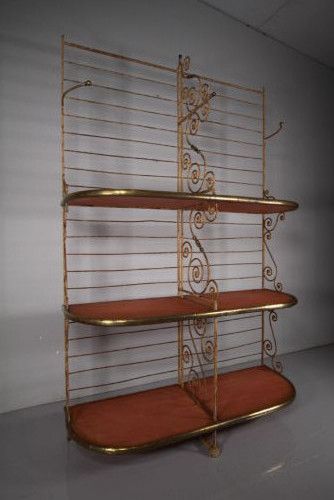
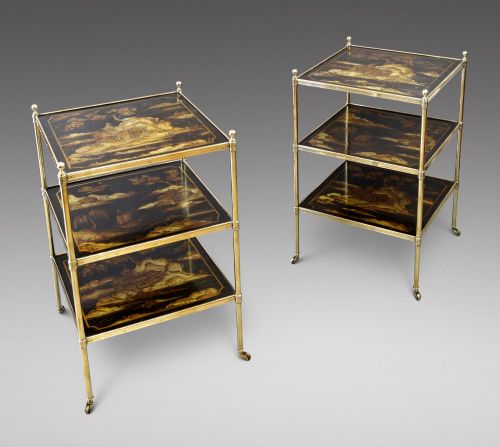
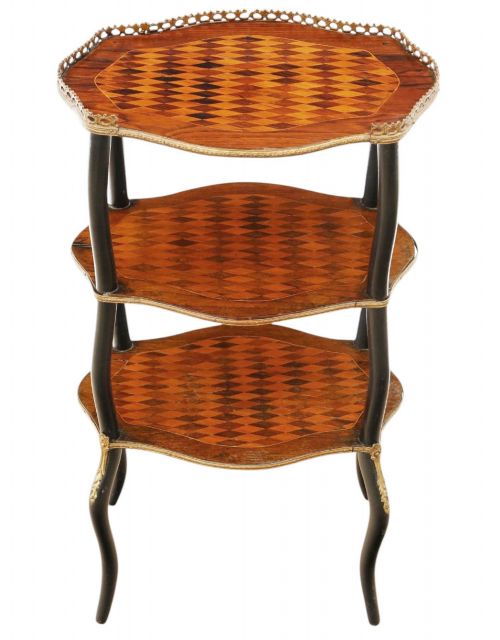
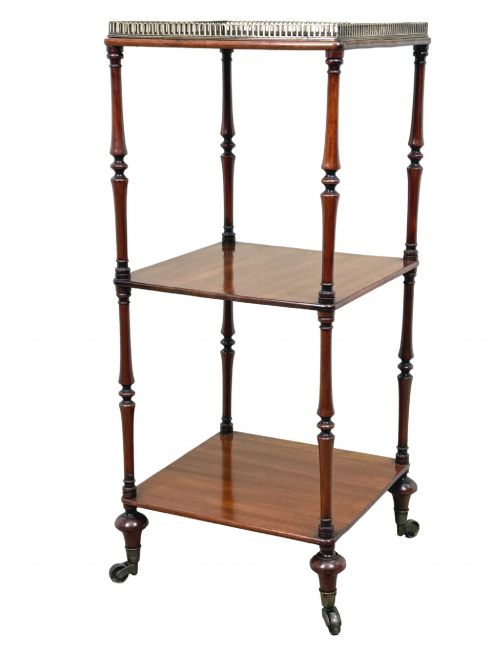


Brass Etagere Stand
These brass etagere stand selections bring multi-tiered display and open storage to a room through traditional frames and gleaming metal mounts.
Brass Etagere Stand
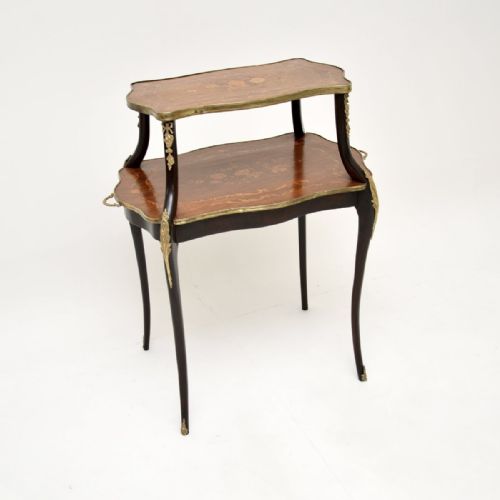
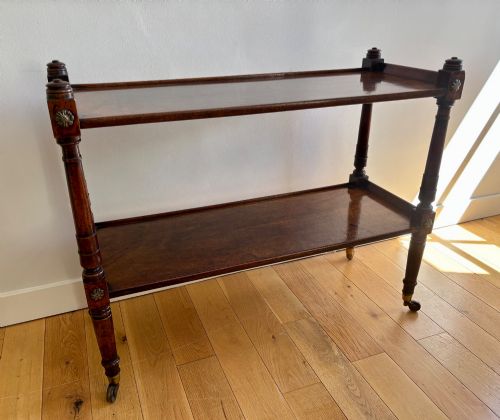
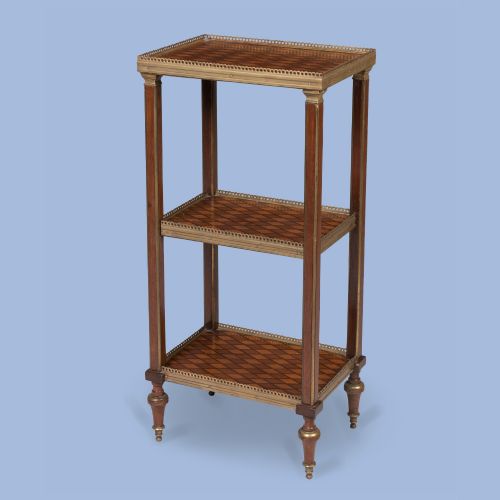
A brass etagere stand provides tiered shelving for display and occasional use, drawing on centuries of domestic and commercial design. When searching for a brass etagere stand, buyers encounter pieces ranging from compact two-tier side tables to tall multi-level display units.
The materials span traditional hardwoods like mahogany, rosewood, walnut, and ebonised wood, alongside glass and polished brass. These tiered stands frequently appear in Victorian, Regency, Edwardian, and French revival styles, incorporating open shelves and delicate galleried edges.
Originating as practical furniture for serving, displaying porcelain, or holding books, these stands serve equally well in modern interiors as lamp tables or plant stands. The forms include corner units, freestanding side tables, and specialised display stands with multiple levels.
Materials and construction methods
Cabinetmakers constructed these stands using dense timbers such as mahogany, rosewood, and walnut, often applying parquetry, marquetry, and intricate inlay work to the surfaces. Brass elements manifest as structural supports, protective feet, delicate galleries, and decorative mounts.
Cast bronze ormolu mounts and brass rods connect the individual shelves, creating rigid multi-tier structures that balance utility with decorative refinement. Glass inserts and mirrored tiers also appear alongside polished wooden boards to lighten the visual weight of the stand.
Distinguishing quality across pieces
Quality rests on the crispness of the brass casting, the precision of the timber inlay, and the structural integrity of the tier supports. Superior examples exhibit fine hand-cut marquetry, substantial brass galleries that remain firmly seated, and dense cabinet timbers that show careful seasoning.
Finer pieces balance heavy tiered loading without sway, utilising robust corner posts and secure joints rather than relying solely on superficial adhesives or thin veneer layers. The refinement of the cast ormolu mounts and the depth of the timber polish separate standard production from master craftsmanship.
W. Turner Lord & Co·Donald Ross
The Brass Etagere Stand Glossary
- Etagere
- A piece of furniture consisting of a set of open shelves for displaying small objects or ornaments. It evolved in France during the eighteenth century.
- Whatnot
- A multi-tiered piece of freestanding furniture designed for storage and display. It gained immense popularity throughout the nineteenth century.
- Ormolu
- Gilt bronze applied to furniture mounts and decorative hardware. It provides a bright metallic contrast against dark cabinet woods.
- Marquetry
- Decorative veneer work forming pictures or geometric patterns using various coloured woods. Craftsmen applied it meticulously to table tops and shelf surfaces.
- Gallery
- A raised ornamental border running along the edge of a shelf or tabletop. It typically uses pierced brass or carved wood to prevent items from sliding off.
- Campaign washstand
- A folding or portable piece of furniture adapted for travel with brass mounts and handles. Many surviving examples feature tiered layouts suited for multi-purpose use.
Brass Etagere Stand: Frequently Asked Questions
What is a brass etagere stand used for?
These pieces serve primarily as open display furniture for porcelain, small collections, books, and decorative objects. Their multiple tiers allow items to be arranged vertically without crowding the room.
In modern spaces, they function effectively as side tables, bedside units, or lamp stands. The open framework keeps light flowing freely around the room while providing practical surface area.
How do I identify a Victorian etagere?
Victorian examples often feature rich mahogany, walnut, or ebonised wood paired with substantial brass columns and galleries. Look for deep timber tones and ornate decorative carving reflecting revival styles.
Construction methods from this era typically involve solid framing beneath polished veneers, combined with heavy cast brass mounts. Maker stamps or labels underneath can occasionally confirm the precise workshop origin.
Where should I place an etagere stand?
An etagere works well in a living room corner, beside a sofa, or against an unobstructed wall where its multi-tier shelving remains visible. Avoid placing delicate polished woods in direct, harsh sunlight to protect the finish.
Because these stands are open on all sides, they allow natural light to pass through. This makes them ideal for brightening tighter spaces or narrow hallways without blocking the flow of movement.
What is the difference between an etagere and a whatnot?
While both terms describe multi-tiered shelving units, an etagere historically leans towards decorative display, often featuring French styling and fine marquetry. A whatnot is traditionally an English form associated with practical tiered storage in domestic interiors.
In practice, the two terms often overlap significantly in antique markets. Both share the characteristic open-shelf structure supported by slender uprights.