


Brass Enamel Table Lamps
These brass enamel table lamps bring rich colour and patterned metalwork directly into a room.
Brass Enamel Table Lamps
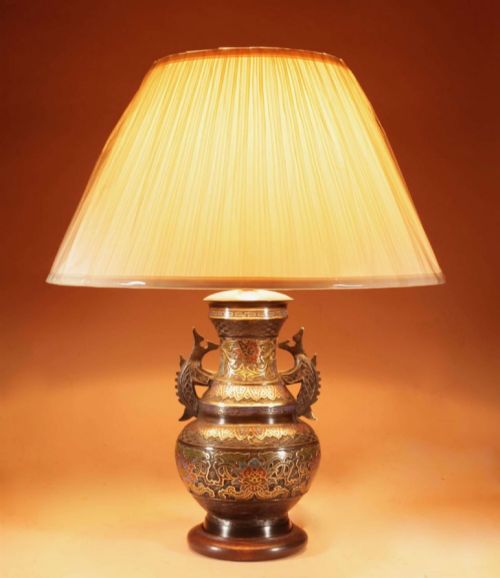
Brass enamel table lamps encompass lighting fixtures formed from metal bases decorated with vitreous enamel work, often adapted from earlier oil lamps or vases. Buyers looking at this selection find a mix of nineteenth-century Asian export vessels and European decorative lighting.
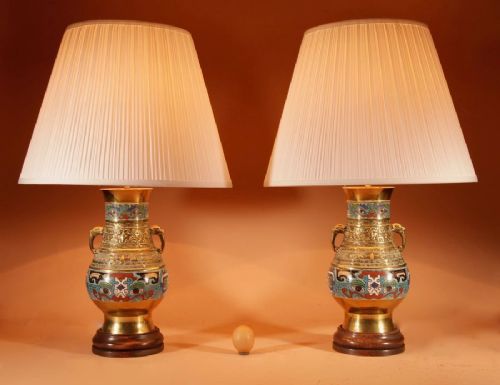
The objects appearing most frequently on this page combine brass, bronze or iron mounts with champlevé, cloisonné or painted enamel panels. Many pieces originate as Chinese or Japanese vases subsequently mounted for electricity in the nineteenth or early twentieth centuries.
Materials and construction
Makers formed the structural elements from cast brass, bronze, copper and iron, often combining metals within a single piece. Surfaces received decorative treatments in coloured enamel, including intricate wire-cell cloisonné and deeply recessed champlevé cells.
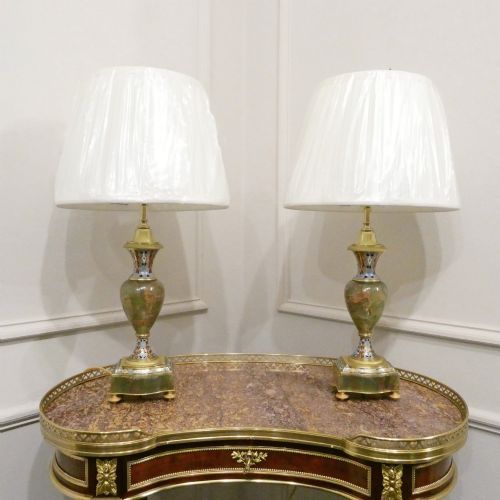
Many examples utilise ceramic, onyx, glass or fabric elements alongside the core metal and enamel body. Conversion from oil burning or vase form to table lamp frequently involved adding bespoke gilt metal mounts and wiring.
Design influences across these pieces include Art Nouveau, Chinoiserie, Meiji period and Qing Dynasty styles.
Variations in quality
Quality rests heavily on the crispness of the enamel work and the weight of the underlying metal casting. Finer examples display precise cell work and well-balanced proportions between the decorative body and the metal mounts.
The sophistication of the conversion work also distinguishes the range. Pieces where mounts integrate harmoniously with the original vessel show superior craftsmanship compared to simpler adaptations.
The Brass Enamel Table Lamps Glossary
- Cloisonné
- Enamelling technique where thin metal wires are soldered to a metal base to create compartments for coloured paste. These wires remain visible in the finished surface as fine outlines.
- Champlevé
- Enamelling method where troughs or cells are hollowed directly into the metal surface and filled with enamel before firing. The surrounding metal forms the raised lines of the pattern.
- Famille rose
- Chinese ceramic palette dominated by opaque pink enamel, frequently appearing on porcelain bodies later mounted as lamps. The style developed during the eighteenth century and continued through later periods.
- Gimbal
- Pivoting ring mounting that allows a lamp or clock to remain level on a moving surface. These mechanisms often appear on nautical or ship pieces.
- Meiji period
- Japanese historical era spanning from 1868 to 1912, associated with detailed metalwork and enamel production exported to Western markets.
Brass Enamel Table Lamps: Frequently Asked Questions
How do I wire an old lamp?
Rewiring typically involves threading modern flexible cable through the existing central channel of the metal or ceramic body. A qualified electrician should handle the installation to ensure proper earthing and safety.
Older fittings often require new lamp holders to comply with current standards while retaining the original exterior appearance.
Can I clean the enamel?
Dust the surface gently with a soft, dry cloth to prevent accumulation in the recesses of the enamel work. Avoid abrasive cleaners or harsh chemical solvents that might damage the vitreous finish.
Metal mounts benefit from careful application of appropriate polish, keeping substances away from the enamel panels entirely.
What is a converted oil lamp?
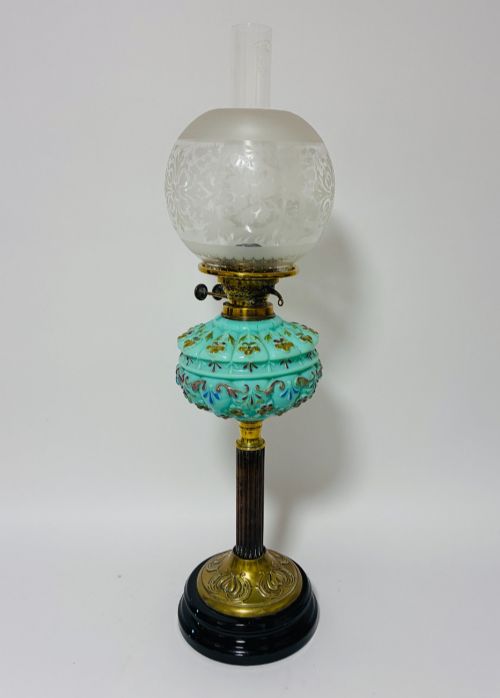
A converted oil lamp is a former fuel-burning lighting fixture adapted to house electrical components. These pieces usually feature a hollow interior that allows modern wiring to pass securely through the original burner mechanism.
Many retain their original brass reservoirs and galleries, offering a distinct profile compared to purpose-built electric lamps.
How do I date these lamps?
Dating relies on examining the manufacturing techniques, metal patination and stylistic markers of the base vessel. Victorian and early twentieth-century examples often show specific casting methods and mounting styles characteristic of their period.
Marks on the base or interior components can provide further clues regarding the workshop of origin.