

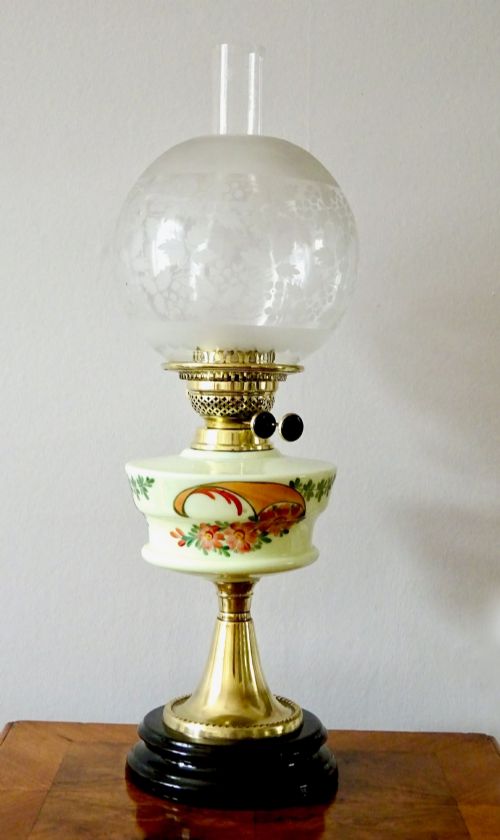


Brass Duplex Burner Lamp
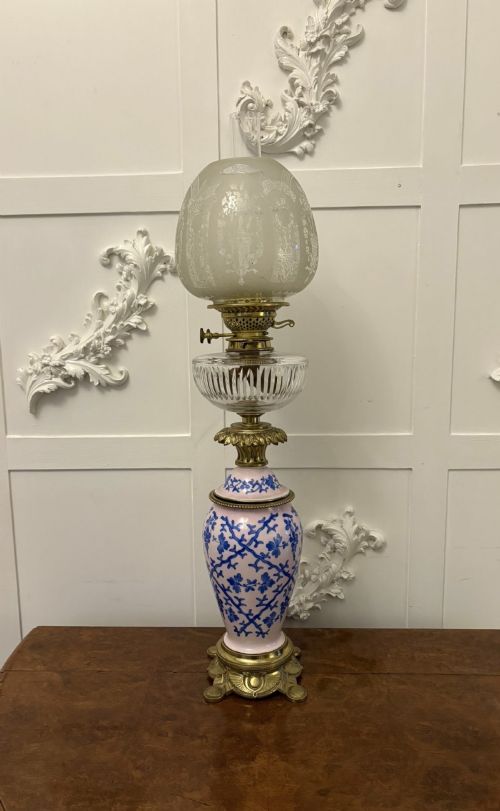
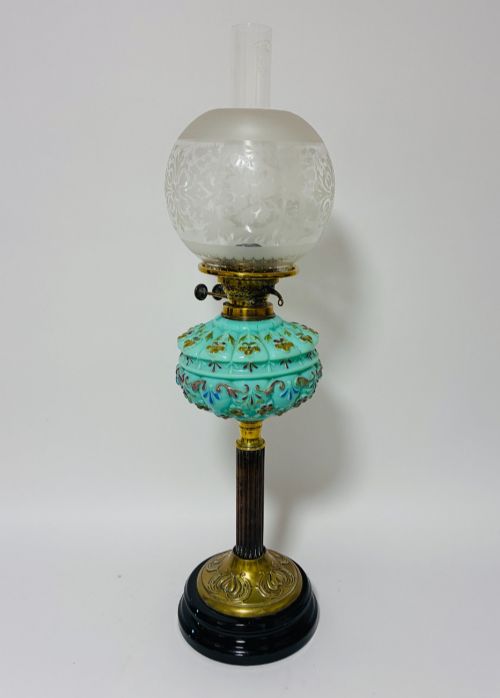
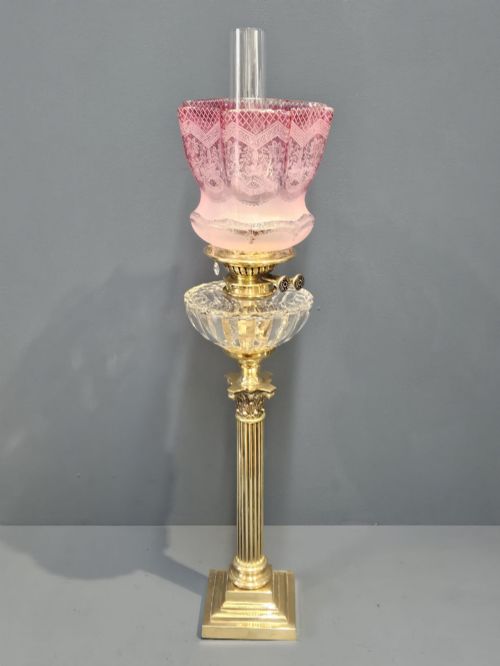
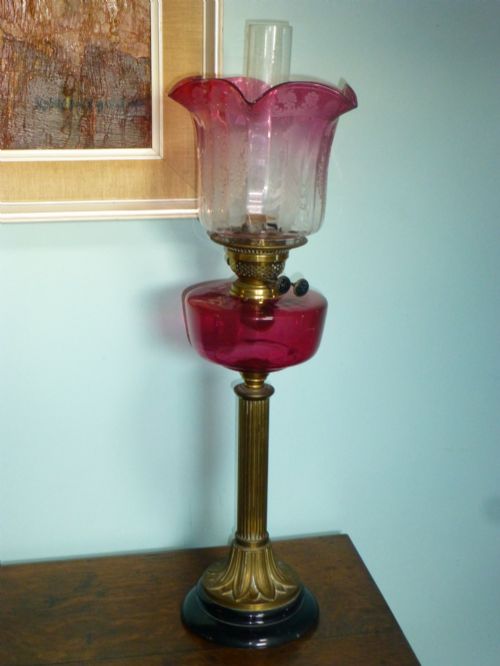
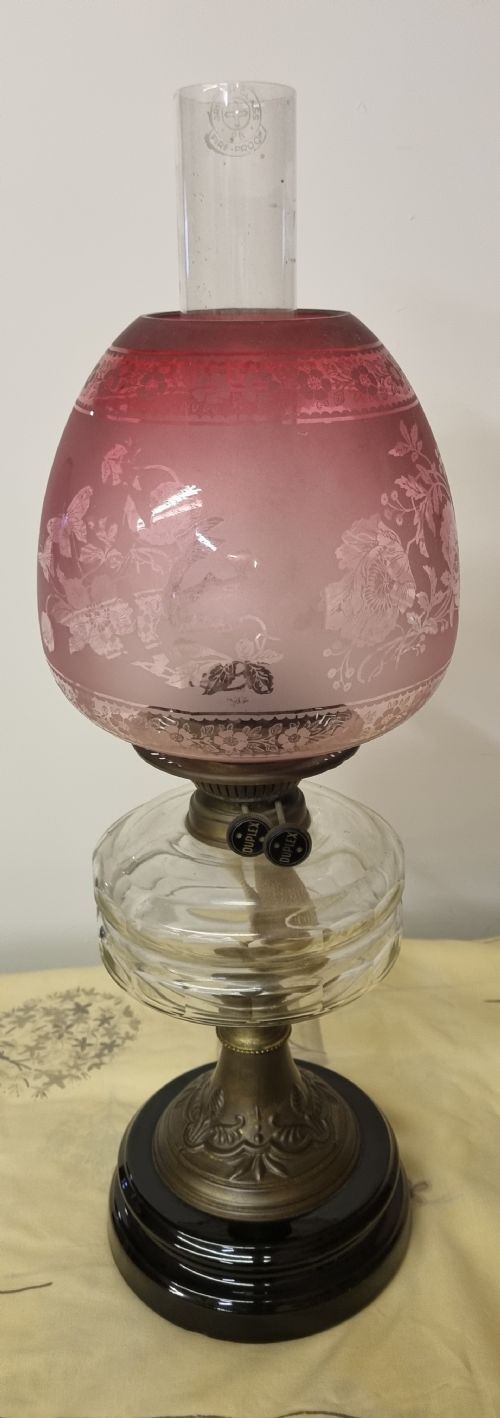
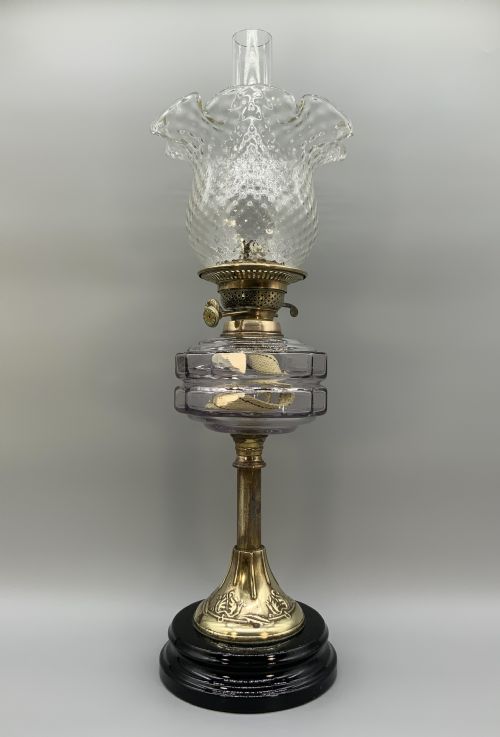
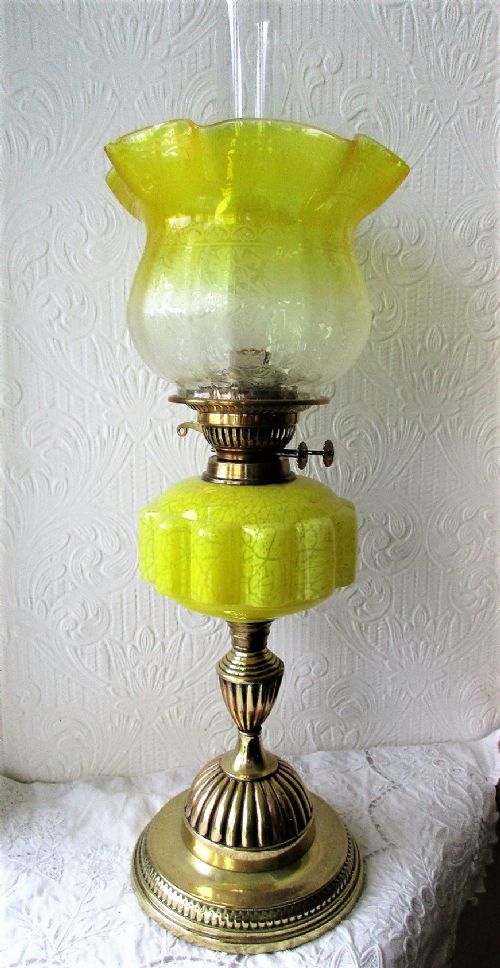
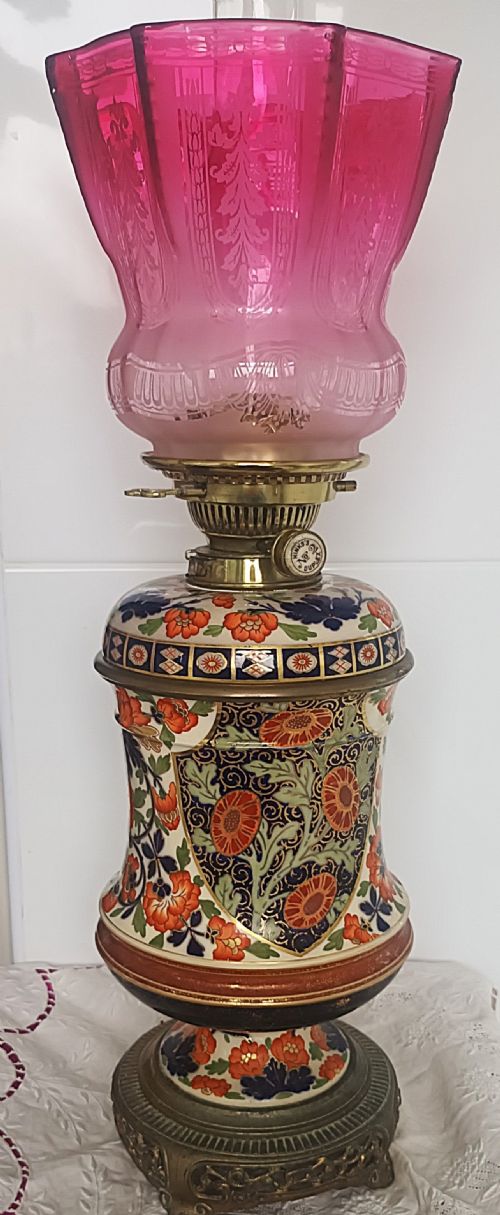
A brass duplex burner lamp brings period illumination into a room, combining heavy metal standards with vibrant coloured glass fonts and shades.
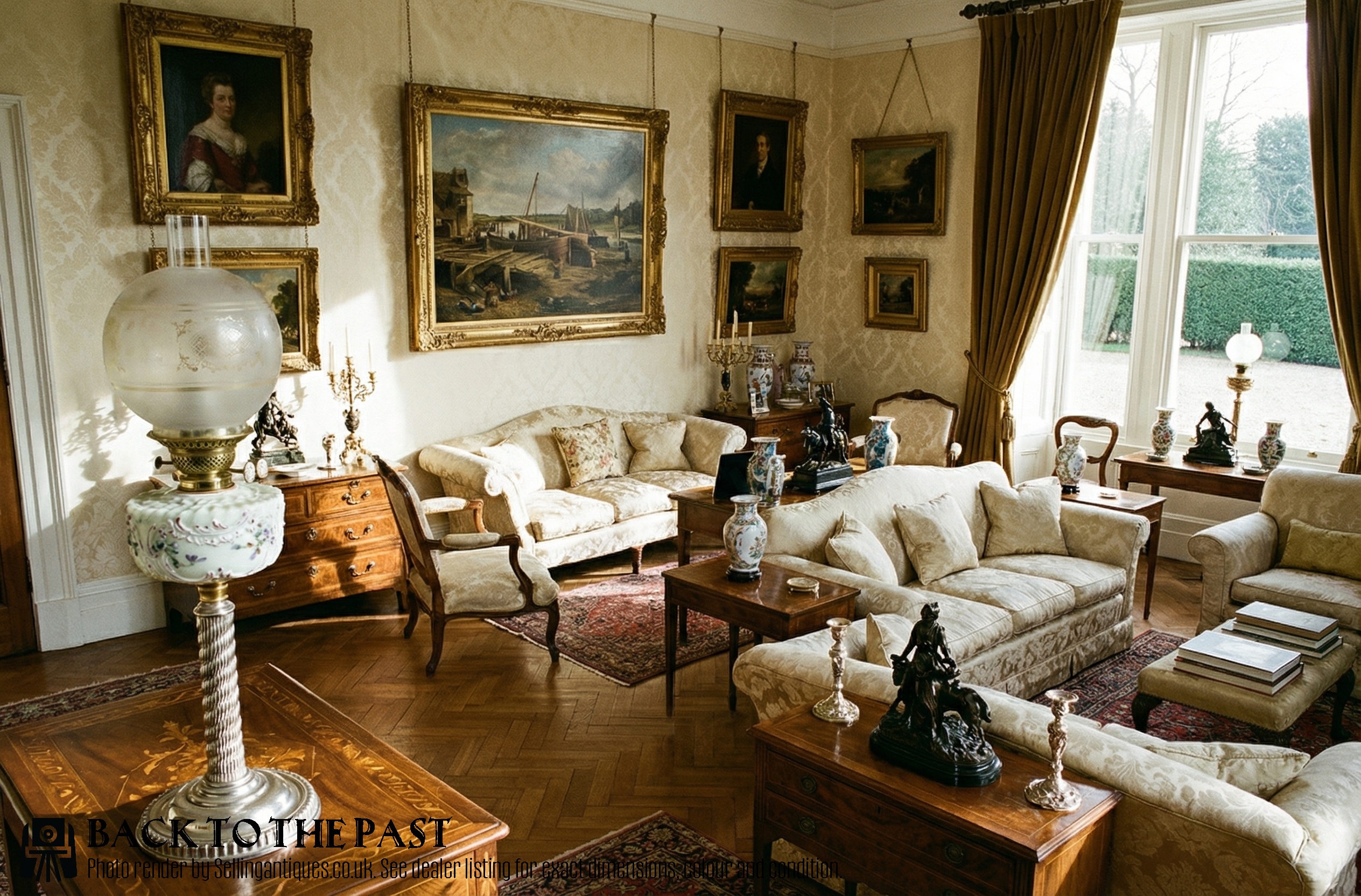
Brass Duplex Burner Lamp
A brass duplex burner lamp is a Victorian or Edwardian lighting fixture designed to burn paraffin via a double-wick mechanism. The versions found here span the nineteenth and early twentieth centuries, encompassing periods such as Victorian and Edwardian alongside Art Nouveau and Victorian Classical Revival styles.
Most examples combine a solid brass column with a decorative font made from glass, ceramic, or porcelain. These are paired with hand-blown, etched, or opaline glass shades in pink, green, or cranberry tones, creating a distinct profile that defined period interiors.
Distinctions in standard
Quality rests upon the weight of the brass casting and the architectural refinement of the column, such as Corinthian or reeded designs. Heavier stands and crisp casting detail distinguish the finest examples from standard production pieces.
The artistic merit of the glass components also dictates the tier of the piece. Hand-blown cranberry shades with complex etched patterns or combined ceramic and brass bodies represent the higher end of the range.
Telescopic brass stands allowed Victorian readers to adjust their light height by simply pulling the column upward like a brass telescope.
Hinks·Taylor Tunnicliff·Messenger·Young's Special
The Brass Duplex Burner Lamp Glossary
- Duplex burner
- A twin-wick mechanism designed to burn paraffin with increased brightness. This system defines the functionality of these lamps.
- Font
- The oil reservoir situated above the column and below the burner. These are frequently formed from coloured, opaline, or cut glass.
- Opaline glass
- A milk-white translucent glass used extensively for period lamp shades. It diffuses light softly across a room.
- Ormolu
- Gilt bronze or brass applied to decorative metalwork. It provides a rich golden finish on select pieces.
Brass Duplex Burner Lamp: Frequently Asked Questions
How do I operate a duplex burner?
The twin wicks are adjusted via separate thumbwheels on the burner gallery. Raising the wicks evenly allows them to be lit to produce a bright, steady flame.
Extinguishing the flame involves turning the wheels down until the wicks drop below the metal slots, cutting off the air supply.
What fuel do these lamps require?
These fixtures were originally designed for paraffin or kerosene illumination. Modern usage typically involves burning standard lamp oil.
Care must be taken to use clean, refined fuel to prevent soot accumulation on the glass shade.
How do I date a brass oil lamp?
Dating relies on stylistic indicators such as column orders, burner patents, and glass colours. Victorian examples often feature heavy Corinthian or reeded brass columns.
Edwardian and Art Nouveau variants introduce softer floral motifs and distinct hand-blown shade profiles characteristic of the early twentieth century.
Can these lamps be converted to electricity?
Many collectors choose to wire these pieces for modern lighting while preserving the original burner and collar components. This allows the lamp to function as a table lamp.
Professional conversion ensures the wiring passes safely through the central column without damaging the antique brass structure.