


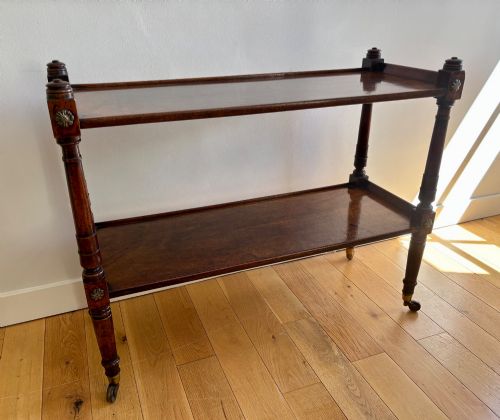
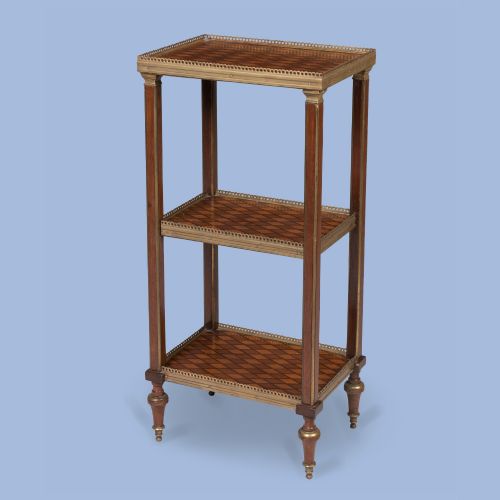
Brass Display Shelves
Brass display shelves combine open frameworks with glass, mahogany, and rosewood to hold books and curiosities with architectural clarity.
Brass Display Shelves
Brass display shelves encompass open bookcases, etagere whatnots, and baker racks originating from the nineteenth and early twentieth centuries. These forms serve to exhibit collections and organise volumes within domestic and commercial spaces.
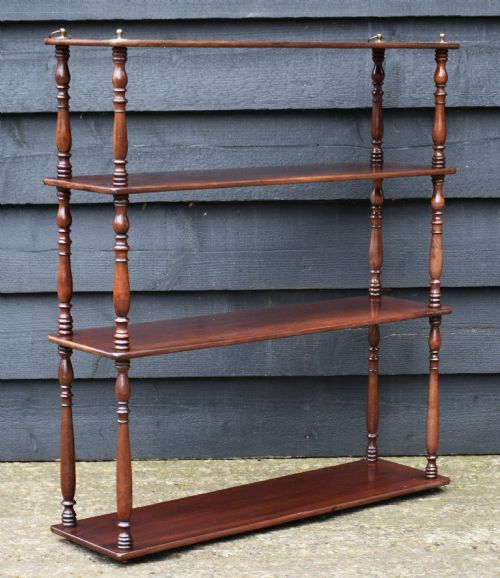
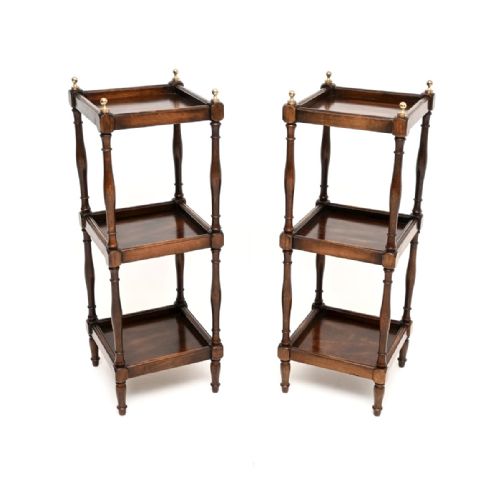
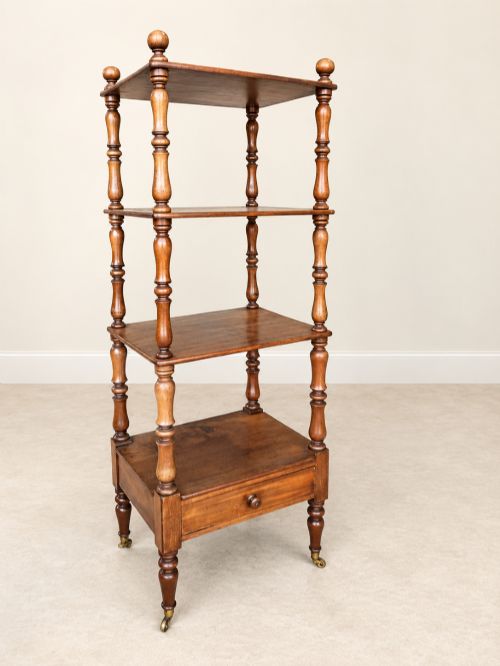
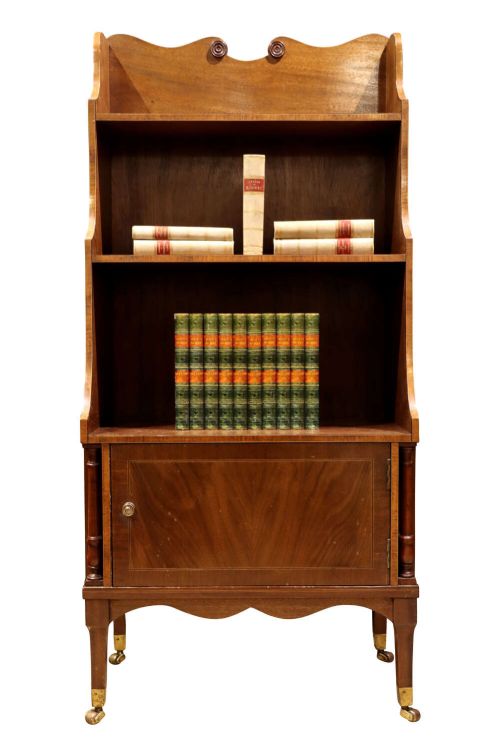
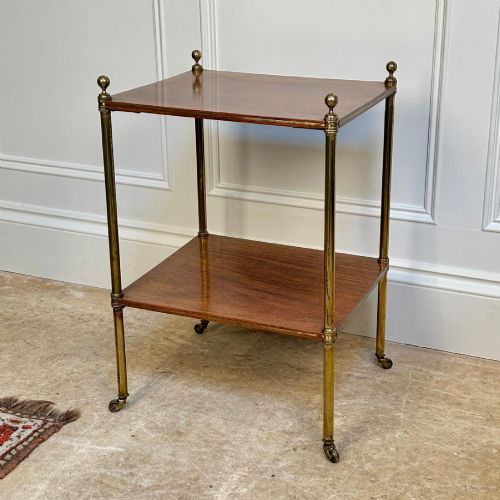
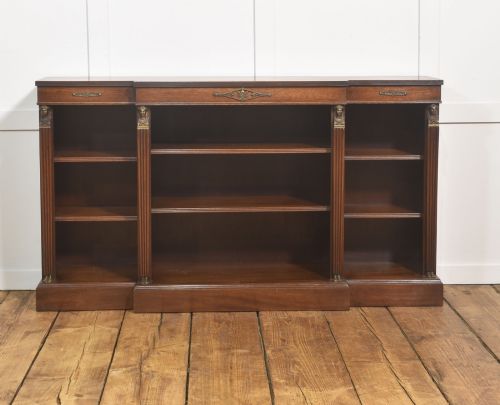
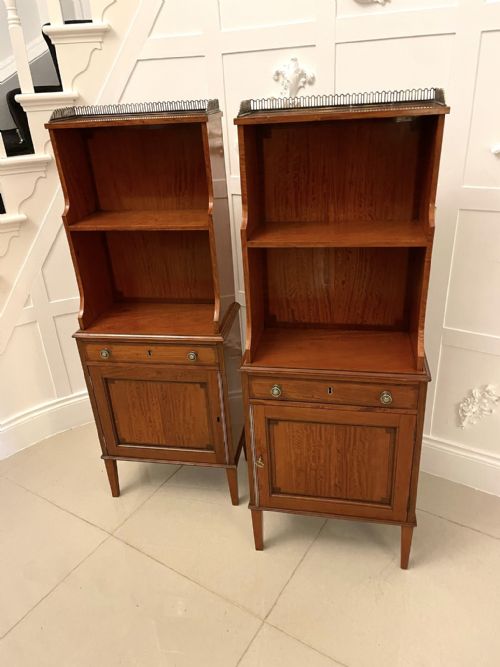
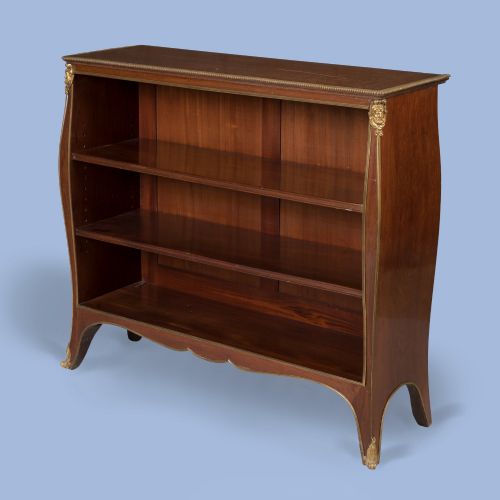
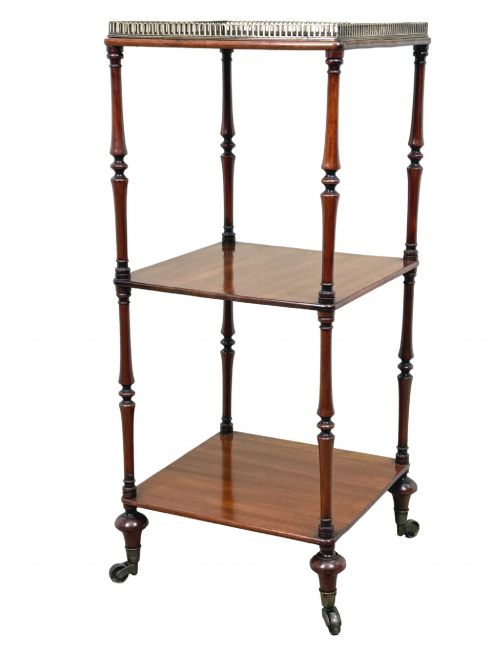
The version most frequently encountered on this page is the nineteenth-century etagere or open bookcase, often constructed in mahogany, rosewood, or ebonised wood. These pieces combine timber tiers with brass supports, castors, or gallery rails.
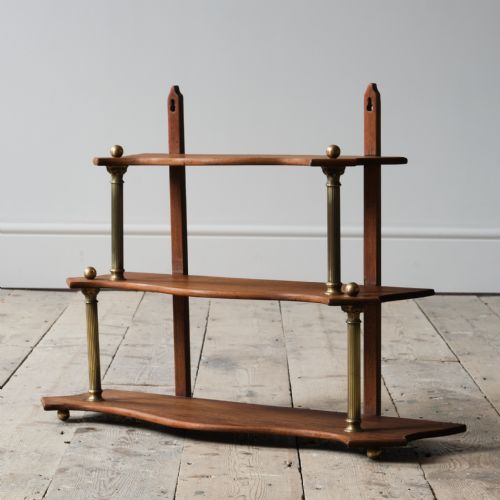
Makers and workshops across Britain and France produced these display structures in styles spanning Regency, Victorian, Edwardian, and French Revival. Pieces range from wall-hanging shelves to large freestanding cabinets.
How they were made
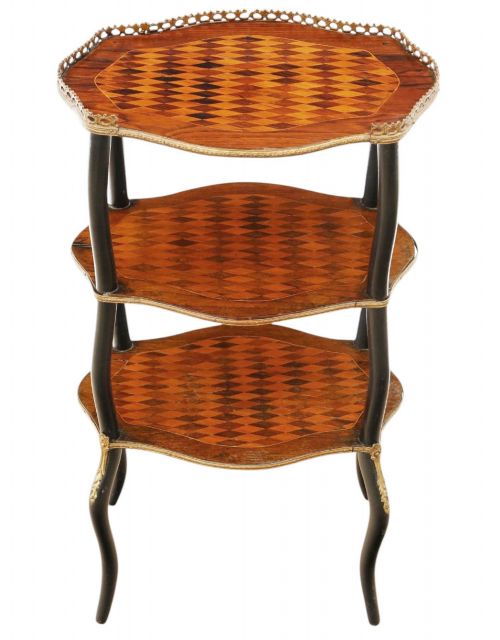
Makers constructed these display pieces using dense hardwoods such as mahogany, rosewood, satinwood, and walnut, frequently applying veneer and marquetry inlay. Brass components appear as structural columns, decorative gallery rails, and castors supporting the base.
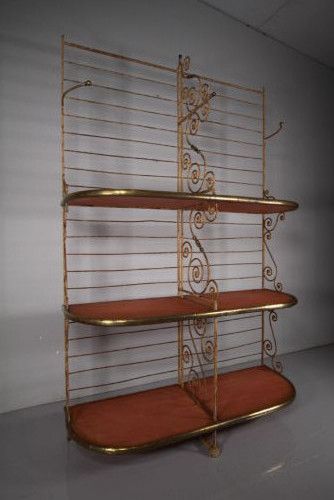
French workshops integrated ormolu mounts and gilt bronze detailing into walnut and ebonised frames, following Louis XV and Louis XVI manners. Wrought iron and brass combinations appear in larger baker and patisserie racks from Parisian workshops.
Listings feature brass display shelves incorporating mahogany, rosewood, walnut, wrought iron, and ebonised wood across Victorian and Edwardian periods.
What varies in quality
The refinement of the timber and the weight of the metal determine the standard of a piece. Solid mahogany or figured rosewood paired with substantial cast brass mounts represents a higher grade of manufacture than lighter secondary timbers with plated fittings.
Joinery detail and decorative execution separate standard output from workshops of notable output. Inlaid marquetry, finely chased ormolu mounts, and adjustable shelving mechanisms indicate superior construction.
Dubois of Lyon·Gillows·John Moyr Smith·Robert Strahan
The Brass Display Shelves Glossary
- Etagere
- A set of open shelves for displaying small objects or books. These pieces typically feature multiple tiers supported by slender columns.
- Whatnot
- A freestanding piece of furniture with several open shelves placed one above another. They emerged in the eighteenth century and remained popular throughout the Victorian period.
- Ormolu
- Gilded bronze applied as a decorative mount on furniture. French makers utilised this technique extensively during the nineteenth century.
- Boulangerie rack
- A large industrial shelving unit originating in French bakeries. They combine iron and brass frameworks with wooden or wire shelves.
- Chiffonier
- A low cabinet with drawers or shelves, often featuring glazed or open compartments. Regency and Victorian examples frequently incorporate brass gallery rails.
Brass Display Shelves: Frequently Asked Questions
Where should I place an etagere?
An etagere suits corners or wall spaces in sitting rooms where open shelving allows light to pass through the tiers. Their slender proportions mean they occupy minimal floor space while offering multiple levels for display.
Avoid placing rosewood or mahogany pieces in direct sunlight to prevent timber fading. Secure taller wall-hanging shelves directly to wall studs to support the weight of books and ceramics.
How do I distinguish Regency from Victorian models?
Regency pieces date from the early nineteenth century and typically display restrained classical lines, sometimes incorporating brass inlay within dark mahogany or rosewood surfaces. They favour architectural proportion and minimal carved ornament.
Victorian examples from the mid to late nineteenth century often feature heavier carving, darker ebonised finishes, and more elaborate ormolu mounts. They also make frequent use of adjustable shelf mechanisms and turned brass column supports.
Can these shelves support heavy books?
Smaller wall-hanging shelves and delicate etagere tiers are designed for display objects, pamphlets, and light volumes rather than heavy folios. Freestanding open bookcases and reinforced cabinets with wooden backing are better suited to substantial book collections.
Check whether the shelves are fixed or resting on adjustable wooden pegs before loading them with heavy volumes. Solid timber shelves tolerate greater weight than veneered alternatives.
What is a French baker rack?
A French baker rack is an industrial or commercial shelving unit originally utilised in Parisian patisseries and bakeries. They feature robust wrought iron and brass frames designed to hold heavy trays and goods.
In domestic settings, these large racks provide substantial open storage in kitchens or dining rooms. Their metal construction offers durability and a distinct aesthetic distinct from traditional domestic cabinetry.