


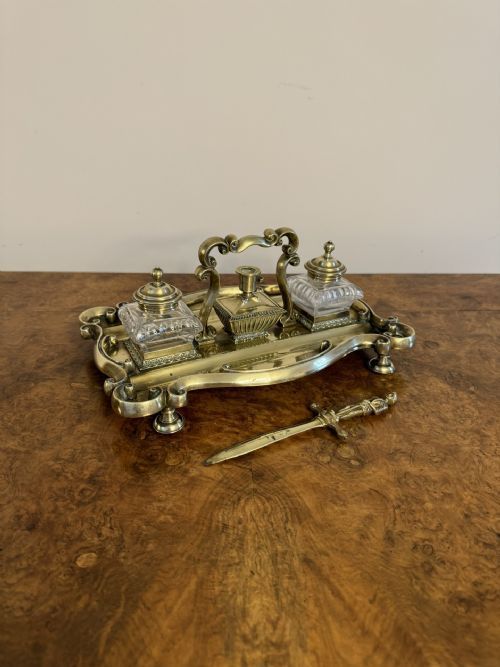
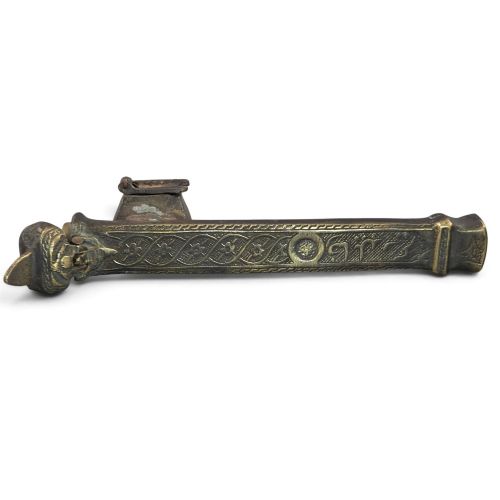
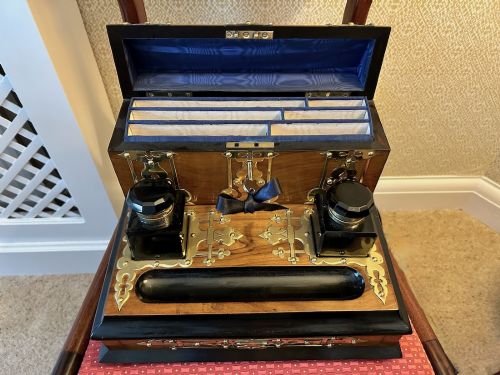
Brass Desk Accessory
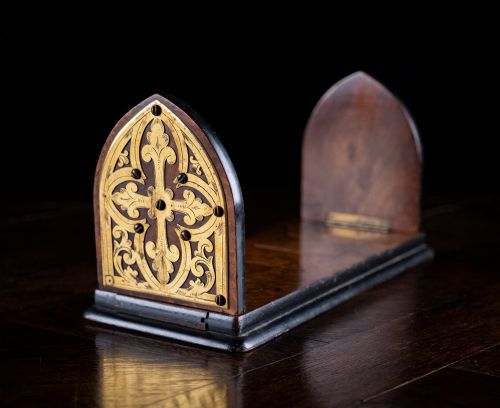
A brass desk accessory brings daily writing gear into order, combining heavy metalwork with woods and glass for practical use.
Brass Desk Accessory
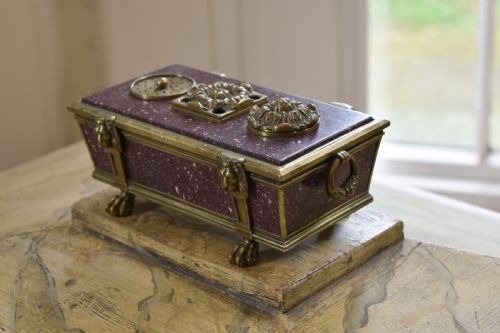
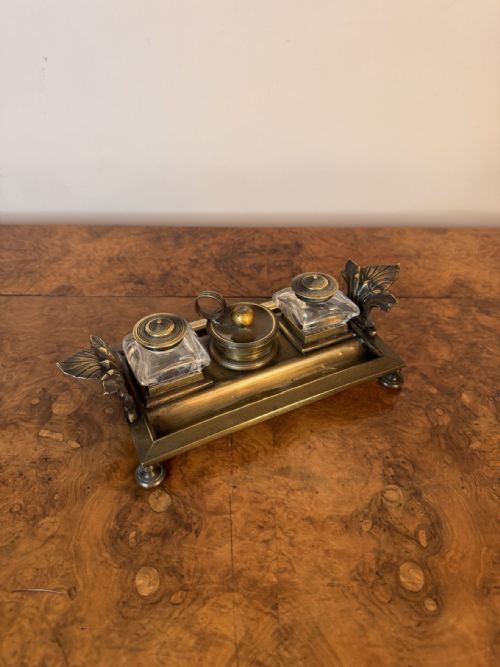
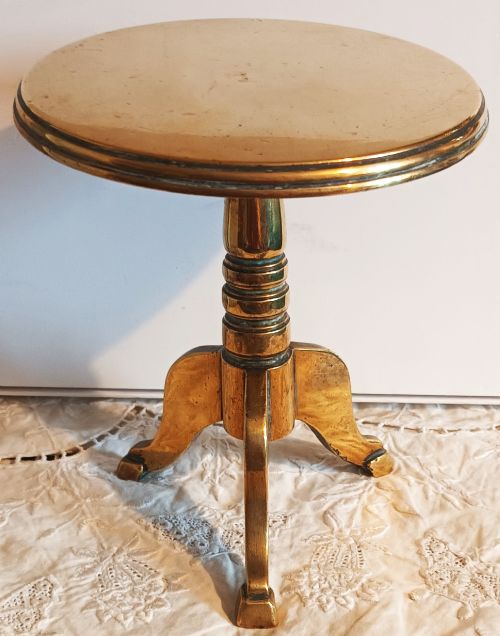
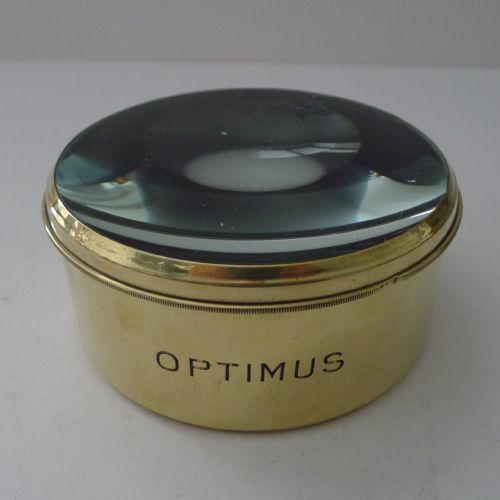
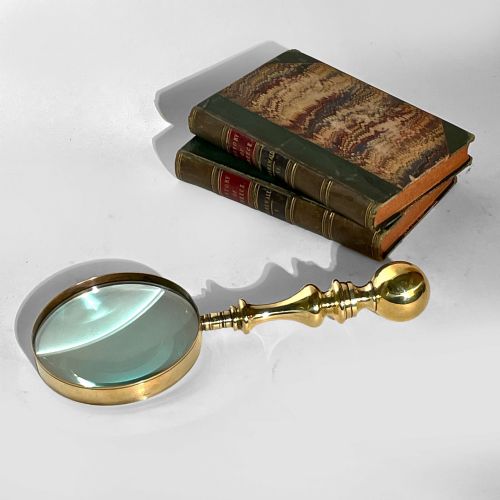
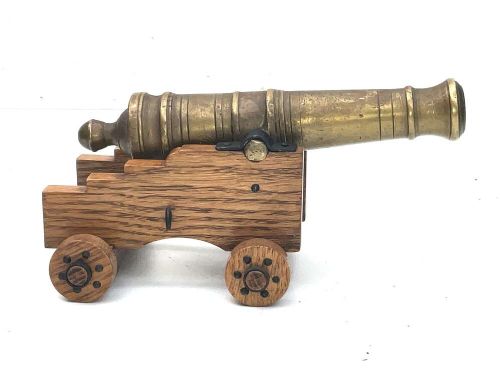
A brass desk accessory covers a broad group of functional writing items, spanning inkstands, postal scales, letter boxes and magnifying lenses. The selection relies heavily upon Victorian examples alongside Georgian pieces and twentieth-century items.
Most entries combine cast or sheet brass with timber bodies such as walnut, mahogany and burr walnut, occasionally incorporating glass or marble. These practical instruments populated nineteenth-century libraries and studies to manage correspondence and documents.
How they were made
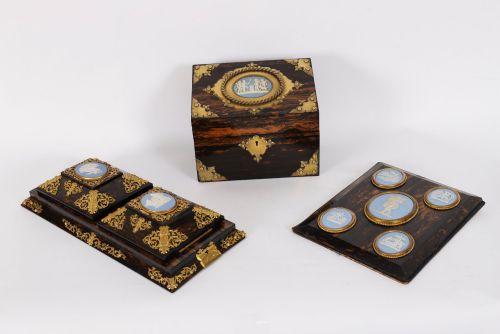
Metal components rely on casting and chasing, yielding crisp details on inkstands, bells and perpetual calendars. Wood elements utilise cabinet-making techniques, pairing mahogany, walnut or coromandel with inset brass mounts and boulle work.
Secondary materials provide contrast, including glass inkwells, marble bases, bone elements and tortoiseshell inlays. These varied substances combine through mechanical fixings and adhesives typical of nineteenth-century workshop production.
Brass Desk Accessory Retail Price Guide 2026
Typical asking prices for brass desk accessory among the pieces listed under this phrase on Sellingantiques today, from the lower quarter to the upper quarter. They describe what is for sale here now, not the wider market.
The listings span the eighteenth, nineteenth and twentieth centuries, incorporating Victorian, Edwardian, Art Deco and Georgian styles across timber and metal forms.
What varies in quality
The standard of execution rests on the crispness of the metal casting and the precision of the brass inlay within wooden bodies. Finer pieces demonstrate careful hand-chasing on bronze or brass surfaces and tightly fitted joints on stationery cabinets.
Material selection separates standard items from exceptional ones, particularly the choice of figured burr walnut, coromandel or Sienna marble bases. Completeness also dictates standard, such as retaining matching inkwell liners and original weights for postal scales.
William Tonks of Birmingham·M Pillischer of London·S Mordan London
The Brass Desk Accessory Glossary
- Standish
- A portable tray or stand holding writing equipment including inkwells, sanders and penholders. These pieces formed the centrepiece of a gentleman's desk.
- Boulle work
- An intricate marquetry of brass and tortoiseshell inlaid into furniture and wooden desk accessories. The technique originated in seventeenth-century France and saw revival during the nineteenth century.
- Navette
- A boat-shaped outline with pointed ends, commonly found on Georgian snuff boxes and small desk containers. The symmetrical curve reflects neoclassical design preferences.
- Divit
- A traditional Middle Eastern travelling pen case and ink container, often cast in brass. These items attached to belts for use by scribes on the move.
- Ormolu
- Gilded bronze mounts applied to decorative objects, marble bases and wooden stationery boxes. The finish provides a rich gold appearance on cast metal elements.
Brass Desk Accessory: Frequently Asked Questions
What items count as a brass desk accessory?
This category includes inkstands, postal scales, magnifying glasses, letter boxes, bell stands and pen cases made from metal and wood.
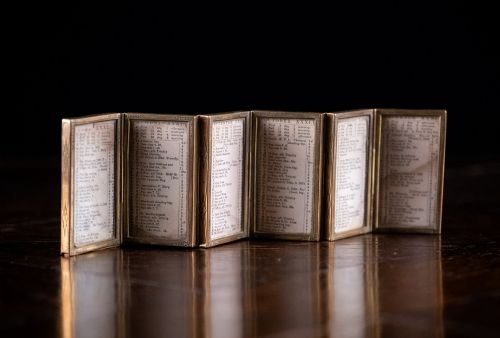
Items range from small pocket almanacs in brass mounts to large double-sided desk sets intended for country house libraries.
How do I date a Victorian brass desk set?
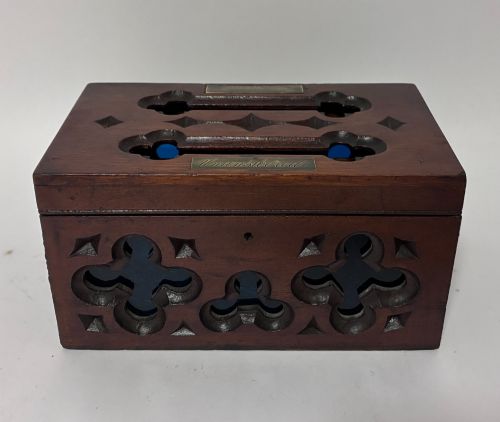
Dating relies upon stylistic markers such as Gothic Revival tracery, Aesthetic movement engraving or heavy Rococo scrolls found on nineteenth-century castings.
Timber choices also help, as walnut and coromandel gained popularity during specific decades alongside brass inlay styles.
Were postal scales used for real letters?
Postal scales weighed incoming and outgoing correspondence to determine correct postage rates under nineteenth-century postal systems.
Many sets retain their original graduated brass weights and balanced brass beams mounted on wooden bases.
How should I clean antique brass items?
Antique brass benefits from gentle dusting and preservation of its natural aged patina rather than aggressive polishing down to bare metal.
Wooden components and glass inserts require separate care suited to polished timber and fragile blown glass.