
Brass Crystal Drop Light
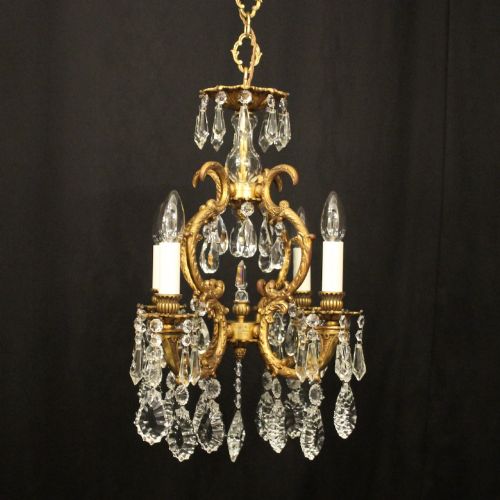
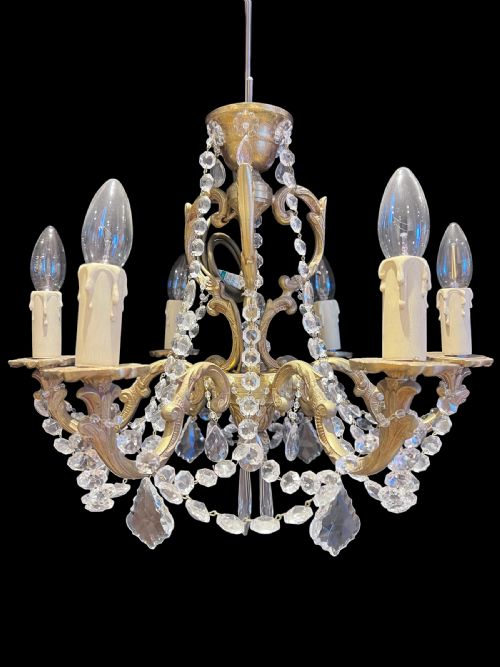
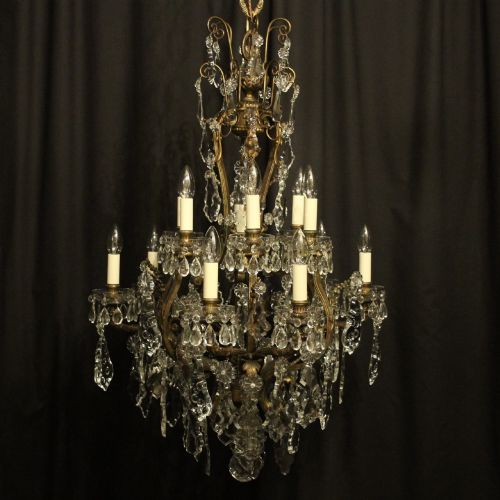
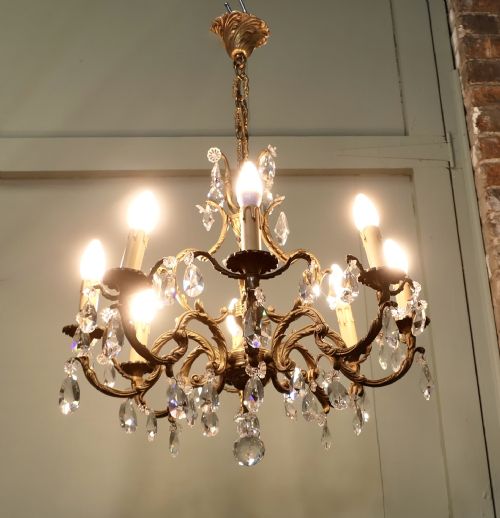
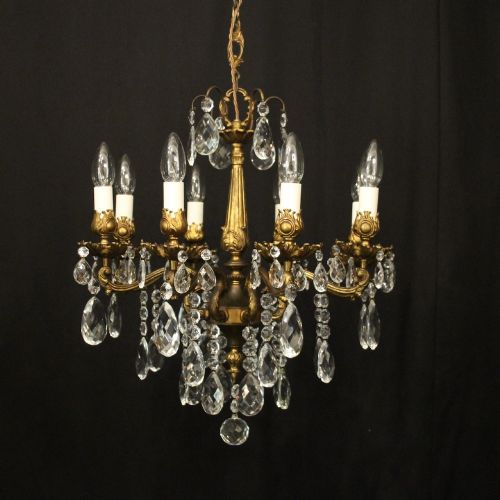
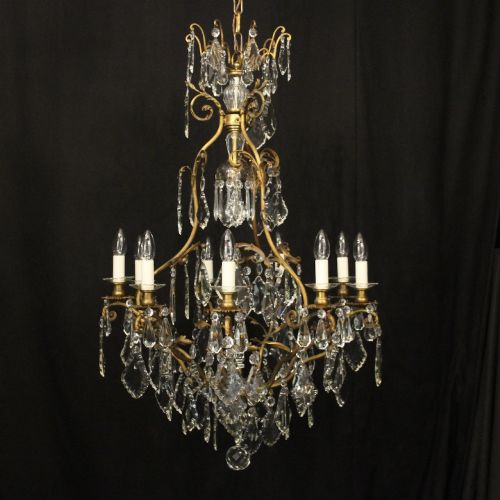
A brass crystal drop light brings together polished metal and hanging glass to catch and throw light around a room.
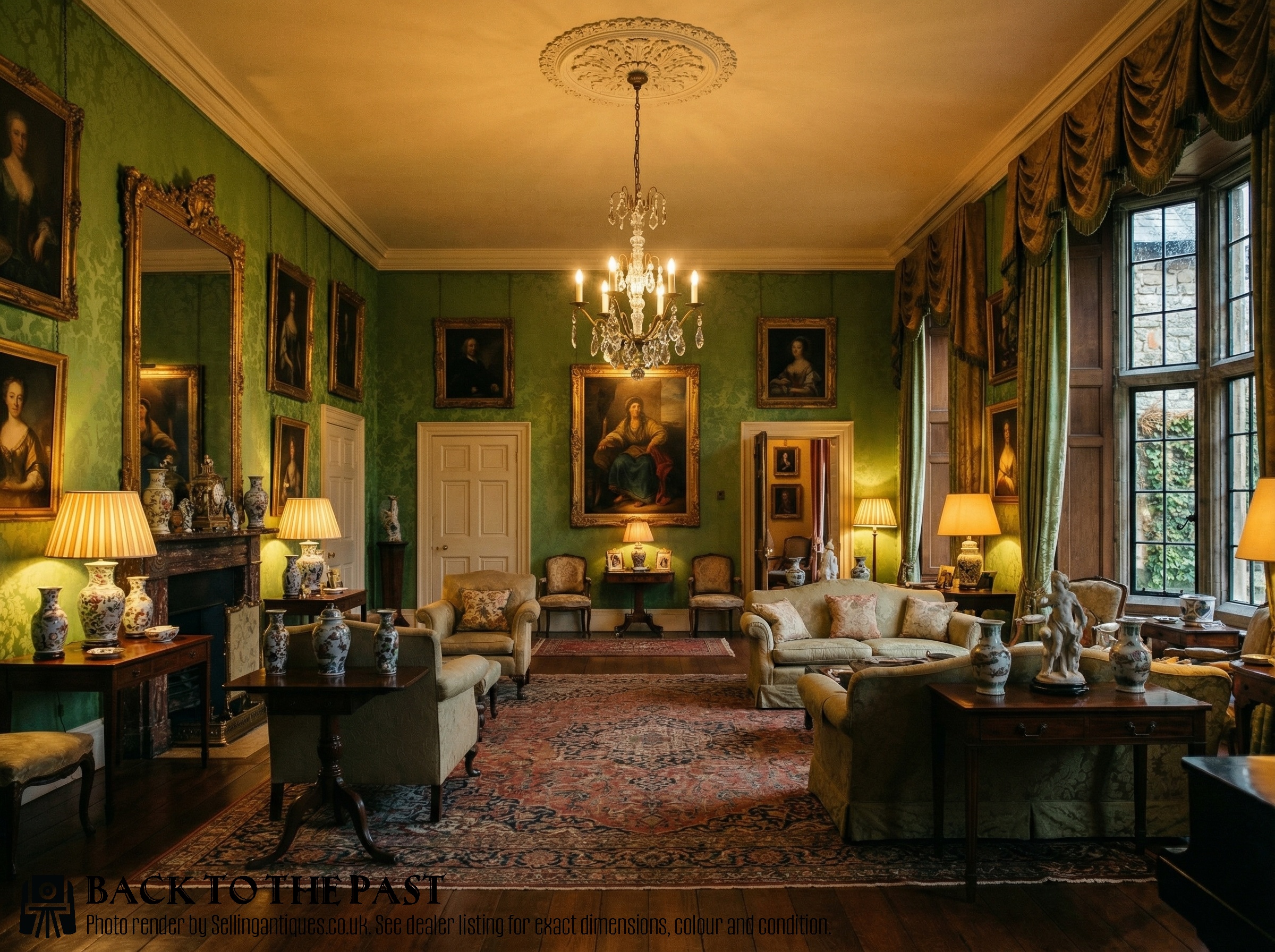
Brass Crystal Drop Light
A brass crystal drop light encompasses chandeliers, wall lights, ceiling lights, and wall sconces produced across the nineteenth and early twentieth centuries. The pieces on this page lean heavily towards French and Italian designs, spanning Edwardian formats alongside items from the 1890s through to the 1930s.
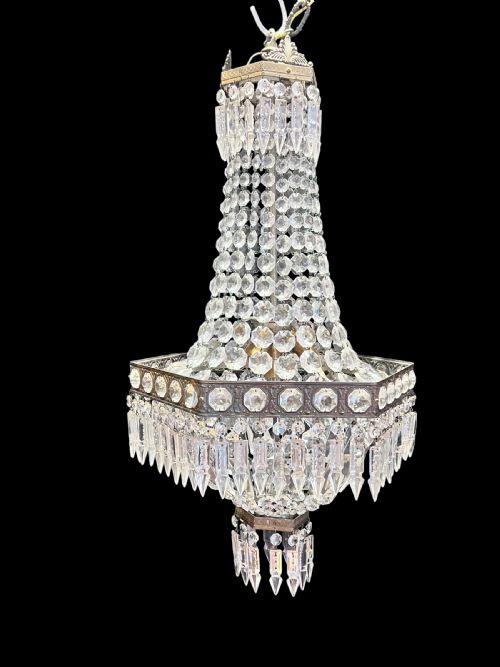
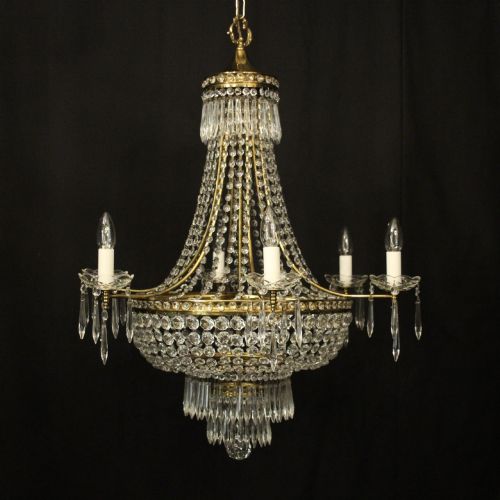
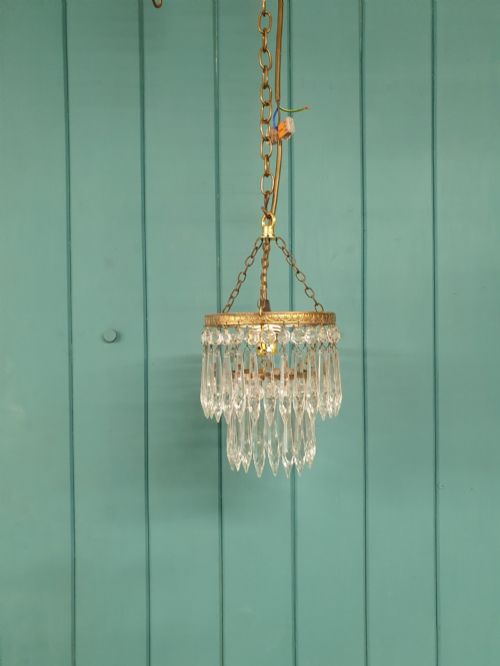
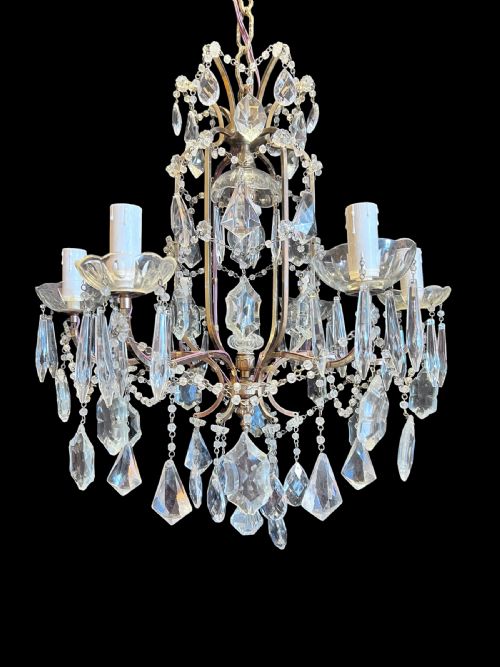
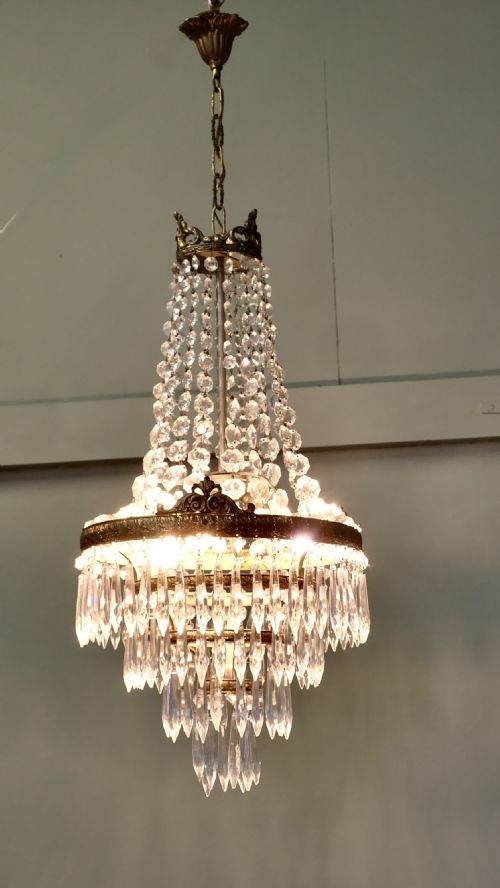
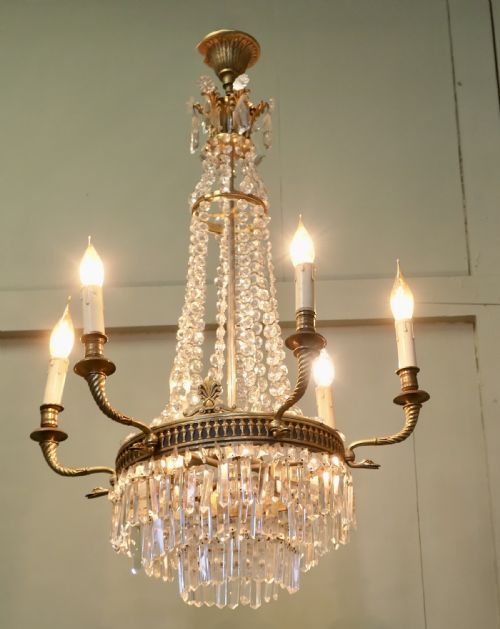
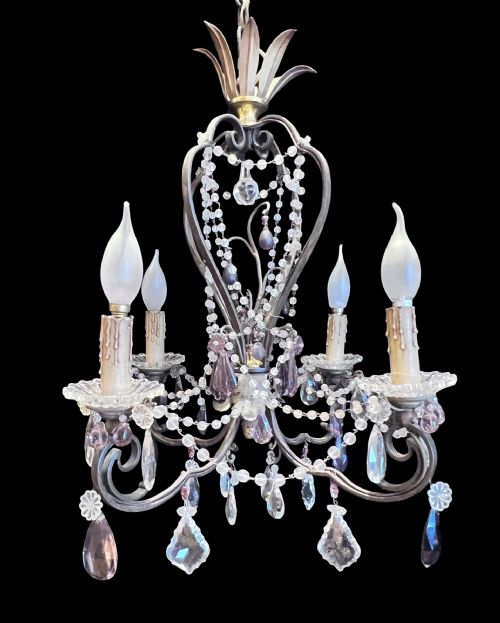
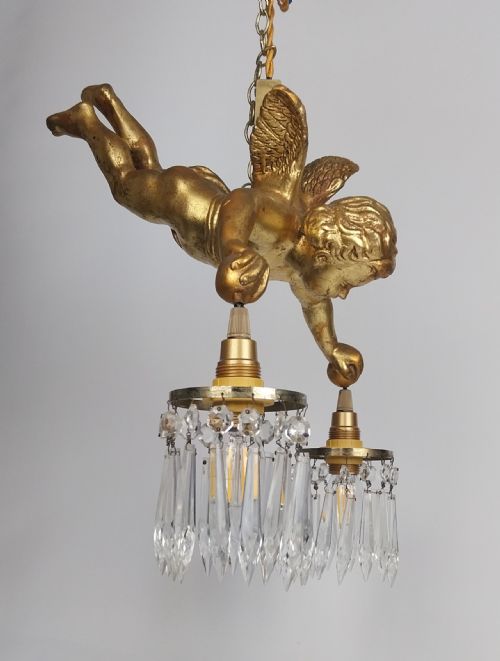
The most common forms take the shape of multi-arm chandeliers, basket fixtures, and tent and waterfall structures hung with glass prisms. Buyers also encounter pairs of wall lights, bag chandeliers, and smaller spike or tier configurations suited to lower ceilings.
Materials and construction methods
Frames are cast or worked in brass, gilt brass, gilt bronze, and gilt metal, sometimes incorporating tolewear or leafy bronze decoration. These structural mounts hold together arrangements of glass, crystal, and cut glass drops.
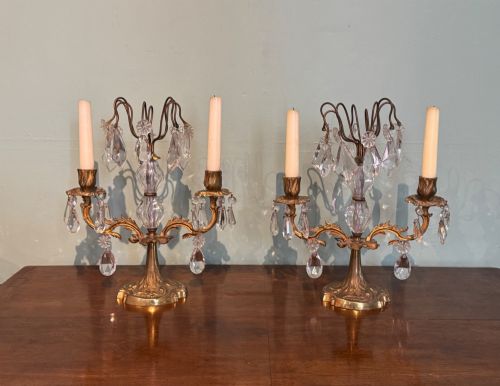
Lighting elements are suspended using wired frames, pins, or metallic linkages to secure individual crystal lustres, coffin prisms, and coloured crystal accents. The assembly relies on joining solid metal armatures with reflective glass components.
Listings feature brass, crystal, glass, and gilt bronze across pieces dated from the nineteenth century through to the 1930s.
Quality variations in the range
Quality rests in the crispness of the metal casting and the clarity of the glass elements. Finer frames show detailed chasing on bronze or brass, while lesser examples rely on simpler stamped or cast components.
The cut and weight of the crystal drops define the upper tier of the range. Faceted crystals with sharp edges refract light more cleanly than simpler pressed glass substitutes.
The Brass Crystal Drop Light Glossary
- Crystal drop
- A pendant piece of glass or crystal hung from a lighting fixture to refract light. These come in various cuts and shapes.
- Waterfall chandelier
- A lighting fixture featuring a cascading arrangement of crystal drops that resembles falling water. This style gained popularity during the Empire period.
- Tent and waterfall
- A chandelier design where an upper canopy of glass beads forms a tent shape above a lower cascading waterfall of crystals. It creates a layered silhouette.
- Coffin prism
- A flat-backed, wedge-shaped glass drop often seen on early twentieth century fixtures. They catch ambient light effectively.
- Bag chandelier
- A compact lighting form where crystals gather in a bag or basket shape beneath the frame. This style suits smaller spaces.
Brass Crystal Drop Light: Frequently Asked Questions
What periods do these lights come from?
The selection covers items made during the Edwardian era, the nineteenth century, and the early twentieth century up to the 1930s.
Designs reflect prevailing tastes from these decades, including French Empire, Rococo revival, and Italian regional styles.
How do tent and waterfall chandeliers differ from standard ones?
Tent and waterfall chandeliers use specific arrangements of glass beads and hanging drops to create distinct geometric upper sections and cascading lower tiers.
Standard chandeliers rely on simpler arm arrangements without the layered canopy structure.
Are wall lights available to match the chandeliers?
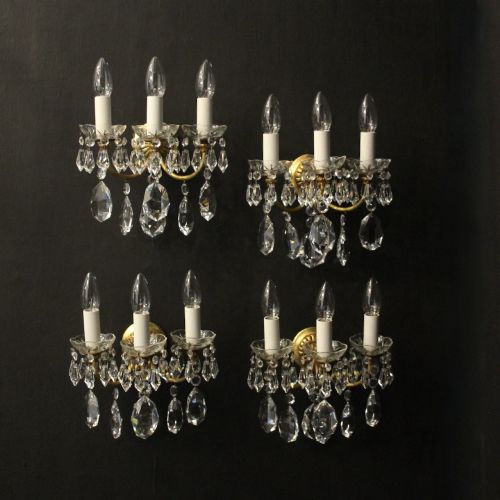
Yes, listings include wall sconces, wall lights, and pairs of wall chandeliers that utilise matching brass and crystal components.
These smaller fixtures often mirror the drop styles and metal finishes found on the larger ceiling lights.
What metal finishes appear on these frames?
Frames utilise brass, gilt brass, gilt bronze, and gilt metal alongside occasional tolewear accents.
These surfaces range from polished brass to heavier gilded bronze castings found on nineteenth-century pieces.