




Brass Corner Chest Drawers
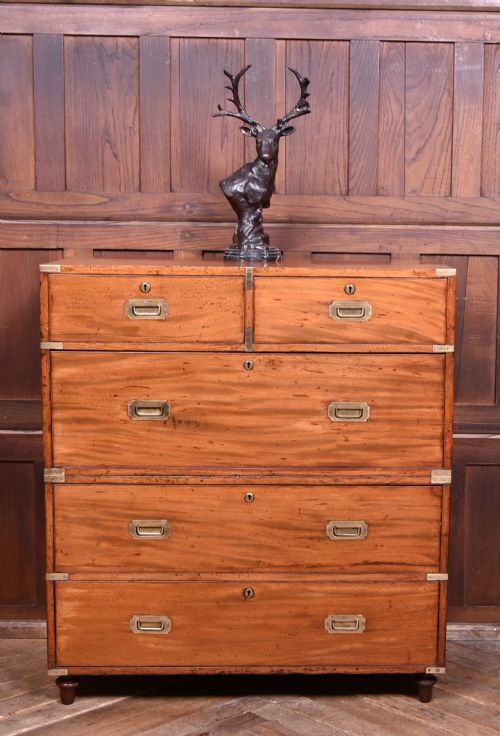
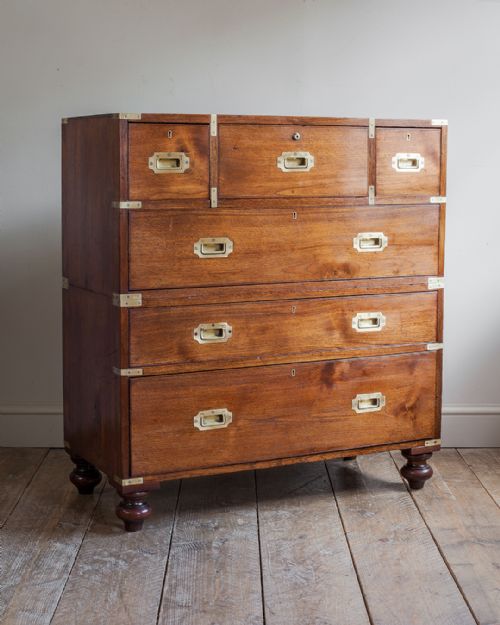
These brass corner chest drawers are travel furniture built for officers on the move, offering modular storage with reinforced metal edges.
Brass Corner Chest Drawers
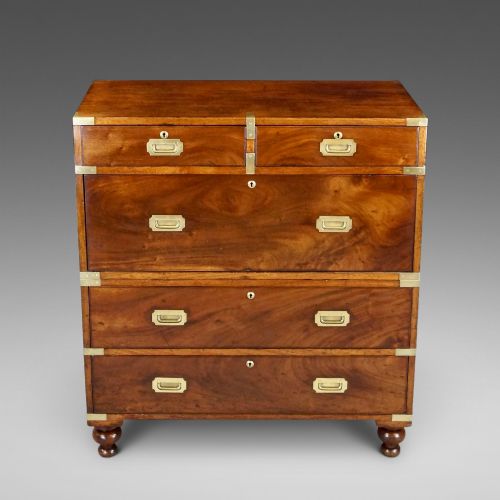
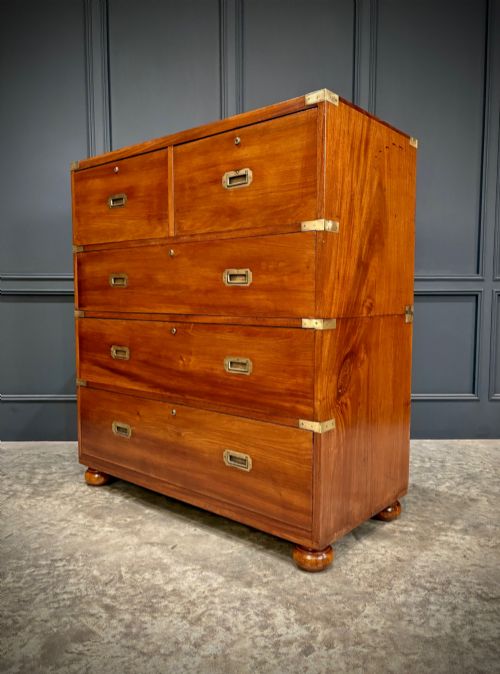
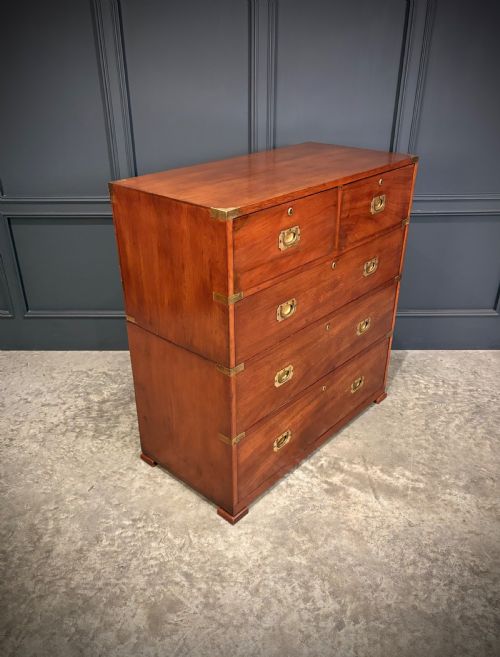
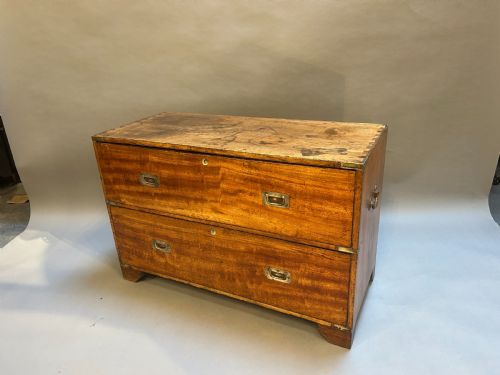
Brass corner chest drawers divide into sections for transport during military campaigns and colonial service. The version most commonly met on this page is the two-part mahogany or teak chest reinforced with brass straps and corners, built during the nineteenth century in the Victorian period.
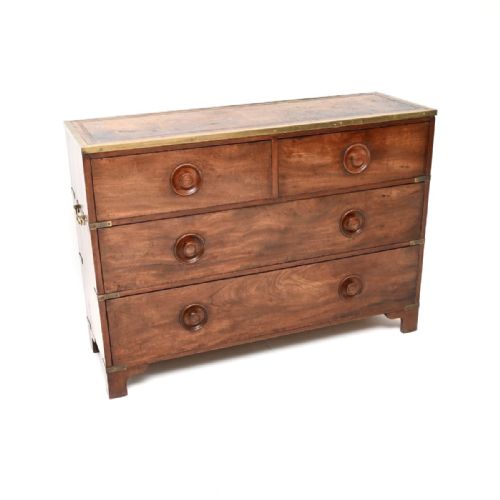
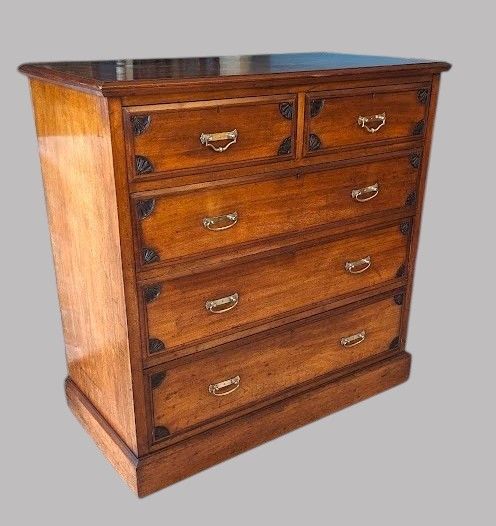
Makers designed these military chests to withstand rough handling while maintaining a neat domestic appearance in officers' quarters. Alongside standard chests of drawers, the selection includes secretaire variants featuring fitted writing drawers and miniature forms.
Origins stretch from eighteenth-century pieces through the Victorian era to later colonial revival and twentieth-century interpretations. The core utility remains modular design, with recessed handles and solid timber construction suited to heavy service.
How they were made
Cabinet makers built these chests using dense timbers such as mahogany, teak, camphor wood, and walnut, chosen for stability and resistance to climate changes. Cedar and elm appear alongside these primary hardwoods in regional variants.
Brass corners, straps, and flush-fitting inset handles protect the vulnerable edges and prevent snagging during transit. These metal fittings anchor directly into the timber, often secured by numerous small screws that hold the modular sections together.
Object forms span standard chests, low chests, secretaire variants, and miniature chests of drawers.
What varies in quality
Quality rests in the precision of the joinery and the integrity of the original brass hardware rather than surface finish alone. Superior examples retain matching flush handles, original locks, and tight-fitting sectional joints that align seamlessly without wobble.
The choice of timber grain and the neatness of internal drawer construction separate utilitarian pieces from finer officer commissions. Secondary woods, drawer linings, and the presence of a fitted secretaire drop-front distinguish standard production from superior workshop output.
Ross & Co.·Army & Navy
The Brass Corner Chest Drawers Glossary
- Campaign chest
- A modular chest of drawers built in two or more stacking sections for easy transport on military expeditions. These pieces feature recessed handles and protective brass corners.
- Secretaire chest
- A chest of drawers where the top drawer pulls down to reveal a fitted writing surface, pigeonholes, and small drawers. This dual-purpose form allowed officers to handle correspondence in the field.
- Brass bound
- A method of reinforcing wooden furniture edges and corners with metal strips and brackets. This technique prevents splitting during transit and adds rigidity to sectional cases.
- Flush handle
- A metal pull inset into the surface of a drawer front so it does not project beyond the wood. This design avoids catching on other objects when stacking or moving the pieces.
- Two-part chest
- A case piece constructed as separate upper and lower cabinet boxes that lock together for stability. This division halved the weight and bulk for carriage by pack animal or wagon.
Brass Corner Chest Drawers: Frequently Asked Questions
What is a brass corner chest drawers?
These pieces are modular storage units designed for military officers on active service, built to dismantle into sections for transport.
They combine robust hardwood carcasses with protective brass corners and recessed hardware to survive rough travel.
How were campaign chests used?
Officers used them to transport uniforms, documents, and personal belongings across colonies and battlefields.
The stacked sections functioned as bedside storage and desks when paired with a secretaire drop-front.
How do I date a campaign chest?
Dating relies on timber choices, brass hardware styles, and construction methods spanning the eighteenth to nineteenth centuries.
Victorian examples frequently utilise teak or mahogany with standardised brass strapwork and inset drop handles.
Where should I place these in a home?
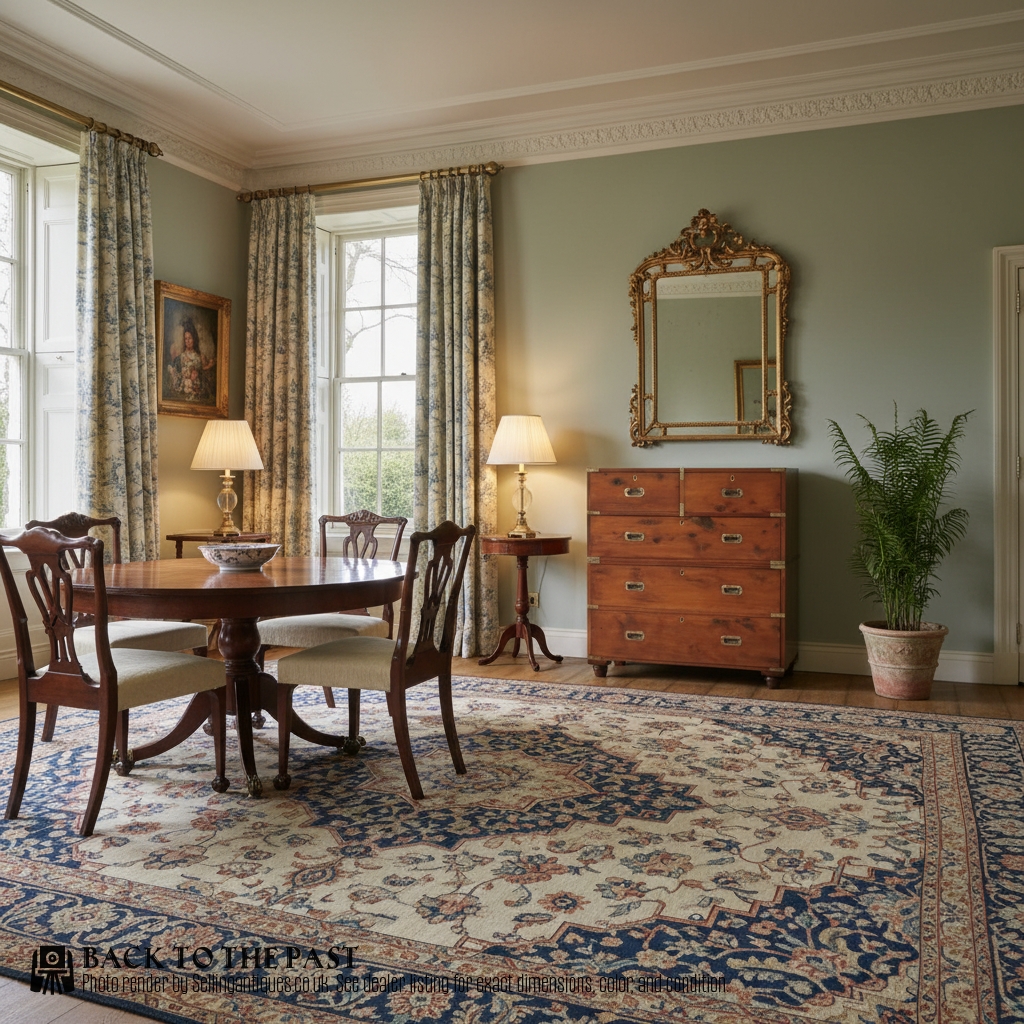
Their compact proportions and flat tops make them suitable for bedrooms, hallways, or living spaces as functional storage.
The modular design allows the sections to be displayed stacked together or separated where space permits.