
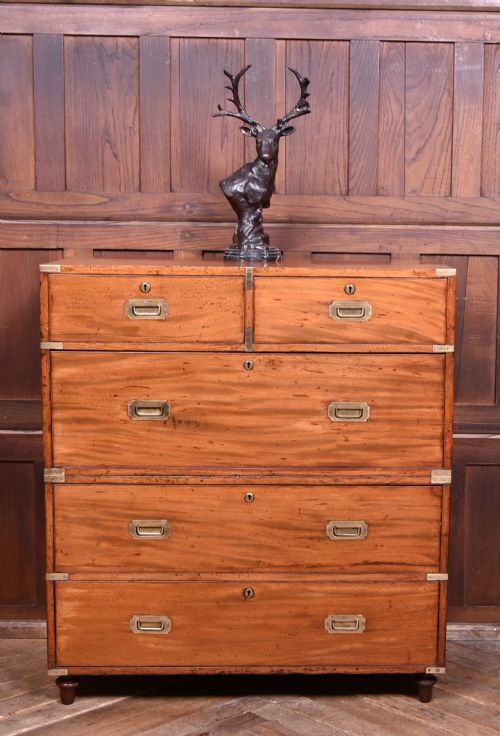
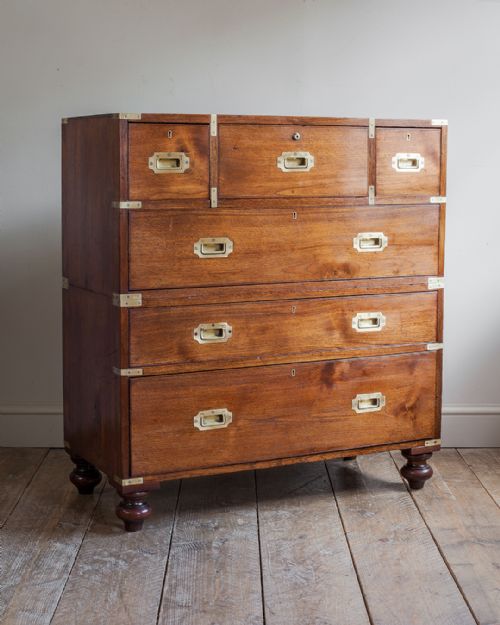
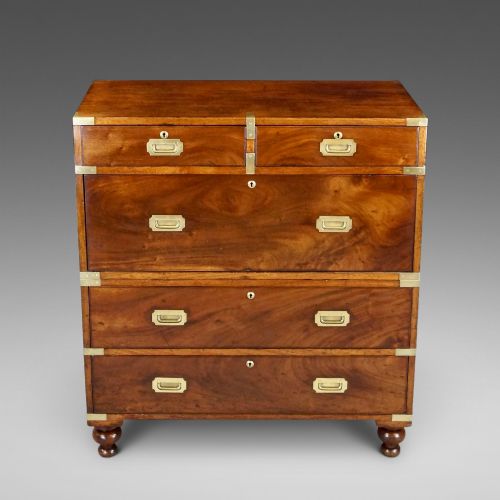
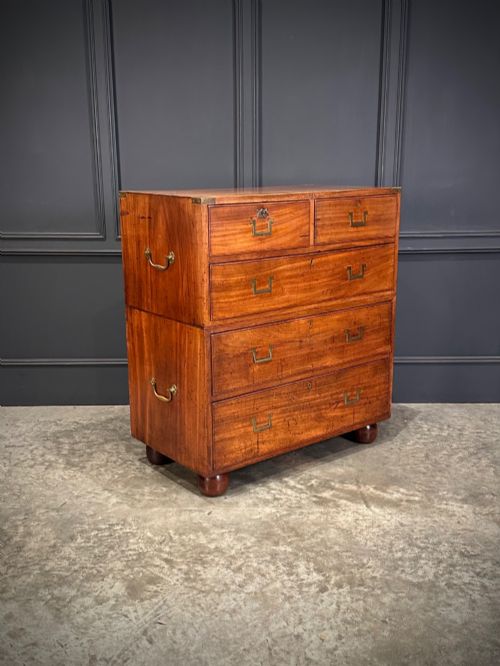
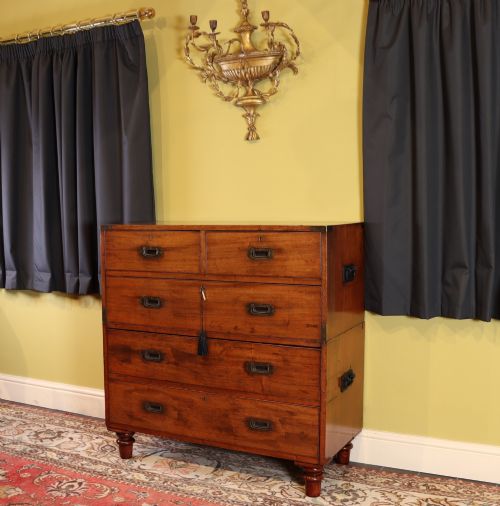
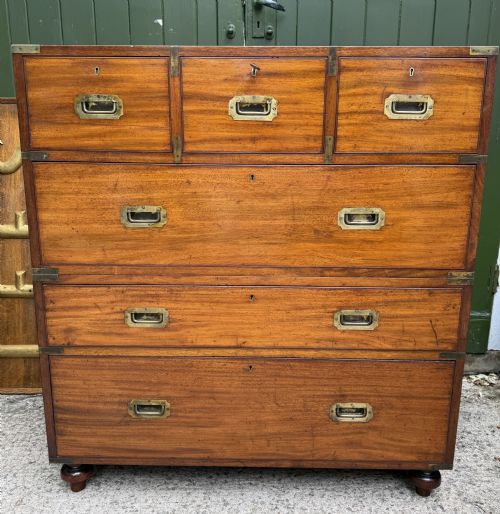

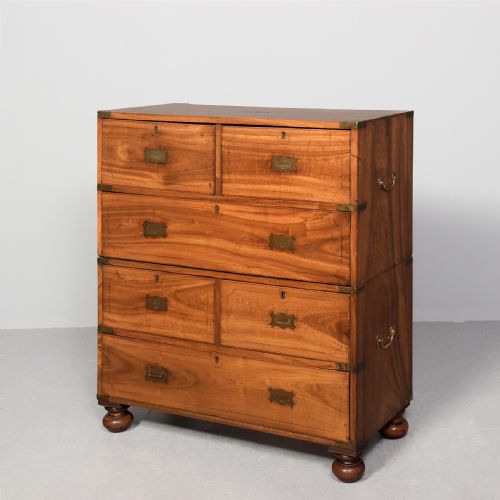
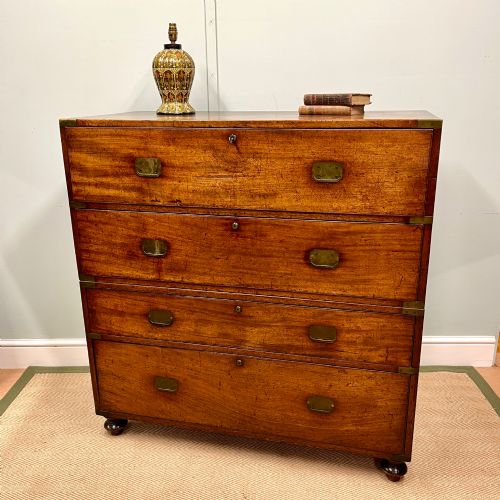
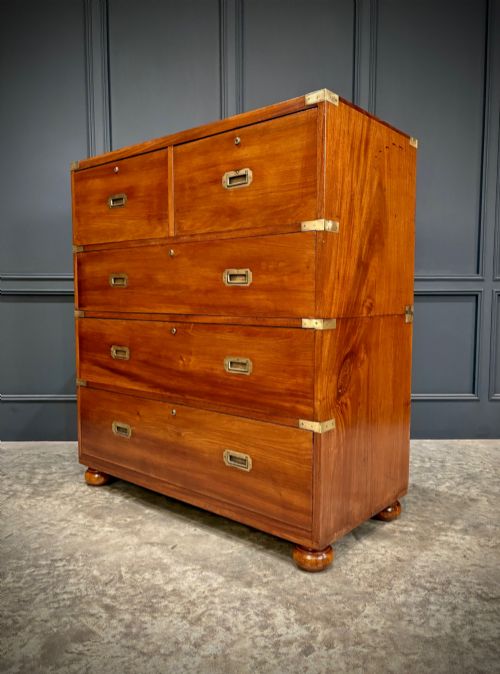
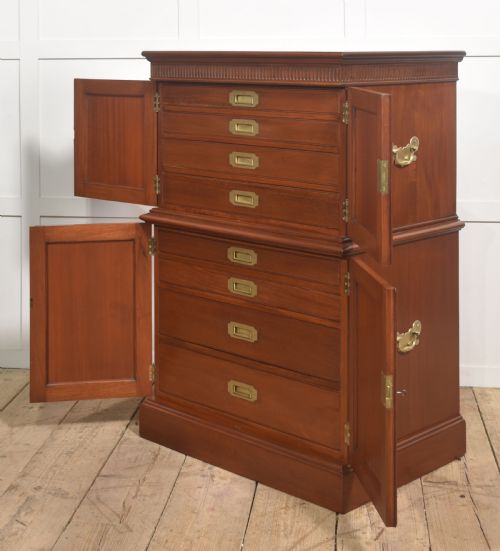
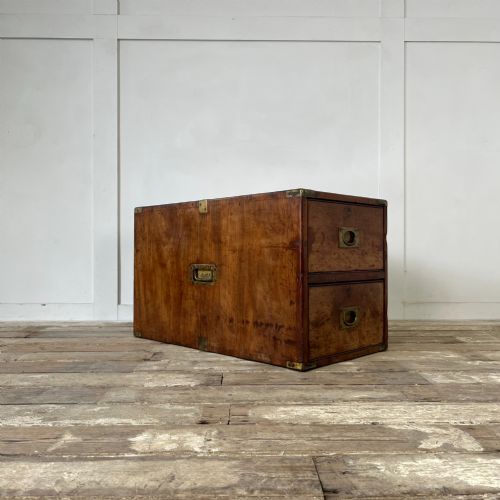
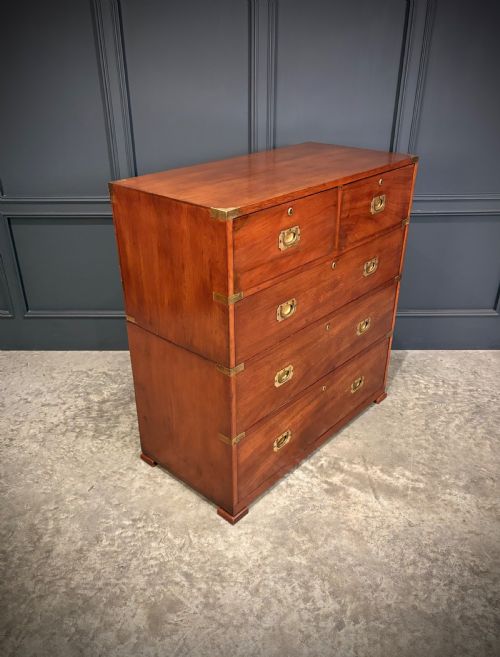


Flush Brass Chest Drawers
These flush brass chest drawers are practical campaign furniture built to travel with officers across the nineteenth-century British Empire.
Flush Brass Chest Drawers
A flush brass chest drawers typically appears as a two-part chest of drawers designed for portability during military service. The form includes recessed brass corners, strapwork, and flush-fitting inset drawer pulls that prevent snagging during transport.
Most examples seen here date from the nineteenth century and the Victorian period, constructed in modular sections with internal carrying handles. Variations range from standard chests of drawers to secretaire chests with fitted writing desks and desktop storage units.
Woods such as mahogany, teak, and camphor wood predominate, reflecting tropical colonial origins and domestic nineteenth-century British manufacture. Collectors also encounter collector cabinets, low chests, and small lockers outfitted with the same characteristic brass binding.
Judging quality and character
Quality rests on the integrity of the timber framing and the precision with which the brasswork is recessed into the wood. Superior pieces maintain tight joints and smooth two-part separation despite decades of changing climate conditions.
Makers' marks stamped into the brass or wood elevate certain pieces, distinguishing standard military contractor output from specialised workshop production. The complexity of the interior, such as a fully fitted secretaire drawer with leather writing surfaces, alters the sophistication of the piece.
Victorian sock drawers and gentleman's sporran chests offer miniature storage solutions built with the same heavy brass hardware.
S. W. Silver & Co. London & Liverpool·Ross & Co.·Army and Navy
The Flush Brass Chest Drawers Glossary
- Campaign chest
- A modular chest of drawers built in two or more stacking sections for easy transport by military officers. These pieces feature recessed brass hardware to prevent damage in transit.
- Secretaire chest
- A chest of drawers where the upper drawer pulls down to reveal a writing surface and small pigeonholes. This combines desk storage with standard clothing drawers.
- Flush brass
- Hardware inset directly into the timber surface so that it sits level with the wood. This technique protects corners and allows chests to slide past one another without catching.
- Two-part chest
- A piece constructed as separate upper and lower carcases that lock together with brass side pins. This modular design reduced weight for officers on the move.
- Camphor wood
- A fragrant tropical timber utilised for campaign furniture because its natural oils repel insects. It appears frequently in pieces originating from colonial trade routes.
Flush Brass Chest Drawers: Frequently Asked Questions
Why are flush brass chests built in two parts?
The two-part construction allowed officers to divide the furniture into manageable loads for transport on pack animals or ships.
Each section locks securely to the other using internal brass bolts once the destination is reached.
What woods are used for these chests?
Cabinetmakers selected durable hardwoods such as mahogany, teak, camphor wood, and padouk to withstand tropical climates.
These timbers resist warping and provide the structural strength needed for constant travel.
How do you use a secretaire chest?
The top drawer pulls forward and drops down on hinges to create a desk surface for correspondence and paperwork.
Inside, small drawers and pigeonholes provide organised storage for writing materials and documents.
How do I identify campaign furniture?
Look for inset brass corners, flush-fitting ring handles, and side carrying brackets designed to protect the wood during transit.
Most examples also feature modular stacking sections rather than a single solid body.