





Antique Military Dresser
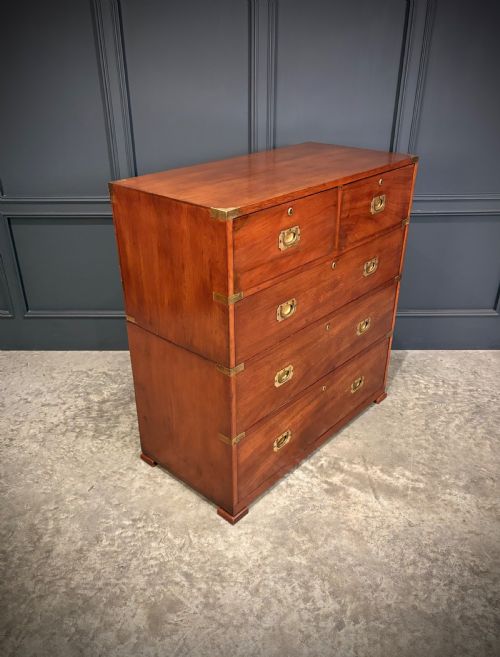
These antique military dresser pieces and campaign chests offer modular storage built for travel, combining robust timbers with flush brass fittings.
Antique Military Dresser
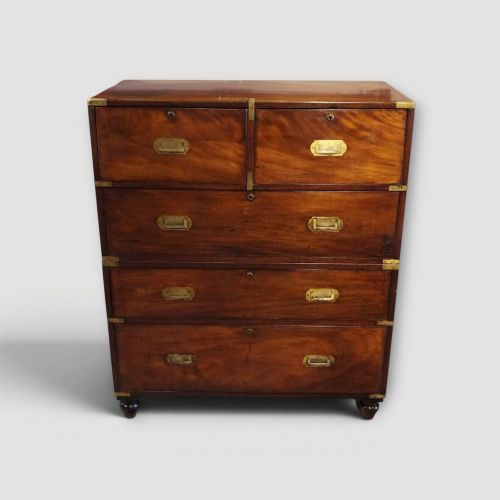
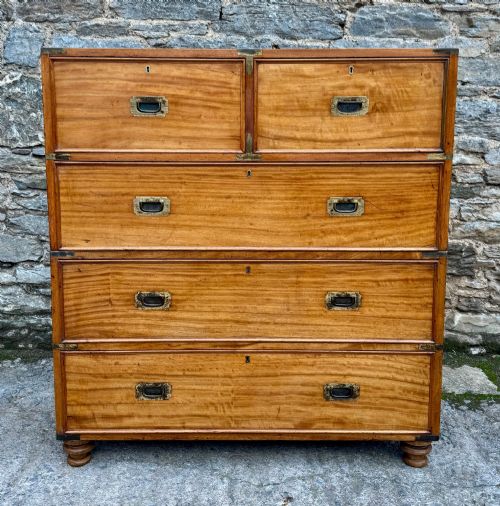
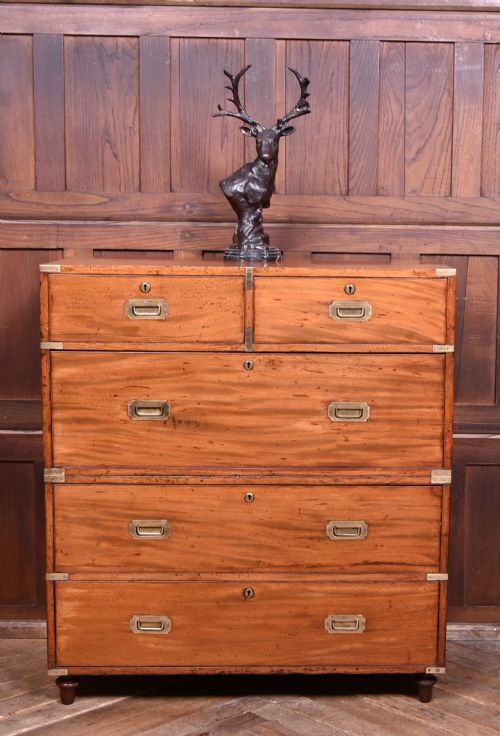
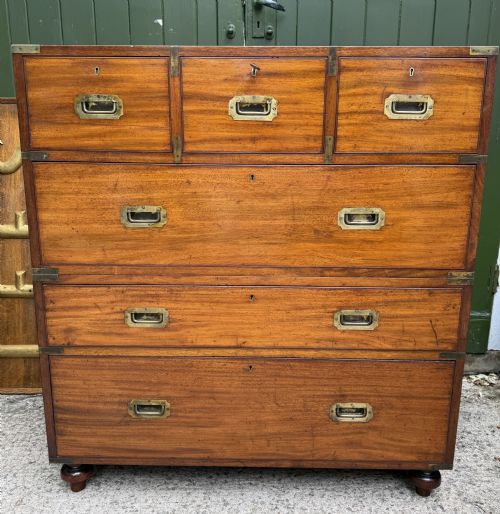
An antique military dresser or campaign chest is primarily encountered as a two-part chest of drawers designed for easy transport by officers on the move. The examples available span the nineteenth century and the Edwardian period, manifesting in Victorian military campaign styles and Anglo-Indian colonial forms.
Most items appearing on this page take the form of chests of drawers, though related pieces such as campaign boxes, ship's chests, tallboy chests, and secretaire variants also emerge. They were constructed to withstand rigorous journeys, separating into modular sections for functional portability.
Materials and construction methods
Cabinetmakers utilised durable timbers like mahogany, teak, cedar, rosewood, oak, and hardwood to endure harsh climates and heavy transit. These woods were chosen for their structural resilience and stability.
Pieces feature recessed brass corners, flush-fitting drawer pulls, and sometimes cast iron carrying handles to prevent snagging during transport. The construction typically divides into stacked sections secured by corner brackets.
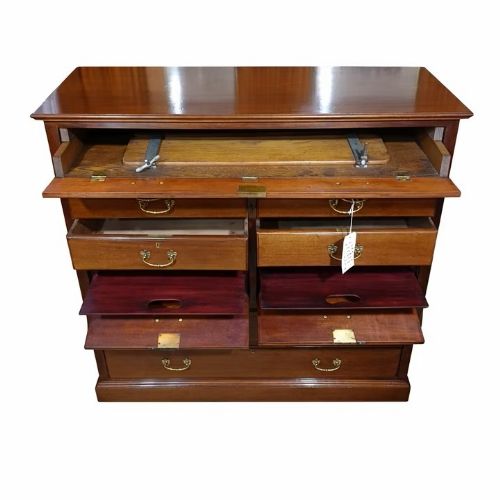
Some campaign chests conceal clever folding writing desks and secret compartments behind deceptively simple drawer fronts.
Judging quality and craftsmanship
Superior quality in a campaign piece is shown through the precision of the brass-binding work and the seamless integration of flush handles into the drawer faces. Finer examples display meticulous dovetail joinery and select timber grains.
The presence of integrated secretaire drawers, clever internal compartments, and original maker signatures elevate a piece. Lesser quality is seen in utilitarian replacements or simpler secondary woods lacking the refined finish of officer-grade commissions.
Ross & Co
The Antique Military Dresser Glossary
- Secretaire
- A cabinet or chest containing a pull-down writing flap and fitted interior compartments. This form allowed officers to maintain correspondence while on expedition.
- Brass-binding
- The practice of reinforcing cabinet corners and edges with brass strips. This technique protected the wood from heavy impacts during transit.
- Flush handle
- A drawer pull or ring set into a recessed cavity so it does not project beyond the face of the drawer. It prevents snagging and allows chests to stack tightly.
Antique Military Dresser: Frequently Asked Questions
What is an antique military dresser?
An antique military dresser or campaign chest is a modular piece of furniture made in sections so that British officers could transport their belongings easily during campaigns. They are characterised by sturdy timbers and protected brass hardware.
These chests usually separate into upper and lower halves, often featuring recessed handles and corner brackets designed to endure rough travel conditions across the empire.
Why are they built in two parts?
The two-part design allowed servants and handlers to load heavy wardrobes onto pack animals, wagons, or ships without damaging the woodwork. Each section was manageable on its own.
Once arrived at a destination, the upper section stacked securely onto the lower base, often locked into place with brass pins or side brackets.
What woods were used for these chests?
Cabinetmakers used dense, durable woods capable of resisting humidity and rough handling, most commonly mahogany and teak. Cedar, rosewood, oak, and general hardwoods also appear across various periods.
Teak and mahogany were favoured for their natural oils and resistance to warping in tropical climates where British regiments were stationed.
How do I date a campaign chest?
Dating relies on observing the timber species, the style of the brass hardware, and construction details like dovetailing. Mid-nineteenth-century pieces often display tight mahogany with crisp brass-binding.
Later Edwardian or early twentieth-century examples shift in timber choice and hardware integration, reflecting changes in military logistics and domestic furniture fashions.