
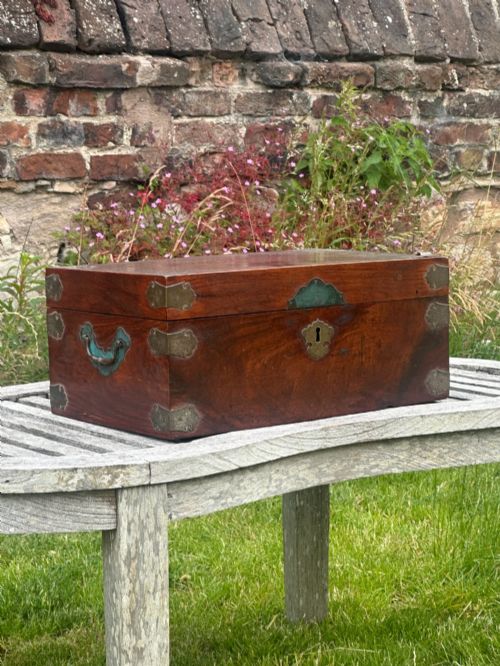
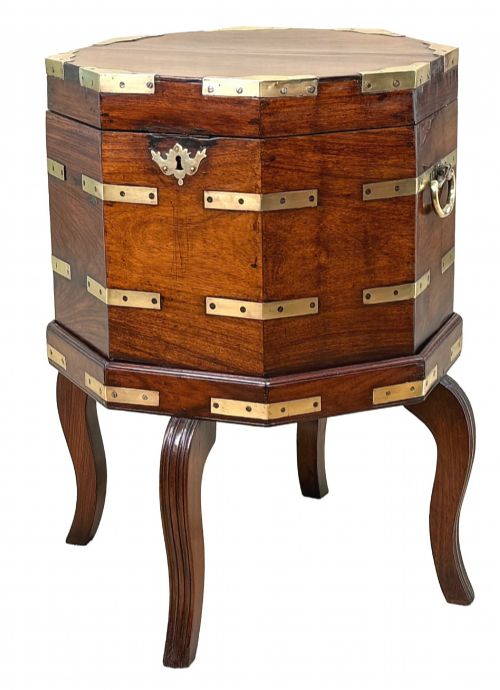


Anglo Indian Campaign
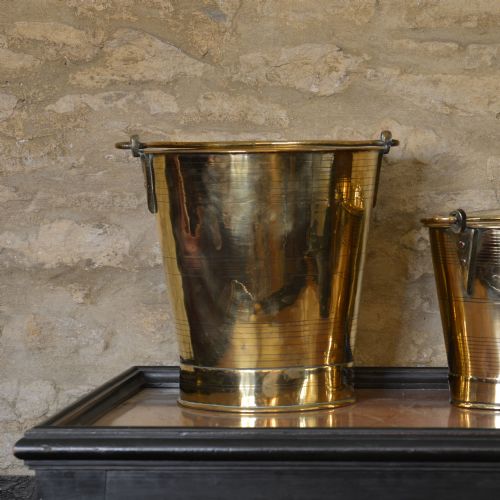
When you explore anglo indian campaign pieces, you encounter sturdy furniture built for travel across the British Empire, prized for clever folding designs and exotic timbers.
Anglo Indian Campaign
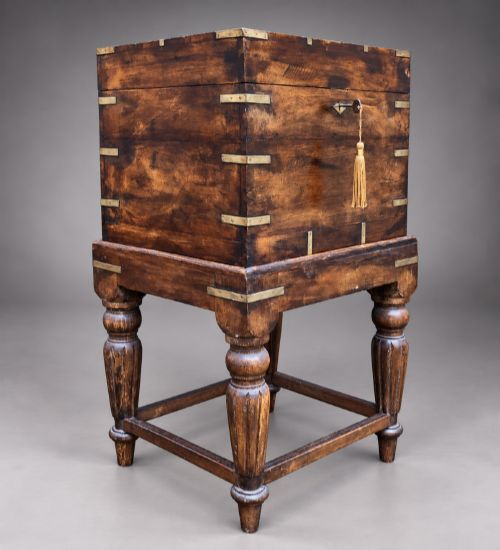
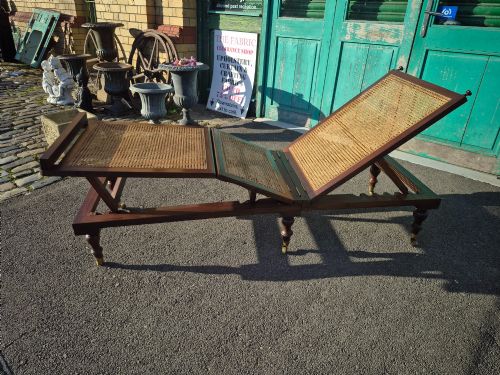
When searching for anglo indian campaign furniture, buyers typically encounter portable chests, trunks, writing boxes, and tables designed for colonial officers and merchants on the move. These pieces span the eighteenth, nineteenth, and early twentieth centuries, reflecting the administrative reach of the British military and colonial presence in the East.
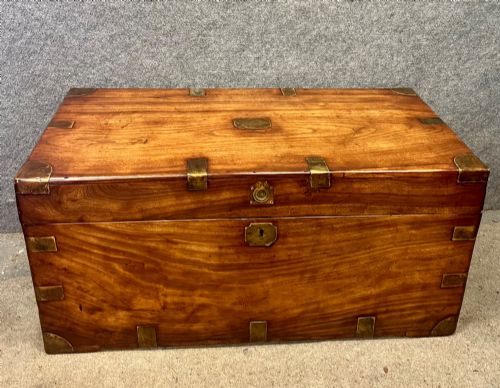
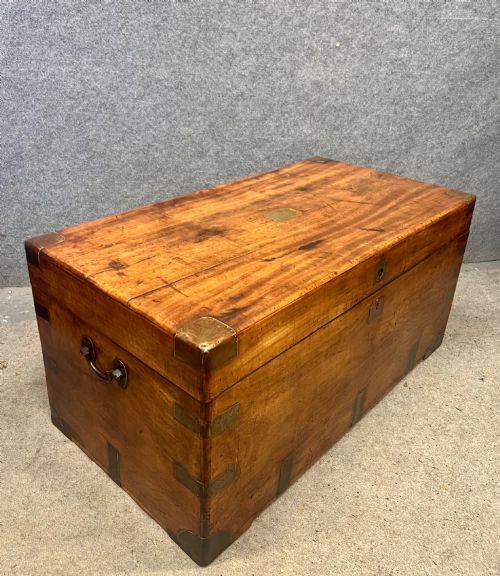
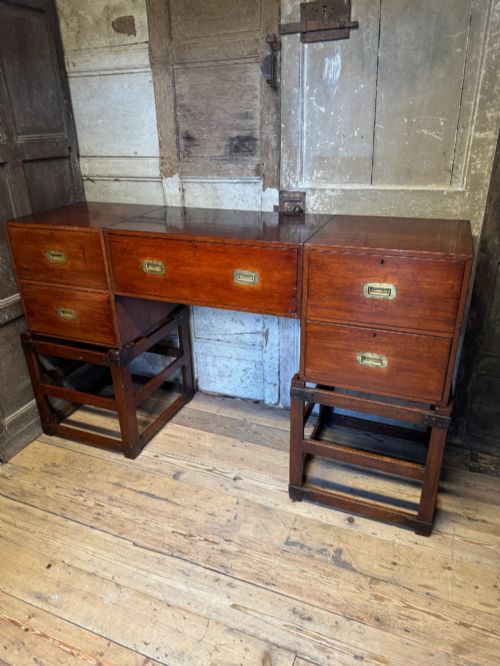
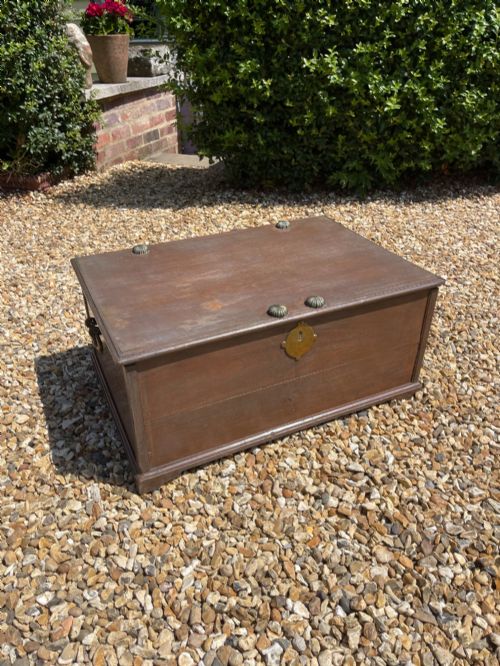
The most common forms on this page are sectional chests of drawers built in two halves for easy transport, alongside camphor wood trunks and fold-away tea tables. Makers constructed these items to withstand long sea voyages and rough overland journeys without sacrificing domestic utility or writing comfort upon arrival.
Originating from workshops in India, Ceylon, and Burma, these furnishings combine European cabinet forms with tropical hardwoods. Buyers select them to bring modular practicality and rich grain patterns into modern interiors.
How They Were Made
Craftsmen built anglo indian campaign items using dense tropical timbers such as teak, padouk, camphor wood, rosewood, and ebony, which resisted humidity and insect damage during transit. These heavy hardwoods provided the structural integrity needed for pieces subjected to constant dismantling and reassembly.
Makers reinforced corners, edges, and structural joints with brass straps, brackets, and inset flush handles to prevent splitting and to protect against knocks during transport. Screws and removable pins replaced permanent glue joints, allowing officers to pack down desks, chests, and tables into compact modules for baggage mules and ships' holds.
What Varies in Quality
The standard of an anglo indian campaign piece depends on the tightness of the joinery and the integrity of the original brass hardware. Superior examples retain matching flush fittings, secret drawers, and smooth-operating sectional locking mechanisms that align precisely after assembly.
Timber selection and carving depth also divide the range, from plain utilitarian trunks built purely for transport to elaborately relief-carved tea tables and secretaire cabinets intended for permanent colonial residences. Grain matching across drawer fronts and the depth of the patination on woods like padouk and camphor distinguish high-workshop output from standard barrack furniture.
The Anglo Indian Campaign Glossary
- Campaign chest
- A modular chest of drawers built in two or more stacking sections with recessed brass handles and corner brackets designed for military transport.
- Secretaire
- A cabinet or chest featuring a pull-out writing drawer fitted with pigeonholes and small compartments for correspondence.
- Padouk
- A heavy, durable reddish-brown tropical hardwood favoured by colonial cabinetmakers for its rich grain and resistance to decay.
- Camphor wood
- An aromatic pale timber widely utilised for trunks and chests because its natural scent repels insects and protects stored textiles.
- Cellarette
- A lockable container or chest designed to hold wine bottles securely during transport.
Anglo Indian Campaign: Frequently Asked Questions
What is anglo indian campaign furniture?
These are portable furnishings made in the colonies during the eighteenth and nineteenth centuries for British officers and administrators. They feature modular designs that dismantle easily for travel.
Cabinetmakers utilised durable tropical woods and protective brass mounts to ensure the pieces survived arduous journeys across land and sea.
What woods were used?
Workshops primarily employed dense Asian hardwoods such as teak, padouk, camphor wood, rosewood, and ebony. These timbers handled tropical climates and frequent movement much better than European oak or walnut.
Camphor wood was particularly popular for clothing trunks due to its pleasant aroma and insect-repellent properties.
How should I clean camphor trunks?
Dust the surfaces gently with a dry, soft cloth and avoid using modern spray polishes that can damage the antique wax finish. Natural beeswax helps maintain the lustre of the timber.
Keep the interior clean and dry, allowing the natural scent of the camphor wood to protect stored items without applying chemical fresheners.
Were these pieces used in battle?
Most campaign items travelled with officers during extended postings, administrative duties, and garrison life rather than active combat. They served as portable offices and bedrooms in permanent or semi-permanent encampments.
Officers took their own furnishings to maintain domestic comfort and status while stationed far from Britain.