

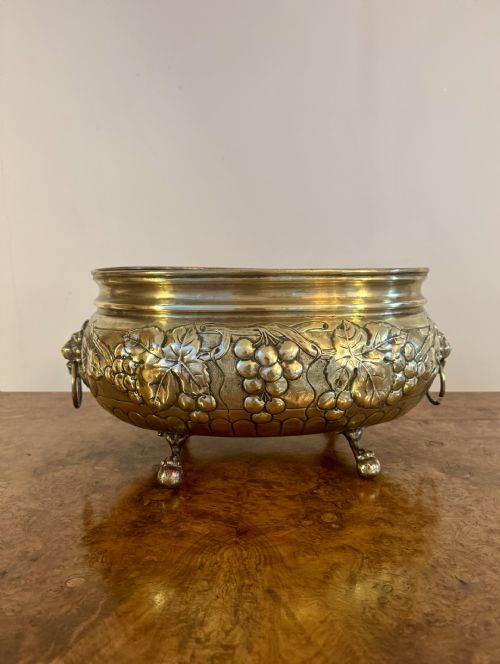
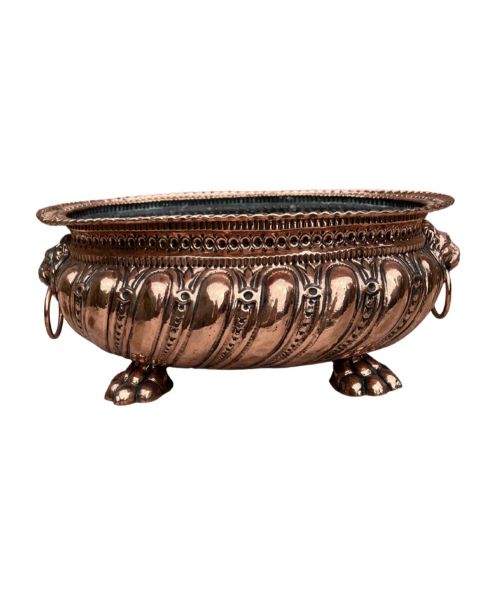


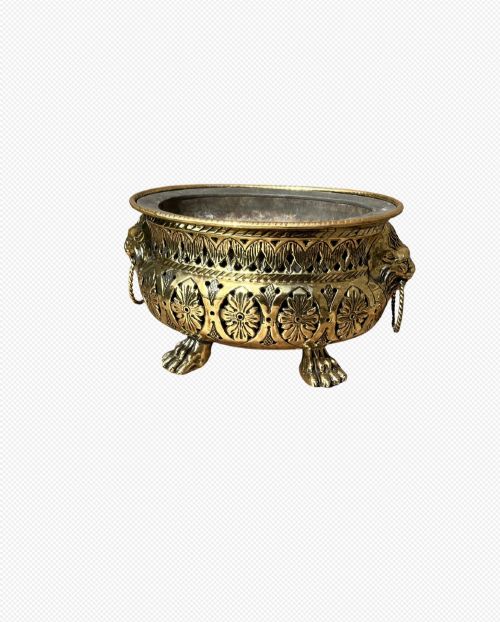
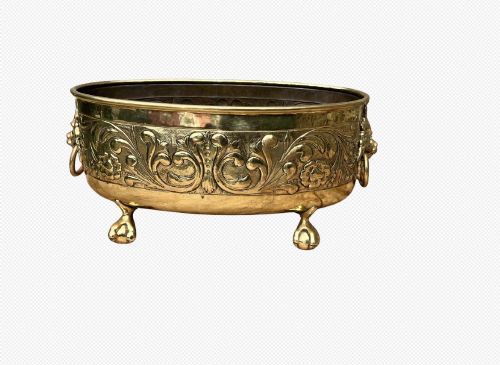
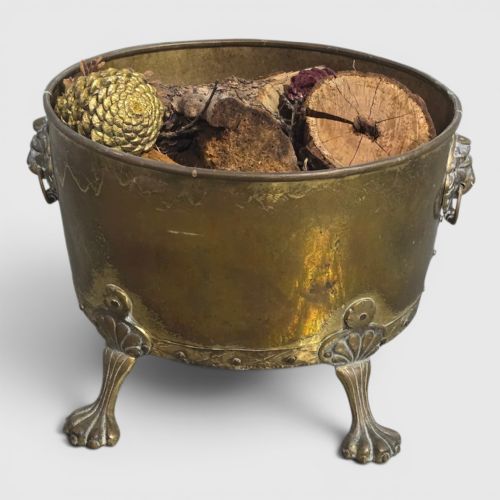
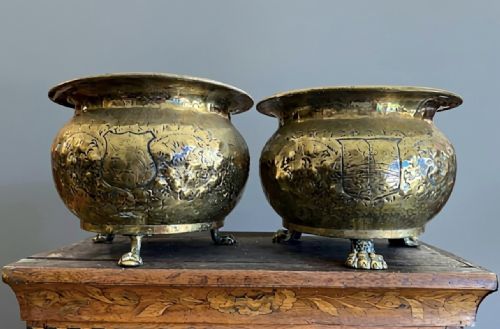


Brass Claw Foot Planter
These brass claw foot planter pieces combine heavy metalwork with practical domestic holding, offering robust character for hearth and flora alike.
Brass Claw Foot Planter
A brass claw foot planter serves to house large indoor plants, firewood, or coal while bringing period metalwork into a room. When searching for a brass claw foot planter, buyers encounter heavy vessels shaped as jardinières, log bins, and cauldrons.
The selections span the eighteenth, nineteenth, and early twentieth centuries, drawing on Victorian, Edwardian, and Dutch designs. Common forms include cylindrical bodies, footed bowls, and handled buckets designed for heavy domestic utility.
Makers shaped these items for practical fireside and plant storage, employing substantial gauge metal to withstand daily wear. Surviving examples reflect centuries of household service through varied patination and structural detailing.
Materials and construction
Workshops utilised heavy sheets of brass and copper, joining seams with visible rivets and folds to ensure durability under heavy loads. Artisans shaped these metals through beating, spinning, and casting to achieve cylindrical and rounded forms.
Surface ornament relied on handbeating, repoussé work, and piercing, creating textured patterns of foliage, geometric motifs, and animal masks. Cast brass feet, often shaped as claws or paws, were riveted securely to the base of the vessel.
Brass Claw Foot Planter Retail Price Guide 2026
Typical asking prices for brass claw foot planter among the pieces listed under this phrase on Sellingantiques today, from the lower quarter to the upper quarter. They describe what is for sale here now, not the wider market.
Listings feature items spanning the eighteenth to the twentieth centuries, utilising brass and copper.
Distinctions in execution
Quality rests in the thickness of the metal sheet and the crispness of the hand-worked repoussé decoration. Superior vessels display cleanly cast feet and robust handles that integrate harmoniously with the main body.
Later or simpler production shows thinner gauge metal and pressed rather than hammered ornamentation, lacking the depth and weight of earlier pieces. Condition and structural integrity of the base and riveted joints determine the overall substance of the item.
The Brass Claw Foot Planter Glossary
- Jardiniere
- A decorative ceramic or metal pot or stand for holding plants or flowers. These vessels often feature detailed surface work and heavy handles.
- Repousse
- A metalworking technique where the metal is hammered from the reverse side to form a raised design in relief. This method creates tactile floral and figural motifs on the body.
- Log bin
- A large container designed specifically for storing firewood beside a hearth. They frequently incorporate sturdy metal bands and carrying handles.
- Cauldron
- A large rounded pot or kettle used traditionally for boiling over an open fire. In later domestic contexts, they served heavy storage duties.
Brass Claw Foot Planter: Frequently Asked Questions
How do I clean an antique brass planter?
Dust the surface gently with a soft dry cloth to preserve the natural aged patination built up over decades. Avoid harsh chemical polishes that strip away the historical character of the metal.
If washing is necessary for plant use, use mild soapy water and dry thoroughly immediately to prevent water spotting or corrosion on the brass and copper.
How do I date a Victorian brass planter?
Examine the construction methods, such as the use of hand-beating versus machine pressing, alongside the style of any cast feet or handles. Victorian pieces often display robust hand-finished repoussé work and heavy riveting.
Reference the specific design motifs typical of the period, such as Gothic revival elements or naturalistic animal masks, to narrow down the decade of production.
Can these containers hold live plants directly?
Many historical vessels lack modern drainage holes and were originally intended to hold potted plants inside an outer cachepot. Placing a plastic or ceramic liner inside prevents direct contact with moisture and soil.
Protecting the interior metal from prolonged dampness prevents corrosion and preserves the structural integrity of the base and riveted seams.