



Brass Charger Dish
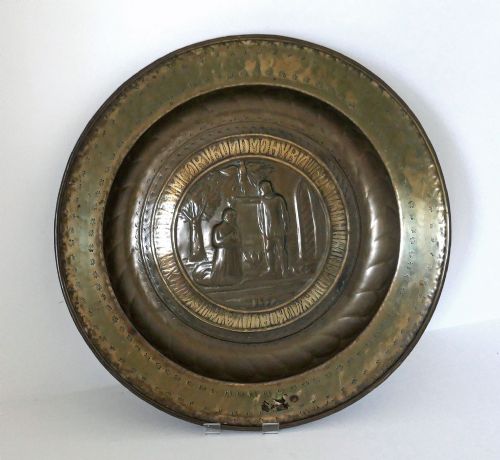
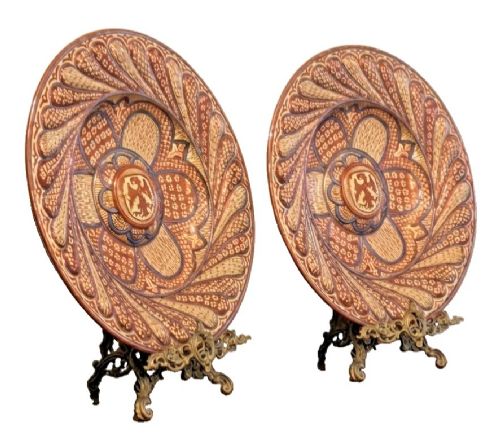
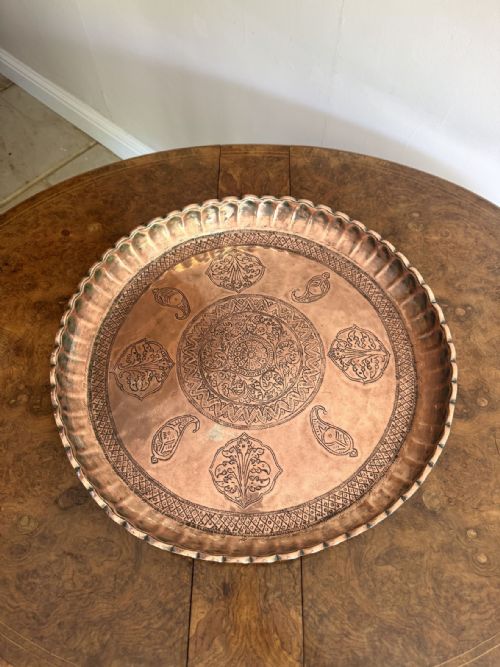
A brass charger dish stands out for its substantial weight, generous circular form, and detailed surface decoration.
Brass Charger Dish
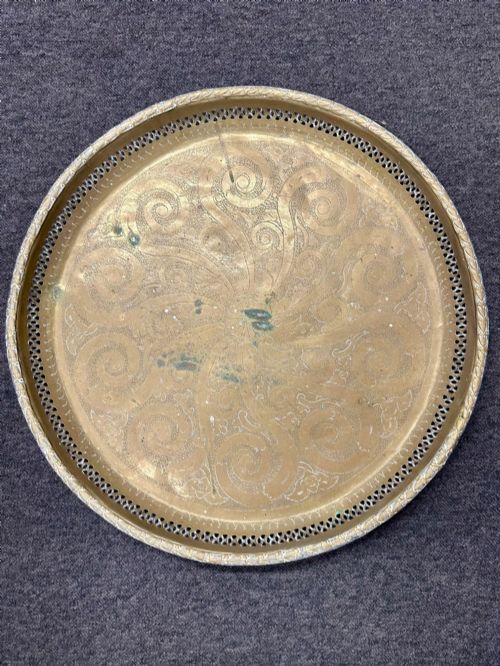
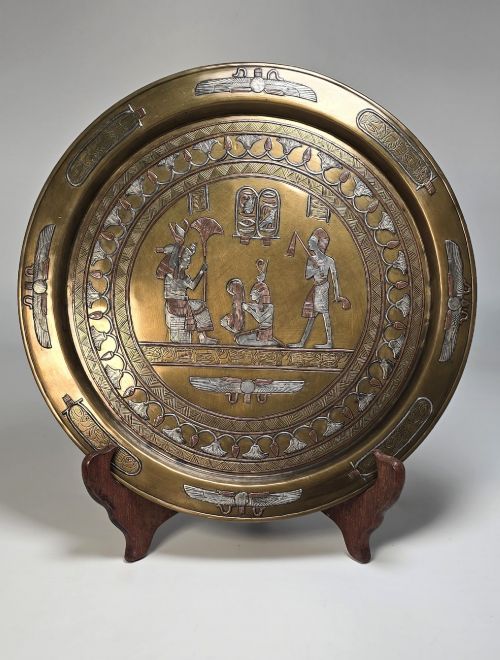
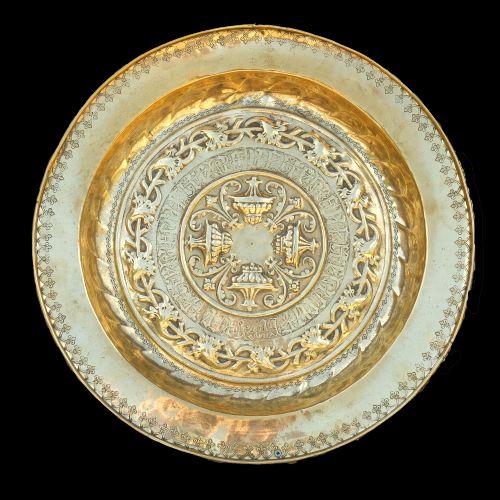
A brass charger dish is a large circular plate or platter designed for display rather than dining. When searching this phrase, a buyer encounters pieces originating from diverse traditions, including nineteenth-century Arts and Crafts hammered brass trays, Middle Eastern silver-inlaid copper, and early European alms dishes.
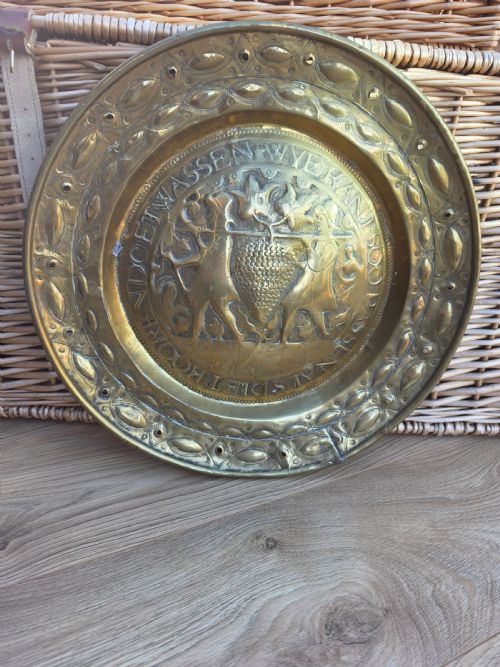
The versions most commonly met on this page include large nineteenth-century circular brass and copper trays, alongside heavily embossed or engraved plates featuring animal motifs, floral patterns, and historical scenes.
How they were made
Makers shaped these heavy metal vessels using techniques such as hammering, repousse, and casting in brass, copper, and bronze. Artisans then decorated the surfaces through hand engraving, piercing, and inlaying contrasting metals like silver.
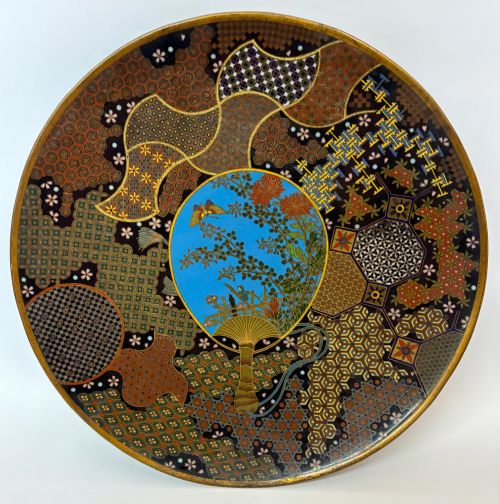
Many examples incorporate mixed metals and applied enamels, particularly in pieces from the Meiji period and the Arts and Crafts movement, where texture and contrasting patination define the finish.
Brass Charger Dish Retail Price Guide 2026
Typical asking prices for brass charger dish among the pieces listed under this phrase on Sellingantiques today, from the lower quarter to the upper quarter. They describe what is for sale here now, not the wider market.
Watch out for hidden fish swimming around central fountains and discreet frogs leaping among chrysanthemums.
What varies in quality
Quality rests upon the crispness of the hand-chased or embossed detail and the depth of the metalwork. Superior examples display precise, intentional hand-hammering and secure inlays without crude joints.
The composition of the metal and the richness of the patination separate standard production pieces from masterworks that retain sharp definition in their central motifs and borders.
The Brass Charger Dish Glossary
- Charger
- A large decorative plate or platter traditionally used for display on a wall or sideboard rather than for serving food.
- Repousse
- A metalworking technique where the artisan hammers the design from the reverse side to form a raised relief on the front.
- Alms dish
- A deep metal basin historically used in churches for collecting donations, often featuring embossed religious or heraldic iconography.
- Cloisonne
- A decorative metalwork technique utilising thin wires soldered to the surface to create compartments filled with enamel paste.
- Latten
- A durable yellow copper-alloy similar to brass, commonly utilised for historical European domestic vessels and dishes.
Brass Charger Dish: Frequently Asked Questions
How were brass charger dishes used?
These large dishes served primarily as decorative wall plaques or centrepieces on sideboards in wealthy households. Historical variants, such as alms dishes, also held charitable donations in ecclesiastical settings.
In domestic interiors, their reflective surfaces caught the light from candles or oil lamps, illuminating the engraved or embossed scenes across the room.
How do I hang a heavy charger?
Hanging a heavy metal dish requires a sturdy wall hook and a dedicated spring-loaded plate hanger that distributes the weight evenly around the rim. Avoid relying on simple adhesive discs or weak wire attachments.
Ensure the hanging wire or brackets grip the outer edge securely without pinching or stressing the metalwork.
How do I clean an antique brass dish?
Cleaning should be kept to a minimum to preserve the aged patination that collectors value. Dust the surface gently with a soft, dry cloth and avoid harsh chemical polishes that strip away historical depth.
If the metal requires washing, use warm water with a mild soap, then dry thoroughly immediately afterwards to prevent spotting.
How do I tell different periods apart?
Distinguishing periods relies on examining the manufacturing marks, tool marks, and stylistic motifs. Sixteenth-century pieces often feature Gothic or religious iconography with heavy casting, whereas nineteenth-century Arts and Crafts items display characteristic hand-hammered textures.
Eastern and Grand Tour pieces from the late nineteenth century typically incorporate dense silver inlay and geometric or calligraphic patterns.