


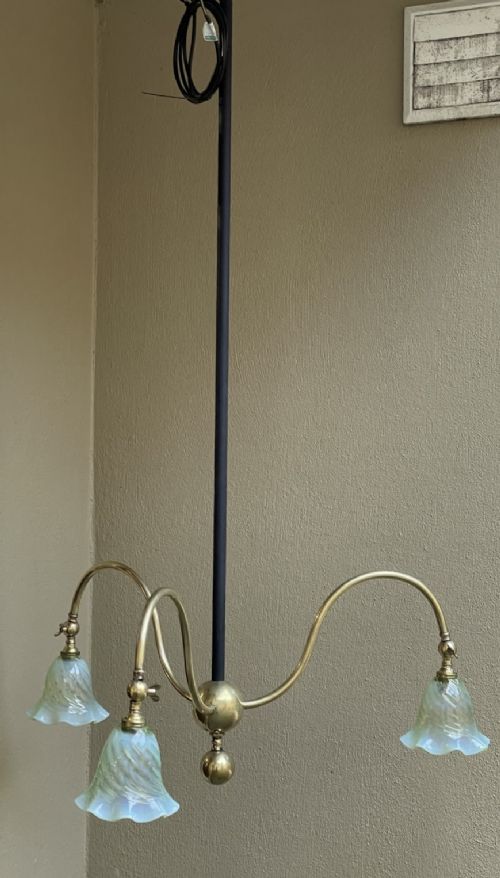
Brass Ceiling Pendant Light
A brass ceiling pendant light brings warmth and targeted illumination to a room through traditional metalwork and suspended glass.

Brass Ceiling Pendant Light
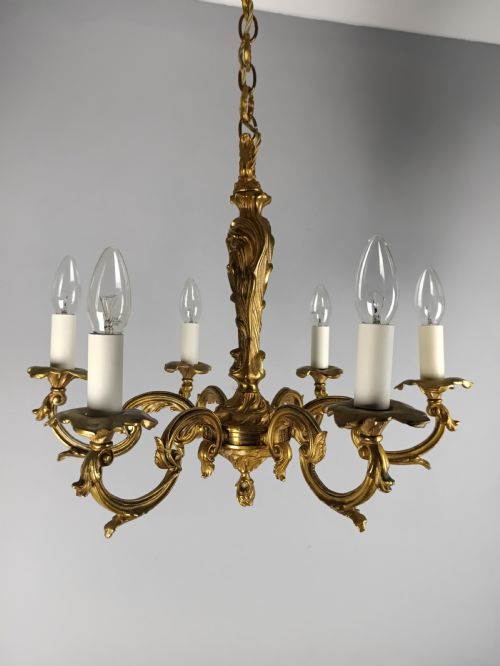
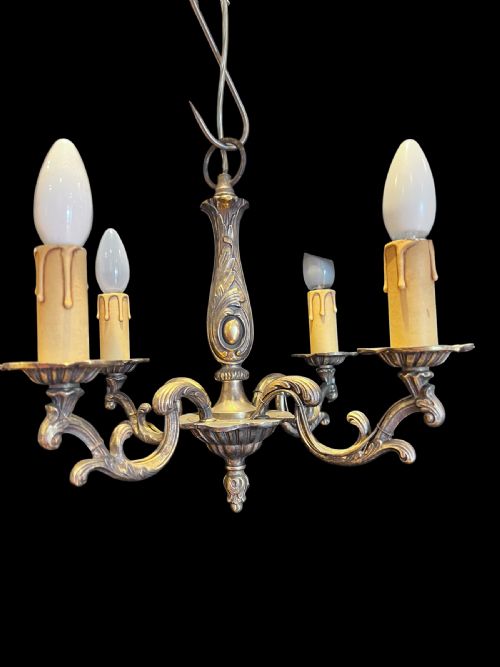
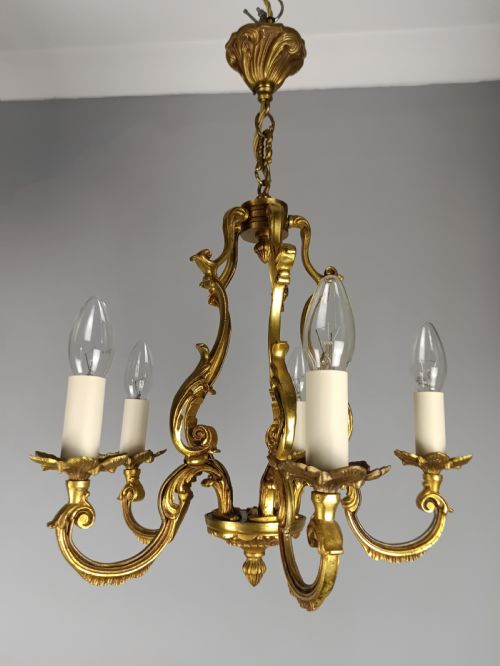
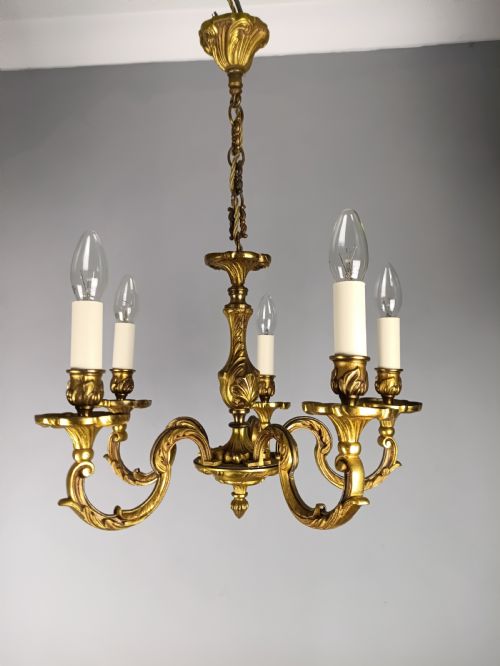
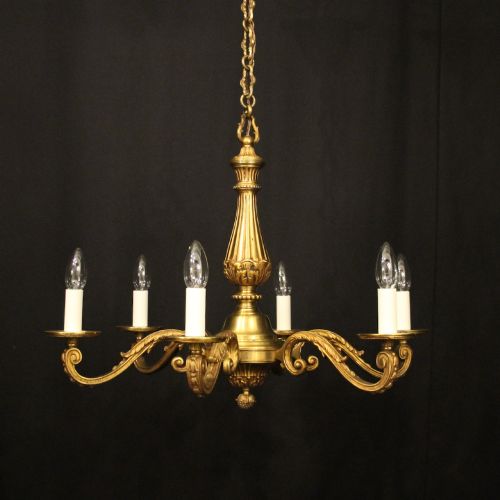
A brass ceiling pendant light encompasses a wide variety of hanging fixtures, ranging from single-bulb glass shades with brass galleries to multi-armed chandeliers and lanterns. These pieces span the Victorian, Edwardian, and Art Deco periods, drawing on French chateau, Arts and Crafts, and neoclassical styles.
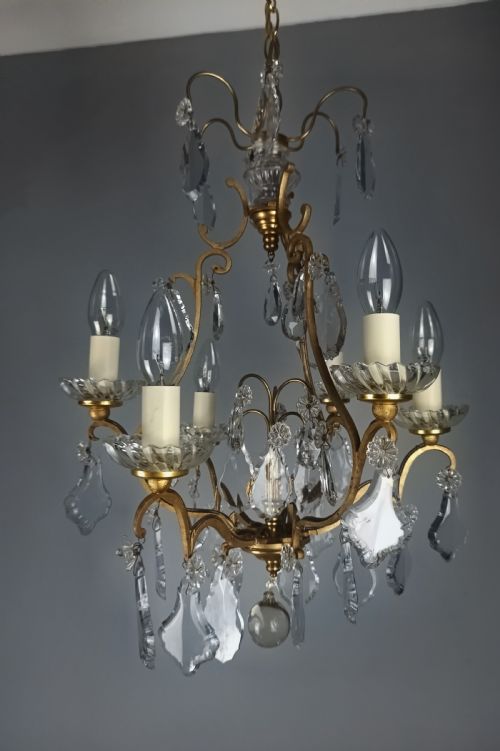
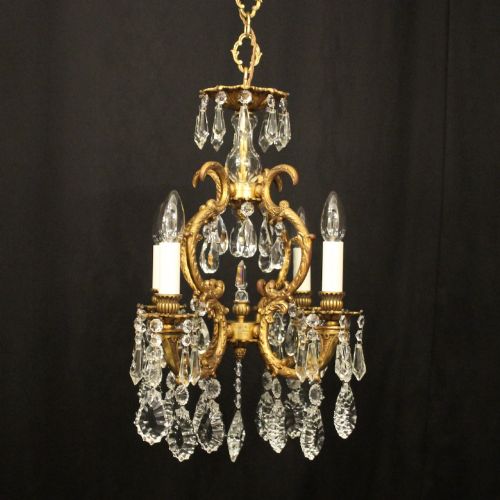
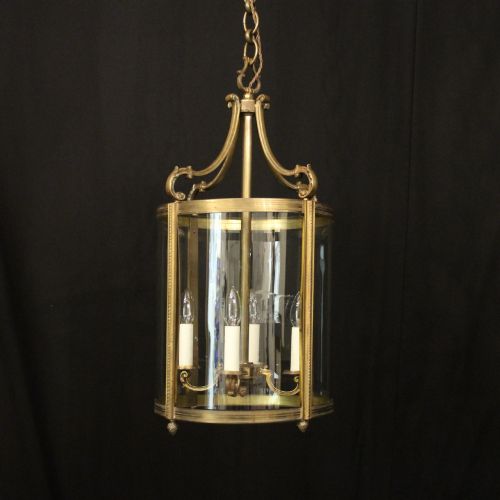
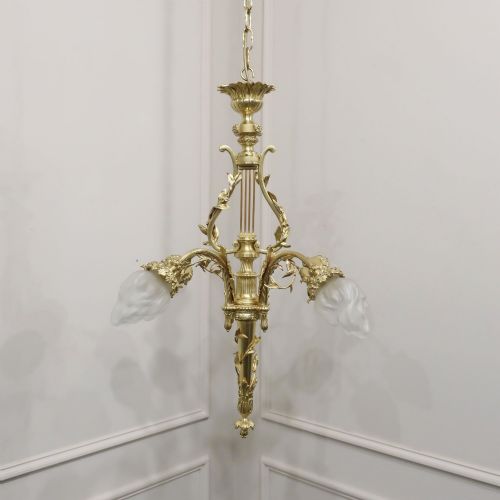
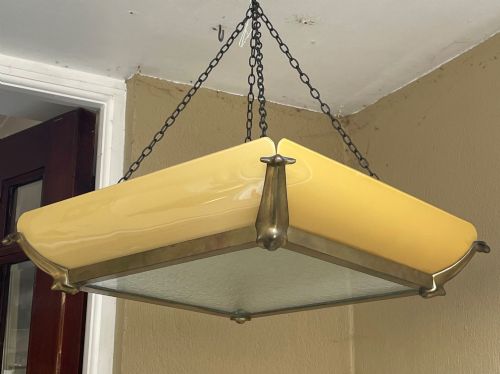
The most common versions met on this page are Edwardian and Art Deco pendants featuring glass shades suspended from brass fittings, alongside French bronze and gilt brass hall lanterns and basket chandeliers from the early twentieth century.
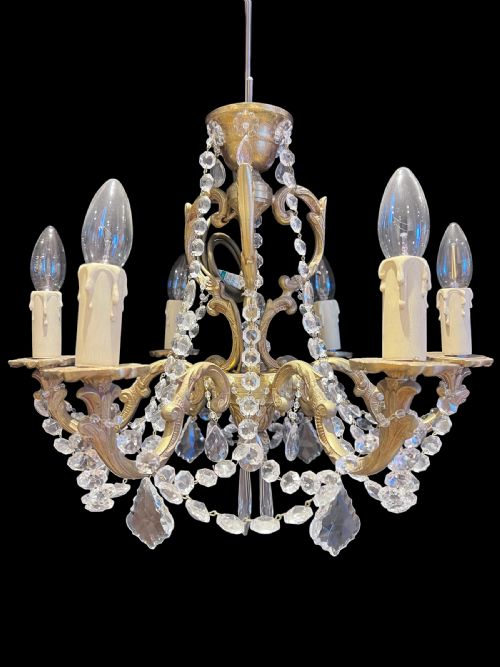
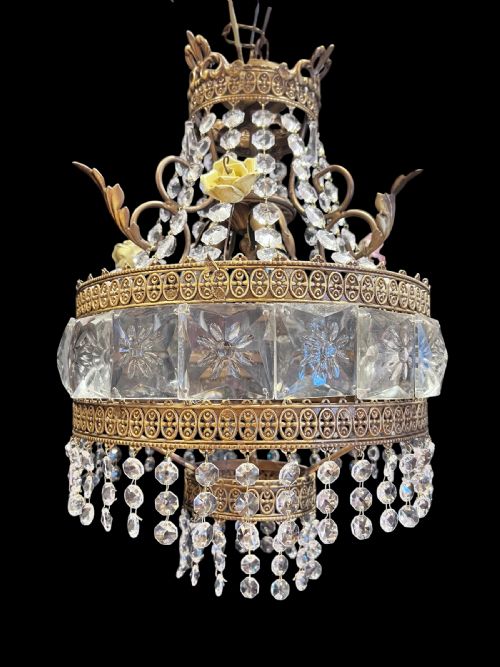
Makers and designers worked within distinct regional traditions, producing everything from utilitarian British civic lighting to elaborate continental gilt bronze fixtures hung with crystal lustres and prisms.
Materials and construction
Brass, gilt bronze, and coppered brass form the primary structural metalwork for these pendants, shaped into cast galleries, spun holders, and intricate frames.
Glass elements include cut crystal, lead glass, opalescent shades, and moulded holophane prisms that diffuse light and add texture to the suspended fixture.
Makers incorporated decorative details such as porcelain flowers, bevelled glass panels, and etched patterns directly into the shades and metal framing.
Listings feature brass ceiling pendant lights from the Victorian, Edwardian, and Art Deco periods, incorporating cut glass, crystal, and bronze.
Evaluating craftsmanship and detail
Quality rests in the weight and definition of the metal casting, seen in the crisp relief of French gilt bronze frames and the substantial gauge of brass galleries.
The treatment of the glass distinguishes standard production from finer examples, evident in hand-cut crystal lustres, heavy bevelled glass panels, and specialised prismatic shades.
The Brass Ceiling Pendant Light Glossary
- Holophane
- A type of prismatic glass designed to direct and diffuse light efficiently. These shades feature ribbed patterns that minimise glare.
- Lustre
- A cut glass pendant drop or prism hung from a chandelier to reflect light. Lustres are commonly wired with small brass pins.
- Slip shade
- A moulded piece of glass that fits into a metal frame to form the body of a ceiling light. This technique is typical of Art Deco design.
- Vaseline glass
- A pale yellow-green glass coloured with uranium oxide that glows under ultraviolet light. It appears frequently in Edwardian and Art Deco shades.
Brass Ceiling Pendant Light: Frequently Asked Questions
How do I hang a heavy brass pendant?
Heavy fixtures require direct attachment to ceiling joists using a suitable metal hook or bracket capable of supporting the weight of bronze and glass.
Professional installation ensures the internal wiring and structural mountings safely bear the load of multi-armed chandeliers or large lanterns.
Are these lights rewired for modern use?
Many surviving pendants retain older wiring or have been updated with modern flex and lamp holders to meet current electrical standards.
Buyers should inspect the internal components and consult an electrician to confirm compatibility with domestic circuits.
How do I clean antique brass and glass?
Metal components benefit from gentle dusting and occasional cleaning with a dry or slightly damp cloth to preserve their aged patina.
Glass shades and crystal lustres can be washed in warm soapy water, provided they are unmounted and dried thoroughly before reassembly.
How do I date a brass pendant?
Dating relies on stylistic clues, such as the geometric lines of Art Deco slip shades or the heavy cast brass galleries typical of the Edwardian era.
Registration numbers, casting marks, and specific glass manufacturing techniques also help narrow down the period of production.