



Brass Castor Writing Desk
A brass castor writing desk brings together period timber and mobility, offering a practical workspace defined by brass wheel feet.
Brass Castor Writing Desk
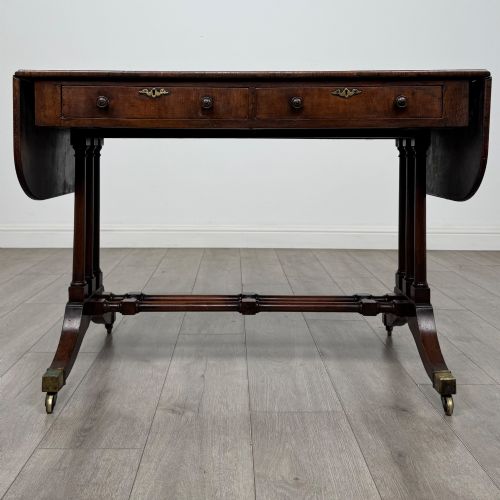
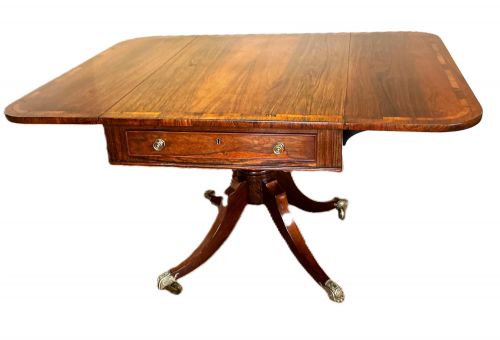
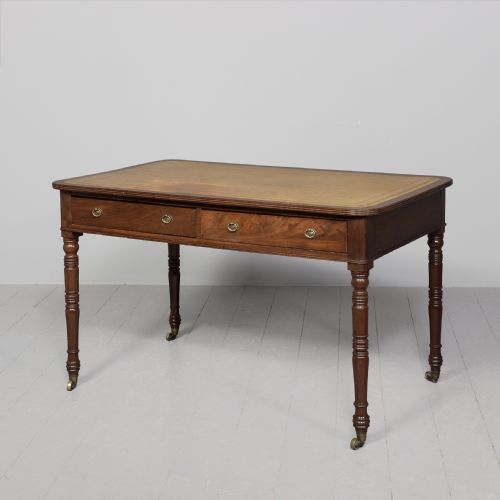
A brass castor writing desk encompasses a variety of writing tables, library tables, and sofa tables designed during the Georgian, Regency, and Victorian periods. These pieces serve as functional workstations or library tables fitted with wheeled supports to allow easy movement across a room.
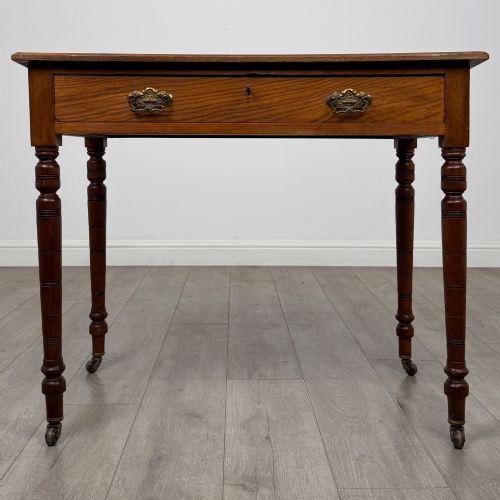
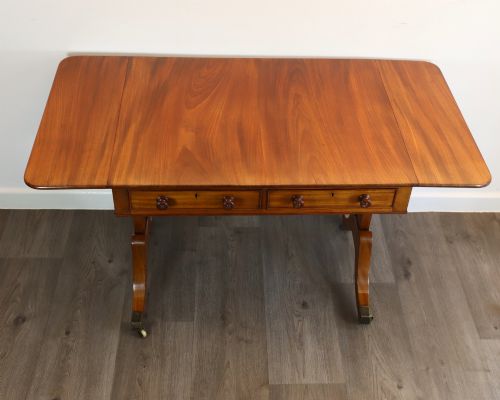
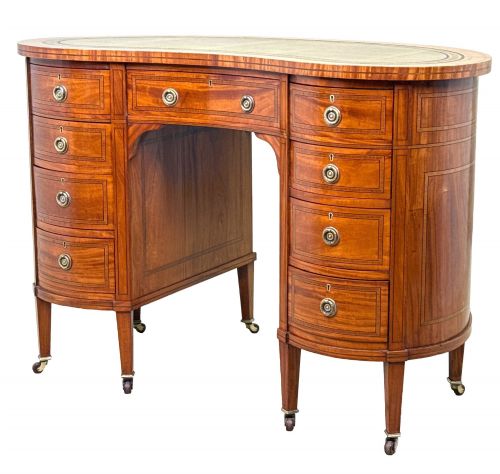
The versions most commonly met on this page are mahogany writing tables and sofa tables originating from the Regency and Victorian eras. Many feature drop flaps, leather inserts, or multiple drawers supported on legs finished with brass castors.
Materials and construction
Makers built these tables primarily using solid and veneered timbers such as mahogany, rosewood, satinwood, and oak. Selected pieces incorporate boxwood inlay and inset leather writing surfaces.
Structural stability relied on traditional joinery methods combined with turned or tapering supports. Brass castors were fitted to the base of the legs to provide both mobility and protection to the floor.
Listings feature brass castor writing desks across Regency, Victorian, and Edwardian periods, constructed in mahogany, rosewood, oak, and satinwood.
Evaluating quality and execution
Quality depends upon the selection of timber figure, the crispness of any inlay work, and the original integration of the brass castors. Finer examples display carefully matched grain patterns on mahogany or rosewood surfaces.
The standard of internal drawer construction and the weight of the brass fittings also distinguish superior pieces from simpler utilitarian tables.
W Williamson & Sons of Guildford
The Brass Castor Writing Desk Glossary
- Castor
- A small wheel mounted on a swivel attached to the foot of a table leg. This allows heavy furniture to be rolled across a floor.
- Sofa table
- A rectangular table designed to stand in front of a sofa, typically featuring drop leaves on either side and two small drawers.
- Drum table
- A circular library table with a deep top containing drawers, usually rotating or stationary on a central pillar with legs.
- Library table
- A large freestanding table used for reading and writing, finished on all sides so it can sit in the centre of a room.
Brass Castor Writing Desk: Frequently Asked Questions
What is a brass castor writing desk?
A brass castor writing desk is a period table intended for correspondence or study, elevated on wheeled brass feet for mobility.
These pieces span the Georgian, Regency, and Victorian eras, taking the form of library tables, sofa tables, and dedicated writing desks.
How were these tables used originally?
They functioned as movable writing surfaces in studies, libraries, and drawing rooms where furniture needed repositioning for different activities.
The inclusion of castors allowed owners to shift the heavy timber tables closer to a light source or push them aside when not in use.
How do I identify a Regency period desk?
Regency desks often display classical proportions, dark mahogany or rosewood veneers, and brass stringing or mounts.
They frequently feature turned or saber legs ending in the characteristic brass castors seen across this period.
Are these desks suitable for daily use?
These tables are robust enough for daily computer or writing work provided the structural joints and leather tops are treated with care.
Placing them in modern interiors offers a functional workspace grounded in nineteenth-century cabinet-making traditions.