
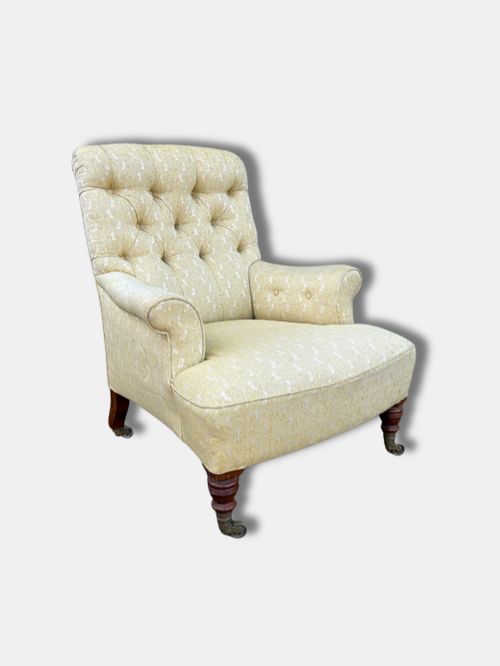
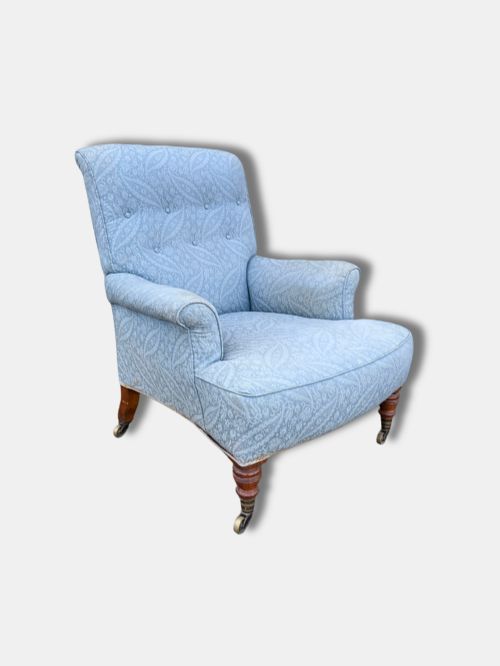
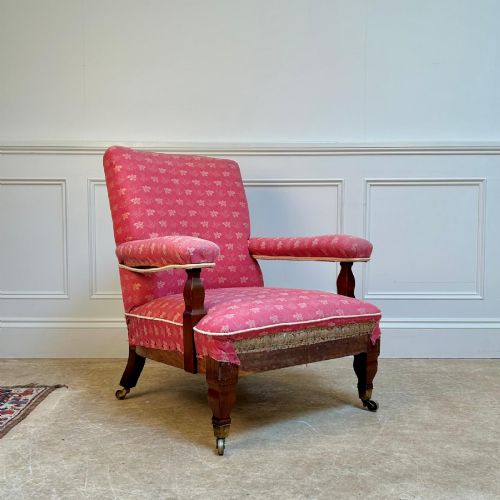
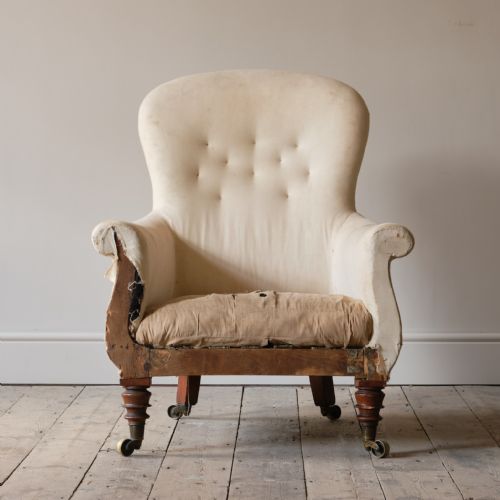
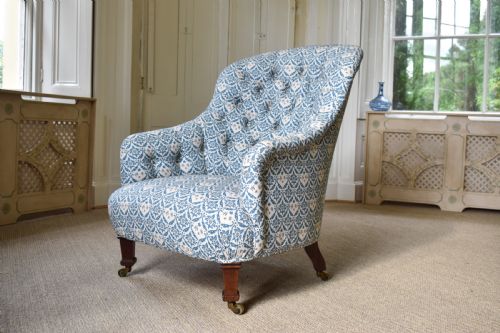

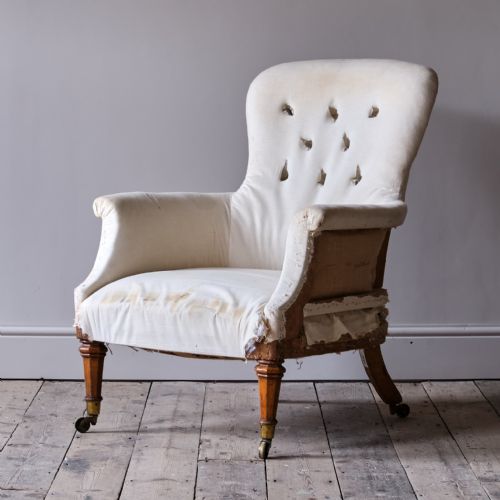

Brass Castor Reading Armchair
A brass castor reading armchair is a comfortable seat designed for libraries and studies, featuring sturdy wheels for easy movement across the floor.
Brass Castor Reading Armchair
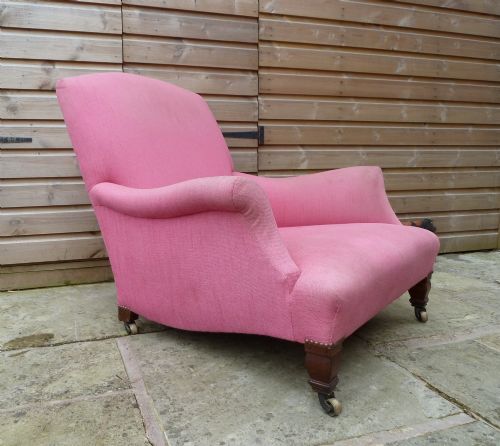
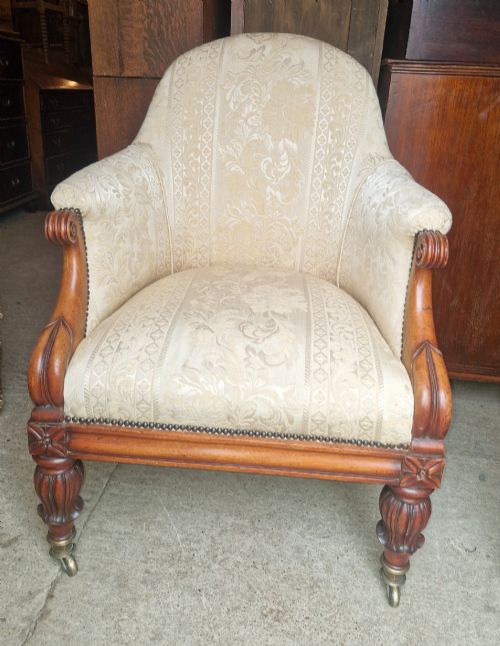
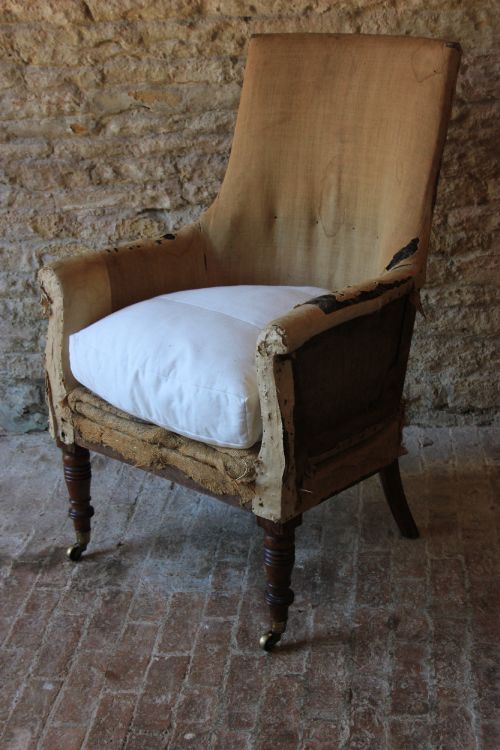
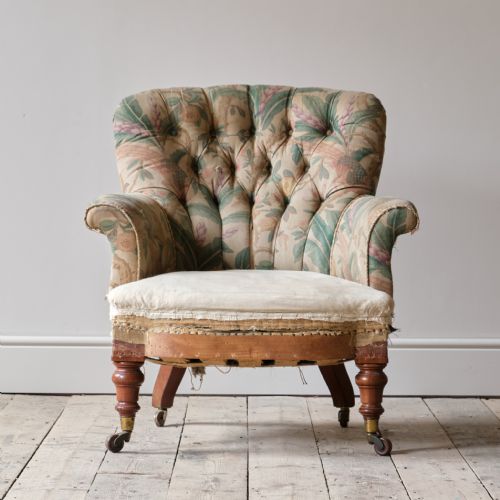
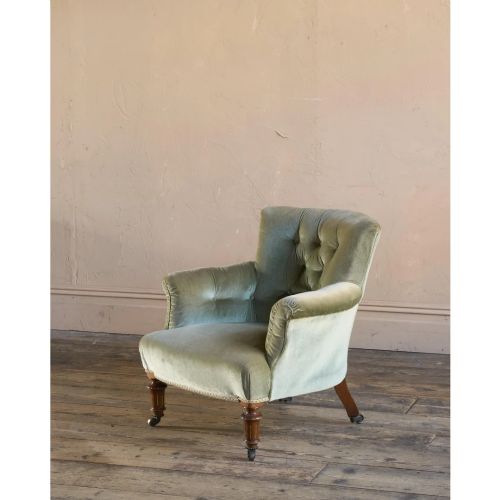
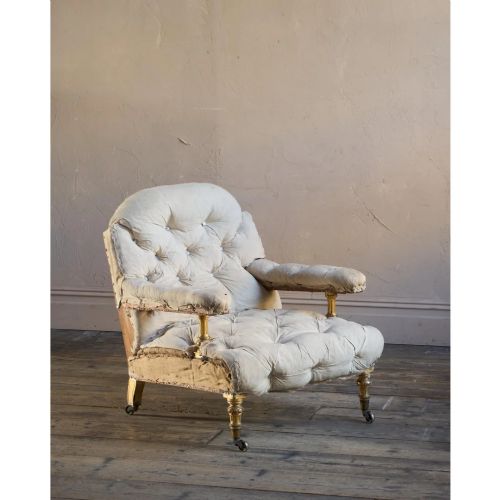
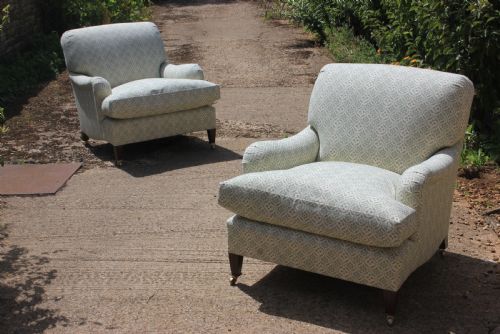
A brass castor reading armchair brings together substantial library seating and practical mobility, allowing readers to adjust their position near a fire or bookshelf. These pieces emerge predominantly from the nineteenth century, encompassing Regency, William IV, Victorian, and Edwardian periods.
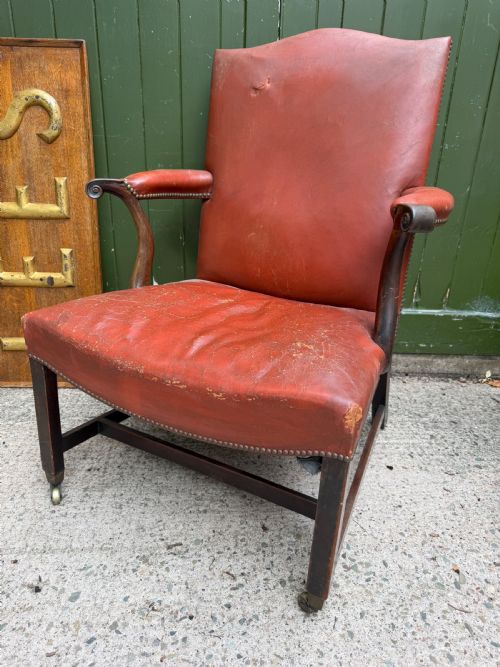
Most examples found on this page display robust mahogany or hardwood frames, often paired with deep leather, velvet, or calico upholstery. Makers such as Howard and Sons, Gillows, and Morris and Co shaped the evolution of these comfortable seats, creating both compact reading chairs and large country house styles.
Buyers will encounter varied forms ranging from button-back club chairs and bergères to Gainsborough library chairs and low-slung Bridgewater designs. Each variant serves the primary function of supporting long hours of reading while standing on small metal wheels that protect carpets and timber floors.
Assessing quality and craftsmanship
The distinction between standard seating and exceptional library chairs lies in the caliber of the timber frame and the precision of the joinery. Superior examples maintain firm proportions and balanced weight, whereas lesser pieces often show structural compromise from heavy wear.
Howard and Sons·Gillows·Morris and Co·Hindley and Sons·Hampton and Sons
The Brass Castor Reading Armchair Glossary
- Bergère
- An upholstered armchair with enclosed sides, typically featuring cane work or padded fabric panels. This French-inspired form became a staple of nineteenth-century English libraries.
- Castor
- A small wheel attached to the foot of a piece of furniture for ease of movement. Brass versions are typical on heavier library armchairs of the period.
- Reeded
- A decorative moulding consisting of parallel convex strips resembling bundled reeds. Cabinet makers frequently applied this detail to the legs of library chairs.
- Library chair
- A substantial seating form designed for reading rooms and studies, prioritising deep upholstery and ergonomic support. They often incorporate writing arms or low profiles.
- Country house style
- A relaxed, comfortable aesthetic associated with large English estates, favouring over-scaled upholstery and durable materials. These chairs show generous proportions built for long-term comfort.
Brass Castor Reading Armchair: Frequently Asked Questions
What defines a reading armchair?
A reading armchair is built specifically for prolonged seated tasks, featuring supportive arms and deep padding suited to study spaces.
These chairs frequently incorporate brass castors so the reader could easily reposition the seat near a light source or fireplace without heavy lifting.
How do I identify a nineteenth-century piece?
Nineteenth-century pieces display specific stylistic markers from the Regency, William IV, Victorian, and Edwardian eras, such as reeded mahogany legs and traditional button-back upholstery.
Examining the construction methods and timber density helps confirm the period of manufacture.
Were these chairs used only in libraries?
While designated as library chairs due to their association with reading rooms, they served as principal seating in drawing rooms and country house studies.
Their comfortable proportions made them versatile additions to any domestic interior requiring heavy daily use.
What is a bergere armchair?
A bergere is an enclosed upholstered armchair that frequently includes exposed wooden frames and woven cane panels along the sides and back.
This style offers a lighter visual presence while maintaining structural support.