
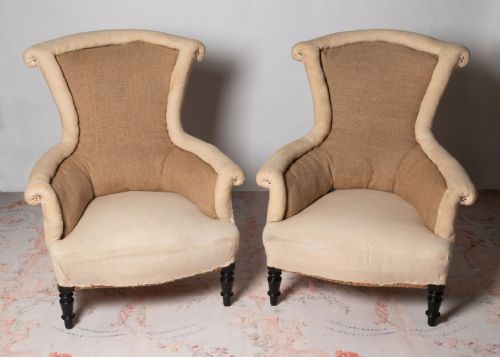


Black Upholstered Armchair
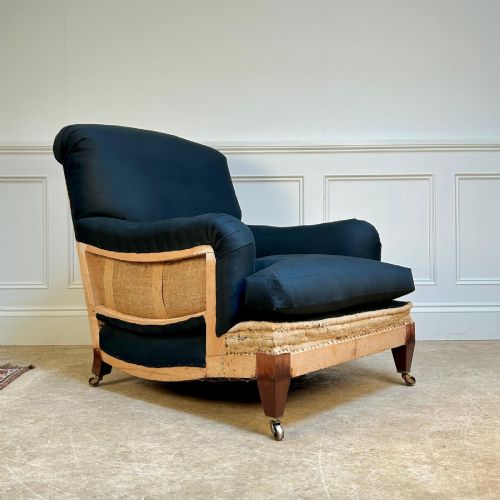
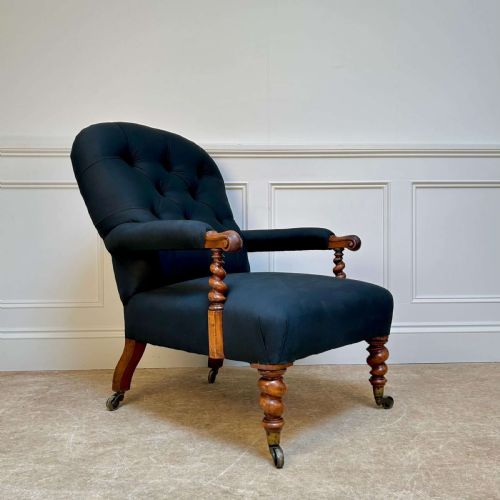
A black upholstered armchair brings serious presence to a room, combining dark wood or painted frames with deep, textured seating.
Black Upholstered Armchair
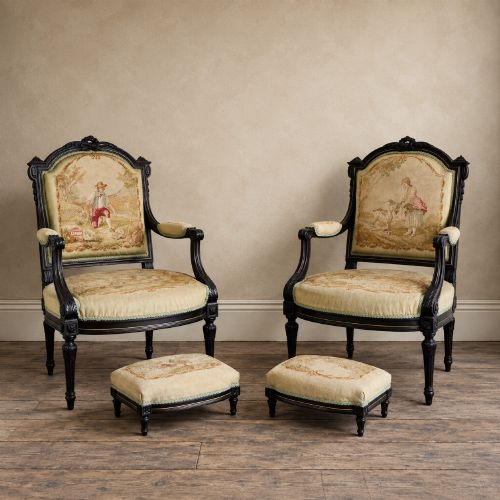
The selection ranges from grand library carvers and reclining armchairs to smaller nursing chairs, rocking chairs, and matching pairs designed for formal rooms. Makers such as Gillows and Hindley and Sons appear among these diverse forms, alongside simpler vernacular pieces.
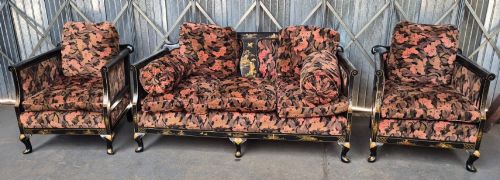
Periods represented stretch across the nineteenth century into the early twentieth, encompassing Regency style, Aesthetic Movement designs, and Louis XVI revivals. You will encounter everything from sturdy oak and mahogany desk chairs to delicate Chinoiserie and japanned finishes.
How they were made
Frames rely on traditional timbers including mahogany, oak, beech, and bentwood, often finished with ebonisation, paint, or gilding to achieve a dark surface. Metal elements like brass studs frequently secure the leather or fabric edges.
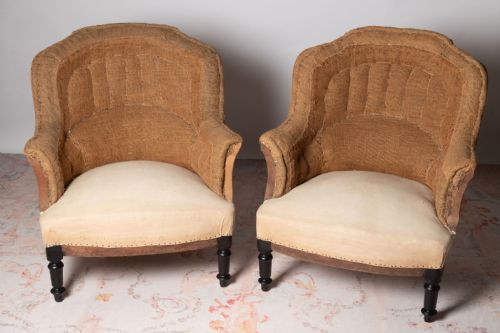
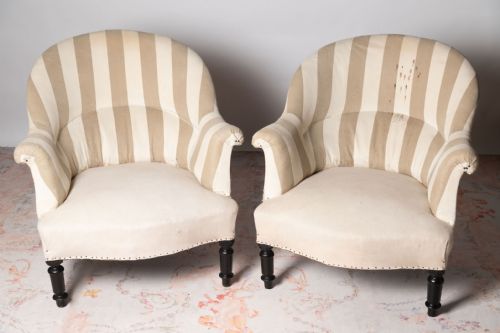
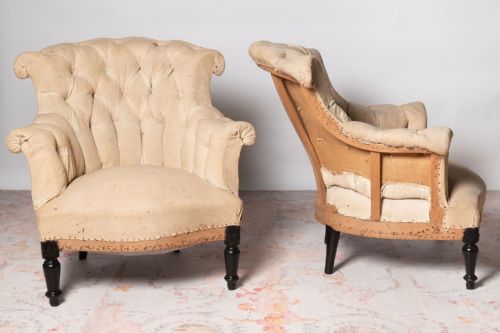
Upholstery techniques utilise traditional foundations covered in various textiles, ranging from plain calico and hessian to printed fabrics and buttoned leather. Stags antler and specialised joinery appear in more unusual regional and period variations.
Listings feature ebonised wood as the predominant frame finish, paired with leather, fabric, calico, and hessian across Victorian and later periods.
What varies in quality
Quality rests heavily on the integrity of the timber frame and the skill of the original cabinet work, distinguishing simple workshop output from documented makers like Gillows. Carved details, gilding execution, and the crispness of ebonised finishes separate standard utility seating from high-status library and salon pieces.
The choice and execution of the upholstery materials define the final character and comfort of the seat. Superior examples maintain balanced proportions, robust joinery beneath the fabric, and period-appropriate textiles that respect the design era.
Hindley and Sons·Gillows
The Black Upholstered Armchair Glossary
- Ebonised wood
- Timber treated with stain, dye, or polish to imitate the deep black tone of ebony. This finish became particularly popular during the Victorian and Aesthetic periods.
- Carver chair
- An armchair, often designed to match a set of dining chairs with lower arms that fit beneath a table rim. They frequently feature mahogany frames and leather seats.
- Japanned
- European craftsmanship that emulates East Asian lacquered surfaces using layered varnishes and decorative motifs. It appears on specialised Chinoiserie frames.
- Calico
- A plain-woven textile often used as an initial upholstery layer or base cover on antique seating before top fabrics are applied.
- Aesthetic Movement
- A late nineteenth-century design style emphasising visual beauty over narrative meaning, frequently utilising ebonised frames and gilt highlights.
Black Upholstered Armchair: Frequently Asked Questions
What periods do these armchairs come from?
The listings span from the Georgian era through the Victorian period, the Aesthetic Movement, and into the early twentieth century including the 1920s and 1930s.
You will find nineteenth-century French salon chairs alongside English library furniture and Regency style pieces.
Are these chairs sold as pairs?
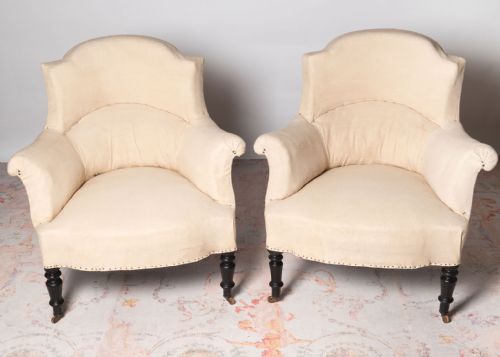
Many listings feature matched pairs of armchairs, salon chairs, or carver chairs, particularly among French revival and Regency style pieces.
Single library chairs and individual rocking or nursing chairs also appear frequently on their own.
What materials are used for the frames?
Frames are constructed from woods such as mahogany, oak, and beech, frequently finished with ebonisation to create a striking black appearance.
Some examples incorporate brass detailing, gilding, painted finishes, or even stags antler for unusual decorative effect.
What types of upholstery do they feature?
Upholstery materials include traditional leather, heavy fabric, hessian, and plain calico, often secured with brass studs.
Textiles range from simple functional covers to patterned designer prints like those by Colefax and Fowler.