

Brass Cased Clock
A brass cased clock brings mechanical precision and warm metalwork into a room, spanning modest carriage models to towering floor-standing longcase examples.
Brass Cased Clock
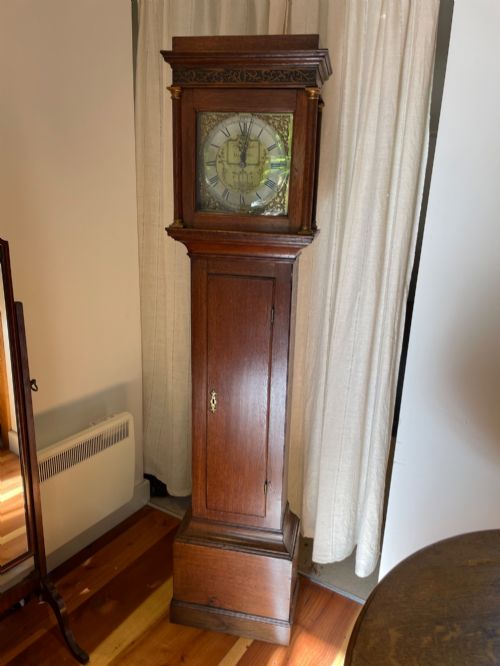
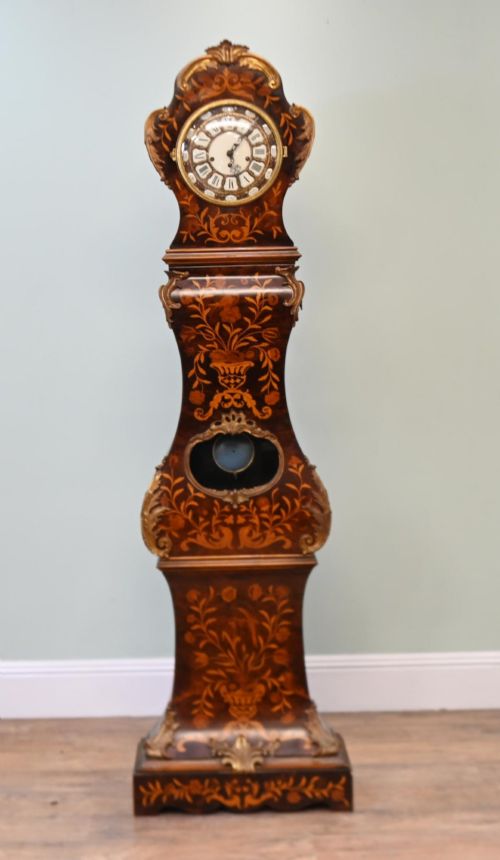
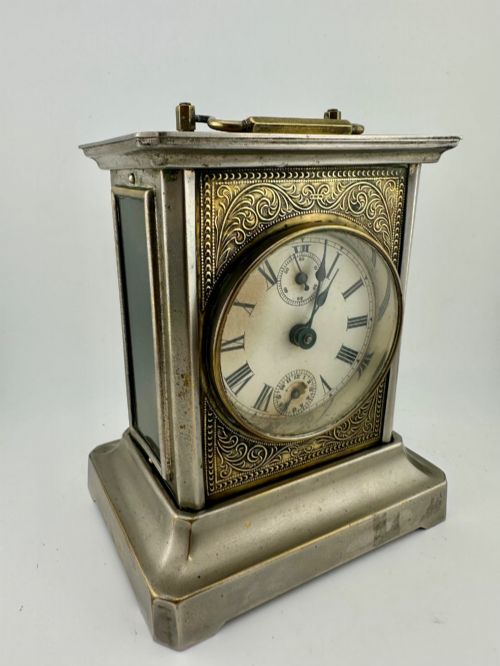
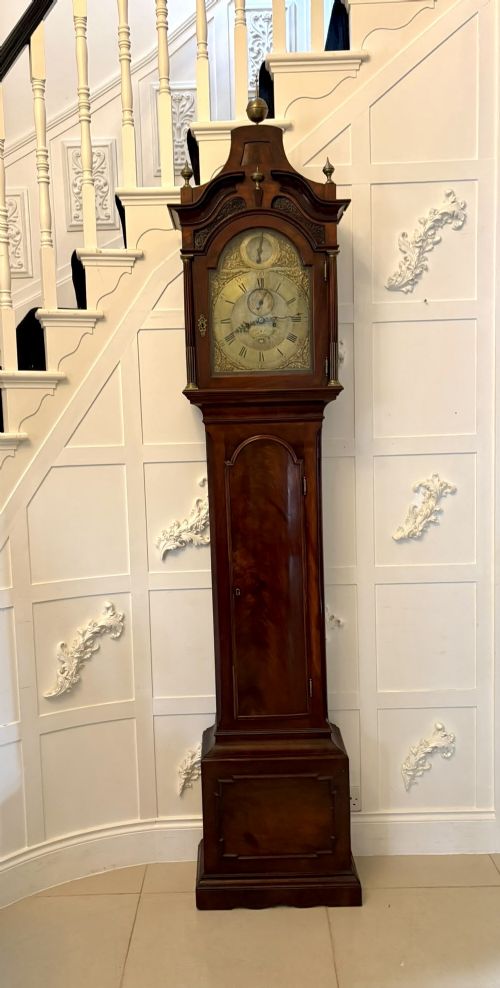
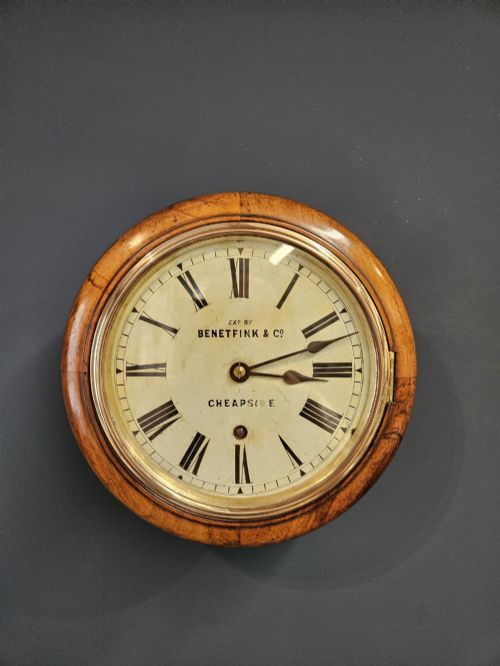
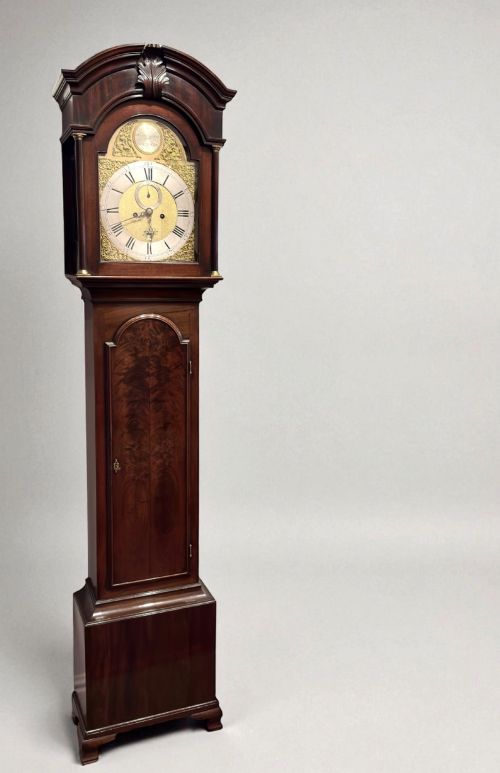
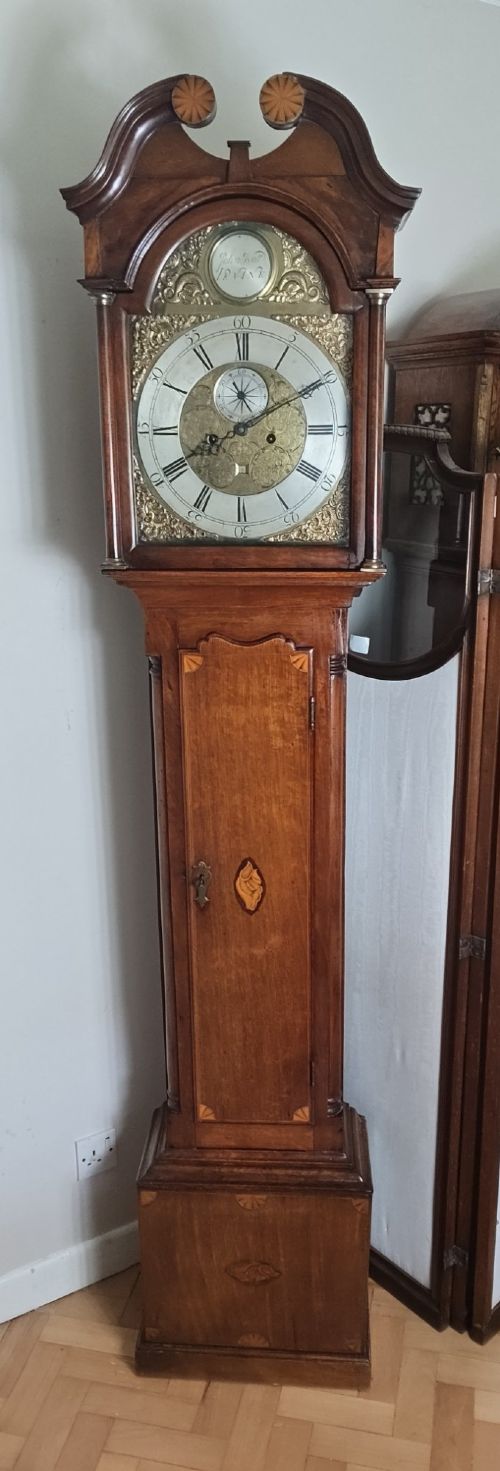
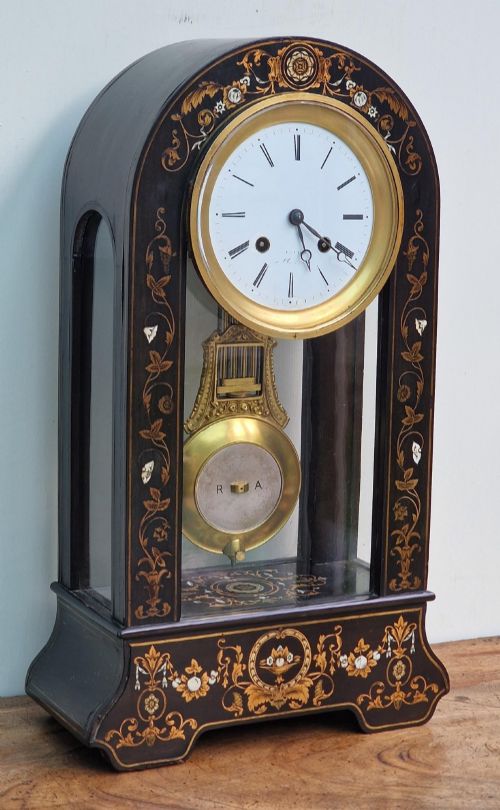
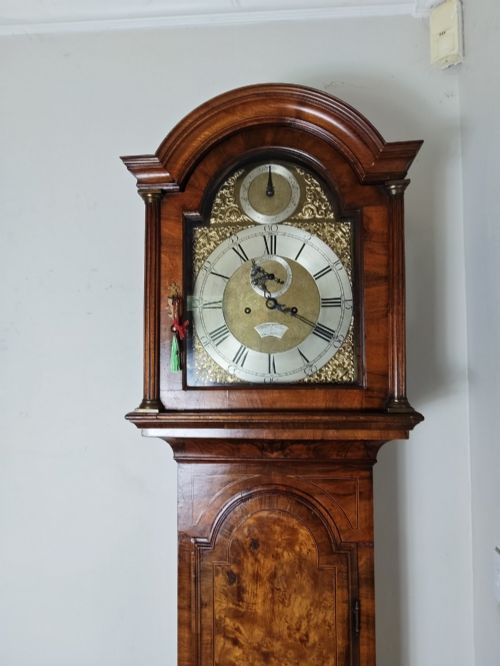
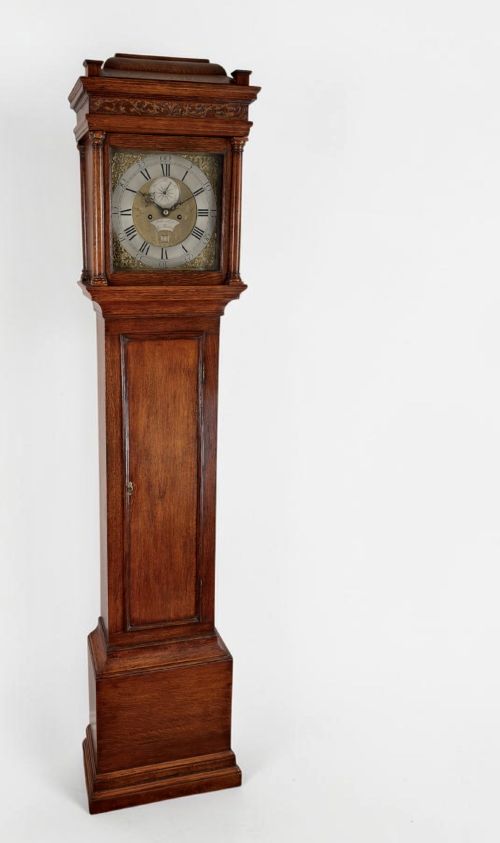
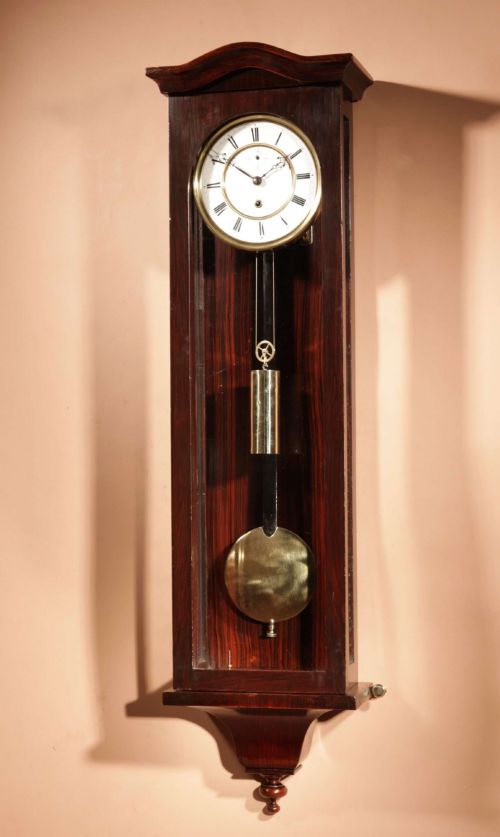
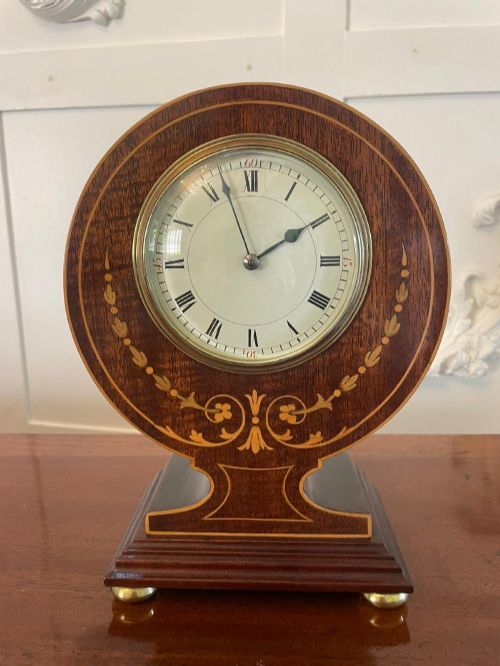
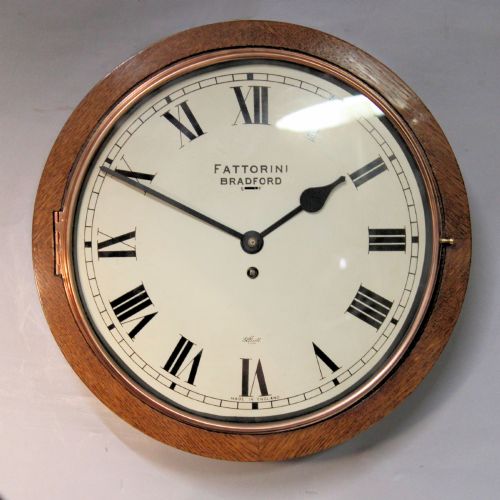
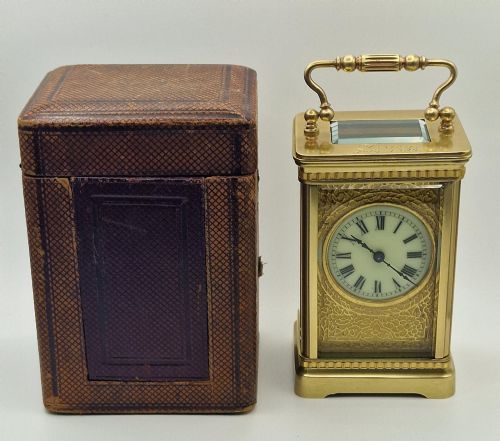
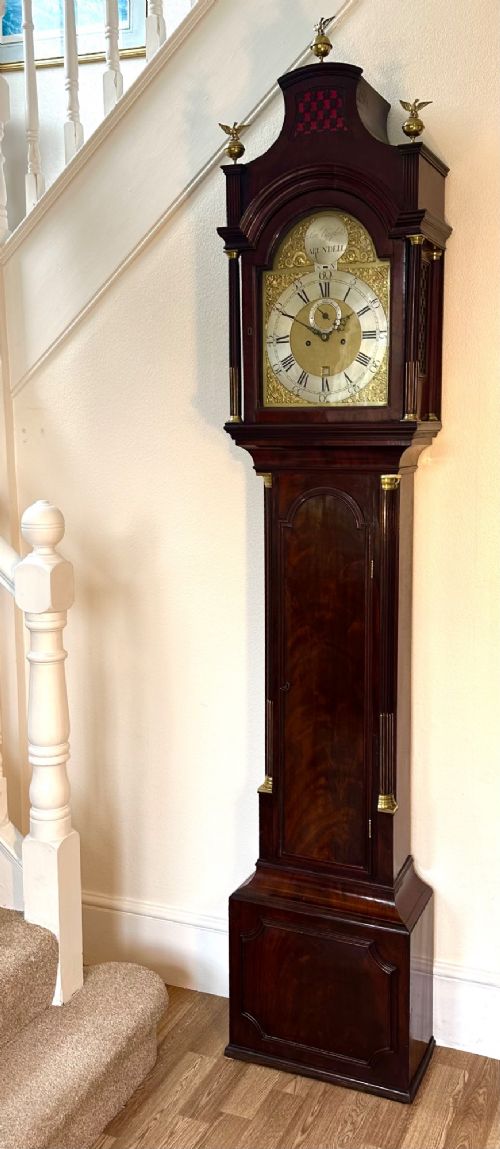
A brass cased clock encompasses diverse forms, from compact carriage and mantel timepieces to substantial longcase grandfather and grandmother clocks. These objects span periods from the eighteenth century through the Georgian, Victorian, and Edwardian eras, reflecting changing domestic interiors and horological demands.
The most frequent examples encountered on this page are eighteenth-century and nineteenth-century longcase clocks alongside Victorian and Edwardian wall and carriage designs. Regional makers from London, Scotland, and provincial towns provide distinct variations in dial layout and casework proportions.
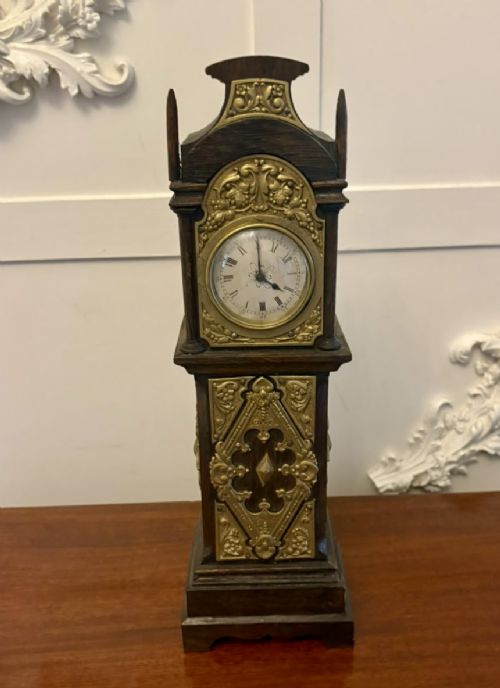
Smaller formats such as library clocks, miniature longcases, and travel pieces offer alternative ways to bring period brass work and mechanical movement into smaller domestic spaces. Each piece relies on the combination of a metal dial and housing to protect the internal gear train.
Materials and Construction
Casework relies heavily on timber, primarily mahogany, oak, and walnut, frequently combined with brass for bezels, dials, and movement plates. Ebonised wood and glass appear across specific wall and library formats to frame the dial and expose the escapement.
Dials combine engraved or silvered brass with enamel chapters and steel hands, driven by weight-driven or spring-driven mechanical movements. Cabinetmakers shaped the timber housings while specialist horologists cast and engraved the brass components.
Brass Cased Clock Retail Price Guide 2026
Typical asking prices for brass cased clock among the pieces listed under this phrase on Sellingantiques today, from the lower quarter to the upper quarter. They describe what is for sale here now, not the wider market.
Object types span longcase clocks, wall clocks, mantel clocks, carriage clocks, and grandmother clocks by provincial and London makers.
Quality and Craftsmanship
The standard of a brass cased clock rests upon the crispness of the brass engraving, the depth of figure in the timber case, and the reputation of the signing horologist. Superior examples display refined dial work and balanced proportions that reflect the maker's skill.
Subtleties in dial ornamentation, such as delicate hand-pierced spandrels and well-executed strike or chime mechanisms, distinguish higher-tier pieces from utilitarian production. The integration of Burr oak, walnut veneers, or marquetry inlay elevates the visual presence of the housing.
John Taylor London·Charles Shuckburgh London·Gordon of Aberdeen·Gillett and Johnston of Croydon·Lee of Great Marlow·Jn Smith Macclesfd·Tait Peebles·James Field of Hempstead·Richard Corless of Stockport·Henri Jacot·James McCabe·Handley and Moore London·William Jourdain·Fisher Of Preston·Elliott
The Brass Cased Clock Glossary
- Fusee
- A conical pulley used in spring-driven clocks to ensure even tension as the mainspring unwinds. This mechanism helps maintain consistent timekeeping throughout the power reserve.
- Spandrel
- The ornamental corner piece placed around the circular dial of a clock. These brass castings often indicate the period of the piece through their changing decorative styles.
- Escapement
- The mechanical linkage that regulates the release of power to the pendulum or balance wheel. It delivers impulses to keep the movement running and translates gear rotation into measured ticks.
- Moon Dial
- An auxiliary dial showing the phases of the lunar cycle alongside standard time. Found on select eighteenth and nineteenth-century longcase clocks.
- Grandfather Clock
- A tall floor-standing timepiece also known as a longcase clock. These tall timber housings protect the weight-driven movement and swinging pendulum.
Brass Cased Clock: Frequently Asked Questions
How do I wind a brass cased clock?
Winding requires using a matching key or pulling internal weights depending on whether the movement is spring-driven or weight-driven. Care must be taken not to over-wind the mainspring.
Consult the specific mechanism type to determine whether the clock requires winding weekly or daily.
Where should I place a longcase clock?
Longcase clocks need a stable, level floor and a secure attachment to the wall behind the waist to prevent swaying. Avoid damp environments and direct sunlight that might dry out timber cases.
Keeping the clock away from heavy foot traffic ensures the pendulum swings without interference.
How do I tell an 18th-century clock from a Victorian one?
Eighteenth-century examples often feature square brass dials with cast spandrels and solid oak or mahogany longcases. Victorian pieces frequently introduce larger circular enamel dials, ebonised finishes, or walnut veneers.
Examining the casework construction and dial signature provides clear clues to the period of manufacture.
What is the difference between a grandfather and a grandmother clock?
Grandfather clocks are tall floor-standing timepieces measuring over six feet in height. Grandmother clocks are smaller, scaled-down versions of the longcase form produced primarily during the nineteenth and early twentieth centuries.
Both house similar weight-driven or spring-driven movements within proportioned timber cases.