


Brass Bowl Chandelier
A brass bowl chandelier brings a warm, diffused glow to a room through suspended glass, alabaster, or crystal basins.
Brass Bowl Chandelier
A brass bowl chandelier suspends a central dish or basin from chains or rods, functioning as a primary ceiling light. These fixtures originate from periods spanning the late nineteenth century through the 1930s.
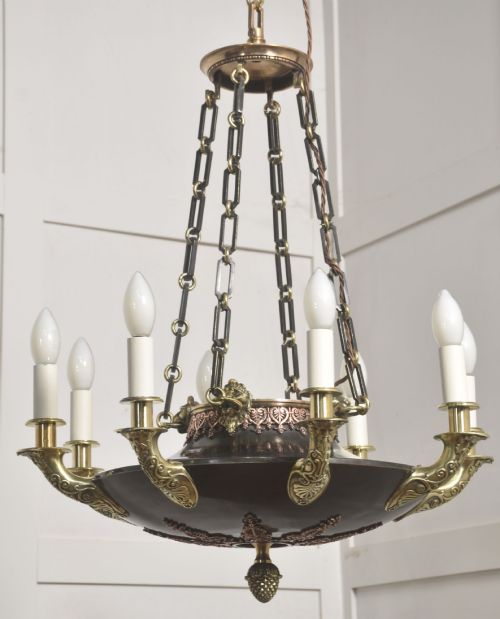
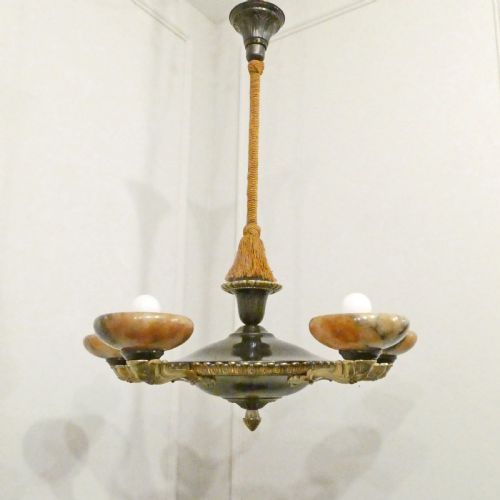
The form encompasses various styles including Arts and Crafts, Art Deco, and Empire Revival. The most frequent examples on this page date from the Edwardian era up to the 1930s.
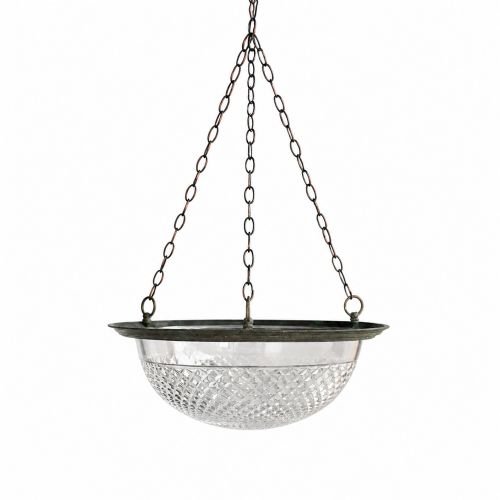
Makers utilised brass, bronze, and copper for the structural frames and suspension hardware. The suspended bowls themselves appear in cut glass, frosted glass, crystal, and white alabaster.
How they were made
Foundry workers cast or spun the brass, bronze, and copper frames to form the structural rims and suspension galleries. Artisans then fitted these metal mounts with cast or heavy-blown glass bowls, alabaster dishes, or cut crystal assemblies.
Glassmakers moulded, pressed, or hand-cut the bowls into forms such as clam shells or acorns to catch and scatter the internal light. Electric conversion or original wiring passes through central downrods or suspension chains.
Listings feature brass, bronze, and copper paired with alabaster, crystal, and frosted glass across Edwardian, Art Deco, and Victorian periods.
What varies in quality
The weight and finish of the metalwork distinguish standard production from finer examples, particularly where cast bronze or heavy brass is concerned. Superior frames display crisp casting detail and harmonious patination across the chains and rims.
The material of the bowl itself dictates much of the character, with dense white alabaster and deeply cut crystal or pink glass sitting at the upper end. The integration between the metal gallery and the suspended dish determines the overall balance of the light fitting.
The Brass Bowl Chandelier Glossary
- Plafonnier
- A ceiling-mounted or shallow bowl light fitting designed to sit close to the ceiling or hang on short suspension cords. This French term frequently applies to Edwardian and Art Deco glass dish lights.
- Alabaster
- A fine-grained mineral stone used for carved bowls that diffuse light with a soft, uniform glow. It appears in English lighting from the 1930s.
- Empire Revival
- A decorative style drawing on neoclassical motifs from the early nineteenth century and reinterpreted in later periods. It often incorporates classical bronze and brass mounts.
- Arts and Crafts
- A design movement prioritising honest materials and visible construction methods over mass-produced ornament. Bowl chandeliers from this tradition rely on the texture of crystal and hand-worked metal.
- Cut Glass
- Glass decorated by grinding facets into the surface to refract light. It is commonly found on Edwardian and Victorian pendant light bowls.
Brass Bowl Chandelier: Frequently Asked Questions
How do I hang a bowl chandelier?
These fixtures suspend from the ceiling using chains or rigid metal rods attached to a central canopy. Weight distribution matters significantly due to the heavy glass or alabaster bowls.
Professional installation ensures the ceiling junction safely supports the combined weight of the metal frame and the suspended dish.
What rooms suit a bowl chandelier?
The downward-facing or enclosed bowls project ambient light across hallways, dining spaces, and principal rooms. Their low profile makes them practical for spaces with standard ceiling heights.
Victorian and Edwardian examples complement traditional interiors, while Art Deco alabaster and pink glass bowls anchor period or modern schemes.
How do I date a brass bowl light?
Dating relies on stylistic clues within the metalwork and the material of the bowl. Victorian and 1890s pieces often feature cast bronze and detailed cut glass.
Later 1920 and 1930 examples favour clean Art Deco lines, white alabaster dishes, or moulded clam shell glass forms.
Are these lights compatible with modern wiring?
Most antique fixtures accommodate standard modern bulb holders and wiring configurations during installation. Electric conversions respect the original internal channels of the metal frame.
A qualified electrician should inspect the internal lampholders and wiring prior to hanging.