
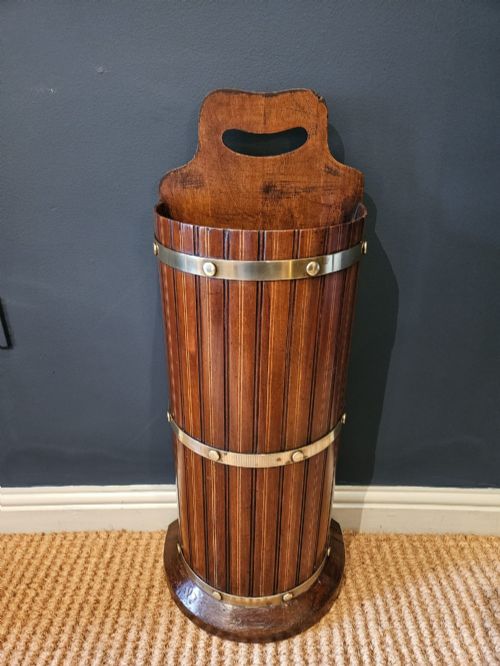
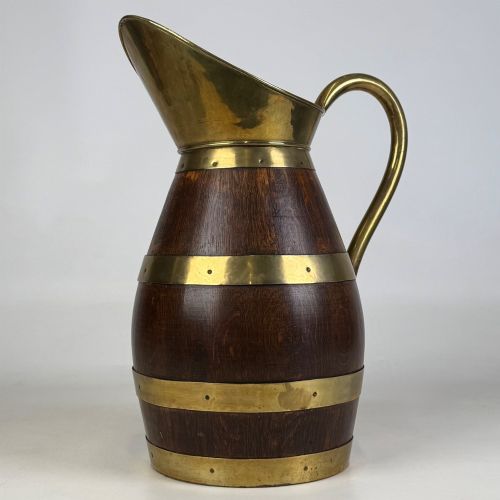
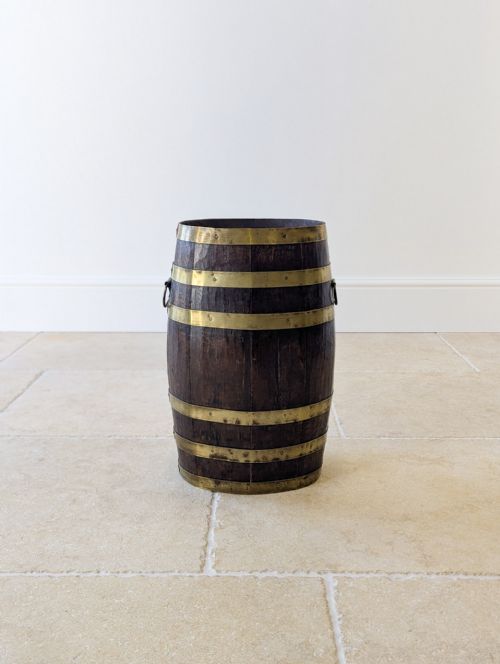
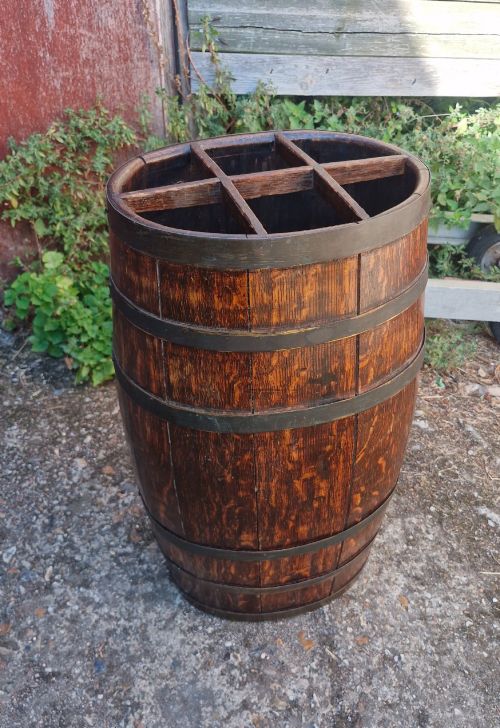


Brass Bound Umbrella Holder
A brass bound umbrella holder brings practical English country house utility into a hallway, pairing sturdy timber staves with gleaming metal bands.
Brass Bound Umbrella Holder
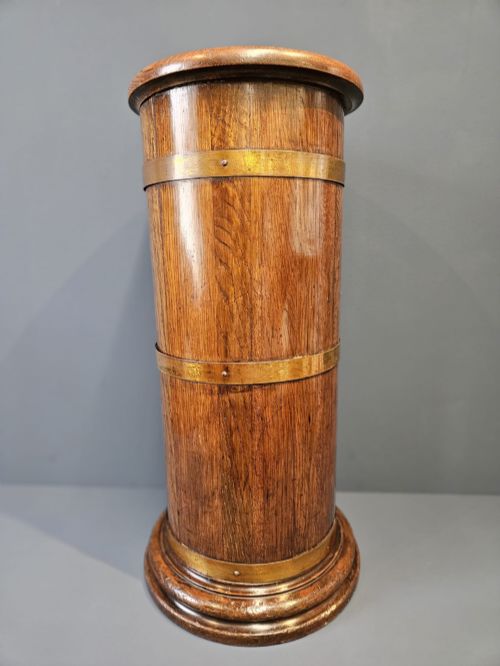
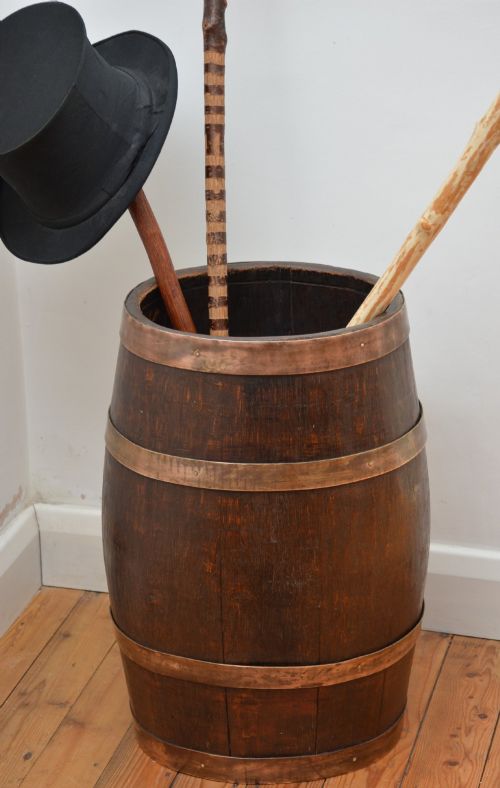
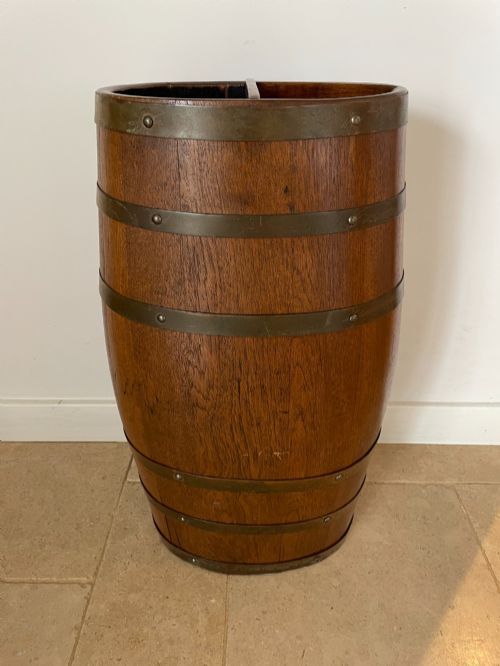
A brass bound umbrella holder takes the form of a coopered barrel or oval vessel designed to keep walking sticks and rain gear contained in an entryway. These pieces range from compact Edwardian examples to generous Victorian country house models.
The most common version met on this page is the coopered oak barrel secured with parallel brass bands. These utilitarian vessels draw on traditional woodworking methods to create a stable container for daily use.
Makers fashioned these stands in mahogany and oak, occasionally incorporating copper elements or painted surfaces. Styles span from Georgian proportions through Victorian robustness to early twentieth century utility.
How they were made
Craftsmen built these containers using cooperage techniques, shaping individual wooden staves of oak or mahogany to form a watertight or sturdy round and oval body. These staves fit tightly together without modern adhesives.
Workers secured the wooden staves using heavy metal bands of brass or copper, hammering them into place to hold the barrel under constant tension. Additional brass mounts and umbrella loops completed the structural assembly.
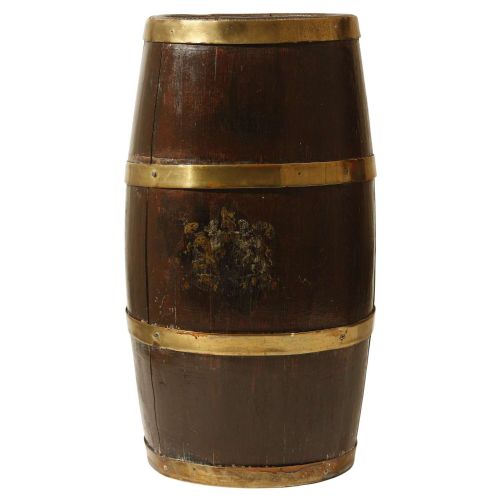
One cheerful nineteenth-century barrel proudly sports the English Coat of Arms, ready to receive royal mail as well as damp brollies.
What varies in quality
Quality rests upon the selection of timber and the precision of the cooperage, where tight stave joints and uniform wood grain distinguish superior vessels from simpler utilitarian ones. The weight and gauge of the brass bands also indicate the original tier of production.
Proportion and form dictate the visual impact, ranging from plain functional barrels to oval shapes with refined brass mounts and armorial details. Finer examples retain an integrity of form and structural balance across the centuries.
R.A. Lister
The Brass Bound Umbrella Holder Glossary
- Coopered
- Constructed from curved wooden staves bound together with metal hoops, much like a traditional drinking cask or bucket.
- Staves
- The narrow vertical strips of oak or mahogany that form the curved sides of a barrel or umbrella stand.
- Mounts
- Decorative or functional metal fittings attached to the exterior or rim of the vessel to reinforce the structure.
- Country House
- A term describing furnishings made for large English estates, prioritising durable materials and straightforward utility.
Brass Bound Umbrella Holder: Frequently Asked Questions
How do you use a brass bound umbrella holder?
These vessels sit in an entrance hall or porch to hold wet umbrellas, walking sticks, and malacca canes upright. Their deep wooden interiors protect hallway floors from dripping rainwater.
Over time, owners have also utilised them as dry storage for rolled maps, dried florals, or fireplace kindling when not holding rain gear.
Are these umbrella stands waterproof?
Most barrel stands rely on tight wooden staves and metal hoops, which naturally held liquids in their original cask-making contexts. However, centuries of timber movement mean some let water seep through.
It remains wise to place a small modern catch tray inside the base if storing very wet items on sensitive wooden flooring.
How do I date an oak umbrella stand?
Dating relies on examining the timber grain, the method of brass binding, and the overall silhouette. Georgian and early Victorian pieces often feature heavier coopered construction and hand-beaten brass.
Later Edwardian and twentieth-century examples frequently show standardised machine rolling on the metal bands and lighter oak staves.
What is the difference between an umbrella and stick stand?
Makers used both terms interchangeably in historical listings because households stored walking sticks and rain shelters together in the same hallway vessels. Oval and round barrel forms suited both slender canes and bulky umbrella handles.
Some variations include interior metal dividers or top loops specifically designed to keep individual sticks from tangling.