



Brass Bound Travel Trunk
A brass bound travel trunk is a rigid chest fitted for transit, offering rugged storage derived from centuries of military and global movement.
Brass Bound Travel Trunk
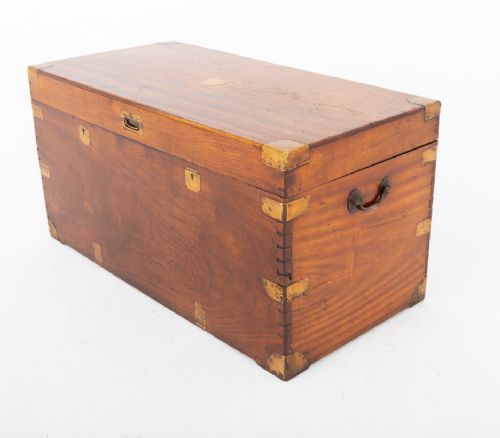
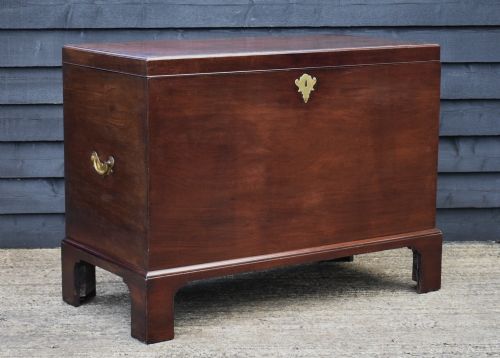
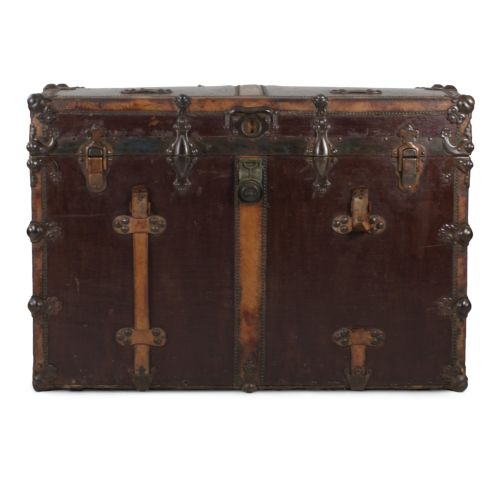
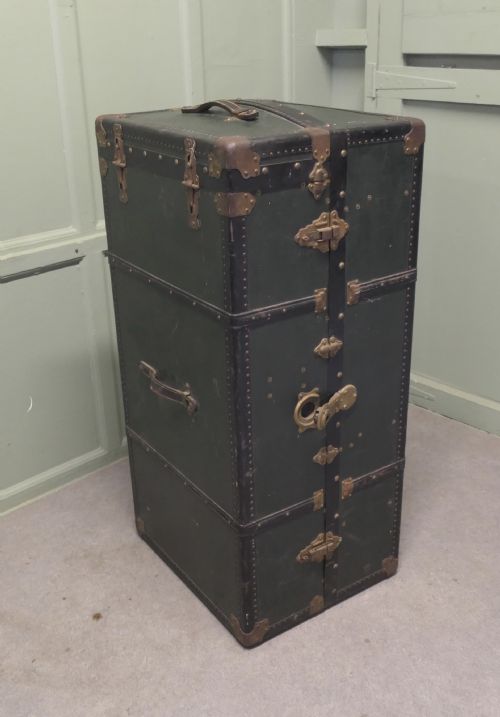
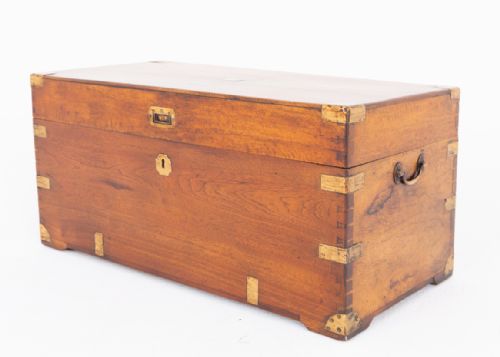
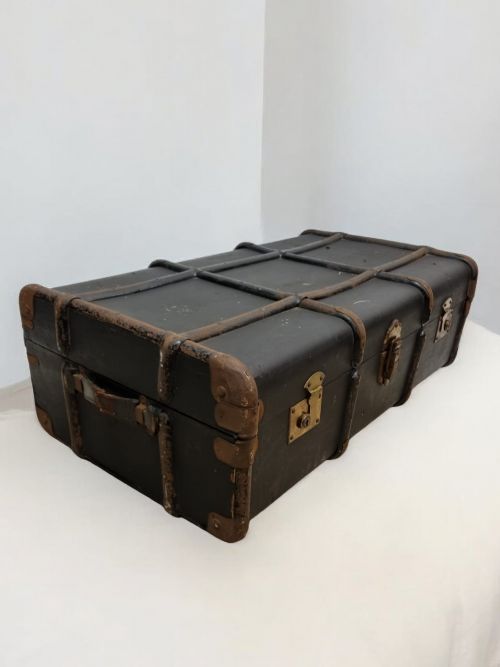
A brass bound travel trunk encompasses rigid storage chests built for officers, diplomats and long-distance travellers across the seventeenth, eighteenth, nineteenth and early twentieth centuries. The pieces on this page span heavy campaign boxes, leather-covered coaching chests and fitted steamer trunks designed for cabins and ships.
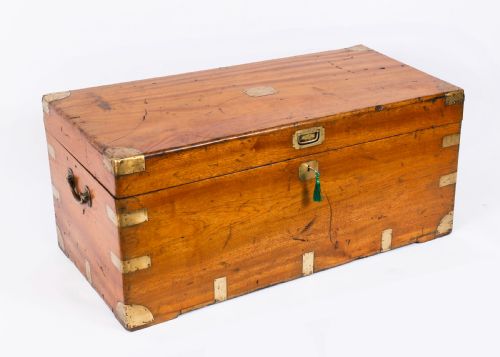
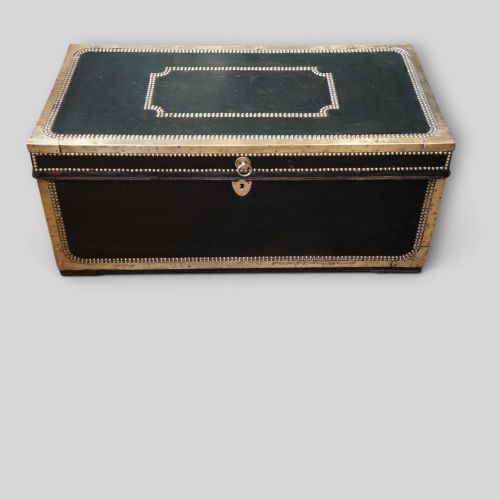
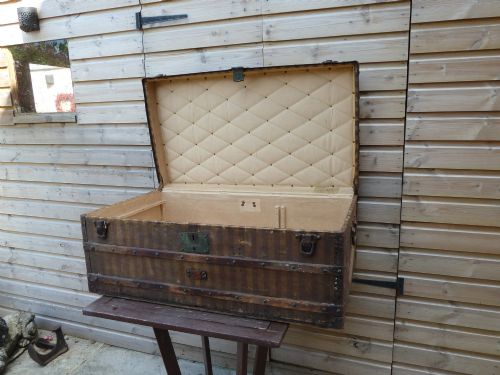
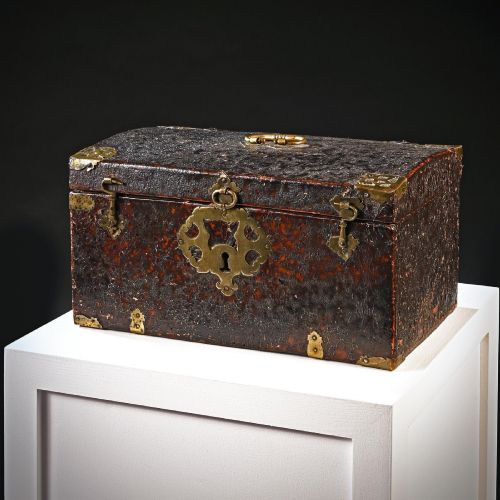
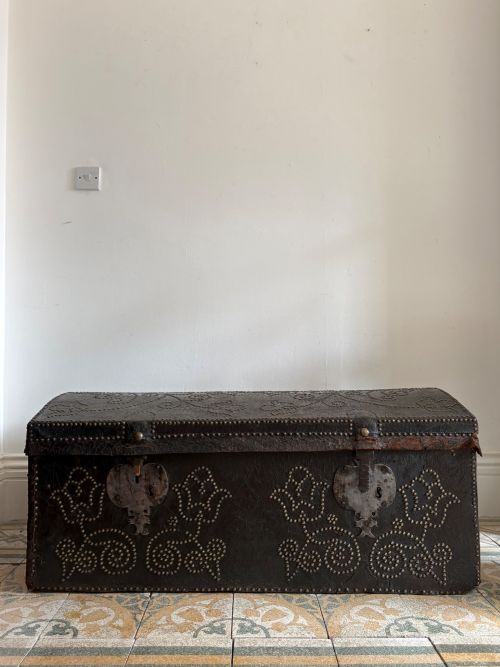
Camphorwood chests made for military campaigns and colonial service appear frequently, often reinforced with brass corners and straps to withstand rough handling. Alongside these sit leather-clad travelling boxes, oak cases and canvas-bound steamer trunks from the Edwardian and later periods.
How they were made
Makers constructed the carcases from durable timbers such as camphorwood, teak, oak, and mahogany, frequently selecting camphor to deter insects during long sea voyages. These woods were joined robustly to endure shifting cargo holds and rough terrain.
Workers applied sheet brass, metal bands, studs, and reinforced corners to protect the vulnerable edges of each trunk. Leather, vellum, or canvas coverings were then stretched over the wood and secured with brass nails alongside fitted interior compartments.
Listings feature camphorwood, teak, oak, and mahogany alongside leather, canvas, and iron hardware from the seventeenth century onwards.
What varies in quality
Quality rests in the integrity of the original hardware, the thickness of the brass strapping, and the selection of timber used for the carcase. Pieces retaining untouched interior fittings, maker stamps, or original keys command greater interest than heavily altered examples.
The precision of the dovetail joinery and the condition of the leather or canvas skin distinguish standard utility pieces from high-end bespoke commission work. Finer examples display meticulous corner-joining and robust structural planning intended for heavy service.
Samuel Pratt·Seaward·Chapple & Sons·Seabrook of St.Pauls·Drew & Sons·Aux Etats Unis
The Brass Bound Travel Trunk Glossary
- Campaign trunk
- A portable chest constructed for military officers and travellers, designed to dismantle or withstand arduous journeys. These pieces typically feature recessed brass handles and protective metal corners.
- Camphorwood
- An aromatic timber native to Asia, prized in nineteenth-century campaign chests for its insect-repellent properties and durability. It yields a distinct scent and resists moisture well.
- Steamer trunk
- A lower-profile luggage piece developed in the late nineteenth and early twentieth centuries to fit beneath the berths of ocean liners. They often include internal wardrobes and compartment trays.
- Studded leather
- A method of finishing travel boxes where sheets of hide are fastened to the wooden carcase using rows of brass tacks. This technique provides both weather resistance and decorative structure.
- Zanzibar chest
- A distinct form of heavily brass-studded wooden chest originating from East African trade routes, incorporating regional carving and strapwork. They were frequently utilised as valuable storage and travel trunks.
Brass Bound Travel Trunk: Frequently Asked Questions
What is a brass bound travel trunk?
A brass bound travel trunk is a portable storage chest reinforced with metal straps and corners to survive long-distance transit. They were built for military officers, global explorers, and civilian travellers.
Constructed from solid woods like camphor, teak, and oak, these trunks protected clothing and equipment across ships, trains, and carriages.
How were these trunks used historically?
Military officers packed uniforms, maps, and personal items into campaign chests during active service abroad. Civilian travellers utilised similar trunks for extended journeys by sea and rail.
Inside, compartments and fitted trays kept belongings organised while exterior handles aided heavy lifting by porters and crew.
How do I date a travel trunk?
Dating relies on observing construction methods, materials, and hardware styles across different periods. Eighteenth and early nineteenth-century examples often feature hand-cut dovetails and heavy iron or brass studs.
Later Victorian and Edwardian pieces incorporate machine-made components, different lock mechanisms, and specialised internal wardrobe fittings designed for modern liners.
How do I live with a travel trunk?
These trunks function well as coffee tables, blanket boxes, and prominent storage furniture in contemporary living spaces. Their flat lids and robust construction allow them to support everyday items while holding bulky linens.
Placing them away from direct heat sources helps preserve the antique wood, leather coverings, and original brass hardware.