




Brass Bound Desk Slope
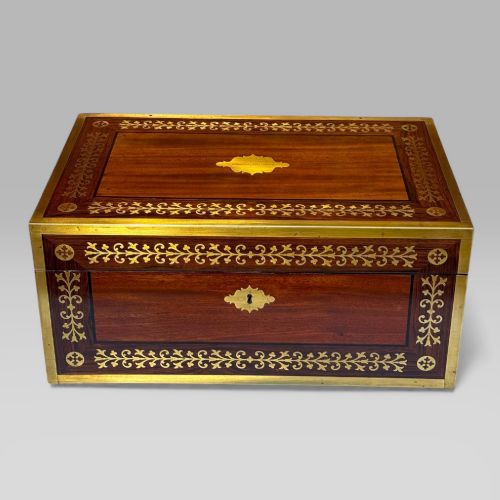
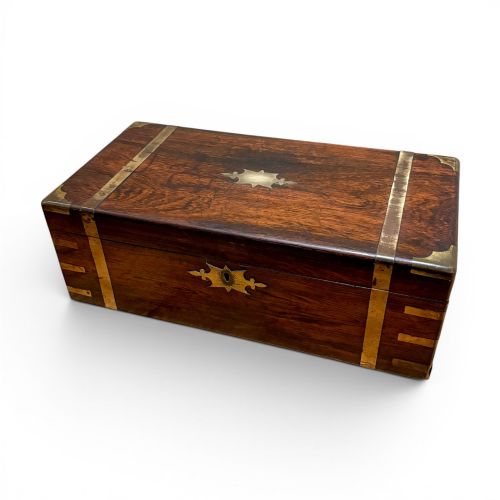
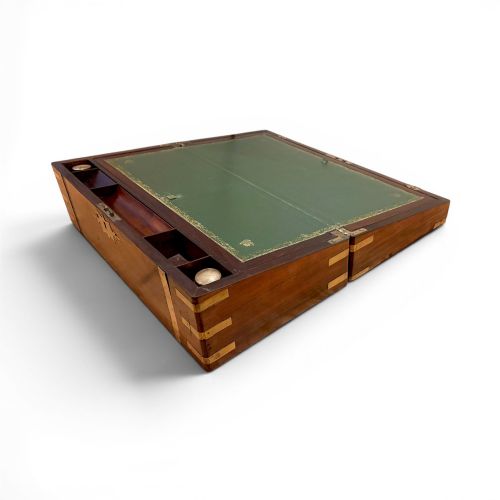
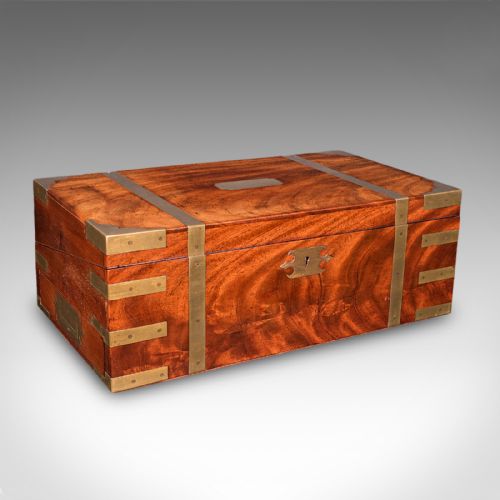
A brass bound desk slope is a portable writing box reinforced with metal corners and straps, offering a portable desk for correspondence.
Brass Bound Desk Slope
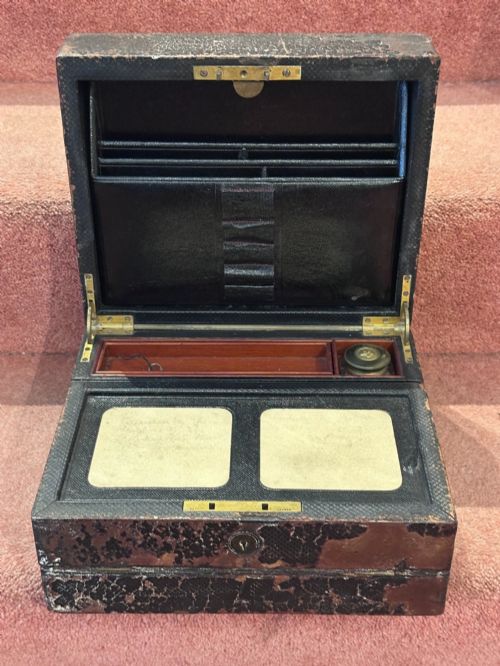
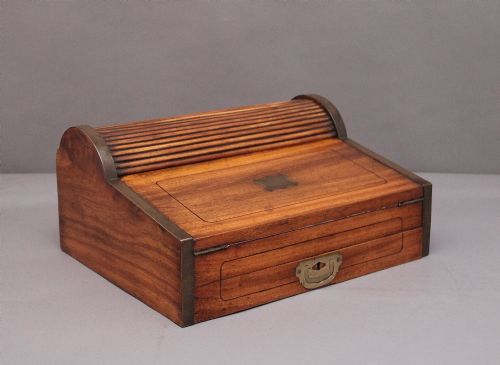
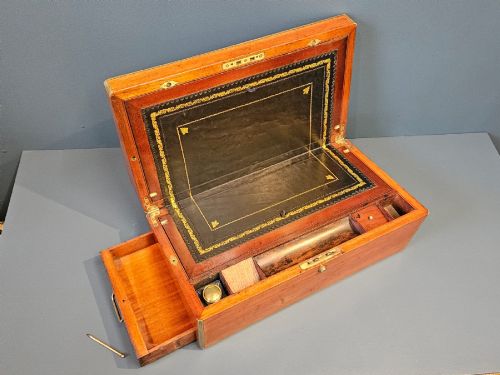
A brass bound desk slope is a portable writing cabinet designed for travel and correspondence, typically featuring a hinged writing surface that folds down to reveal compartments. Buyers searching for a brass bound desk slope encounter variants ranging from compact lap boxes to substantial military stationery chests.
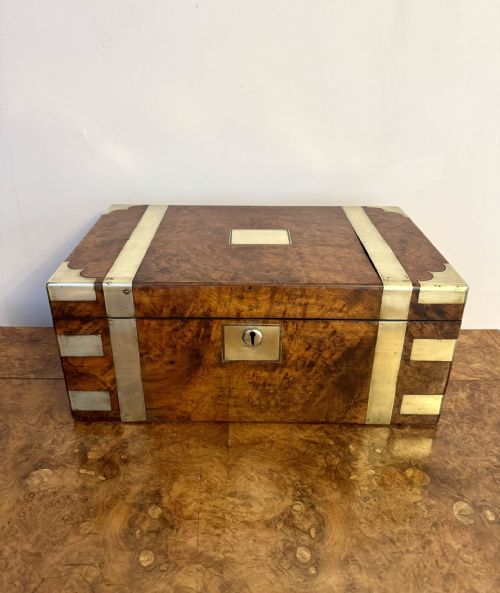
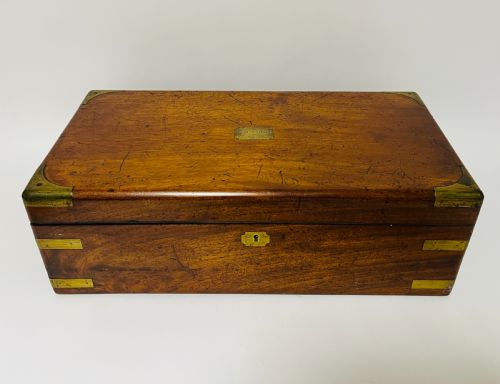
The majority of pieces seen on this page date from the Georgian, Regency, and Victorian periods, reflecting the height of portable cabinet making. These objects often present rectangular wooden carcasses strengthened with brass corner brackets, strapwork, and inlay.
Makers constructed these boxes in various scales, from standard portable slopes to large campaign writing boxes fitted with secret drawers, candle sconces, and leather-lined writing surfaces.
Materials and Construction
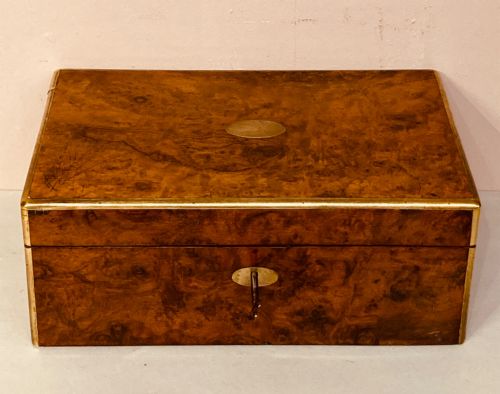
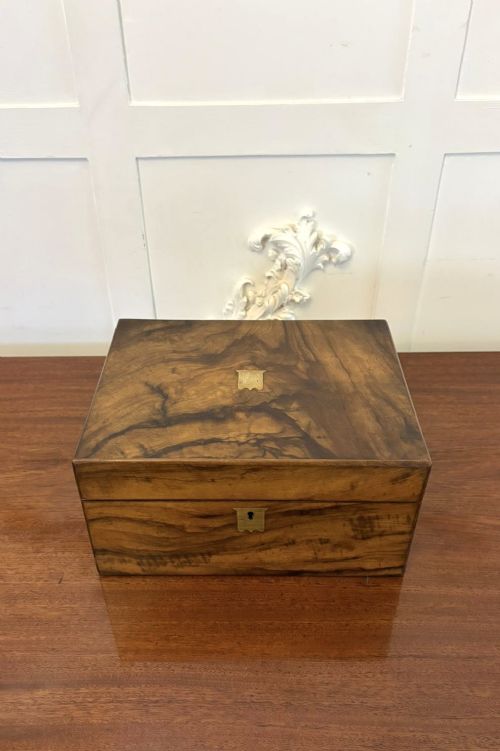
Cabinet makers utilised dense hardwoods such as mahogany, rosewood, walnut, burr walnut, coromandel, camphor wood, and pollard oak as the primary structural bodies. These timbers provided the durability required for travel and the stable grain necessary for fine French polishing.
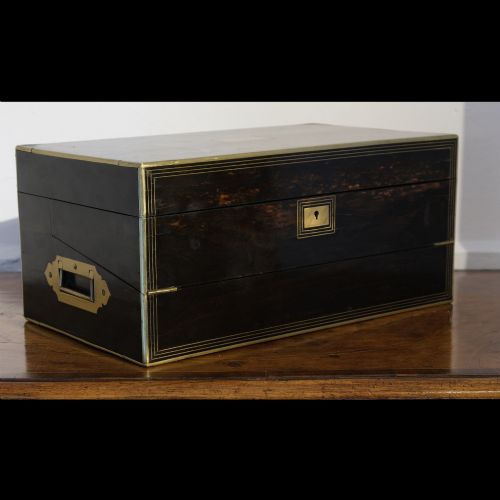
Robust brass binding, corner pieces, and flush inset handles were screwed and pinned to the wooden carcasses to protect the edges from impact during transport. Fitted interiors incorporated secondary timbers, secret drawers, and tooled leather writing surfaces designed to hold inkwells, pens, and paper securely.
Some military campaign slopes hid secret sovereign sections so officers could carry gold coin reserves safely into battle.
Standards of Execution
Quality in a brass bound desk slope depends on the selection of figured timbers like burr walnut or amboyna and the precision of the brass inlay and corner mounts. Superior examples exhibit tightly fitted internal compartments, concealed secret drawers that operate smoothly, and original locking mechanisms by makers such as Bramah.
The integration of functional accessories, including working keys, secret sovereign sections, and candle sconces, separates standard portable boxes from elite campaign pieces commissioned for travel.
Austin·Briggs
The Brass Bound Desk Slope Glossary
- Writing slope
- A portable box with a hinged sloping lid that opens to provide a slanted writing surface and internal storage for stationery. These objects were essential for correspondence during travel.
- Campaign box
- A piece of portable furniture constructed with brass corners and inset handles for military officers on the move. They are built for resilience and ease of transport.
- Secret drawers
- Concealed compartments hidden behind false panels or activated by releasing hidden catches within the writing slope. They provided secure storage for valuables and confidential papers.
- Bramah lock
- A high-security barrel lock invented by Joseph Bramah, commonly found on superior nineteenth-century writing boxes. These locks required a specialised cylindrical key to operate.
- Coromandel
- A dense, heavily figured exotic hardwood from Asia with dark brown and black grain patterns. Cabinet makers reserved this material for luxury boxes and desk accessories.
Brass Bound Desk Slope: Frequently Asked Questions
What is a brass bound desk slope?
A brass bound desk slope is a portable wooden box featuring reinforced metal corners and straps designed to protect the corners during travel. Inside, the hinged lid opens to create a slanted writing surface.
These boxes served as portable writing desks for travellers, officers, and writers before the widespread use of fitted stationery rooms. They contain compartments for inkwells, pens, and paper.
How were writing slopes used?
Owners placed the box on a table or across their lap to write letters, manage accounts, and store personal documents. The sloping lid provided an ergonomic angle for handwriting.
Many examples include secret drawers and locking mechanisms to secure valuables and correspondence while away from home. Some military variants even incorporate candle sconces for writing after dark.
How do I date a writing slope?
Dating relies on observing the timber choices, brass work style, and internal layout characteristics. Georgian and Regency pieces often feature simpler mahogany or rosewood construction with flush brass stringing.
Victorian examples frequently utilise figured walnut, coromandel, or burr walnut with heavier brass corner mounts and complex internal stationery arrangements. Lock types and maker stamps also help narrow down the period.
How do I care for my writing slope?
Keep the wood conditioned with appropriate furniture wax and avoid placing the box in direct sunlight or near heat sources that could split the timber. Protect the leather writing surface from moisture and sharp implements.
Ensure that brass mounts remain clean and dry to prevent tarnishing. Handle folding mechanisms and internal lids with care to preserve the original hinges and catches.