



Brass and Lacquer Clock
A brass and lacquer clock brings together rich japanned decoration and precision metalwork, offering striking focal points for a room.
Brass and Lacquer Clock
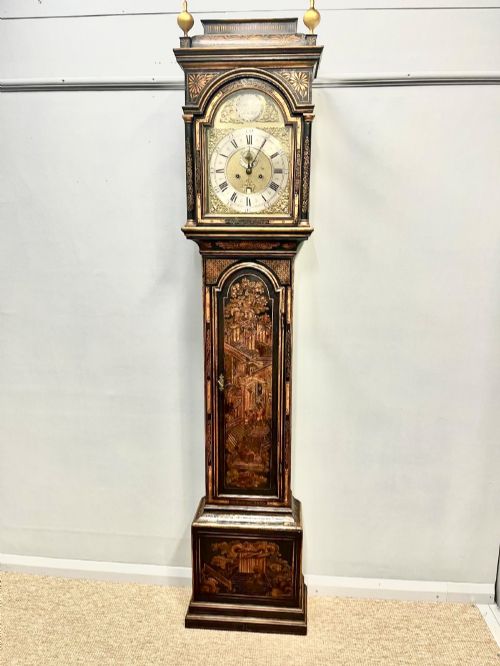
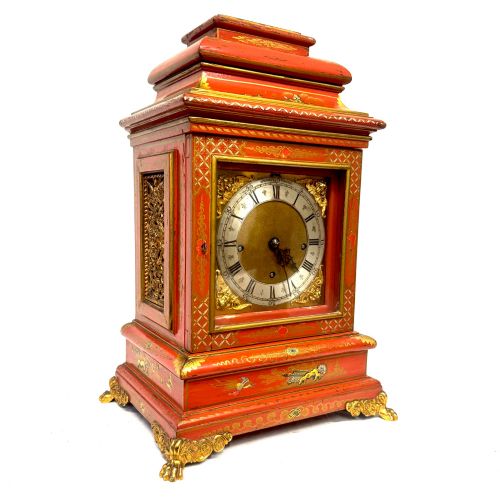
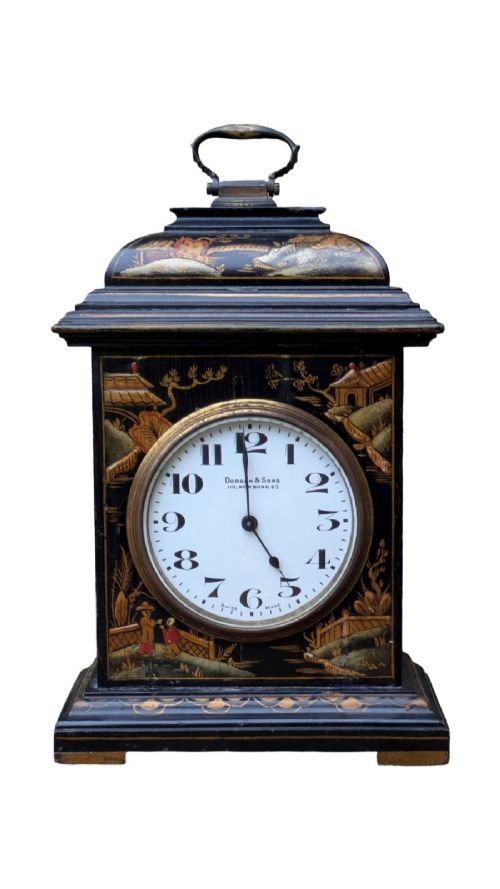
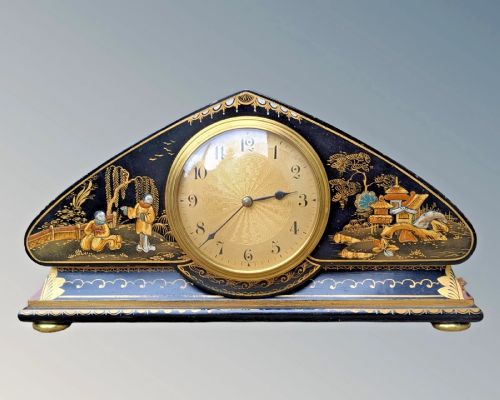
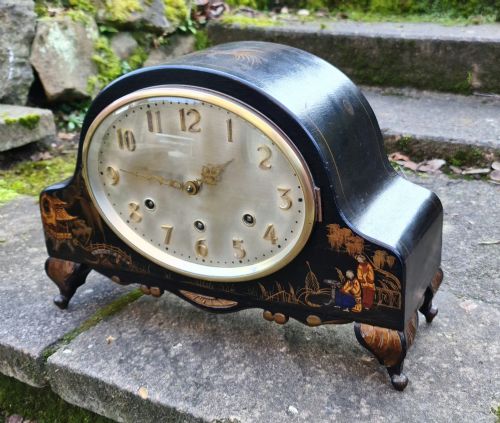
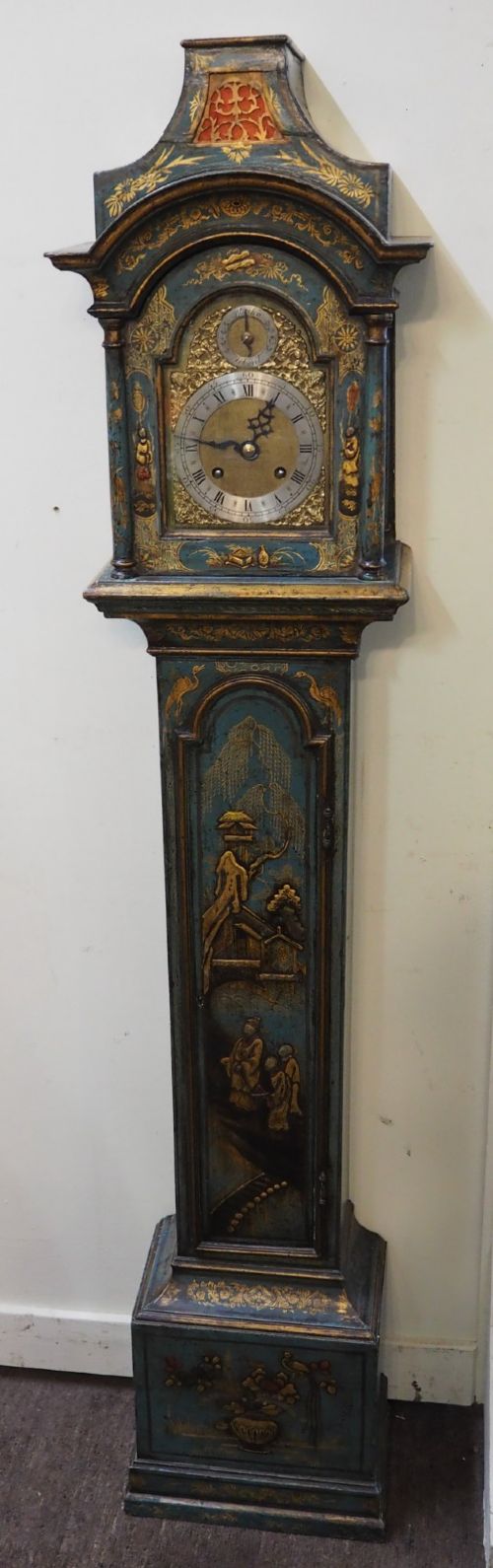
When searching for a brass and lacquer clock, collectors encounter grand longcase clocks alongside smaller mantel and bracket timepieces. These objects combine timekeeping mechanics with decorative painted surfaces spanning periods from the eighteenth century to the early twentieth century.
The longcase versions, often referred to as grandfather or grandmother clocks, dominate the larger formats alongside bracket and mantel variations. Their origins stretch from early Georgian workshops through to Edwardian revivals.
Chinoiserie decoration frequently defines the aesthetic, featuring elaborate gilt motifs set against coloured lacquer backgrounds such as green, red, blue, and cream. Makers applied these finishes to wood cases to house brass dial movements.
How they were made
Craftsmen built the main housings using wood, which they coated with multiple layers of lacquer and japanning before applying gilt ornamentation. They integrated brass for dials, bezels, and internal clockwork mechanisms.
Makers utilised glass to protect the dial faces on mantel and bracket clocks, while longcase doors shielded the swinging pendulums and weights. Enamel frequently appeared on clock faces for clear numerical displays.
Brass and Lacquer Clock Retail Price Guide 2026
Typical asking prices for brass and lacquer clock among the pieces listed under this phrase on Sellingantiques today, from the lower quarter to the upper quarter. They describe what is for sale here now, not the wider market.
What varies in quality
The distinction between tiers rests upon the depth and intricacy of the chinoiserie hand-painting on the lacquered wood surfaces. Finer examples display meticulous gilt detailing and robust movement engineering signed by established horologists.
Proportion and case architecture also separate standard items from superior pieces, particularly in longcase configurations where mouldings and hood designs dictate the visual presence.
Wise of Reading·Thomas Utting of Yarmouth·Gardner of London·James Smith·Chater and Son·Robert Berry
The Brass and Lacquer Clock Glossary
- Chinoiserie
- European decorative style reflecting Chinese artistic influences, prominently seen in the painted lacquer scenes of these clocks.
- Japanned Wood
- European woodwork finished with varnishes and coatings intended to emulate East Asian lacquerware.
- Longcase Clock
- A tall pendulum clock enclosed in a wooden case, commonly known as a grandfather clock.
- Bracket Clock
- A portable clock originally designed to sit upon a wall bracket or furniture piece.
- Escapement
- The internal mechanical linkage that controls the rotation of the gear train in a clock.
Brass and Lacquer Clock: Frequently Asked Questions
What is a brass and lacquer clock?
A brass and lacquer clock is a timekeeper housed in a decorated wooden case featuring lacquered finishes and brass components. These range from tall grandfather clocks to compact mantel pieces.
They primarily showcase Chinoiserie styles, incorporating gilt motifs on coloured backgrounds alongside mechanical brass movements.
How do I date a lacquered clock?
Dating relies on stylistic clues in the case architecture, dial design, and painting techniques. Eighteenth-century models often feature distinct regional movements and classical proportions.
Later revivals from the Edwardian era or the nineteen-thirties adopt earlier aesthetics while utilising modern manufacturing tolerances.
Where were these clocks placed?
Longcase clocks stood in hallways and principal rooms where their height and striking chimes served households. Mantel and bracket varieties rested on tables, shelves, or dedicated wall brackets.
Their decorative lacquer finishes meant they functioned as prominent interior ornaments as well as practical instruments.
What maintenance do they need?
Mechanical clocks require professional servicing of their brass gears, springs, and escapements to maintain accurate timekeeping. Wood and lacquer surfaces benefit from stable environmental conditions away from direct sunlight.
Gentle dusting preserves the painted gilt details without risking the integrity of the antique finishes.