
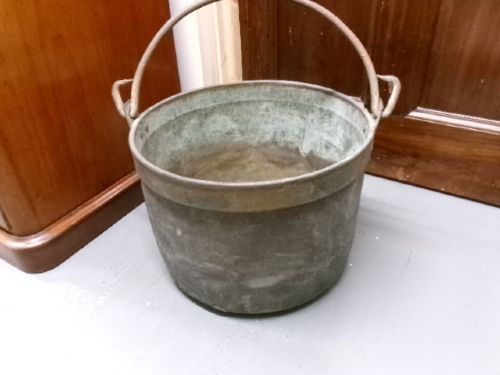


Brass and Copper Bucket
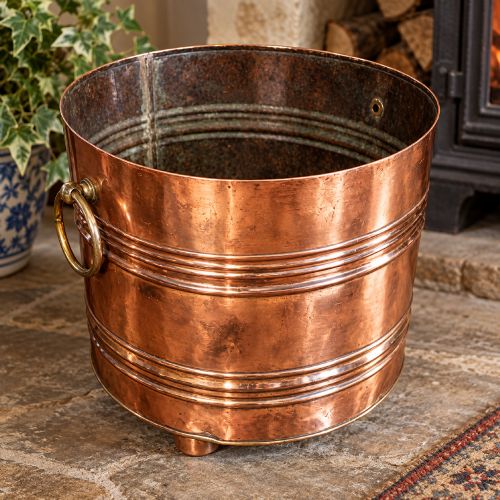
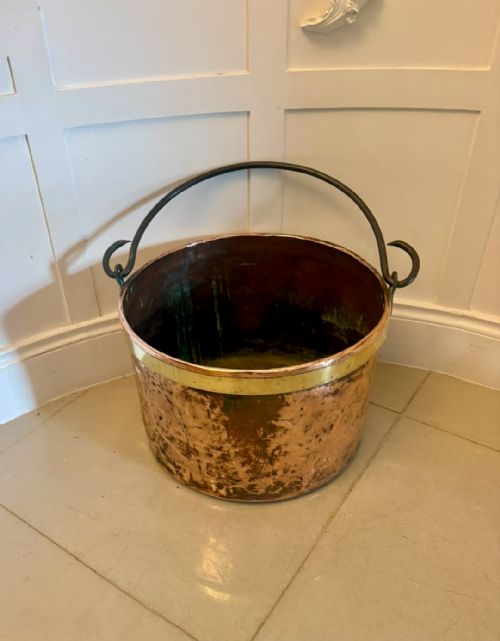
A brass and copper bucket brings warmth and utility to a fireside, serving as a coal scuttle, log bin or planter.
Brass and Copper Bucket
A brass and copper bucket combines dual-metal construction with practical domestic storage for fuel, logs or hearth accessories. The selection on this page centres primarily on Victorian and nineteenth-century pieces, alongside Georgian examples and Arts and Crafts designs.
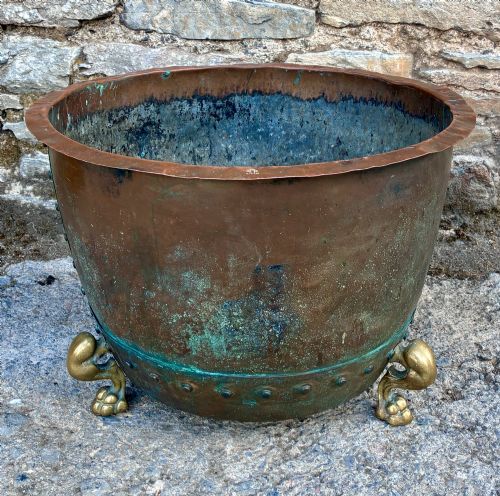
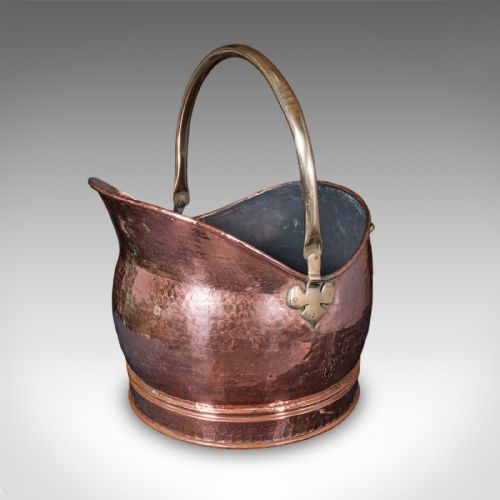
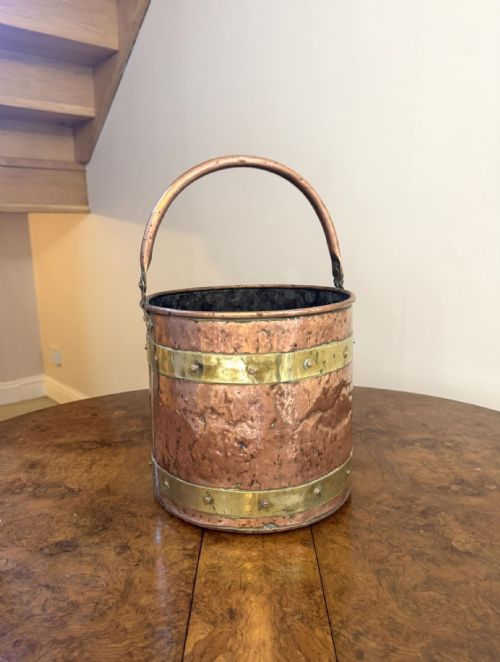
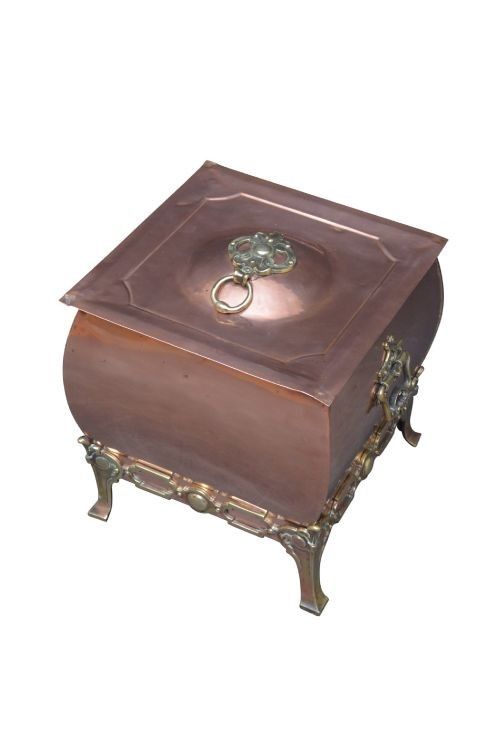
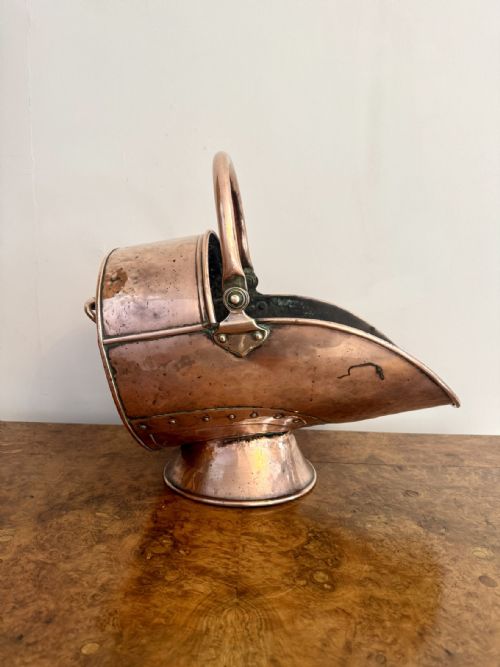
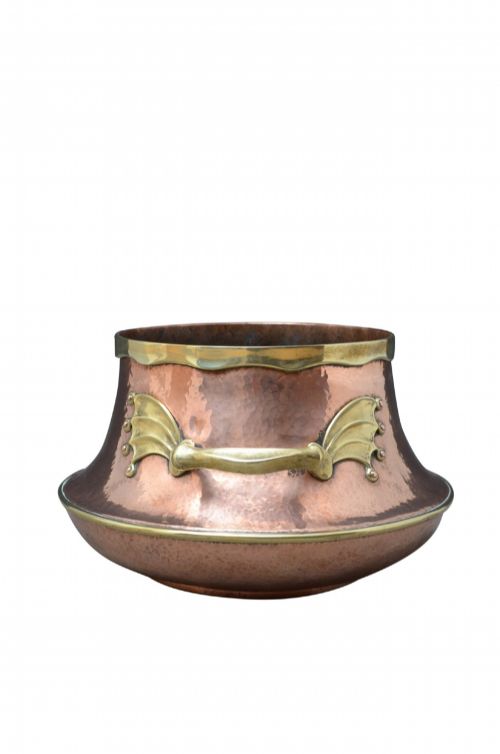
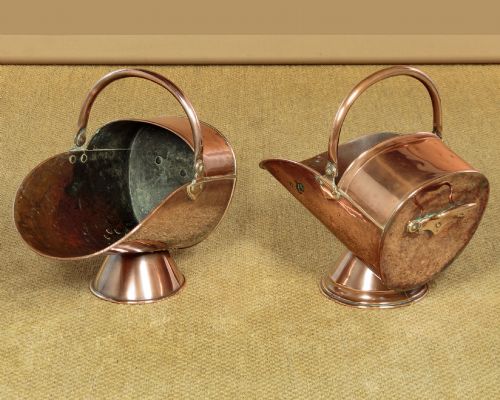
Forms span helmet coal scuttles, cylindrical log bins, cauldrons and jardiniere vessels. Many serve multiple purposes today, functioning as indoor planters or decorative fireside stores alongside their original roles in coal handling.
How They Were Made
Construction relies heavily on sheet copper and brass, often joined by visible hand-hammered rivets or smooth seams. Handles, feet and supporting bands utilise cast or forged brass, occasionally incorporating iron or wooden elements.
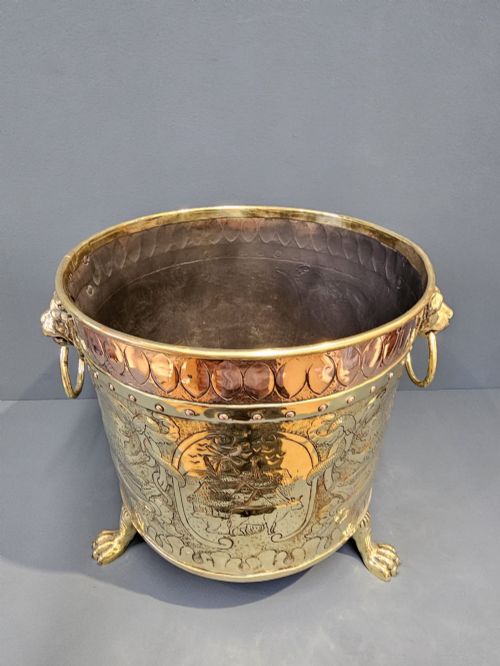
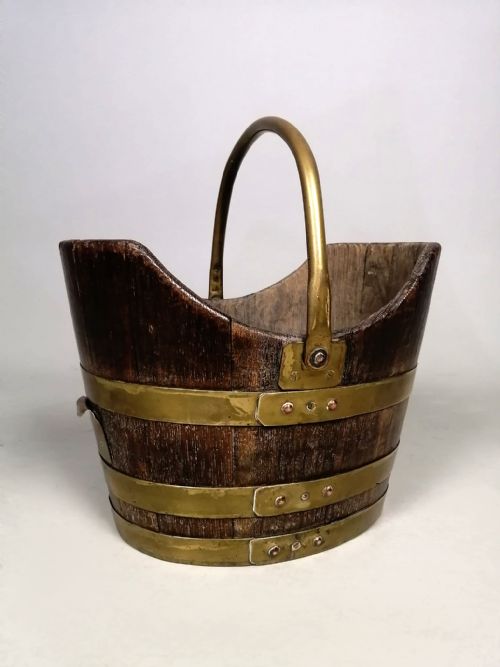
Surface finishes range from plain rolled sheet to hand-beaten, embossed or hammered textures. Coopered wooden vessels bound with brass bands also appear among the records.
Some fireside coal scuttles doubled as indoor plant pots long before container gardening became fashionable.
What Varies in Quality
The distinction between ordinary and exceptional pieces lies in the weight of the metal and the crispness of the hand-beaten or embossed detail. Substantial gauges of copper and securely riveted brass mounts indicate superior construction designed to withstand heavy domestic use.
Decorative refinement separates simple utility items from pieces bearing heraldic motifs, swing handles with turned grips, or balanced proportions typical of Georgian and Arts and Crafts workshops.
The Brass and Copper Bucket Glossary
- Helmet scuttle
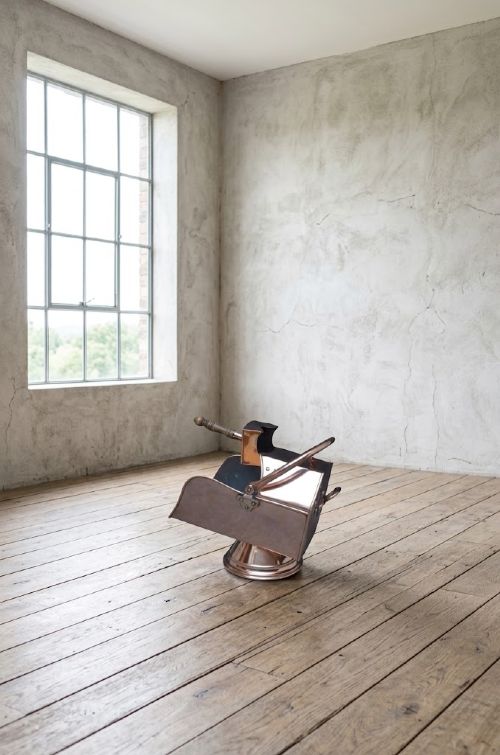
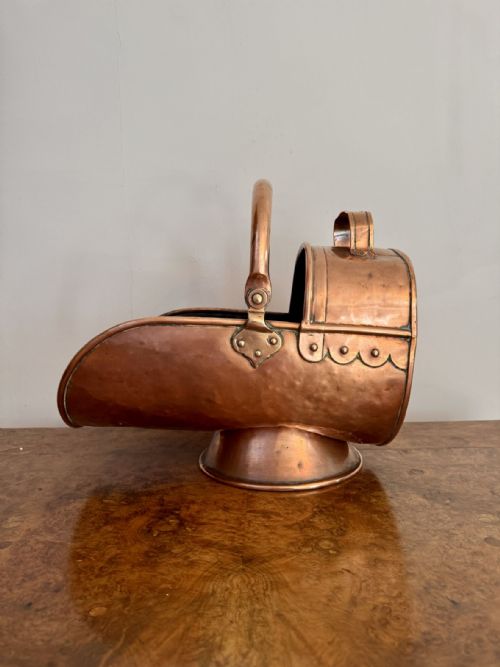
- A coal container featuring a sloping body and a high back, resembling a classical helmet. This shape allowed easy pouring of coal onto a fire.
- Jardiniere
- An ornamental pot or receptacle designed to hold plants or flowers. These vessels utilise copper and brass bodies to complement indoor foliage.
- Coopered
- Built using narrow staves of wood joined edge to edge and bound with metal hoops. Walnut and oak versions often use this traditional barrel-making technique.
- Cauldron
- A round vessel with a rounded bottom and carrying handle, often resting on small feet. They originate from older cooking pots but survive as fireside coal or log holders.
Brass and Copper Bucket: Frequently Asked Questions
What were brass and copper buckets used for?
These vessels primarily stored coal, peat or logs beside the hearth for domestic fires. Their durable metal construction made them practical for carrying heavy fuel.
Over time, many of these utilitarian containers transitioned into decorative items, functioning as indoor planters, wine coolers or fireside storage bins.
How do I clean a brass and copper bucket?
Maintenance depends on the desired appearance, as many collectors prefer a dark, aged patina rather than a bright finish. Gentle dusting and occasional washing with mild soapy water remove surface grime without stripping the historical surface.
Harsh metal polishes should be avoided on antique pieces to preserve the natural oxidation and character built up over centuries.
Are these buckets safe to use by an active fireplace?
Solid metal construction makes these bins robust enough for holding logs and dry fuel near a hearth. Their sturdy brass handles and riveted bodies withstand daily handling.
Care should be taken to protect antique surfaces from direct moisture or acidic ash residues left standing inside the metal base for long periods.
How can I tell a Georgian bucket from a Victorian one?
Georgian examples, often dating from the eighteenth century, tend to show simpler, heavier construction with hand-forged iron fittings and deep patination. They frequently take cylindrical or plain bucket forms rather than ornate shapes.
Victorian and later nineteenth-century pieces introduce embossed decoration, helmet scuttle silhouettes, and brighter brass banding associated with industrial manufacturing methods.