


Boxed Art Deco Cutlery
Boxed art deco cutlery brings geometric elegance and bright metalwork directly to the table.
Boxed Art Deco Cutlery
When you search for boxed art deco cutlery, you find matched sets and specialised utensils housed in fitted presentation cases. These groupings range from modest teaspoon sets to large canteens containing over one hundred pieces designed for formal dining.
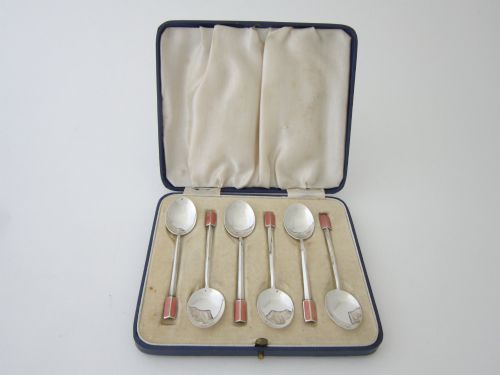
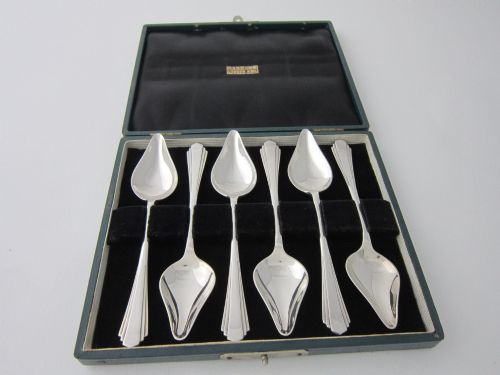
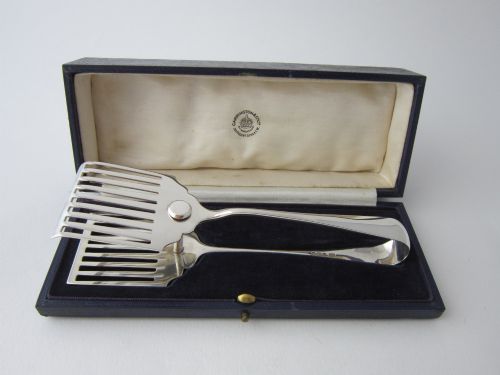
The objects appearing here span the 1920s, 1930s, and 1940s, alongside earlier Edwardian examples and George V or George VI period items. You encounter specific forms such as coffee spoons, grapefruit spoons, asparagus tongs, cake forks, and knife rests.
Enamelled decoration and silver plating feature prominently alongside solid sterling silver elements. The accompanying boxes are typically lined with velvet, silk, or satin, and finished with leatherette or fabric exteriors to protect the contents.
Materials and construction
Silversmiths utilised sterling silver and silver plate for the primary utensils, often applying vibrant coloured enamel to the handles of teaspoons and coffee spoons. Bakelite appears in specialised items like knife rests, reflecting the modern industrial materials of the period.
Presentation cases rely on sturdy structural cores covered in leatherette or fabric, tailored internally to hold each utensil securely. Delicate linings of silk, satin, or velvet provide a soft cushion that prevents friction damage during storage and transit.
Someone once needed a dedicated set of twelve Bakelite knife rests just to keep butter off the linen.
Distinguishing quality across sets
Quality rests upon the preservation of the original fitted presentation case and the completeness of the fitted interior. Sets that retain every matching component without replacement utensils hold greater integrity for collectors.
Waring and Gillows·Walker and Hall
The Boxed Art Deco Cutlery Glossary
- Canteen
- A fitted box or cabinet designed specifically to hold a complete set of cutlery. These containers often feature multiple internal tiers or trays lined with soft fabric.
- Silver Plate
- A base metal coated with a thin layer of silver through electroplating. This technique provided a bright appearance at a lower cost than solid sterling silver.
- Enamel
- A glassy substance melted onto the surface of metal for decoration and colour. It is frequently found on the handles of art deco spoons.
- Knife Rest
- A small support used to keep the blade of a carving or dining knife off the tablecloth between courses. They are often found in matched sets within fitted boxes.
Boxed Art Deco Cutlery: Frequently Asked Questions
What periods do these sets come from?
The listings span the Edwardian era through the 1920s, 1930s, and 1940s, encompassing George V and George VI reigns alongside distinct art deco designs.
Most items cluster around the interwar decades when matching boxed sets became popular wedding and household gifts.
How were specialist spoons used?
Specialist utensils such as grapefruit spoons and coffee spoons were designed for specific dining courses and small porcelain cups. Their proportions suited the particular foods and beverages served in formal settings.
Serving tongs and asparagus tongs handled delicate or awkward items that standard forks could not manage easily.
How should I store my cutlery set?
Keep the utensils inside their original fitted box where the velvet, silk, or satin lining protects the surfaces from scratching. Storing them in a dry environment prevents tarnishing of the silver and degradation of the fabric.
Avoid stacking unprotected pieces together to maintain the crisp detail of the metalwork.
What materials are used inside the boxes?
Boxes are lined with soft textiles including velvet, silk, and satin to cushion the silver or plated utensils. The outer shells are typically constructed from leatherette or durable fabric over rigid frames.
These fitted interiors ensure each spoon, fork, or knife rests securely in its own designated slot.